

 Marcus Thorne
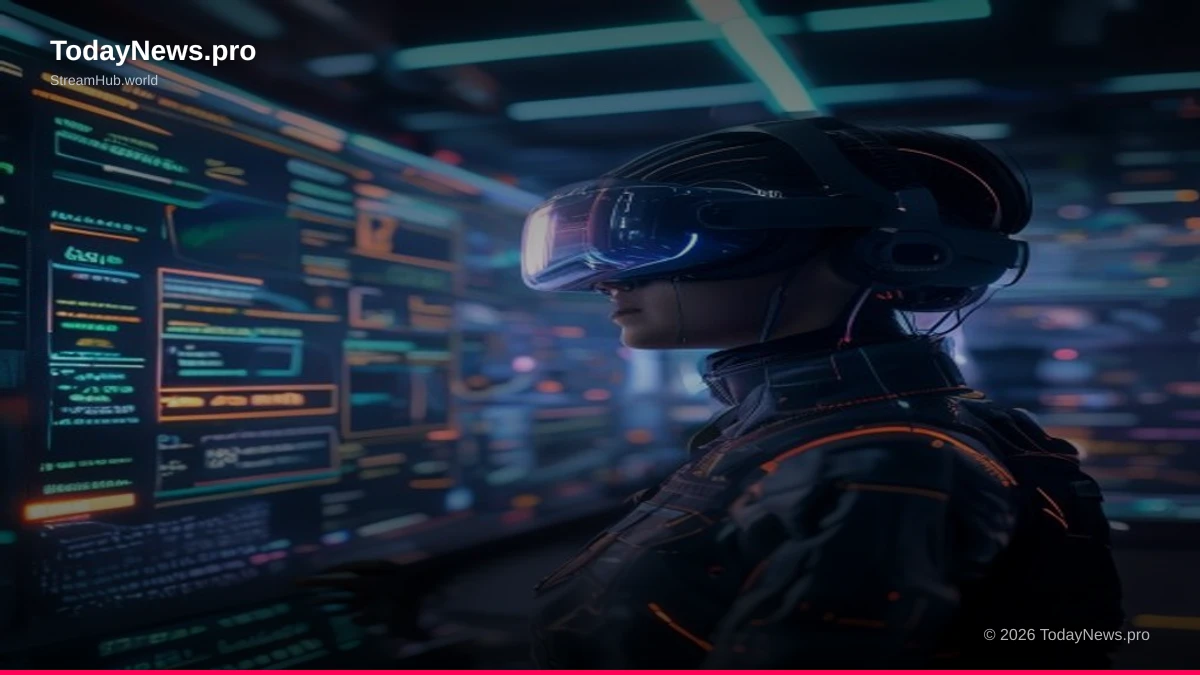
By 2025, over 70% of educational institutions worldwide are projected to have adopted AI-powered tools, fundamentally reshaping how students learn and educators teach. This seismic shift is propelling education towards a future where personalized learning paths, driven by artificial intelligence and immersive virtual reality, are not just a possibility but an emerging reality.
The Dawn of the Gamified Classroom: Beyond Traditional Pedagogy
For decades, the chalk and talk model has been the bedrock of education. However, a growing body of research points to its limitations in catering to the diverse learning styles and paces of individual students. The traditional classroom often struggles to maintain student engagement, leading to disinterest and a failure to grasp complex concepts. This is where the concept of a gamified future, powered by advanced technologies, steps in to offer a compelling alternative.
The digital revolution has already introduced interactive whiteboards and online learning platforms, but the next wave promises a far more profound transformation. Imagine a learning environment where every student embarks on a unique journey, tailored to their strengths, weaknesses, and interests. This is the promise of gamified education, moving beyond rote memorization to foster critical thinking, problem-solving, and genuine understanding.
The Imperative for Change
The current educational paradigm, while historically significant, faces considerable pressure to adapt. Globalization, rapid technological advancement, and the evolving demands of the job market necessitate a more agile and effective approach to learning. Students need to be equipped not just with knowledge, but with the skills and adaptability to thrive in a constantly changing world.
Statistics from the Reuters Technology Report indicate a significant surge in EdTech investments, signaling market confidence in innovative educational solutions. This financial backing is crucial for the development and widespread adoption of the technologies that will underpin this gamified future.
Early Adopters and Emerging Trends
While the fully gamified classroom is still on the horizon, early indicators are abundant. Numerous pilot programs are showcasing the efficacy of gamified elements in K-12 and higher education. These initiatives often report increased student participation, improved test scores, and a more positive attitude towards learning. The integration of adaptive learning platforms, which adjust content difficulty based on student performance, is a prime example of this trend.
AI: The Architect of Personalized Learning Journeys
Artificial intelligence is the engine driving the personalization at the heart of this educational revolution. AI algorithms can analyze vast amounts of student data – from their interaction with learning materials to their performance on assessments – to create a dynamic profile of each learner. This profile then informs the creation of bespoke learning paths.
Instead of a one-size-fits-all curriculum, AI can identify areas where a student excels and areas where they need more support. It can then recommend specific resources, exercises, or even entirely different teaching approaches to optimize their learning experience. This adaptive nature ensures that no student is left behind or held back.
Adaptive Learning Platforms
These platforms are AI's most visible manifestation in education today. They function like intelligent tutors, observing a student's progress and adjusting the difficulty and type of content presented in real-time. If a student masters a concept quickly, the platform moves on to more advanced material. Conversely, if a student struggles, the AI can offer supplementary explanations, practice problems, or alternative learning modalities.
The effectiveness of these platforms is being rigorously studied. A meta-analysis of adaptive learning systems found an average improvement of 15% in learning outcomes compared to traditional methods. This data underscores the power of AI in tailoring educational content to individual needs.
AI-Powered Content Generation and Curation
Beyond adaptive delivery, AI is also being used to generate and curate educational content. AI can create personalized quizzes, generate practice questions, and even summarize complex texts. It can also sift through the internet and educational databases to recommend the most relevant and engaging resources for a particular student, factoring in their learning style and current knowledge level.
This capability is particularly valuable for educators, freeing them from the often-tedious task of content creation and allowing them to focus on higher-level teaching and mentorship. AI can also help identify learning gaps across an entire class, enabling teachers to address common misconceptions effectively.
Predictive Analytics for Intervention
One of the most powerful applications of AI in education is its ability to predict potential learning difficulties before they become significant problems. By analyzing patterns in student engagement, performance, and even non-academic factors (with appropriate privacy safeguards), AI can flag students who are at risk of falling behind. This allows educators to intervene early with targeted support, preventing academic disengagement.
Virtual Reality: Immersive Worlds for Deeper Understanding
If AI is the architect, then Virtual Reality (VR) is the constructor, building immersive environments where learning transcends the limitations of textbooks and lectures. VR technology offers a unique opportunity to experience concepts rather than just read about them, fostering a deeper and more intuitive understanding.
Imagine dissecting a virtual frog without the ethical concerns or mess, exploring ancient Rome firsthand, or practicing complex surgical procedures in a risk-free environment. VR makes these scenarios not only possible but also incredibly engaging, transforming abstract ideas into tangible experiences.
Experiential Learning Through Simulation
VR excels at providing hands-on, experiential learning opportunities that are often impractical or impossible in a traditional setting. Medical students can practice intricate surgeries on virtual patients, engineering students can design and test bridges in simulated environments, and history students can walk through historical reenactments. This direct engagement with the subject matter can significantly enhance retention and comprehension.
The Wikipedia entry on Virtual Reality details its applications across various fields, highlighting its potential to revolutionize training and education by creating realistic simulations.
Bridging the Gap Between Theory and Practice
Many subjects, particularly in STEM fields, involve abstract concepts that are difficult to visualize. VR can bridge this gap by providing immersive visualizations. Students can manipulate 3D models of molecules, explore the vastness of the solar system, or understand complex mathematical functions through interactive simulations. This visual and kinesthetic learning approach caters to a wider range of learning preferences.
The benefits are evident in fields like anatomy. Studies show that medical students using VR for anatomical learning can identify structures with 15% greater accuracy compared to those using traditional dissection or 2D diagrams.
Enhancing Soft Skills and Empathy
Beyond academic subjects, VR can also be a powerful tool for developing soft skills. Role-playing scenarios in VR can help students practice public speaking, negotiation, or customer service in a safe, simulated environment. Furthermore, VR experiences designed to foster empathy, such as walking in the shoes of someone with a disability or experiencing a different cultural perspective, can cultivate a more compassionate and understanding generation.
The Mechanics of Gamification: Motivation, Engagement, and Mastery
Gamification in education is not simply about turning lessons into video games. It's about strategically applying game-design elements and game principles in non-game contexts to enhance engagement, motivation, and learning outcomes. This involves understanding what makes games compelling and translating those elements into the educational sphere.
Core to gamification are concepts like points, badges, leaderboards, challenges, and immediate feedback. When applied thoughtfully, these mechanics can transform passive learning into an active, goal-oriented pursuit, fostering a sense of accomplishment and continuous improvement.
Points, Badges, and Leaderboards (PBLs)
These are the most recognizable gamification elements. Points can be awarded for completing tasks, answering questions correctly, or participating actively. Badges can represent mastery of specific skills or topics, serving as visual markers of achievement. Leaderboards foster healthy competition and provide social recognition, motivating students to strive for higher performance.
However, it's crucial that these elements are not merely superficial additions. They must be integrated meaningfully into the learning process, reinforcing key learning objectives and providing genuine feedback on progress.
Challenges, Quests, and Narrative
Beyond simple rewards, effective gamification often involves crafting challenges and quests that require students to apply their knowledge and skills to solve problems. These can be framed within a narrative, giving context and purpose to the learning activities. For example, a history lesson might become a "quest" to uncover the secrets of a lost civilization, requiring students to research, analyze primary sources, and solve puzzles.
This narrative approach can make learning more enjoyable and memorable, transforming abstract information into an engaging story that students want to be a part of.
Immediate Feedback and Iterative Learning
Games excel at providing instant feedback, allowing players to learn from their mistakes and adjust their strategies. Gamified education aims to replicate this by offering immediate feedback on quizzes, exercises, and challenges. This allows students to identify and correct misunderstandings quickly, reinforcing correct knowledge and preventing the consolidation of errors. This iterative process of trying, failing, and learning is central to mastery.
Challenges and Ethical Considerations in the EdTech Revolution
As with any transformative technology, the gamified future of education is not without its hurdles and ethical dilemmas. Ensuring equitable access, safeguarding data privacy, and preventing the over-reliance on technology are critical considerations that must be addressed for this future to be realized responsibly.
The rapid pace of technological development also raises questions about the long-term sustainability of these solutions and the potential for a widening digital divide if not managed carefully.
The Digital Divide and Equity of Access
A significant concern is ensuring that all students, regardless of their socioeconomic background, have access to the necessary hardware, software, and internet connectivity to participate in these advanced learning environments. If not addressed, these technologies could exacerbate existing inequalities, creating a two-tiered educational system.
Governments and educational institutions must prioritize investments in digital infrastructure and provide resources to underserved communities to ensure equitable access to AI and VR learning tools. Initiatives like providing subsidized devices and free internet access are crucial.
Data Privacy and Security
AI-powered learning systems collect a wealth of sensitive student data. Protecting this information from breaches, misuse, and unauthorized access is paramount. Robust data privacy policies, transparent data usage practices, and advanced security measures are essential to build trust and ensure student well-being.
Strict adherence to regulations like GDPR and FERPA is non-negotiable. Educational technology providers must demonstrate a commitment to ethical data handling and provide clear explanations of how student data is collected, used, and protected.
Potential for Addiction and Over-Reliance
The gamified nature of these systems, while beneficial for engagement, also carries a risk of fostering over-reliance or even addiction to digital interfaces. It's important to strike a balance and ensure that technology complements, rather than replaces, essential human interaction and traditional learning methods that foster critical thinking and independent problem-solving.
Educators must guide students in developing healthy digital habits and encourage them to engage with learning in diverse ways. The goal is to use technology as a tool, not a crutch.
| Technology | Potential Benefits | Potential Risks | Equity Concerns |
|---|---|---|---|
| AI-Powered Personalization | Tailored learning paths, improved outcomes, early intervention | Data privacy, algorithmic bias, over-reliance | Access to devices/internet, digital literacy |
| Virtual Reality Immersion | Experiential learning, deeper understanding, skill development | Cost of hardware, motion sickness, isolation | Cost of VR headsets, quality of experiences |
| Gamification Mechanics (PBLs) | Increased engagement, motivation, immediate feedback | Superficial learning, extrinsic motivation focus, distraction | Digital access for platforms |
The Evolving Role of the Educator in the Gamified Future
With AI taking on many of the traditional instructional roles, the educator's position is not diminished but rather transformed. Instead of being the primary disseminator of information, teachers will evolve into facilitators, mentors, and guides, focusing on higher-order thinking skills, emotional intelligence, and individual student support.
This shift requires educators to embrace new technologies, develop different pedagogical approaches, and cultivate strong interpersonal skills to nurture students' holistic development.
From Instructor to Facilitator and Mentor
In a gamified, AI-driven classroom, educators will spend less time lecturing and more time observing, guiding, and intervening. They will use AI-generated data to understand individual student needs and provide targeted support, facilitate group projects, foster critical discussions, and help students develop their own learning strategies. The focus will be on empowering students to take ownership of their learning journey.
This role demands a deep understanding of both the subject matter and the pedagogical tools available, as well as strong communication and interpersonal skills.
Fostering Critical Thinking and Problem-Solving
While AI can deliver information and guide practice, it cannot fully replicate the nuanced guidance of a human educator in developing higher-order thinking skills. Teachers will be instrumental in challenging students to analyze, synthesize, evaluate, and create. They will design complex problems that require collaboration, creativity, and critical judgment – skills that AI is still developing.
The educator’s role in posing thought-provoking questions and encouraging debate will become even more critical.
Cultivating Social-Emotional Learning (SEL)
The human element of education remains irreplaceable, especially in fostering social-emotional learning. Educators will play a vital role in helping students develop self-awareness, self-management, social awareness, relationship skills, and responsible decision-making. VR experiences can supplement this by providing scenarios for empathy training, but the guidance and modeling of an educator are crucial for true SEL development.
Looking Ahead: The Long-Term Impact on Society and the Workforce
The widespread adoption of gamified, personalized education has the potential to profoundly impact society and the future workforce. By equipping individuals with adaptive learning skills and a deeper understanding of complex subjects, this new paradigm could foster a more innovative, resilient, and skilled global population.
The ability to learn continuously and adapt to new challenges will become the most valuable asset in a rapidly evolving job market, and the educational systems of tomorrow are being built today to cultivate precisely these capabilities.
A More Adaptable and Skilled Workforce
As industries continue to transform at an unprecedented pace, the demand for workers who can learn new skills quickly and adapt to changing roles will skyrocket. Gamified, AI-driven education, by emphasizing mastery and personalized learning paths, will naturally cultivate these adaptive capabilities. Graduates will enter the workforce not just with a degree, but with a proven ability to learn and evolve.
The World Economic Forum's "Future of Jobs" report consistently highlights the growing importance of skills such as complex problem-solving, critical thinking, and adaptability, all of which are fostered by these evolving educational models.
Lifelong Learning as the New Norm
The concept of education ending after formal schooling will become obsolete. With personalized learning platforms and readily accessible VR experiences, individuals will engage in continuous learning throughout their careers. This "lifelong learning" approach will be essential for staying relevant and advancing in any profession. The gamified elements will make this continuous learning engaging and rewarding.
This shift will democratize access to advanced knowledge and skill development, empowering individuals to pursue new career paths and adapt to economic changes throughout their lives.
Fostering Innovation and Creativity
By providing students with a deeper understanding of foundational concepts and the ability to explore complex subjects through immersive experiences, gamified education can unlock new levels of innovation and creativity. When learning is engaging and personalized, students are more likely to pursue their passions, experiment with ideas, and develop novel solutions to real-world problems.
The ability to visualize complex systems and test hypotheses in virtual environments will accelerate the pace of discovery and invention across all fields.