

 William Nye
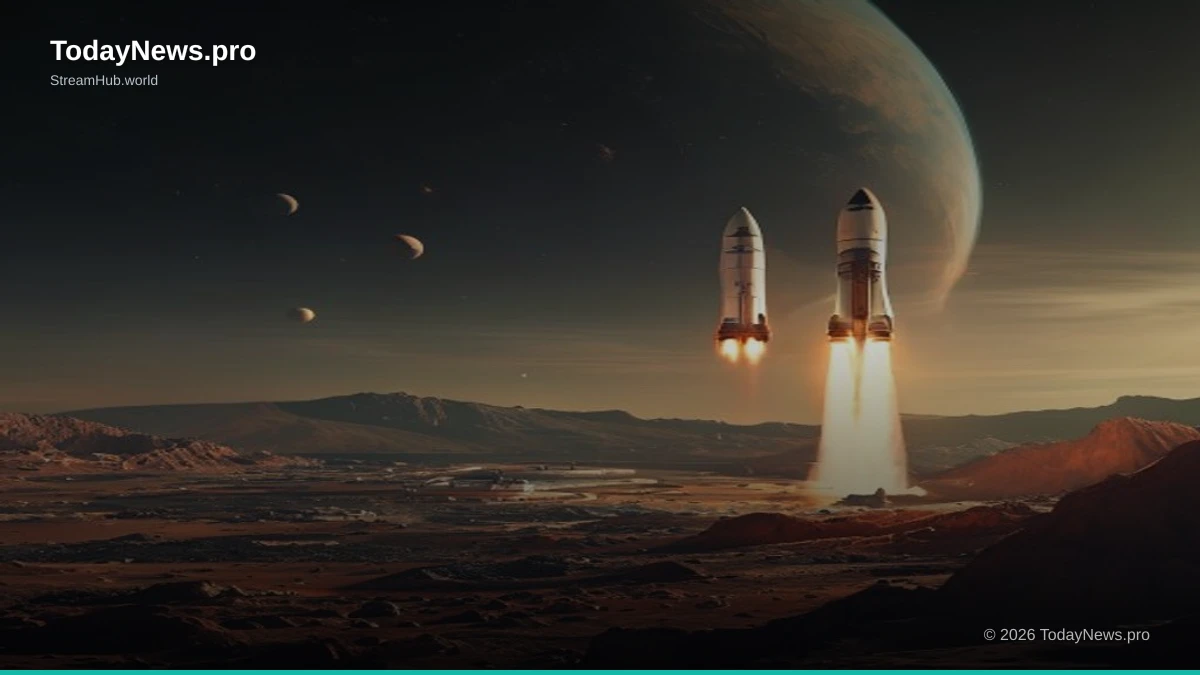
In 2023, the global space economy was valued at an estimated $469 billion, a figure projected to double in the next decade, driven by an unprecedented surge in commercial innovation and ambitious governmental goals.
The New Space Race: A Commercial Revolution
The landscape of space exploration is undergoing a seismic shift, moving beyond the exclusive domain of government agencies like NASA and ESA. A new era has dawned, characterized by the dynamic and often disruptive influence of private enterprise. Companies such as SpaceX, Blue Origin, and Rocket Lab are not merely participating; they are leading the charge, fundamentally altering the economics and accessibility of space. This commercial revolution is not about replacing national ambitions but augmenting them, fostering a more robust and diverse ecosystem for reaching orbit and beyond.
The reduction in launch costs, a direct consequence of private sector innovation, has opened up avenues previously unimaginable. Small satellites, once prohibitively expensive to deploy, are now being launched in swarms, enabling sophisticated Earth observation, advanced telecommunications, and groundbreaking scientific experiments. This democratization of space access is fueling a cascade of new applications and services that are beginning to touch virtually every aspect of modern life, from weather forecasting to global internet connectivity.
Governments are increasingly recognizing the value of this commercial partnership. Instead of solely investing in the development of their own launch capabilities, many agencies are now procuring launch services from private companies. This allows them to focus their resources on deep space missions, scientific research, and astronaut training, while relying on the private sector for the heavy lifting of getting payloads into orbit. This symbiotic relationship is proving to be a powerful engine for progress.
The Impact of Private Investment
Venture capital and private equity have poured billions of dollars into space startups, recognizing the immense long-term potential. This influx of capital has accelerated research and development, leading to faster innovation cycles and the rapid deployment of new technologies. Unlike traditional government procurement, which can be slow and bureaucratic, private funding allows for more agile decision-making and a greater tolerance for calculated risk.
This investment is not confined to launch vehicles. It spans the entire spectrum of the space industry, from satellite manufacturing and ground station networks to in-space servicing and debris removal technologies. The sheer volume of private capital at play signifies a profound shift in how humanity views and interacts with the space environment.
Beyond the Launchpad: The Rise of Reusability
Perhaps the most transformative innovation driving the commercial space revolution is the advent of reusable rocket technology. SpaceX's Falcon 9 rocket, with its iconic vertical landing capability, has become a symbol of this new paradigm. By recovering and refurbishing its first-stage boosters, SpaceX has drastically reduced the cost per launch, making space more affordable than ever before.
This economic advantage is not just theoretical. It has enabled the deployment of larger satellite constellations, such as Starlink, and facilitated more frequent and ambitious scientific missions. The concept of throwing away multi-million dollar rockets after a single use is rapidly becoming a relic of the past.
Other companies are following suit. Blue Origin's New Shepard and New Glenn programs, along with others in development, are also incorporating reusability into their designs. The competition to achieve greater reusability and lower costs is fierce, benefiting the entire space industry. This technological leap is critical for sustaining the long-term economic viability of space exploration and commercialization.
| Rocket | Manufacturer | Reusability Status | Approximate Cost Per Launch (Million USD) |
|---|---|---|---|
| Falcon 9 | SpaceX | First Stage, Fairing | 62 |
| Atlas V | United Launch Alliance (ULA) | None (Expendable) | 109 |
| Ariane 5 | Arianespace | None (Expendable) | 210 |
| New Shepard | Blue Origin | First Stage, Capsule | (Suborbital, not directly comparable) |
The Economics of Reusability
The cost savings associated with reusable rockets are substantial. While precise figures can vary based on the number of reuses and refurbishment costs, estimates suggest that reusability can reduce launch costs by as much as 70-80%. This dramatic decrease in expenditure is a primary enabler for ambitious projects, from large satellite constellations to crewed missions to the Moon and Mars.
Furthermore, reusable rockets can be launched more frequently. This increased cadence of launches is essential for building and maintaining infrastructure in orbit and for responding rapidly to scientific or commercial opportunities. The logistical and economic benefits are multifaceted, creating a virtuous cycle of innovation and expansion.
Laying Foundations: Lunar Bases and Their Promise
The Moon, our nearest celestial neighbor, is no longer just a destination for flag-planting missions. It is increasingly viewed as a crucial stepping stone for deeper space exploration and a potential hub for scientific research and resource utilization. The Artemis program, led by NASA with significant international and commercial partnerships, aims to establish a sustainable human presence on the lunar surface.
The establishment of lunar bases, whether temporary outposts or more permanent settlements, represents a monumental undertaking. It requires the development of advanced life support systems, robust habitats capable of withstanding the harsh lunar environment, and reliable power generation. These bases will serve as critical testbeds for technologies and operational procedures needed for future missions to Mars and beyond.
The scientific return from lunar bases is expected to be immense. The Moon offers a unique vantage point for astronomical observations, free from Earth's atmospheric interference. Its geological history also holds clues to the formation of the Earth and the early solar system, making it a veritable geological treasure trove.
The Scientific Imperative
Lunar bases will enable unprecedented scientific investigations. Observatories placed on the far side of the Moon, shielded from Earth's radio emissions, could provide a clearer view of the universe than ever before. The seismic activity on the Moon can also be studied to understand planetary interiors. Furthermore, samples collected from different lunar regions can shed light on the Moon's origin and evolution, as well as the bombardment history of the inner solar system.
The potential for in-situ resource utilization (ISRU) is also a major driver for lunar exploration. The ability to extract and use resources found on the Moon, such as water ice, regolith (lunar soil), and helium-3, could significantly reduce the cost and complexity of future missions.
Resource Utilization: Water Ice and Beyond
The discovery of water ice in permanently shadowed craters at the lunar poles is a game-changer. This water can be electrolyzed to produce oxygen for breathing and rocket propellant, dramatically reducing the amount of material that needs to be launched from Earth. This capability is fundamental to establishing a sustainable presence.
Beyond water, lunar regolith can be used as a building material for habitats, radiation shielding, and even for 3D printing components. Helium-3, a rare isotope on Earth but potentially abundant in lunar soil, is also being explored as a future fuel source for fusion reactors, though this remains a long-term prospect.
International Collaboration and Competition
The development of lunar bases is fostering both unprecedented international collaboration and renewed geopolitical competition. The Artemis Accords, a set of principles for peaceful and responsible lunar exploration, have garnered support from numerous nations. These accords emphasize transparency, interoperability, and adherence to international law.
However, the potential economic and strategic value of the Moon also means that different nations and blocs are pursuing their own lunar ambitions. China, for example, has its own ambitious lunar exploration program, including plans for a robotic International Lunar Research Station. This dynamic interplay between cooperation and competition is likely to accelerate progress while also posing diplomatic challenges.
The Mars Horizon: Humanitys Next Giant Leap
Mars, the "Red Planet," has long captured the human imagination as the ultimate frontier for exploration. The prospect of sending humans to Mars is one of the most ambitious goals of 21st-century space exploration. While significant technological hurdles remain, a clear roadmap is emerging, driven by both government agencies and private entities like SpaceX.
The journey to Mars is significantly more complex than a trip to the Moon. It involves a much longer transit time (months), greater radiation exposure, and the challenge of landing massive payloads on a planet with a thin atmosphere. Developing the necessary propulsion systems, life support, and landing technologies are paramount.
The scientific motivations for a crewed Mars mission are compelling. Understanding whether life ever existed on Mars, or if it might still exist in subsurface environments, is a profound question. Studying Martian geology and climate can also provide critical insights into planetary evolution and the potential for habitability beyond Earth.
Challenges of the Red Planet
The challenges of a human mission to Mars are daunting. The journey itself exposes astronauts to prolonged periods of microgravity and cosmic radiation, posing significant health risks. The psychological toll of such a long and isolated mission also needs careful consideration.
Landing on Mars is another immense challenge. The planet's thin atmosphere makes it difficult to use parachutes for large payloads, necessitating the development of sophisticated powered descent systems. Once on the surface, astronauts will need to contend with extreme temperatures, dust storms, and the need for reliable power and life support systems for extended stays.
The cost of such a mission is also a major factor. While commercial endeavors aim to reduce costs, a human Mars mission will still represent a colossal investment, requiring sustained political and public support.
Terraforming: A Distant Dream
The concept of terraforming Mars – transforming its environment to be more Earth-like – is a popular subject in science fiction. However, in reality, it is an undertaking of unimaginable scale and complexity, likely centuries or even millennia away, if it is feasible at all. The thin atmosphere, lack of a global magnetic field, and extremely cold temperatures present formidable obstacles.
While direct terraforming is a distant dream, making Mars habitable through enclosed habitats and localized environmental control is a more immediate and achievable goal. The focus for the foreseeable future will be on establishing human bases and enabling survival and research on the Martian surface.
The Economic Engine of Space
The burgeoning commercial space sector is not just about exploration; it is rapidly becoming a significant economic driver. The services and technologies developed for space are creating new markets and transforming existing ones.
From satellite imagery that informs agricultural practices and disaster response to the ever-expanding global internet access provided by satellite constellations, space-based services are increasingly integrated into our daily lives. The economic potential of space is only just beginning to be tapped.
Satellite Services and Data
The proliferation of small satellites has revolutionized Earth observation. High-resolution imagery, hyperspectral data, and real-time monitoring capabilities are now accessible to a wider range of users, including governments, businesses, and researchers. This data is crucial for climate monitoring, urban planning, resource management, and national security.
The telecommunications sector is another major beneficiary. Satellite internet services are bringing connectivity to remote and underserved areas, bridging the digital divide. Furthermore, the development of advanced satellite communication systems is essential for supporting future space missions, including crewed endeavors to the Moon and Mars.
Space Tourism and Beyond
Space tourism, once the realm of science fiction, is becoming a reality. Companies like Virgin Galactic and Blue Origin are offering suborbital flights, providing individuals with the opportunity to experience weightlessness and view the Earth from space. While currently a niche market for the ultra-wealthy, the long-term vision is for space tourism to become more accessible.
Beyond tourism, the potential for commercial activities in orbit is vast. In-space manufacturing, asteroid mining, and the development of orbital servicing and debris removal capabilities are all areas with significant economic promise. These ventures require substantial investment and technological development but could unlock new frontiers of economic growth.
Future Prospects and Unforeseen Discoveries
The trajectory of space exploration is one of accelerating progress and increasing ambition. As commercial players continue to drive down costs and innovate, and as national agencies set increasingly bold goals, the coming decades promise a wealth of new discoveries and opportunities.
The potential for finding extraterrestrial life, even microbial, within our solar system or beyond remains one of the most profound drivers of scientific inquiry. The exploration of ocean worlds like Europa and Enceladus, or the study of exoplanets through advanced telescopes, could yield revolutionary answers to fundamental questions about life in the universe.
Furthermore, the expansion of humanity's presence into space will undoubtedly lead to unforeseen discoveries and technological advancements that we can only begin to imagine. The pursuit of knowledge and the drive to explore are fundamental human characteristics, and space offers an inexhaustible canvas for both.
The ongoing development of advanced propulsion systems, artificial intelligence in space operations, and closed-loop life support systems will be critical enablers for future endeavors. The integration of these technologies will pave the way for more sustainable and ambitious missions, pushing the boundaries of what is possible.
The future of space exploration is not a single, monolithic path but a complex, interconnected web of scientific ambition, commercial enterprise, and human curiosity. From the commercial rockets lifting off from Earth's soil to the eventual boots on Martian dust, humanity's journey to the stars is well underway.