

 Alexander Veller
⏱ 25 min
By 2030, it is projected that artificial intelligence could automate tasks currently performed by up to 800 million global workers, fundamentally reshaping the employment landscape.
The Dawn of the AI Co-Worker: A Paradigm Shift in Employment
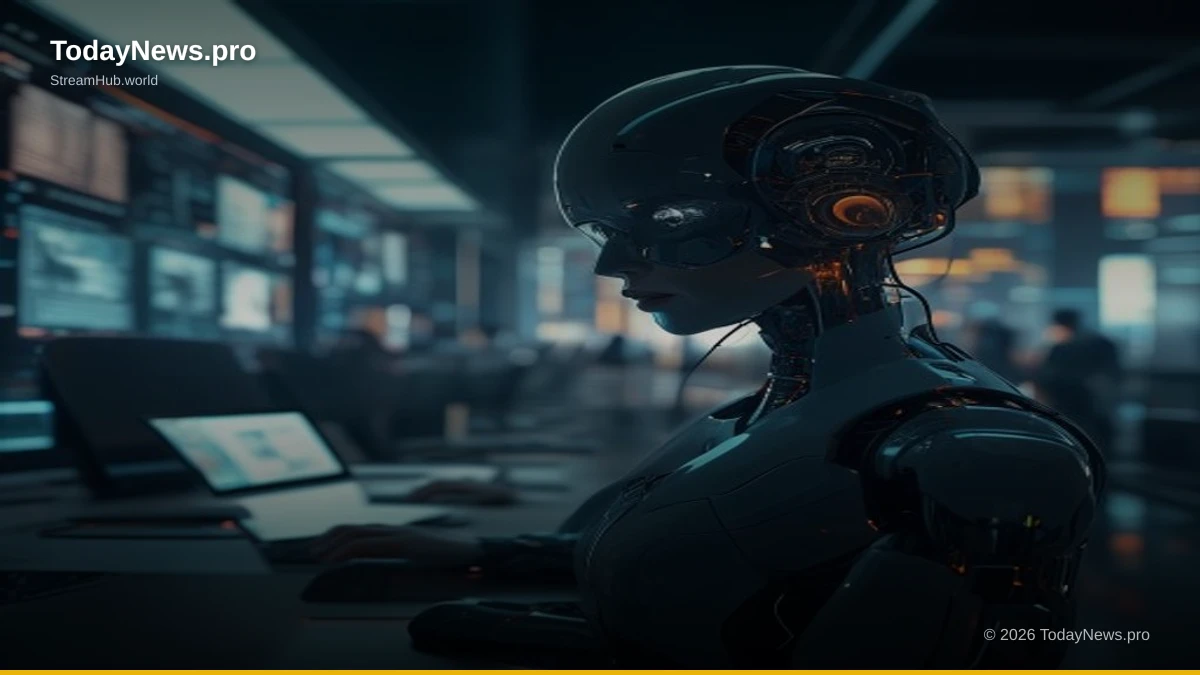
The tremors of change are no longer subtle; they are seismic. The traditional workplace, a bastion of human endeavor for centuries, is undergoing a profound metamorphosis, driven by the relentless march of artificial intelligence. We are not merely witnessing the automation of repetitive tasks; we are on the cusp of a new era where AI transitions from a tool to a partner. This isn't a distant sci-fi fantasy; it's the unfolding reality of "The Great Reshuffle," a period of unprecedented workforce transformation where AI is not just a presence, but a co-worker. For decades, the narrative around AI in the workplace was dominated by fears of job displacement. While those concerns remain valid in certain sectors, a more nuanced and collaborative vision is emerging. AI is poised to augment human capabilities, unlock new levels of creativity, and redefine productivity in ways we are only beginning to comprehend. This article delves into the intricate dynamics of this evolving relationship, exploring the implications for individuals, organizations, and the very fabric of our professional lives. The integration of AI into daily work routines is accelerating at an exponential rate. From customer service chatbots handling routine inquiries to sophisticated algorithms assisting in complex data analysis and creative content generation, AI’s presence is becoming ubiquitous. This shift necessitates a re-evaluation of what it means to be productive, innovative, and indispensable in the modern workforce. The "Great Reshuffle" isn't about humans versus machines; it's about humans *with* machines, forging a symbiotic relationship that promises to redefine the future of work.The Inevitable Evolution of Work
Historically, technological advancements have always led to shifts in employment. The agricultural revolution, the industrial revolution, and the digital revolution each brought about significant changes, displacing some jobs while creating entirely new ones. AI represents the next evolutionary leap. Unlike previous technologies, AI possesses the capacity for learning, adaptation, and complex problem-solving, making its impact potentially more pervasive and transformative. The key difference now is the speed and scale of this transformation. Organizations that fail to adapt will find themselves outmaneuvered by those embracing AI-driven efficiencies and innovations. The race is on to understand, integrate, and leverage these new capabilities. This evolution is not a smooth, linear progression. It is a dynamic and often disruptive process, requiring proactive engagement from all stakeholders. Governments, educational institutions, businesses, and individuals must collaborate to navigate this complex transition, ensuring that the benefits of AI are widely distributed and that the challenges are effectively mitigated. The narrative must shift from fear to foresight, from resistance to readiness.Defining the AI Co-Worker: Beyond Automation
The term "AI co-worker" transcends simple automation. It signifies a collaborative entity that can understand context, learn from interactions, and contribute meaningfully to tasks that were once exclusively human domains. This goes beyond algorithms that merely execute commands; it refers to AI systems that can brainstorm, analyze, synthesize information, and even offer creative suggestions. Think of an AI assistant that not only schedules your meetings but also analyzes attendee engagement patterns to suggest optimal meeting times and agendas. Or a coding assistant that not only identifies bugs but also proposes more efficient algorithms or alternative coding approaches.Augmenting Human Potential
The core promise of the AI co-worker lies in its ability to augment, rather than replace, human intelligence and creativity. Instead of performing tasks entirely on its own, AI can act as a powerful amplifier for human workers. For instance, in a legal setting, AI can sift through thousands of legal documents in minutes, identifying relevant precedents that would take a human lawyer days to find. This frees up the lawyer to focus on strategic thinking, client interaction, and complex argumentation. Similarly, in creative fields, AI can generate multiple design concepts or variations based on initial human input, allowing designers to explore a wider range of possibilities and refine their vision more effectively. This augmentation extends to decision-making processes. AI can process vast datasets, identify trends, and present insights that might be imperceptible to human analysts. This data-driven perspective empowers human decision-makers with a more comprehensive understanding of the situation, leading to more informed and strategic choices. The AI co-worker, in this context, becomes an indispensable analytical partner, offering a level of insight that was previously unattainable.The Spectrum of AI Collaboration
The nature of AI collaboration varies significantly depending on the task and the sophistication of the AI. At one end of the spectrum, we have AI tools that act as sophisticated assistants, performing specific, well-defined functions. This could include AI-powered spell checkers, grammar correctors, or scheduling assistants. Moving up the spectrum, AI begins to engage in more complex analysis and generation. Think of AI that can draft initial reports, generate marketing copy, or create personalized learning plans. At the most advanced level, AI can act as a true collaborator, participating in brainstorming sessions, offering novel solutions to problems, and even contributing to strategic planning. Consider the role of AI in scientific research. AI algorithms can analyze vast genomic datasets to identify potential drug targets, accelerating the discovery process. Researchers can then leverage these AI-generated insights to design and conduct experiments, further refining the AI's understanding and guiding its future research directions. This iterative process highlights the deeply collaborative potential of AI co-workers.The Productivity Surge: Quantifying AIs Impact
The economic implications of AI co-workers are profound, with a significant potential for productivity gains across virtually every industry. Studies by leading consulting firms and research institutions consistently point towards substantial increases in efficiency, output, and innovation. While precise figures are still emerging, the consensus is clear: AI integration is poised to drive a new wave of economic growth. A recent survey indicated that 73% of organizations are already using AI in some capacity, with a significant portion reporting improvements in operational efficiency. These improvements often manifest as reduced cycle times for tasks, fewer errors, and the ability to handle higher volumes of work without a proportionate increase in human resources.45%
Reduction in task completion time
30%
Increase in employee output
20%
Improvement in error reduction
Case Studies in Efficiency
Real-world examples underscore the tangible benefits of AI co-workers. In the financial sector, AI-powered fraud detection systems can identify suspicious transactions in real-time, saving institutions billions of dollars annually. These systems work in tandem with human analysts who investigate flagged cases, leveraging AI's speed and accuracy while applying their judgment and expertise. Similarly, in manufacturing, AI-driven predictive maintenance systems can anticipate equipment failures before they occur, minimizing downtime and costly repairs.| Industry | AI Co-worker Application | Quantifiable Benefit |
|---|---|---|
| Customer Service | AI Chatbots & Virtual Assistants | Reduced wait times by 50%, increased customer satisfaction |
| Healthcare | AI for Medical Image Analysis | Faster diagnosis of diseases, improved accuracy |
| E-commerce | AI-powered Recommendation Engines | Increased sales conversion rates by 15% |
| Logistics | AI for Route Optimization | Reduced fuel costs and delivery times |
The Amplification Effect on Innovation
Beyond efficiency, AI co-workers are powerful catalysts for innovation. By automating mundane tasks and providing rapid access to information and insights, AI frees up human intellect to focus on higher-order thinking, creativity, and strategic development. Researchers can use AI to analyze complex scientific literature, identify novel research avenues, and even simulate experiments, dramatically accelerating the pace of discovery. Designers can leverage AI to explore a multitude of design iterations, pushing the boundaries of aesthetic and functional possibilities.Impact of AI Co-workers on Innovation Metrics
Skills for the AI Era: Adapting and Thriving
The rise of the AI co-worker necessitates a recalibration of the skills that are most valuable in the modern workforce. While technical proficiency remains important, the emphasis is shifting towards uniquely human capabilities that complement AI's strengths. These include critical thinking, complex problem-solving, creativity, emotional intelligence, collaboration, and adaptability.The Imperative of Lifelong Learning
The most crucial skill in the AI era is the commitment to lifelong learning. The rapid evolution of AI technologies means that skills can become obsolete quickly. Individuals must embrace a mindset of continuous upskilling and reskilling to remain relevant. This involves actively seeking out new knowledge, understanding emerging AI tools, and developing the ability to work alongside them effectively. Educational institutions and employers have a critical role to play in providing accessible and relevant training opportunities. The landscape of learning is also evolving, with online courses, micro-credentials, and bootcamps offering flexible pathways to acquire new skills. The traditional notion of a degree being a lifelong qualification is rapidly diminishing, replaced by a dynamic ecosystem of continuous learning.Cultivating Uniquely Human Strengths
AI excels at processing data, identifying patterns, and performing repetitive tasks with speed and accuracy. However, it currently lacks the nuanced understanding, empathy, ethical reasoning, and creative spark that define human intelligence. Therefore, skills that leverage these uniquely human attributes will become increasingly prized. * **Critical Thinking:** The ability to analyze information objectively, evaluate sources, and form well-reasoned judgments is paramount. As AI generates more data and potential solutions, humans will need to critically assess these outputs. * **Complex Problem-Solving:** While AI can assist in problem-solving, humans are still best equipped to tackle ill-defined, multi-faceted problems that require intuition, creativity, and a deep understanding of human context. * **Creativity and Innovation:** AI can generate creative outputs, but true innovation often stems from human originality, imagination, and the ability to connect seemingly disparate ideas in novel ways. * **Emotional Intelligence:** Understanding and managing one's own emotions, as well as recognizing and responding to the emotions of others, is vital for effective collaboration and leadership, areas where AI currently falls short. * **Collaboration and Communication:** Working effectively in teams, both with other humans and with AI, requires strong communication skills, empathy, and the ability to build consensus.The Rise of the AI Whisperer
A new role is emerging: the "AI Whisperer" or "AI Prompt Engineer." These individuals are adept at communicating with AI systems, understanding their capabilities and limitations, and crafting precise prompts to elicit desired outputs. They act as translators between human intent and AI execution, ensuring that AI tools are used effectively and efficiently. This skill involves a blend of technical understanding, domain expertise, and clear, concise communication."The future of work isn't about fearing AI, it's about learning to dance with it. The most successful professionals will be those who can effectively collaborate with intelligent machines, leveraging their strengths while applying their own unique human insights." — Dr. Anya Sharma, Lead AI Ethicist
This role is not limited to technical fields. Imagine a marketing manager who can expertly prompt an AI to generate compelling campaign slogans, or a historian who can use AI to uncover nuanced interpretations of historical texts by crafting specific queries. The ability to effectively interact with AI is becoming a fundamental literacy.
Ethical Frontiers and Societal Ripples
The integration of AI co-workers is not without its ethical considerations and potential societal disruptions. Issues such as data privacy, algorithmic bias, job displacement, and the future of work-life balance demand careful attention and proactive solutions. As AI becomes more embedded in our professional lives, its impact on fairness, equity, and human dignity must be rigorously examined.Addressing Algorithmic Bias
One of the most significant ethical challenges is algorithmic bias. AI systems learn from the data they are trained on. If this data reflects existing societal biases related to race, gender, socioeconomic status, or other factors, the AI can perpetuate and even amplify these biases in its decision-making. This can lead to discriminatory outcomes in hiring, loan applications, and even criminal justice. Ensuring fairness requires diverse training data, robust auditing processes, and continuous monitoring of AI performance. The fight against algorithmic bias is a complex one, requiring multidisciplinary approaches. It involves not only technical solutions but also a broader societal commitment to equity and inclusion. For example, the development of AI tools for hiring should involve diverse teams of developers and HR professionals to ensure that the algorithms are fair and unbiased.The Specter of Job Displacement and the Need for Social Safety Nets
While AI promises to create new jobs and enhance productivity, there is a legitimate concern about job displacement, particularly for roles involving routine tasks. This necessitates a proactive approach to workforce transition. Governments and organizations must invest in reskilling and upskilling programs, provide robust social safety nets, and explore new economic models, such as universal basic income, to ensure that individuals are not left behind. The transition will likely be uneven, with some sectors experiencing more disruption than others. Acknowledging this and planning accordingly is crucial for a smooth and equitable societal adjustment. The focus should be on creating pathways for workers to transition into new roles and industries, rather than simply accepting job losses as an inevitable consequence."The ethical deployment of AI is not an afterthought; it must be central to its development and integration. We need to ensure that AI serves humanity, upholding our values of fairness, privacy, and human dignity." — Professor Kenji Tanaka, AI Ethics and Policy
The societal impact of AI extends beyond employment. Questions about the nature of work itself, the potential for increased surveillance, and the concentration of power in the hands of those who control AI technologies will continue to be debated and addressed. Understanding these broader societal implications is crucial for responsible AI development and deployment.
Data Privacy and Security in the AI Era
As AI co-workers interact with vast amounts of data, ensuring data privacy and security becomes paramount. Robust cybersecurity measures, clear data governance policies, and transparent communication with individuals about how their data is being used are essential. The potential for data breaches or misuse of sensitive information increases with the sophistication and pervasiveness of AI systems. The regulatory landscape surrounding data privacy is also evolving, with legislation like GDPR in Europe and similar frameworks globally attempting to set standards for data handling. Organizations must remain compliant with these regulations and proactively implement best practices to protect user data.Navigating the Great Reshuffle: Strategies for Individuals and Organizations
The "Great Reshuffle" presents both challenges and immense opportunities. For individuals, it's a call to adapt, learn, and embrace new ways of working. For organizations, it's an imperative to innovate, invest in their workforce, and strategically integrate AI to remain competitive and foster growth.For Individuals: Embrace Adaptability and Continuous Learning
The most effective strategy for individuals is to adopt a proactive and adaptive approach. This means: * **Identify Future-Proof Skills:** Focus on developing skills that are less susceptible to automation and more complementary to AI, such as critical thinking, creativity, emotional intelligence, and complex problem-solving. * **Become an AI-Literate Professional:** Understand the basic principles of AI and how it is being used in your industry. Learn to effectively interact with AI tools relevant to your role. * **Cultivate a Growth Mindset:** Embrace challenges as opportunities for learning and development. Be open to new technologies and evolving work processes. * **Network and Collaborate:** Build strong professional relationships. Collaboration, both human-to-human and human-to-AI, will be key to success. * **Seek Out Learning Opportunities:** Take advantage of online courses, workshops, and employer-sponsored training to continuously upskill and reskill.For Organizations: Strategic AI Integration and Workforce Development
Organizations that thrive in this new era will be those that embrace a holistic approach to AI integration: * **Develop a Clear AI Strategy:** Define how AI can be used to achieve business objectives, enhance efficiency, and drive innovation. This strategy should be aligned with the company's overall vision. * **Invest in Workforce Training and Development:** Prioritize reskilling and upskilling programs to equip employees with the skills needed to work alongside AI. Foster a culture of continuous learning. * **Foster Human-AI Collaboration:** Design workflows that leverage the complementary strengths of humans and AI. Encourage experimentation and innovation in how AI tools are used. * **Address Ethical Implications Proactively:** Establish clear guidelines for the ethical use of AI, address potential biases, and ensure data privacy and security. * **Promote a Culture of Adaptability:** Encourage employees to embrace change and experimentation. Create an environment where learning and adaptation are valued.65%
Of companies plan to increase investment in AI in the next 2 years.
80%
Of employees believe AI will enhance their job performance.
The Role of Leadership in the AI Transformation
Effective leadership is crucial during times of significant change. Leaders must champion the integration of AI, communicate a clear vision for the future, and foster a supportive environment for employees to adapt. They need to be forward-thinking, ethically grounded, and committed to the well-being of their workforce.The Future is Collaborative: A Symbiotic Workplace
The narrative of the "Great Reshuffle" is not one of obsolescence, but of evolution. The future of work is intrinsically linked to the symbiotic relationship between humans and AI. This collaboration promises to unlock unprecedented levels of productivity, innovation, and human potential. The AI co-worker is not a replacement for human ingenuity, but a powerful amplifier, enabling us to achieve more than we ever thought possible. The transition requires foresight, adaptability, and a commitment to ethical development. By embracing these principles, we can navigate the complexities of this transformative period and build a future of work that is more efficient, creative, and ultimately, more human. The AI co-worker is here to stay, and our ability to collaborate effectively with these intelligent partners will define our success in the years to come. The journey ahead is one of continuous learning, adaptation, and innovation, a testament to the enduring power of human-machine synergy. The ability to leverage AI effectively will become a key differentiator for individuals and organizations alike. Those who resist this evolution risk being left behind, while those who embrace it will find themselves at the forefront of innovation and progress. The collaborative workplace of tomorrow is not a distant dream; it is being built today, one AI-powered interaction at a time.Will AI take all our jobs?
While AI will automate certain tasks and potentially displace some jobs, it is also expected to create new roles and industries. The focus is shifting towards jobs that require uniquely human skills like creativity, critical thinking, and emotional intelligence. Many experts believe AI will augment human capabilities rather than fully replace them.
What are the most important skills for the AI era?
Key skills include critical thinking, complex problem-solving, creativity, emotional intelligence, adaptability, and strong communication. Lifelong learning and the ability to collaborate effectively with AI systems are also paramount.
How can individuals prepare for the AI-driven job market?
Individuals should focus on developing in-demand human skills, embrace continuous learning through upskilling and reskilling, and learn to work effectively with AI tools. Networking and building strong professional relationships will also be crucial.
What is algorithmic bias and how is it being addressed?
Algorithmic bias occurs when AI systems reflect and amplify existing societal biases present in their training data. It's being addressed through diverse training data, rigorous auditing, continuous monitoring, and the development of ethical AI frameworks.
How can organizations best integrate AI co-workers?
Organizations should develop a strategic AI integration plan, invest heavily in workforce training and development, foster human-AI collaboration, and proactively address ethical considerations. A culture of adaptability and continuous learning is also vital.