

 Eric Mason
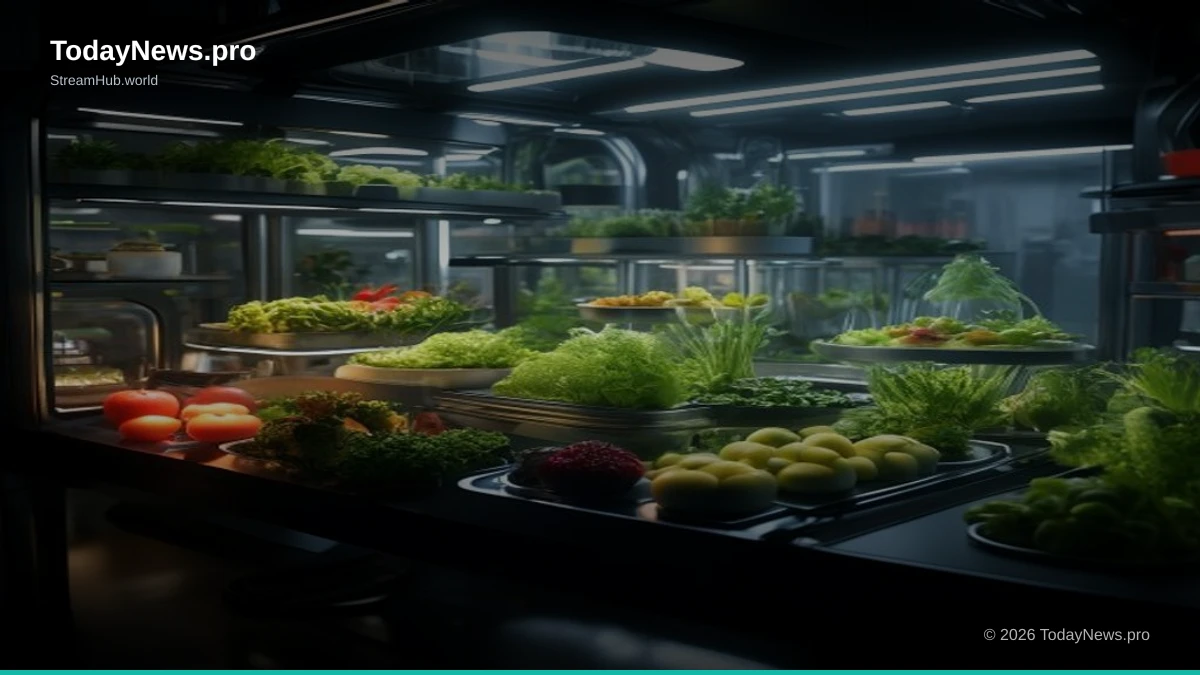
By 2050, the global population is projected to reach nearly 10 billion people, demanding a staggering 70% increase in food production. This monumental challenge is propelling an unprecedented wave of innovation in how we grow, produce, and consume food, ushering in an era of lab-grown meat, hyper-personalized nutrition, and vertical farms.
The Culinary Revolution: Redefining Our Plates
For millennia, humanity's relationship with food has been dictated by the seasons, the land, and the arduous process of traditional agriculture. However, the 21st century is witnessing a profound transformation, driven by technological advancements and a growing awareness of the environmental and ethical implications of our current food systems. This revolution is not about replacing existing methods entirely, but about augmenting them with novel solutions that promise greater efficiency, sustainability, and a more intimate connection between our bodies and our sustenance.
The confluence of biology, data science, and engineering is creating a fertile ground for groundbreaking food technologies. These innovations are poised to address critical issues such as food security, climate change, animal welfare, and the growing demand for healthier, more tailored dietary options. From the sterile environment of a laboratory to the intricate mapping of our genetic code, the future of food is being engineered, cultivated, and personalized.
This article delves into three of the most transformative areas: lab-grown (or cultivated) meat, personalized nutrition, and vertical farming. Each represents a distinct yet interconnected facet of a larger paradigm shift, collectively painting a picture of a food system that is more resilient, responsible, and responsive to both planetary needs and individual well-being.
Lab-Grown Meat: From Petri Dish to Plate
The concept of growing meat without raising and slaughtering animals might sound like science fiction, but it is rapidly becoming a tangible reality. Lab-grown meat, also known as cultivated meat or cell-based meat, is produced by harvesting a small sample of cells from an animal and then growing these cells in a nutrient-rich medium within a controlled environment, such as a bioreactor. This process bypasses the need for large-scale animal husbandry, offering a potential solution to many of the environmental and ethical concerns associated with conventional meat production.
Companies like Upside Foods, Eat Just (with its subsidiary GOOD Meat), and Mosa Meat are at the forefront of this emerging industry. They are developing the technologies and scaling the production processes to bring cultivated meat products to market. The initial offerings are often focusing on popular items like chicken and beef, aiming to replicate the taste, texture, and nutritional profile of their conventional counterparts. The long-term vision extends to a wide range of meat products, including pork, lamb, and even exotic meats, all produced sustainably and ethically.
The journey from a small sample of cells to a commercially viable product involves complex biological and engineering challenges. Optimizing growth mediums, designing efficient bioreactors, and ensuring sterility are crucial steps. Furthermore, the cost of production remains a significant hurdle, though significant progress is being made in reducing expenses through economies of scale and technological advancements. For a deeper understanding of the history and science behind this field, Wikipedia offers a comprehensive overview of cultured meat. Wikipedia: Cultured Meat
The Science Behind Cultivated Meat
At its core, cultivated meat production is a marvel of cellular agriculture. It begins with a biopsy, a simple procedure to obtain a small sample of cells – typically muscle stem cells or fibroblasts – from a living animal. These cells are then cultured in a laboratory setting, provided with essential nutrients, growth factors, and oxygen, mimicking the conditions inside an animal's body. These cells proliferate, differentiating into muscle, fat, and connective tissues, the very building blocks of meat.
The growth medium is a critical component, historically relying on fetal bovine serum (FBS), a byproduct of animal slaughter. However, a major focus of research and development is on creating animal-free growth mediums, often referred to as "plant-based" or "synthetic" mediums. This shift is vital for achieving the full ethical and environmental benefits of cultivated meat. Bioreactors, specialized vessels designed to control temperature, pH, and oxygen levels, are used to grow vast quantities of cells efficiently. The process of scaffolding, where cells are encouraged to grow into specific shapes and structures, is also an area of active research to achieve the fibrous texture characteristic of whole cuts of meat.
Challenges and Consumer Acceptance
Despite the scientific progress, the path to widespread adoption of cultivated meat is not without its obstacles. One of the primary challenges is scaling production to meet global demand while significantly reducing costs. Currently, cultivated meat is considerably more expensive than conventional meat, a barrier that requires further innovation in bioreactor design, nutrient sourcing, and manufacturing processes. Reuters has extensively covered the economic and regulatory hurdles. Reuters: Cultivated Meat Faces Hurdles in Scaling Up, Regulatory Approval
Consumer perception and acceptance are equally crucial. The idea of eating meat grown in a lab can be met with skepticism or even revulsion by some. Educating consumers about the safety, nutritional benefits, and environmental advantages of cultivated meat is paramount. Clear labeling, transparent production processes, and compelling marketing campaigns will play a vital role in building trust and driving demand. Regulatory bodies worldwide are also working to establish frameworks for the approval and labeling of cultivated meat products, ensuring safety and consumer confidence.
Personalized Nutrition: Tailoring Diets to Our DNA
Beyond the source of our food, how we nourish our bodies is undergoing a revolution of personalization. For decades, dietary advice has often been generalized, with broad recommendations for macronutrient ratios and calorie intake. However, a growing body of scientific evidence suggests that individual responses to food are highly variable, influenced by a complex interplay of genetics, gut microbiome, lifestyle, and environment. Personalized nutrition aims to leverage this understanding to provide individuals with precise dietary recommendations tailored to their unique biological makeup and health goals.
This field moves beyond one-size-fits-all approaches, acknowledging that what is healthy for one person might be suboptimal or even detrimental for another. By analyzing an individual's genetic data, microbiome composition, metabolic markers, and even real-time physiological data from wearable devices, personalized nutrition platforms can create bespoke meal plans, supplement recommendations, and even curated food product suggestions. The ultimate goal is to optimize health, prevent chronic diseases, and enhance overall well-being through diet.
The implications of personalized nutrition are vast, extending from individual health management to public health strategies. It has the potential to empower individuals with greater control over their health outcomes, shifting the focus from reactive treatment of illness to proactive prevention and optimization. This paradigm shift is not only transforming how we eat but also how we perceive our own bodies and our relationship with food.
The Rise of Nutrigenomics
Nutrigenomics, the study of how nutrients interact with our genes, is a cornerstone of personalized nutrition. Our genes don't dictate our destiny, but they can influence how our bodies process different nutrients. For example, some individuals may have genetic variations that affect their ability to metabolize certain fats or their sensitivity to caffeine. By understanding these genetic predispositions, personalized nutrition plans can be designed to either capitalize on inherent strengths or mitigate potential risks.
Companies are developing sophisticated genetic testing kits that analyze specific gene variants linked to nutrient metabolism, food sensitivities, and even taste preferences. This data, combined with other personal health information, provides a rich foundation for creating highly individualized dietary strategies. The insights gained can guide choices about carbohydrate intake, fat consumption, vitamin and mineral needs, and even the optimal timing of meals.
Data-Driven Diets
The advent of wearable technology and continuous glucose monitors (CGMs) has opened up new frontiers in personalized nutrition. These devices provide real-time data on how our bodies respond to different foods and meals, offering a dynamic and granular understanding of our individual metabolic responses. By tracking blood glucose levels, heart rate, sleep patterns, and activity levels, these technologies can reveal personalized insights that were previously inaccessible.
Imagine a system that analyzes your glucose response to a specific breakfast and, based on your genetic profile and your body's real-time reaction, suggests a slight modification to your lunch to maintain optimal energy levels and metabolic health throughout the day. This is the promise of data-driven, personalized nutrition. AI-powered algorithms are being developed to process this vast amount of data, providing actionable insights and dynamic dietary adjustments. This continuous feedback loop allows for a truly adaptive approach to nutrition, ensuring that dietary recommendations evolve with our changing bodies and lifestyles.
Vertical Farming: Growing Up, Not Out
As urban populations swell and arable land becomes increasingly scarce, vertical farming offers an innovative solution to food production. This method involves growing crops in vertically stacked layers, often in controlled indoor environments, eliminating the need for vast tracts of land. By utilizing hydroponics, aeroponics, or aquaponics systems, plants are grown without soil, receiving nutrients directly from water solutions or mist. This approach allows for year-round cultivation, regardless of external weather conditions, and significantly reduces water usage compared to traditional agriculture.
Vertical farms can be established in urban centers, bringing food production closer to consumers. This proximity minimizes transportation distances, reducing carbon emissions and ensuring fresher produce. The controlled environment also allows for precise management of light, temperature, humidity, and CO2 levels, optimizing plant growth and yield. Furthermore, it eliminates the need for pesticides and herbicides, resulting in cleaner, healthier produce.
Companies like AeroFarms, Plenty, and Infarm are pioneering this field, establishing large-scale vertical farms that supply a variety of leafy greens, herbs, and even some fruits to local markets. The technology is evolving rapidly, with advancements in LED lighting, automation, and climate control systems continuously improving efficiency and reducing operational costs. The long-term vision is to integrate vertical farms into the fabric of urban life, creating sustainable and resilient food systems for cities of the future.
The Advantages of Controlled Environments
The controlled environment of a vertical farm offers a multitude of advantages over traditional open-field agriculture. Firstly, it enables precise control over all aspects of plant growth, from light spectrum and intensity to temperature, humidity, and nutrient delivery. This optimization leads to faster growth cycles, higher yields, and superior quality produce. Crops can be grown to exact specifications, ensuring consistent flavor, texture, and nutritional content.
Secondly, the absence of soil and the controlled environment significantly reduce the risk of pest infestations and diseases. This means that pesticides, herbicides, and fungicides are largely unnecessary, leading to cleaner, chemical-free produce. Furthermore, vertical farms can be located anywhere, including in urban areas, drastically reducing the "food miles" associated with transporting produce from distant farms to consumers. This not only lowers transportation costs and carbon emissions but also ensures that consumers receive produce at its peak freshness.
Challenges in Scalability and Energy
Despite its promising attributes, vertical farming faces significant challenges, particularly in terms of scalability and energy consumption. Setting up and operating large-scale vertical farms requires substantial upfront investment in infrastructure, technology, and automation. Achieving profitability often depends on achieving high yields and efficient resource management. The energy required for lighting, climate control, and pumps can be considerable, making energy efficiency a critical factor in the economic viability of vertical farms.
Research is ongoing to develop more energy-efficient LED lighting systems and to integrate renewable energy sources like solar power. Furthermore, optimizing nutrient solutions and water recycling systems is crucial to minimize operational costs and environmental impact. The development of more robust and cost-effective building materials and automation systems will also be key to scaling vertical farming operations effectively. The long-term goal is to make vertical farming a competitive and sustainable option for producing a significant portion of our global food supply. The Reuters has detailed the economic headwinds facing the sector.
The Synergistic Future of Food
The future of food is not a singular technological solution but a mosaic of interconnected innovations. Lab-grown meat, personalized nutrition, and vertical farming are not competing ideologies but complementary forces that, when integrated, can create a more sustainable, resilient, and equitable global food system. Imagine a future where cultivated meat can be tailored to specific nutritional needs, and where fresh produce from local vertical farms can be incorporated into personalized meal plans, all delivered with minimal environmental impact.
This synergy promises a food system that is less reliant on traditional agriculture, which is a major contributor to deforestation, water pollution, and greenhouse gas emissions. By diversifying our food production methods, we can build greater resilience against climate change impacts, disease outbreaks, and supply chain disruptions. The ethical considerations surrounding animal welfare can be addressed through cultivated meat, while personalized nutrition empowers individuals to take proactive control of their health. Vertical farming can revitalize urban landscapes and ensure access to fresh, nutritious food in food deserts.
The convergence of these technologies is already underway. For instance, advancements in cell culture for cultivated meat could inform the development of more efficient nutrient delivery systems for vertical farms. Similarly, the data collected for personalized nutrition could help optimize the growth parameters for specific crops in controlled environments. This interdisciplinary approach fosters innovation and accelerates progress across the entire food value chain, from production to consumption.
Environmental Impact and Sustainability
The environmental imperative is a driving force behind the development of these novel food technologies. Conventional agriculture is a significant contributor to greenhouse gas emissions, deforestation, and water depletion. Cultivated meat has the potential to drastically reduce land use, water consumption, and methane emissions associated with livestock farming. While energy consumption for cultivation is a factor, ongoing research aims to power these operations with renewable energy and optimize efficiency.
Vertical farming, by its very nature, is designed for resource efficiency. It uses significantly less water and land compared to traditional farming. By locating farms in urban areas, it also reduces the carbon footprint associated with food transportation. The ability to grow crops year-round in a controlled environment minimizes waste due to spoilage and seasonality. When combined with personalized nutrition, which can optimize food choices for individual health and reduce overconsumption, the overall environmental benefit is substantial.
Economic Considerations
The economic landscape of food production is also being reshaped. While the initial investment in cultivated meat facilities and vertical farms can be high, the long-term economic benefits are significant. Reduced reliance on fluctuating commodity prices for feed and land, coupled with increased yield and efficiency, can lead to more stable and predictable production costs. The creation of new industries and jobs in fields like biotechnology, data science, and advanced manufacturing is also a major economic advantage.
Personalized nutrition has the potential to reduce healthcare costs by preventing diet-related chronic diseases. As these technologies mature and achieve economies of scale, the cost of products is expected to decrease, making them accessible to a wider consumer base. The development of local food systems through vertical farming can also boost local economies and create new business opportunities in urban and peri-urban areas. The global market for these innovative food technologies is projected to grow exponentially in the coming decades, attracting significant investment and driving further innovation.