

 Diana Prince
⏱ 25 min
In 2023, the global immersive technologies market, encompassing VR, AR, and mixed reality, was valued at an estimated $50 billion, a figure projected to explode past $300 billion by 2028, signaling a dramatic shift in how we consume entertainment.
Beyond the Headset: The Evolving Landscape of Immersive Entertainment
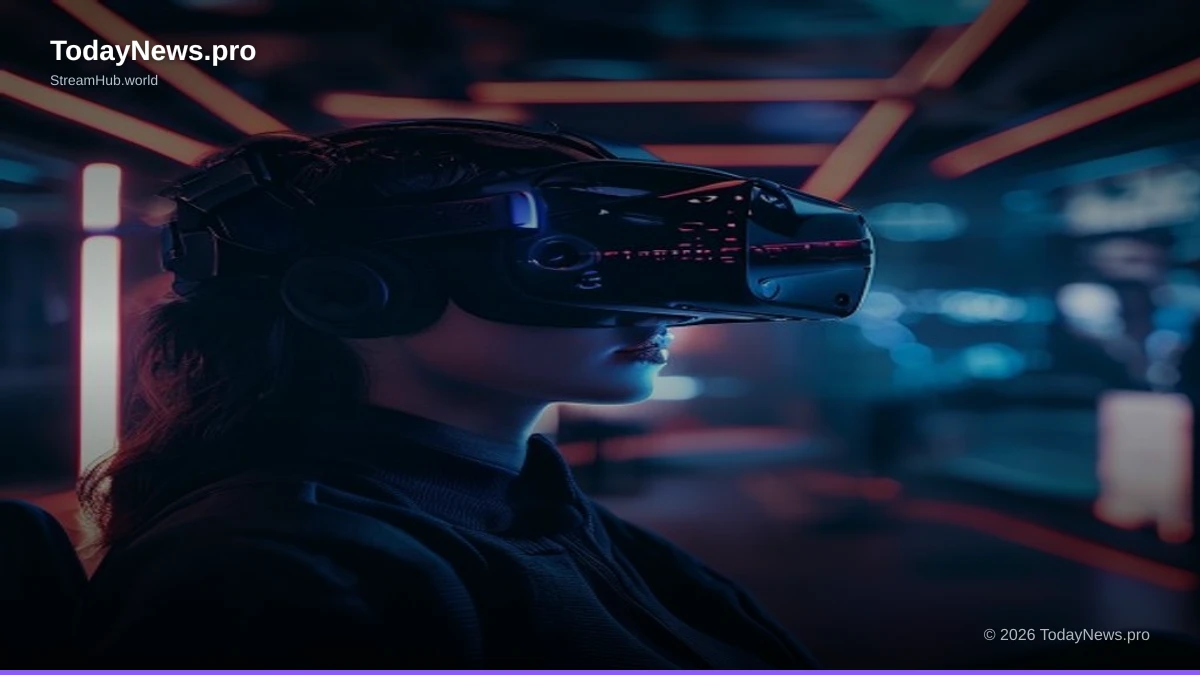
The narrative surrounding immersive entertainment has, for too long, been narrowly focused on virtual reality (VR) headsets and their perceived limitations. While VR has undeniably been a pioneer, offering unparalleled escapism into digital realms, the future of immersion is far more nuanced and expansive. It's a future that moves beyond the solitary experience of donning a headset, aiming instead for a broader, more integrated engagement with digital content that enriches our physical reality. The aspiration is to create experiences so compelling, so multisensory, that the line between the real and the virtual becomes beautifully blurred, fostering deeper emotional connections and unprecedented levels of presence. This evolution is driven by a confluence of technological advancements and a growing consumer appetite for experiences that are not just visually stimulating but deeply engaging. The limitations of current VR – motion sickness, bulky hardware, social isolation – are being addressed not by perfecting the headset alone, but by exploring alternative and complementary technologies that can deliver similar, if not superior, levels of immersion. The key lies in understanding that true immersion is a holistic sensory experience, and the future will involve orchestrating a symphony of stimuli to achieve this.The Limitations of Current VR
Virtual reality, despite its impressive strides, still grapples with inherent challenges. The reliance on visual and auditory input, while powerful, leaves much of our sensory apparatus untapped. Physical discomfort, such as eye strain and nausea, can often detract from the experience. Furthermore, the isolating nature of current VR setups can hinder social interaction, a fundamental aspect of many forms of entertainment. The cost of entry also remains a significant barrier for widespread adoption, limiting its reach to a niche market for now.The Promise of Ubiquitous Immersion
The ultimate goal is to move away from dedicated hardware for every immersive experience. Instead, imagine ambient technologies that seamlessly weave digital elements into our everyday lives. This could involve projection mapping that transforms any room into a dynamic environment, smart fabrics that provide haptic feedback, or even personalized scent diffusers that enhance virtual journeys. The focus shifts from a singular device to an ecosystem of interconnected technologies working in concert.The Sensory Symphony: Engaging More Than Sight and Sound
For centuries, human entertainment has primarily relied on sight and sound. From the earliest forms of theatre to modern cinema and video games, these two senses have been the dominant conduits for storytelling and engagement. However, our perception of reality is far richer, a complex interplay of multiple sensory inputs. The frontier of immersive entertainment lies in unlocking these other senses, transforming passive consumption into active, multisensory participation. This is not merely about adding extra bells and whistles; it's about creating a more profound and believable connection to the digital world. The potential impact of engaging more senses is enormous. Imagine experiencing the biting chill of a virtual winter landscape not just visually, but with a subtle drop in room temperature, or smelling the salty air of a virtual ocean. This level of sensory engagement can elevate narratives, deepen emotional resonance, and create memories that are far more potent and lasting. It moves us from observing a story to truly living within it.Beyond Visual Fidelity
While photorealistic graphics continue to improve, true immersion demands more than just a pretty picture. It requires a comprehensive approach that stimulates all available sensory channels. This means developing sophisticated systems that can accurately replicate the nuances of touch, smell, taste, and even proprioception – our sense of body position and movement. The challenge is to achieve this without overwhelming the user or creating a sense of artificiality.Interactive Environments
Future immersive experiences will be characterized by environments that react dynamically to user input across all sensory modalities. This could range from a subtle vibration in a chair when a virtual object is touched, to the release of a specific aroma when entering a virtual garden. The goal is to create a feedback loop where the digital world feels as responsive and tangible as the physical one.Haptic Feedback: Feeling the Virtual World
Haptic technology, which translates digital information into tactile sensations, is perhaps the most immediately impactful of the emerging immersive technologies. Beyond simple vibrations, advanced haptics can simulate texture, pressure, temperature, and even the inertia of objects. This capability is crucial for bridging the gap between seeing and doing in virtual environments, offering a sense of physicality that was previously impossible. The development of sophisticated haptic suits, gloves, and even localized feedback devices is rapidly progressing. These technologies allow users to feel the recoil of a weapon, the texture of a fabric, or the gentle brush of a virtual character's hand. This tactile dimension adds an entirely new layer of realism and engagement, making virtual interactions feel more consequential and believable.The Spectrum of Haptic Experiences
From the rumble of a game controller to the nuanced sensations delivered by full-body haptic suits, the range of haptic experiences is expanding rapidly. Researchers are exploring everything from ultrasonic haptics that can project tactile sensations onto the skin without physical contact, to advanced actuators that can mimic complex textures and forces. The aim is to provide a tactile vocabulary that can enrich any digital interaction.Applications in Gaming and Beyond
While gaming is a natural early adopter, the applications for advanced haptics extend far beyond. Surgeons could practice complex procedures with realistic tactile feedback, engineers could "feel" the stress on a virtual prototype, and architects could experience the texture of building materials before construction. The potential for training, design, and even therapy is immense.Olfactory and Gustatory Immersion: The Next Frontiers
The senses of smell and taste are deeply intertwined with memory and emotion, yet they remain the least explored frontiers in digital immersion. Developing technologies that can accurately and dynamically deliver scents and tastes in a controlled manner presents significant scientific and engineering challenges. However, the potential rewards in terms of enhanced realism and emotional depth are immense. Imagine experiencing a virtual journey through a spice market, not just seeing the vibrant stalls, but inhaling the complex aromas of cumin, saffron, and cinnamon. Or tasting the delicate sweetness of a virtual dessert, creating a truly holistic sensory memory. These are the experiences that will define the next generation of immersive entertainment.The Science of Scent Synthesis
Olfactory displays are emerging technologies that aim to replicate scents digitally. These systems typically involve a library of base scent compounds that can be mixed and released in precise combinations to create a vast array of smells. The challenge lies in miniaturization, speed of delivery, and ensuring the scents are pleasant and non-intrusive.The Challenge of Taste Simulation
Gustatory simulation, or the artificial stimulation of taste, is even more complex. It involves understanding the chemical compounds that trigger our taste receptors and finding ways to deliver them safely and effectively. Current research is exploring electrical and thermal stimulation, as well as the use of edible materials. While a fully realized "taste-o-vision" may be years away, incremental progress is being made.Augmented Reality: Blending Worlds Seamlessly
While VR aims to transport users to entirely new digital worlds, augmented reality (AR) overlays digital information and experiences onto our existing physical environment. This makes AR a powerful tool for enhancing, rather than replacing, our reality, offering a more natural and accessible form of immersion for many. The integration of AR into everyday devices, from smartphones to smart glasses, is paving the way for its widespread adoption. AR experiences can range from simple overlays that identify landmarks or provide real-time navigation, to complex interactive games that turn our living rooms into battlegrounds. The key to compelling AR is its seamless integration, making digital elements feel like a natural part of our surroundings. This requires sophisticated tracking, environmental understanding, and intuitive user interfaces.The Evolution of AR Devices
Smartphones have served as the initial gateway for AR, but the future lies in more sophisticated and unobtrusive devices. Lightweight, stylish smart glasses capable of displaying high-resolution digital content are on the horizon, promising a hands-free and more integrated AR experience. These devices will enable a constant, subtle augmentation of our reality.AR in Entertainment and Beyond
AR is poised to revolutionize how we experience live events, with digital enhancements layered onto concerts or sporting matches. Educational content can be brought to life, allowing students to explore anatomical models or historical artifacts in their own classrooms. The potential for retail, navigation, and social interaction is equally vast, making AR a transformative technology.The Rise of Spatial Computing and the Metaverse
The concept of the "metaverse," a persistent, interconnected set of virtual spaces where users can interact with each other and digital objects, is gaining significant traction. This vision is intrinsically linked to spatial computing, a paradigm that allows computers to understand and interact with the physical world in 3D. As these technologies mature, they will form the backbone of future immersive experiences. Spatial computing enables devices to accurately map and understand their surroundings, allowing digital content to be anchored to real-world locations and objects. This is crucial for creating persistent virtual worlds that seamlessly blend with our physical reality, whether experienced through VR, AR, or future mixed reality interfaces. The metaverse, in this context, represents the ultimate manifestation of this spatial computing capability.Understanding Spatial Computing
Spatial computing moves beyond the flat interfaces of traditional computing, treating space as a primary element of interaction. It involves sensors, algorithms, and display technologies that enable devices to perceive, interpret, and manipulate the 3D world. This understanding is what allows for persistent virtual objects to remain fixed in a room even as you move around.The Metaverse as an Evolving Ecosystem
The metaverse is not a single product but an evolving ecosystem of interconnected virtual environments. It promises new forms of social interaction, commerce, and entertainment that transcend geographical boundaries. The development of open standards and interoperability will be key to its success, ensuring that users can move seamlessly between different virtual spaces with their digital identities and assets.Ethical Considerations and Accessibility
As immersive technologies become more sophisticated and integrated into our lives, it is imperative to address the ethical implications and ensure accessibility for all. Issues such as data privacy, digital identity, addiction, and the potential for social stratification must be proactively considered and mitigated. The goal is to create inclusive and responsible immersive experiences. The digital divide, which already affects access to traditional technologies, could be exacerbated by the widespread adoption of immersive platforms. Ensuring that these experiences are affordable, intuitive, and usable by individuals with diverse needs and abilities will be crucial for their equitable success. Designing for accessibility from the outset is not just a moral imperative but a practical necessity for broad adoption.Data Privacy and Security
Immersive technologies collect vast amounts of personal data, including biometric information and behavioral patterns. Robust data protection measures and transparent privacy policies are essential to build trust and prevent misuse. Users must have control over their data and understand how it is being used.The Digital Divide and Inclusivity
Ensuring that immersive entertainment is accessible to everyone, regardless of socioeconomic status, physical ability, or technological literacy, is a critical challenge. Developers and policymakers must collaborate to address issues of cost, ease of use, and the availability of assistive technologies.Potential for Addiction and Escapism
The deeply engaging nature of immersive experiences raises concerns about potential addiction and unhealthy escapism. Designing for responsible use, incorporating features that encourage breaks, and providing support for those who may struggle with overuse are important considerations.What are the key differences between VR and AR?
Virtual Reality (VR) fully immerses the user in a completely digital environment, blocking out the real world. Augmented Reality (AR), on the other hand, overlays digital information and graphics onto the user's view of the real world, enhancing rather than replacing it.
How might smell and taste be incorporated into future entertainment?
Future entertainment could incorporate smell through "olfactory displays" that mix and release various scent compounds to recreate environments. Taste simulation is more complex, potentially involving electrical or thermal stimulation, or even edible components, to evoke specific flavors.
What is spatial computing?
Spatial computing is a computing paradigm that allows devices to understand and interact with the physical world in three dimensions. It uses sensors and algorithms to perceive, interpret, and manipulate the 3D environment, enabling digital content to be anchored to real-world locations and objects.
What are the ethical concerns surrounding immersive technologies?
Key ethical concerns include data privacy (especially biometric data), the potential for addiction and unhealthy escapism, the exacerbation of the digital divide, and the implications for digital identity and social interaction in virtual spaces.