

 Maria Gonzalez
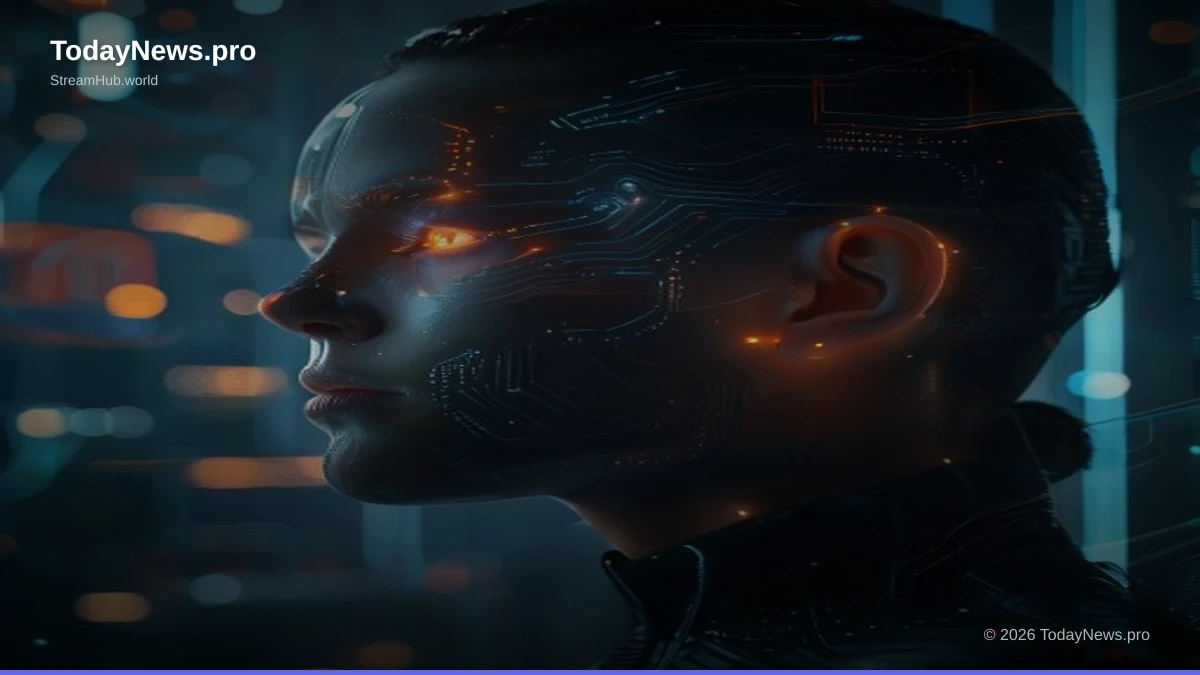
⏱ 15 min
According to a recent report by Statista, the global brain-computer interface (BCI) market is projected to reach $3.1 billion by 2027, a staggering increase from just $1.5 billion in 2020, signaling a significant surge in investment and development within this transformative field.
The Dawn of Direct Neural Interfaces
Human-computer interaction (HCI) has always been a quest to bridge the gap between human intent and machine execution. From the clunky keyboards of early computing to the touchscreens that define our mobile lives, we've steadily evolved the methods by which we communicate with technology. However, the next frontier promises a paradigm shift so profound it may redefine what it means to interact. We are on the cusp of an era where the very thoughts and intentions of the human mind could become the primary interface, bypassing physical actions altogether. This leap, driven by advancements in neuroscience and artificial intelligence, is moving from the realm of speculative fiction into tangible, albeit early-stage, reality. The implications for accessibility, productivity, and even human consciousness are immense, prompting urgent discussions about ethics, privacy, and the very definition of human agency. The evolution of HCI can be traced through several key milestones. Initially, interaction was purely command-line driven, requiring users to learn complex syntax. The graphical user interface (GUI) revolutionized this by introducing visual metaphors and direct manipulation. Touchscreens then offered a more intuitive, naturalistic input method, leading to the ubiquitous smartphones and tablets we use today. Voice assistants, powered by natural language processing, further abstracted the interaction layer, allowing us to communicate with devices using spoken words. Yet, each of these methods still relies on an intermediary: physical actions like typing, swiping, or speaking. The ultimate goal for many researchers is to eliminate this intermediary, achieving a direct link between the user's cognitive state and the digital realm. This ambition is being fueled by breakthroughs in understanding the human brain. Neuroscientists are mapping neural pathways with increasing precision, and engineers are developing sophisticated sensors capable of detecting these subtle electrical and chemical signals. The convergence of these fields is paving the way for technologies that can interpret brain activity and translate it into commands for computers, prosthetics, and other digital systems. This isn't just about controlling a cursor with your mind; it's about a far more seamless and integrated experience.Decoding the Brains Language
The human brain operates on a complex symphony of electrochemical signals. Neurons, the fundamental units of the nervous system, communicate with each other through electrical impulses and chemical neurotransmitters. These signals, when aggregated across vast networks of neurons, create patterns that correspond to our thoughts, emotions, intentions, and perceptions. The challenge for HCI researchers is to decode these intricate patterns. Early approaches to deciphering brain activity relied heavily on invasive methods, such as electroencephalography (EEG) and magnetoencephalography (MEG), which measure electrical and magnetic fields generated by neuronal activity, respectively. While these offer valuable insights, they often lack the spatial resolution to pinpoint specific neural processes. More recent advancements include functional magnetic resonance imaging (fMRI), which measures brain activity by detecting changes in blood flow, and even more invasive techniques like electrocorticography (ECoG), which involves placing electrodes directly on the surface of the brain. Each has its strengths and limitations in terms of invasiveness, cost, portability, and the type of brain signals they can detect. The real breakthrough is occurring in the interpretation of these signals. Machine learning algorithms, particularly deep learning models, are proving exceptionally adept at identifying subtle patterns within noisy brain data. By training these AI models on vast datasets of brain activity correlated with specific actions or mental states, researchers are enabling computers to learn to "read" minds with increasing accuracy.Mind-Reading: From Sci-Fi to Scientific Reality
The concept of "mind-reading" has long been a staple of science fiction, conjuring images of telepathic aliens or futuristic devices that can peer directly into people's thoughts. While true telepathy remains in the realm of fantasy, the scientific community is making astonishing progress in developing technologies that can interpret neural signals to infer a person's intentions, mental states, and even specific thoughts. This is not about a literal reading of every single thought, but rather the ability to translate neural activity into actionable data for interaction. One of the most promising avenues is through non-invasive brain-computer interfaces (BCIs). These devices, such as advanced EEG headsets, can detect electrical activity on the scalp. By analyzing these patterns, individuals can learn to control cursors, type on virtual keyboards, or even play video games using only their thoughts. For people with severe motor disabilities, such as those suffering from amyotrophic lateral sclerosis (ALS) or spinal cord injuries, these BCIs offer a lifeline, restoring a degree of autonomy and communication.Decoding Intentions: The Path to Control
The core of mind-reading technology lies in its ability to decode user intentions. Imagine a user wanting to move a cursor to the left. This intention is associated with a specific pattern of neural activity. BCIs, coupled with sophisticated AI algorithms, can learn to recognize this pattern and translate it into a command for the computer. This process is often iterative, with the user and the system learning from each other. For instance, a person might focus on the mental image of moving left. Their EEG data is recorded. An AI algorithm analyzes this data, looking for correlations between the "moving left" intention and specific brainwave patterns. Through repeated attempts and feedback, the system refines its ability to identify this pattern, allowing the user to reliably control the cursor's movement. This principle extends to more complex actions, such as selecting letters to form words or commands. The accuracy and speed of these systems are continuously improving. While early BCIs might have been slow and prone to errors, modern systems, powered by advanced machine learning, can achieve impressive levels of performance, making them increasingly viable for real-world applications.The Specter of Thought Detection
Beyond mere intention, researchers are exploring the possibility of detecting more complex cognitive states. This includes identifying emotional states, distinguishing between imagined speech and actual speech, and even recognizing visual imagery. For example, studies have shown that it's possible to reconstruct images that a person is seeing or imagining by analyzing their fMRI data. This raises profound questions. If we can detect what someone is thinking or perceiving, what are the implications for privacy? The line between inferring intent and reading thoughts is a critical one, and navigating this boundary will be a defining challenge for the future of HCI.| Application Area | Estimated Market Share (%) | Key Technologies |
|---|---|---|
| Medical & Healthcare | 65% | Rehabilitation, Prosthetics, Communication Aids |
| Gaming & Entertainment | 15% | Immersive Experiences, Novel Controllers |
| Research & Education | 10% | Neuroscience Study, Skill Development |
| Military & Defense | 5% | Enhanced Soldier Capabilities |
| Other | 5% | Wellness, Productivity Tools |
"The goal isn't to become cyborgs in the literal sense, but to augment human capabilities and overcome limitations. The ethical considerations must be at the forefront of development, ensuring that these powerful tools are used for good." — Dr. Anya Sharma, Lead Neuroscientist, CogniTech Labs
Ethical Labyrinths and Privacy Frontiers
The prospect of direct neural interfaces and mind-reading technologies, while exhilarating, is also fraught with significant ethical dilemmas and privacy concerns. As these technologies become more sophisticated, they touch upon the most intimate aspects of human experience: our thoughts, our intentions, and our very sense of self. The potential for misuse, accidental intrusion, and unintended consequences necessitates a proactive and robust ethical framework. One of the primary concerns is the sanctity of private thought. If our neural activity can be interpreted, even partially, what prevents unauthorized access to our innermost thoughts and feelings? This is not merely a theoretical concern. As BCIs become more common, the data they generate – our brain signals – becomes a new, highly sensitive personal data category.The Right to Cognitive Liberty
The concept of "cognitive liberty" is gaining traction in ethical discussions. It refers to an individual's right to control their own mental processes and states, free from external coercion or interference. Mind-reading technologies, by their very nature, challenge this liberty. Who owns your brain data? How can it be secured? Can it be used against you in legal proceedings or by employers? The development of robust data encryption, anonymization techniques, and strict access controls will be paramount. Furthermore, clear legislation and international agreements will be required to define what constitutes permissible access to neural data and what constitutes an unacceptable violation of privacy. The question of consent is also complex. Can consent for data usage be truly informed when the user may not fully understand the extent to which their thoughts can be decoded?Bias and Equity in Neural Interfaces
Another critical ethical consideration is the potential for bias and inequity. AI algorithms are trained on data, and if that data is not representative of the diverse human population, the resulting BCIs could perform differently for different demographic groups. This could lead to disparities in access to beneficial technologies or, worse, to systems that are less effective or even harmful for certain individuals. Ensuring that training datasets are diverse and that algorithms are rigorously tested for fairness across different genders, ethnicities, ages, and socioeconomic backgrounds is crucial. Furthermore, the cost of advanced neural interfaces could create a new digital divide, where only the privileged can access these augmentations, exacerbating existing societal inequalities.75%
of surveyed individuals expressed concern about neural data privacy.
50%
believed strict regulations are needed for BCI development.
30%
were optimistic about potential benefits, despite ethical concerns.
Beyond Brainwaves: The Expanding Landscape of HCI
While direct neural interfaces capture the imagination with their futuristic allure, the broader evolution of human-computer interaction is also being shaped by a multitude of other innovative technologies. These advancements are working in concert, often complementing BCIs, to create more intuitive, immersive, and personalized digital experiences. The future of HCI is not monolithic; it's a rich tapestry woven from diverse threads of innovation. One significant area of growth is in enhanced sensory input and output. Beyond visual and auditory feedback, researchers are exploring haptic feedback systems that simulate touch and texture, allowing users to "feel" digital objects. This is particularly relevant for virtual and augmented reality, where tactile immersion can significantly enhance realism and engagement.Haptic Feedback and Tactile Immersion
Haptic technology aims to replicate the sense of touch. This can range from simple vibrations in a smartphone to complex exoskeletons that provide resistance and texture. For example, in a virtual reality environment, a user could reach out and "touch" a virtual object, with the haptic device providing feedback that mimics the object's surface properties. This has profound implications for fields like remote surgery, where surgeons can perform procedures on patients miles away, feeling the subtle resistance of tissues. In gaming, it can transform passive experiences into deeply physical ones. For product design, it allows for the virtual prototyping of physical goods, enabling designers to assess ergonomics and feel the "quality" of a virtual product.Biometric Authentication Beyond Passwords
The reliance on passwords and PINs is rapidly becoming a relic of the past. Biometric authentication, which uses unique physiological or behavioral characteristics to verify identity, is becoming increasingly sophisticated. While fingerprint and facial recognition are now commonplace, new frontiers are being explored. This includes iris scanning, vein pattern recognition, and even gait analysis – the unique way a person walks. For HCI, this means more seamless and secure access to devices and services. Imagine walking into your smart home, and it automatically recognizes you and adjusts settings to your preferences, all without you having to lift a finger or type a single character. The integration of such passive authentication methods can create a more frictionless user experience. The broader trend is towards "invisible" or ambient computing, where technology fades into the background, anticipating our needs and responding intelligently without explicit commands. This requires a deep understanding of user context, behavior, and preferences, often leveraging a combination of sensors and AI.Augmented Reality and the Blurring of Digital and Physical
Augmented Reality (AR) represents a significant evolution in HCI, moving beyond the screen-based interactions we've become accustomed to. Instead of immersing users in entirely virtual worlds, AR overlays digital information and experiences onto the real world. This creates a blended reality where the physical and digital realms coexist and interact, offering a powerful new way to engage with information and environments. The potential applications of AR are vast and rapidly expanding. In education, students can learn about anatomy by viewing 3D models of the human body superimposed on their desks, or explore historical sites by seeing virtual reconstructions overlaid on present-day locations. In retail, customers can virtually "try on" clothes or see how furniture would look in their homes before making a purchase. For professionals, AR can provide real-time data and instructions during complex tasks, such as intricate repairs or surgical procedures.The AR Interface: Lenses and Devices
The primary interface for AR is evolving. While early AR experiences were often confined to smartphone screens, the development of dedicated AR glasses and headsets promises a more natural and hands-free interaction. Devices like Meta's Ray-Ban Stories, while still nascent, offer a glimpse into a future where our eyewear provides contextual information, captures our surroundings, and connects us to the digital world without the need to pull out a phone. These AR devices are not just passive displays; they are equipped with cameras, sensors, and processors that allow them to understand the user's environment and respond to their gaze and gestures. This understanding is crucial for creating seamless AR experiences where digital elements appear to be part of the physical world, responding realistically to light, perspective, and interaction.Spatial Computing and Contextual Awareness
The success of AR hinges on "spatial computing" – the ability of computers to understand and interact with the 3D physical world. This involves technologies like SLAM (Simultaneous Localization and Mapping), which allows devices to build a map of their surroundings while simultaneously tracking their own position within that map. This contextual awareness is what enables AR applications to anchor virtual objects to real-world surfaces and respond dynamically to changes in the environment. For example, a virtual ball kicked in an AR game would realistically bounce off a real-world table. As this technology matures, AR will become less about overlaying flat images and more about creating truly integrated digital-physical experiences, fundamentally changing how we navigate, learn, and interact with our surroundings.250M+
AR-enabled smartphones globally.
$80B
Projected AR market size by 2025.
50%
Increase in consumer AR adoption anticipated by 2027.
The Role of AI in Intuitive Interaction
Artificial Intelligence (AI) is not merely a component of future HCI; it is its engine. The quest for more intuitive and seamless interaction is intrinsically linked to AI's ability to understand, predict, and respond to human needs and behaviors. From interpreting complex neural signals to personalizing user experiences, AI is the indispensable partner in shaping the future of how we engage with technology. One of the most significant contributions of AI is in natural language processing (NLP). This field allows computers to understand, interpret, and generate human language, paving the way for highly sophisticated voice assistants and chatbots. As NLP models become more advanced, they are able to grasp nuances, context, and even sentiment, making interactions feel more like conversations with another human.Personalization and Predictive Interfaces
AI's capacity for learning and adaptation is crucial for creating personalized user experiences. By analyzing a user's past interactions, preferences, and even emotional states (detected through various sensors), AI can tailor interfaces and content to individual needs. This moves beyond simple customization to a proactive approach, where technology anticipates what the user might want or need next. Predictive interfaces can suggest actions, curate information, or even automate tasks before the user even expresses the need. For example, a smart calendar might suggest the best time for a meeting based on participants' availability and typical work patterns, or a news aggregator might prioritize articles based on a user's recent browsing history and expressed interests.AI as the Interpreter of Complex Data
Whether it's deciphering brainwaves for a BCI, understanding a user's gaze in an AR environment, or interpreting subtle cues in voice interaction, AI serves as the critical interpreter of complex data. Machine learning algorithms excel at identifying patterns and correlations within vast datasets that would be imperceptible to humans. This is particularly evident in the development of BCIs, where AI is essential for translating noisy and complex neural signals into meaningful commands. Without AI, the raw data from brain sensors would be largely unintelligible. Similarly, in AR, AI helps to parse sensor data, understand the 3D space, and seamlessly blend digital content with the physical environment."AI is the bridge that connects the raw data of human intent, whether from a brainwave or a keystroke, to meaningful action in the digital world. Its ability to learn and adapt is what will make future interfaces truly intuitive and invisible." — Dr. Kenji Tanaka, Chief AI Architect, FutureTech Innovations
Future Applications: Revolutionizing Industries and Lives
The advancements in human-computer interaction, particularly the integration of mind-reading technologies, augmented reality, and AI, portend a future where industries are revolutionized and individual lives are profoundly enhanced. These technologies are not merely incremental improvements; they represent a fundamental reimagining of how humans and machines can collaborate and coexist. In healthcare, the impact will be transformative. For individuals with paralysis or severe motor impairments, BCIs offer unprecedented levels of autonomy, allowing them to control prosthetic limbs with thought, communicate effortlessly, and regain a sense of agency. Surgeons could perform complex operations with enhanced precision, guided by AR overlays and receiving real-time feedback from AI. Mental health could also see new therapeutic approaches, with BCIs helping individuals to better understand and manage their emotional states.Transforming Work and Productivity
The workplace will undergo a significant metamorphosis. Imagine design engineers manipulating 3D models with their thoughts, architects walking through virtual buildings and making real-time modifications using AR, or customer service agents accessing information instantly through AR glasses that overlay data onto the real world. This could lead to unprecedented gains in efficiency, creativity, and problem-solving. The concept of remote collaboration will also be redefined. Immersive AR environments could allow teams to work together as if they were in the same room, regardless of their physical locations. Productivity tools will become more intelligent and personalized, anticipating needs and automating routine tasks, freeing up human workers for more complex and creative endeavors.Enhancing Education and Entertainment
Education will become more engaging and personalized. Students will be able to interact with historical events, scientific concepts, and complex systems in entirely new ways through AR and VR. Personalized learning paths, guided by AI and informed by individual learning styles, will become the norm. Entertainment will move beyond passive consumption to active, immersive experiences. Gaming will become deeply visceral, with players controlling avatars through thought and interacting with virtual worlds that feel incredibly real. The lines between creator and consumer will blur as new tools empower individuals to build and share their own immersive experiences.Challenges and the Path Forward
Despite the exhilarating progress, the path towards widespread adoption of these advanced HCI technologies is paved with significant challenges. Overcoming these hurdles will require sustained innovation, thoughtful regulation, and broad societal engagement. One of the most immediate challenges is the cost and accessibility of these technologies. Advanced BCIs and high-end AR devices are currently expensive, limiting their availability to early adopters and research institutions. For these technologies to truly democratize interaction, costs must come down significantly, and intuitive, user-friendly interfaces must be developed.Technological Maturity and Reliability
While impressive, current BCI and AR technologies are still in their nascent stages. The accuracy and reliability of mind-reading systems need to improve substantially for widespread everyday use. Similarly, AR devices need to become lighter, more comfortable, and offer longer battery life, while also addressing issues like visual comfort and potential motion sickness. The integration of different technologies also presents a challenge. Seamlessly combining BCIs, AR, AI, and haptic feedback into a cohesive and intuitive user experience requires sophisticated engineering and interoperability standards.Public Trust and Ethical Governance
As discussed, ethical considerations and privacy concerns are paramount. Building public trust will require transparency in development, robust data security, and clear ethical guidelines. Governments and international bodies will need to establish frameworks for regulating these powerful technologies, ensuring they are used responsibly and for the benefit of all. Public education and open dialogue are crucial to foster understanding and address anxieties surrounding mind-reading and advanced AI. The future of human-computer interaction is not a predetermined destiny but a landscape we are actively shaping. By addressing these challenges proactively, we can ensure that the coming era of intuitive, immersive, and intelligent interaction is one that enhances human potential and fosters a more connected and capable society.What is the current state of mind-reading technology?
Current mind-reading technologies, primarily brain-computer interfaces (BCIs), can interpret neural signals to infer user intentions, control devices, and communicate. While not "reading" every thought, they are increasingly accurate at translating specific mental commands and states into digital actions, particularly for individuals with disabilities.
Are mind-reading devices safe?
Non-invasive BCIs, like EEG headsets, are generally considered safe as they do not penetrate the body. Invasive methods, which involve surgical implantation of electrodes, carry risks associated with any surgical procedure. Ongoing research focuses on improving safety and minimizing potential side effects for both types of technology.
Who owns the data generated by brain-computer interfaces?
This is a major ethical and legal question. Currently, ownership and usage rights are often determined by the terms of service of the BCI provider. There is a growing movement advocating for individuals to have clear ownership and control over their neural data, with strong privacy protections.
How will Augmented Reality change our daily lives?
Augmented Reality (AR) is expected to overlay digital information and experiences onto the real world. This could mean receiving real-time navigation cues directly in your vision, virtually trying on clothes before buying, or accessing contextual information about your surroundings. It aims to make digital interactions more integrated and seamless with our physical environment.