

 Maria Curry
⏱ 18 min
The global population is projected to reach 9.7 billion by 2050, demanding a 50% increase in food production. This staggering statistic underscores the urgent need for radical innovation in how we grow, produce, and consume food. The traditional agricultural model, stretched thin by climate change, resource depletion, and evolving consumer demands, is facing an unprecedented reckoning. Fortunately, a trio of groundbreaking advancements – personalized nutrition, vertical farming, and lab-grown delicacies – are poised to redefine our relationship with food, promising a future that is healthier, more sustainable, and potentially more delicious than ever before.
Revolutionizing Our Plates: The Triple Threat of Future Food Innovation
The way we nourish ourselves is on the cusp of a monumental transformation. For millennia, food production has been largely dictated by geography, climate, and tradition. However, a confluence of technological breakthroughs and a growing awareness of environmental and health imperatives are dismantling these age-old constraints. Personalized nutrition, powered by advancements in genomics and data analytics, is moving beyond generic dietary advice to offer bespoke meal plans tailored to individual biological makeup. Simultaneously, vertical farms are sprouting in urban centers, bringing food production closer to consumers and minimizing its environmental footprint. And perhaps most controversially, but with immense potential, is the burgeoning field of cellular agriculture, which promises to deliver lab-grown meats and seafood, decoupling consumption from traditional animal agriculture. Together, these innovations form a powerful, interconnected force shaping the future of our global food system.The Interplay of Innovation
These seemingly disparate fields are not operating in isolation. Personalized nutrition can inform the development of nutrient-dense crops optimized for vertical farms, ensuring that precisely what our bodies need can be grown efficiently. Similarly, lab-grown meats can be formulated with specific nutritional profiles, aligning with personalized dietary goals. The synergy between these advancements offers a holistic approach to food security and individual well-being. Consider the potential for individuals with specific dietary restrictions or allergies to receive customized food products that are not only safe but also nutritionally optimized, produced locally in controlled environments, and ethically sourced. This interconnectedness is the bedrock upon which a more resilient and responsive food future will be built.Personalized Nutrition: Tailoring Diets to Our DNA and Beyond
The one-size-fits-all approach to dietary recommendations is rapidly becoming obsolete. Personalized nutrition, often referred to as precision nutrition, leverages an individual's unique genetic makeup, gut microbiome, lifestyle, and even real-time physiological data to create customized dietary plans. This field is moving beyond simple calorie counting and macronutrient ratios to consider how our bodies actually process and respond to different foods.Genomics and the Microbiome: Unlocking Our Inner Blueprint
At the heart of personalized nutrition lies the understanding of our individual biological code. Genetic testing can reveal predispositions to certain nutrient deficiencies, intolerances, or metabolic conditions. For instance, some individuals may be genetically predisposed to higher cholesterol levels, requiring a different dietary approach than someone without that predisposition. The human gut microbiome, a complex ecosystem of bacteria, fungi, and viruses residing in our digestive tract, plays a crucial role in nutrient absorption, immune function, and even mental health. Analyzing an individual's microbiome can reveal imbalances that may be contributing to various health issues. Based on this analysis, probiotics, prebiotics, and tailored dietary interventions can be recommended to restore balance and optimize health.Data-Driven Diets: Wearables and AI
The advent of wearable technology and advanced data analytics is further accelerating the personalized nutrition revolution. Devices like smartwatches and continuous glucose monitors can track vital physiological data in real-time, providing insights into how specific foods affect blood sugar levels, sleep patterns, and energy expenditure. This continuous stream of data, when analyzed by sophisticated Artificial Intelligence (AI) algorithms, can offer dynamic dietary adjustments. Imagine a scenario where your smartwatch detects a dip in energy levels and, cross-referencing this with your recent food intake and genetic profile, suggests a specific snack rich in complex carbohydrates and healthy fats. This level of granular, responsive dietary guidance was science fiction just a decade ago.30%
Increase in dietary adherence reported with personalized plans
15%
Reduction in chronic disease risk through tailored nutrition
2028
Projected market size for personalized nutrition (USD billions)
"We are moving from a population-level understanding of nutrition to an individual-level mastery. It's about empowering people with knowledge of their own bodies and providing them with the tools to make optimal food choices, not dictating them."
— Dr. Anya Sharma, Lead Nutrition Scientist, BioHealth Innovations
The Rise of Vertical Farms: Cultivating Food in Urban Oases
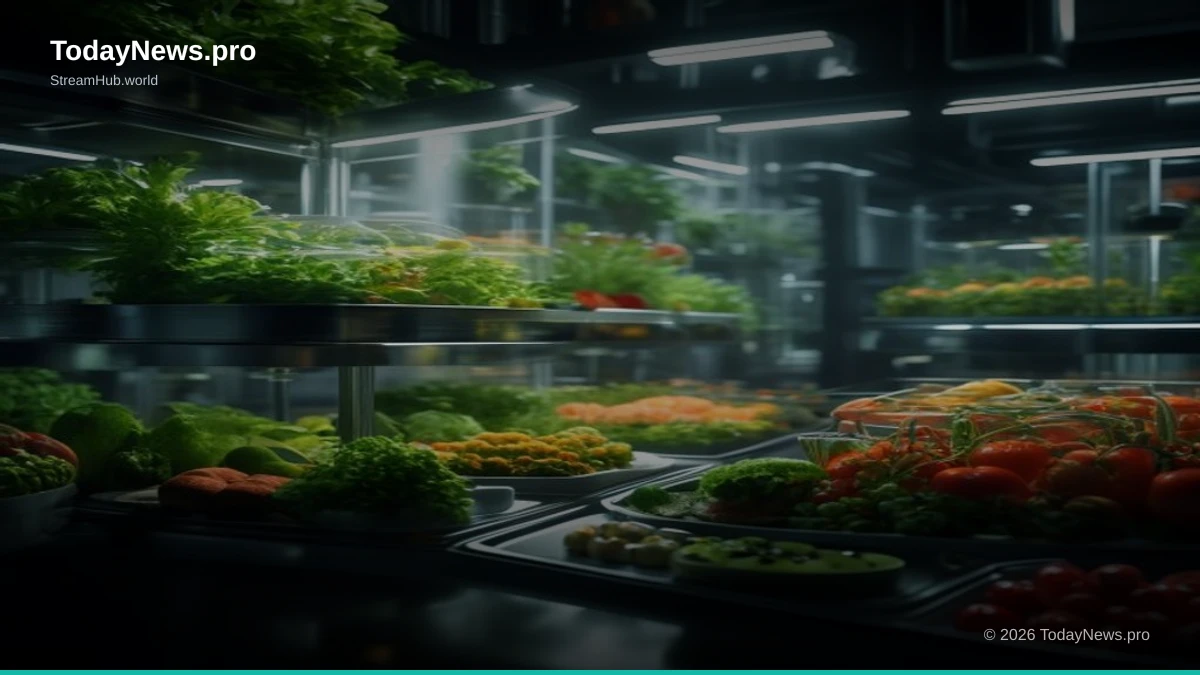
As urban populations swell and arable land becomes increasingly scarce, vertical farms are emerging as a vital solution for local, sustainable food production. These innovative agricultural systems grow crops in vertically stacked layers, often in controlled indoor environments, utilizing techniques like hydroponics, aeroponics, or aquaponics.Controlled Environments, Optimized Growth
Vertical farms offer unparalleled control over growing conditions. Factors such as temperature, humidity, light spectrum, and nutrient delivery can be precisely managed to optimize plant growth and yield. This precision minimizes the risk of crop failure due to pests, diseases, or adverse weather, which are constant threats to traditional agriculture. Furthermore, these systems can drastically reduce water usage compared to conventional farming. Hydroponic and aeroponic systems, for example, recirculate water, leading to water savings of up to 95%. The absence of soil also eliminates the need for chemical pesticides and herbicides, resulting in cleaner, healthier produce.Bringing Food Closer to Home
One of the most significant advantages of vertical farming is its ability to be established in urban areas, often in repurposed warehouses or shipping containers. This proximity to consumers dramatically reduces transportation distances, cutting down on carbon emissions associated with long-haul logistics and ensuring fresher produce reaches markets faster. This localization of food production also enhances food security, particularly in regions that are heavily reliant on imported food.| Farming Method | Water Usage (Liters per kg) | Land Footprint (m² per tonne) | Pesticide Use |
|---|---|---|---|
| Traditional Agriculture | 250-1500 | 100-1000 | High |
| Vertical Farming | 10-50 | 1-10 | Negligible |
The Economic and Environmental Equation
While the initial investment in vertical farming technology can be substantial, the long-term economic and environmental benefits are considerable. Reduced spoilage, consistent yields, and the elimination of seasonal limitations contribute to a more stable and predictable supply chain. The environmental advantages, including reduced water consumption, minimized pesticide use, and lower transportation emissions, align with global sustainability goals. The projected market growth indicates a strong investor confidence in the viability and scalability of vertical farming.Lab-Grown Delicacies: Ethical Eating Meets Culinary Excellence
Perhaps the most disruptive of the future food innovations is the development of cultivated or lab-grown meat, poultry, and seafood. This technology involves taking a small sample of animal cells and growing them in a nutrient-rich environment, known as a bioreactor, to produce edible meat without the need to raise and slaughter animals.The Science Behind the Steak
The process begins with a biopsy from a living animal, from which stem cells are extracted. These cells are then placed in a sterile bioreactor filled with a nutrient-rich medium that provides the cells with the sustenance they need to multiply and differentiate into muscle, fat, and connective tissues – the components of meat. This process mimics the natural growth of muscle tissue but in a controlled, accelerated environment. Currently, regulatory hurdles and cost of production are significant challenges, but advancements in cell culture media and bioreactor technology are rapidly improving efficiency and scalability. Companies are developing a range of products, from ground meat and chicken nuggets to more complex cuts like steak and seafood.Addressing Ethical and Environmental Concerns
The ethical implications of traditional animal agriculture are a major driving force behind the development of cultivated meat. Concerns about animal welfare, the environmental impact of livestock farming (including greenhouse gas emissions, land use, and water pollution), and the potential for zoonotic disease transmission are all addressed by this technology. While the exact environmental footprint of cultivated meat is still under scrutiny and depends heavily on energy sources and production scale, early lifecycle assessments suggest it could have significantly lower land and water requirements, and potentially lower greenhouse gas emissions, compared to conventional meat production. For example, a study from the University of Oxford in 2011 estimated potential reductions in greenhouse gas emissions of up to 78% and land use of up to 99%."Cultivated meat represents a paradigm shift, offering a pathway to enjoy familiar foods with a dramatically reduced ethical and environmental burden. It's not about replacing traditional farming entirely, but about providing a crucial alternative for a growing global demand."
— Dr. David Lee, Chief Science Officer, Future Proteins Inc.
Culinary Applications and Consumer Acceptance
The potential for cultivated meat extends beyond mere sustenance. It opens up new avenues for culinary innovation, allowing for the precise control of fat content, texture, and even flavor profiles. This could lead to novel food experiences and the creation of "designer" meats tailored to specific culinary applications or individual preferences. Consumer acceptance remains a key area of focus. Educating the public about the science, safety, and benefits of cultivated meat is crucial. Initial market introductions are likely to focus on products where consumer adoption might be easier, such as minced meat or processed items, before moving to more premium cuts.Challenges and Opportunities on the Path to a Sustainable Food Future
While the promise of personalized nutrition, vertical farms, and lab-grown delicacies is immense, significant challenges lie ahead.Technological Hurdles and Scalability
For vertical farming, the primary challenges revolve around energy consumption for lighting and climate control, which can be substantial. Innovations in LED technology and renewable energy integration are crucial for improving efficiency. For cultivated meat, scaling up production to meet global demand while reducing costs remains a significant hurdle. The development of cost-effective and scalable nutrient media for cell growth is a key area of research. Personalized nutrition, while technologically advanced, faces challenges in data privacy and the accessibility of testing and personalized advice to a wider population.Regulatory Frameworks and Consumer Trust
New food technologies often face complex regulatory landscapes. Ensuring the safety and transparency of these new food products is paramount for building consumer trust. Governments and international bodies are working to establish clear guidelines and approval processes for cultivated meat and genetically optimized crops. Consumer education campaigns will be vital in demystifying these technologies and highlighting their benefits.50%
Potential reduction in food waste with localized production
80%
Of consumers express interest in trying lab-grown meat
10+
Years of research and development in cultivated meat
Economic Viability and Accessibility
The cost of entry for these new food technologies can be high, raising concerns about accessibility. Ensuring that these innovations benefit everyone, not just the affluent, is a critical societal challenge. Government subsidies, investment in research and development, and market competition will all play a role in driving down costs and making these future foods more affordable. Wikipedia's extensive overview of the future of food highlights the global efforts and diverse approaches being taken to address these complex issues.The Consumers Role: Embracing the Next Generation of Food
Ultimately, the success of these future food innovations will depend on consumer adoption. As individuals become more aware of the environmental and health implications of their food choices, they are likely to become more receptive to new and innovative solutions.Informed Choices and Shifting Palates
The growing demand for transparency and traceability in food production is a positive trend. Consumers want to know where their food comes from, how it was produced, and its impact on their health and the planet. Personalized nutrition empowers individuals to make informed choices based on their unique biological needs. Vertical farms offer locally sourced, pesticide-free produce, appealing to health-conscious and environmentally aware consumers. Lab-grown meat, once accepted, could offer a guilt-free way to enjoy familiar tastes and textures.The Power of Demand
As consumer demand for sustainable, ethical, and personalized food options grows, so too will investment and innovation in these areas. Early adopters and those who advocate for these changes will play a crucial role in driving market acceptance and pushing the boundaries of what is possible. The food industry is a dynamic ecosystem, and consumer preferences are a powerful force for change.Looking Ahead: A Glimpse into the Evolving Gastronomy
The future of food is not a single, monolithic entity but a mosaic of interconnected advancements. Personalized nutrition will allow us to optimize our health from the inside out. Vertical farms will transform our cities into sustainable food-producing hubs. And lab-grown delicacies will offer a compassionate and environmentally conscious alternative to traditional animal products. This evolution promises a food system that is more resilient, equitable, and aligned with the planet's carrying capacity. The journey will undoubtedly involve challenges, but the potential rewards – a healthier population, a thriving planet, and a more sustainable future – are too significant to ignore. The next generation of food is not just coming; it is already here, growing in laboratories, stacked in urban towers, and being tailored to our very own DNA.What is personalized nutrition?
Personalized nutrition is an approach to diet and health that tailors dietary recommendations to an individual's unique genetic makeup, gut microbiome, lifestyle, and other biological factors, rather than using a one-size-fits-all approach.
How do vertical farms work?
Vertical farms are indoor farming systems where crops are grown in vertically stacked layers. They typically use controlled environments and methods like hydroponics, aeroponics, or aquaponics to optimize plant growth with significantly less water and land than traditional agriculture.
What is lab-grown meat?
Lab-grown meat, also known as cultivated meat, is produced by growing animal cells in a laboratory setting. A small sample of cells is taken from an animal and then cultured in a nutrient-rich medium to develop into meat without the need for raising and slaughtering animals.
Are vertical farms more energy-intensive than traditional farms?
Vertical farms can be more energy-intensive due to the need for artificial lighting and climate control. However, ongoing advancements in LED technology, automation, and the integration of renewable energy sources are helping to improve their energy efficiency and reduce their overall environmental impact compared to the extensive land and water use of traditional agriculture.