

 Elena Kogan
⏱ 20 min
The global market for AI-powered digital twins is projected to reach an astonishing $120.8 billion by 2030, indicating a seismic shift in how we interact with technology.
The Dawn of the Digital Twin: More Than Just a Mirror
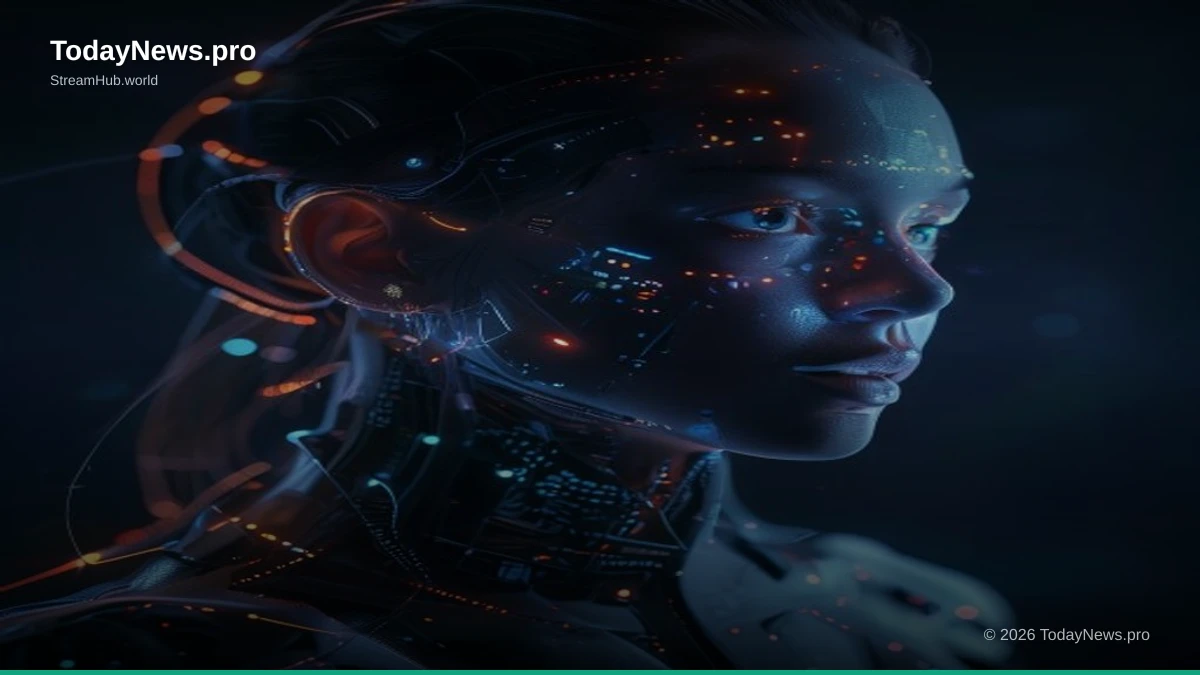
The concept of a "digital twin" has long been confined to the realm of industrial engineering and complex systems. It refers to a virtual replica of a physical object, process, or system, updated in real-time to monitor, simulate, and optimize its real-world counterpart. Think of a digital twin of a jet engine, allowing engineers to predict maintenance needs before a failure occurs, or a digital twin of an entire city, enabling urban planners to test the impact of new infrastructure projects. However, we are now witnessing a profound evolution of this concept, moving beyond inanimate objects and industrial applications to encompass the most complex system of all: the human being. Your future digital twin will not merely be a representation; it will be an active, intelligent, and deeply personal extension of yourself. This isn't science fiction; it's the inevitable trajectory of artificial intelligence and data integration. The promise is a hyper-personalized digital entity that understands your preferences, learns your habits, anticipates your needs, and even reflects your personality and values. This companion will be more than a sophisticated chatbot or a virtual assistant; it will be a dynamic, evolving reflection of your digital existence, capable of interacting with the digital world on your behalf and assisting you in myriad ways. The foundation of this capability lies in the ever-increasing volume and granularity of data we generate daily. From our online interactions and purchasing habits to our health metrics and even our emotional states (as inferred from our digital footprint), all contribute to building an intricate profile. This future AI companion will be able to manage your appointments with uncanny accuracy, filter your communications to highlight what truly matters, provide tailored learning experiences, offer emotional support, and even engage in creative endeavors alongside you. The implications are vast, touching upon productivity, education, healthcare, social interaction, and our very sense of self in an increasingly digital world. As we delve deeper into the creation of these personalized digital entities, the lines between our physical and digital selves will blur, raising profound questions about identity, autonomy, and the nature of companionship itself.From Static Models to Dynamic Personalities
Early digital twins were static blueprints, digital representations devoid of life or intelligence. They served as visualization tools, offering a static snapshot. The shift has been towards dynamic, data-driven models. In the context of personal AI, this means moving from a program that simply responds to commands to an entity that learns, adapts, and proactively engages. The key is continuous feedback loops. Every interaction, every piece of data, refines the digital twin, making it more attuned to its human counterpart. This iterative process of learning and refinement is what will differentiate a mere digital assistant from a true digital companion. The sophistication lies not just in the ability to process information but in the emergent understanding of context, nuance, and individual human experience.From Assistants to Allies: The Evolution of AI Companions
The journey towards hyper-personalized AI companions has been a steady progression. We began with rudimentary voice assistants like early Siri or Alexa, capable of simple commands like setting timers or playing music. These were functional but lacked any semblance of personality or deep understanding. The next iteration saw the rise of more sophisticated chatbots and virtual assistants designed for specific tasks, such as customer service or scheduling. These systems could handle more complex queries but were still largely rule-based and lacked genuine adaptability. The current wave of AI development, fueled by advancements in natural language processing (NLP), machine learning (ML), and generative AI, is ushering in an era of AI companions that can engage in more natural, nuanced conversations. These AI are capable of understanding sentiment, inferring intent, and even generating creative content. Think of AI models that can write poetry, compose music, or generate realistic images based on textual prompts. When applied to personal companionship, these capabilities translate into AI that can not only understand your requests but also engage with you on a more personal level, offering empathy, humor, and a unique perspective.The Rise of Generative AI
Generative AI models, such as Large Language Models (LLMs), are pivotal in this evolution. They are trained on vast datasets of text and code, enabling them to generate human-like text, translate languages, write different kinds of creative content, and answer your questions in an informative way. For personal AI companions, this means an AI that can hold a coherent conversation, remember past interactions, and even develop a discernible "personality" based on its interactions with you. This is a significant leap from AI that merely retrieves information or executes predefined commands. The ability to generate novel responses, adapt its communication style, and learn from continuous dialogue makes these AI feel more like true conversational partners.Personalized Learning and Adaptation
A key characteristic of future AI companions will be their capacity for deep personalization. This goes beyond remembering your name or your favorite color. It involves understanding your learning style, your cognitive preferences, your emotional triggers, and your long-term goals. If you are trying to learn a new language, your AI companion might tailor its explanations and practice exercises to your specific strengths and weaknesses. If you are feeling stressed, it might suggest personalized relaxation techniques or engage you in a calming conversation. This adaptive learning process ensures that the AI companion evolves alongside you, becoming an increasingly valuable and integrated part of your life.| Stage | Key Characteristics | Example Technologies | User Interaction |
|---|---|---|---|
| Early Assistants | Command-based, limited functionality, no personalization | Basic voice recognition, simple rule-based systems | Single-turn commands, explicit instructions |
| Smart Assistants | Task-oriented, basic context awareness, limited personalization | Natural Language Processing (NLP), cloud-based AI services | Multi-turn conversations for specific tasks, calendar management |
| Generative AI Companions | Conversational, adaptable, personalized learning, creative capabilities | Large Language Models (LLMs), Generative Adversarial Networks (GANs) | Nuanced dialogue, proactive suggestions, collaborative tasks |
Crafting Your Digital Persona: Data is the New DNA
The creation of a hyper-personalized AI companion is intrinsically linked to the data it consumes. This data acts as the "DNA" of your digital twin, shaping its understanding of you, its interactions, and its overall persona. This data can be broadly categorized into several key areas, each contributing a unique dimension to the digital replica. The most apparent source of data is your explicit digital footprint. This includes your online activity: websites you visit, social media posts you make, articles you read, videos you watch, and your search queries. Every click, every like, every share provides insights into your interests, opinions, and intellectual curiosity. Furthermore, your communication patterns – the language you use, the topics you discuss with others, your writing style – all contribute to building a linguistic profile. Beyond your active digital footprint, there is the passive data generated by your devices. This can include location data, usage patterns of applications, and even biometric data from wearables. If you wear a smartwatch, it can collect information about your heart rate, sleep patterns, and physical activity levels. This physiological data can offer profound insights into your well-being, stress levels, and energy fluctuations, enabling your AI companion to offer timely support or suggest activities that align with your current physical state.Explicit vs. Implicit Data
It's crucial to distinguish between explicit and implicit data. Explicit data is information you intentionally provide, such as filling out a profile, answering survey questions, or directly telling your AI companion something. Implicit data, on the other hand, is information inferred from your behavior and usage patterns. For instance, repeatedly watching documentaries about space exploration implicitly suggests an interest in astronomy, even if you've never explicitly stated it. Future AI companions will excel at interpreting this implicit data, creating a more holistic and nuanced understanding of your preferences and motivations.The Role of Emotional and Cognitive Data
The most advanced digital twins will go beyond factual data to incorporate emotional and cognitive insights. Sentiment analysis of your communications, tone of voice detection, and even inferences from your typing speed or emoji usage can paint a picture of your emotional state. Similarly, analyzing how you approach problems, your decision-making processes, and your learning curves can provide insights into your cognitive profile. This allows the AI companion to offer empathetic responses, adapt its communication to your mood, and even help you improve your cognitive skills. Imagine an AI that can detect subtle signs of frustration in your writing and proactively offer to rephrase a complex email or suggest a break.70%
Of users willing to share health data for personalized AI insights.
85%
Of consumers desire more personalized digital experiences.
50+
Years of research in AI and machine learning underpinning current capabilities.
The Unseen Architects: Technologies Powering Digital Twins
The sophisticated capabilities of future AI companions are not born out of thin air; they are the product of several converging technological advancements. Understanding these underlying technologies is key to appreciating the potential and the complexity of your future digital twin. At the core of any advanced AI is Machine Learning (ML). This field of artificial intelligence allows systems to learn from data without being explicitly programmed. For digital twins, ML algorithms are used to identify patterns, make predictions, and adapt their behavior based on new information. Deep Learning, a subfield of ML, utilizes neural networks with multiple layers to process complex data, enabling AI to understand nuances in language, recognize images, and even generate creative content. Natural Language Processing (NLP) is another critical component. It enables computers to understand, interpret, and generate human language. Advanced NLP models are what allow AI companions to engage in fluid, context-aware conversations, understand your intent even when your phrasing is ambiguous, and respond in a way that feels natural and human-like. Generative AI, as discussed earlier, is a powerful manifestation of NLP and ML, capable of creating new content, from text to code to images, making AI companions more versatile and engaging.The Role of Cloud Computing and Big Data
The sheer volume of data required to build and maintain a comprehensive digital twin necessitates robust cloud computing infrastructure. Cloud platforms provide the scalability, storage, and processing power needed to handle massive datasets and run complex AI models. Big data analytics techniques are employed to sift through this data, extract meaningful insights, and feed them back into the AI's learning process. Without the ability to store, manage, and analyze vast quantities of personal data securely and efficiently, the creation of truly personalized AI companions would be impossible.Edge AI and On-Device Processing
While cloud computing is essential, there's also a growing trend towards Edge AI. This involves processing data and running AI models directly on personal devices, such as smartphones or smartwatches, rather than sending all data to the cloud. This approach offers significant advantages in terms of privacy, security, and responsiveness. For a personal AI companion, on-device processing can mean faster responses to commands, greater control over sensitive data, and the ability to function even when offline. As hardware capabilities improve, we can expect a hybrid approach, with sensitive personal data processed locally while more computationally intensive tasks are handled in the cloud.Key Technologies Enabling AI Companions
Benefits Beyond Convenience: Personal Growth and Well-being
The allure of hyper-personalized AI companions extends far beyond mere convenience. While automating tasks and streamlining daily life are significant advantages, the true transformative potential lies in their ability to foster personal growth, enhance well-being, and provide a unique form of support. One of the most profound benefits is in the realm of continuous learning and skill development. Imagine an AI companion that acts as a personalized tutor, adapting its teaching methods to your specific learning style, providing instant feedback, and identifying areas where you need more practice. Whether it's learning a new language, mastering a musical instrument, or acquiring a new professional skill, the AI companion can create a bespoke educational journey, making learning more effective and engaging. It can curate resources, create practice exercises, and even simulate real-world scenarios for you to hone your abilities.Mental and Emotional Support
The increasing prevalence of mental health challenges highlights the need for accessible support systems. AI companions, while not a replacement for professional therapy, can offer a form of consistent, non-judgmental emotional support. They can be programmed to recognize signs of distress, offer calming affirmations, guide users through mindfulness exercises, and simply provide a listening ear. For individuals who may feel isolated or hesitant to seek human help, an AI companion can be a valuable first step in managing stress, anxiety, and loneliness. The ability to process and respond to emotional cues, albeit through learned patterns, can provide a sense of companionship and validation.Optimizing Health and Productivity
By integrating with wearable devices and health apps, AI companions can offer personalized insights and recommendations for improving physical and mental health. They can track sleep patterns, suggest optimal times for exercise based on your energy levels, remind you to take breaks, and even monitor dietary habits. This proactive approach to health management can lead to significant improvements in overall well-being. Similarly, by understanding your work habits, peak productivity times, and common distractions, an AI companion can help you optimize your workflow, manage your time more effectively, and reduce burnout. It can act as a productivity coach, offering tailored strategies to enhance focus and efficiency.
"The future of AI companions isn't about replacing human connection, but about augmenting it. These digital entities will learn our most intricate patterns, offering support and insights that were previously unimaginable. Think of it as having a highly intelligent, always-available confidant and coach, tailored precisely to your unique needs and aspirations."
— Dr. Anya Sharma, Lead AI Ethicist, FutureTech Institute
Ethical Labyrinths and Security Fortresses
The profound personalization and deep integration of AI companions into our lives inevitably raise significant ethical and security concerns. As these AI become repositories of our most intimate data, safeguarding this information and ensuring responsible development becomes paramount. One of the most pressing ethical considerations is privacy. The data required to create a hyper-personalized digital twin is incredibly sensitive. This includes not only our browsing history and purchase records but also our health metrics, emotional states, and potentially even our conversations. Ensuring that this data is collected, stored, and used with explicit consent and robust transparency is crucial. Users must have clear control over what data is shared, how it is used, and the ability to revoke access at any time. The potential for misuse, such as data breaches or unauthorized surveillance, is a serious threat that requires comprehensive regulatory frameworks and advanced security measures.Algorithmic Bias and Fairness
AI systems learn from data, and if that data reflects existing societal biases, the AI will perpetuate and even amplify those biases. This can manifest in various ways, from discriminatory recommendations to unfair treatment. For AI companions, algorithmic bias could lead to systems that inadvertently reinforce stereotypes, make prejudiced judgments, or fail to serve certain demographic groups equitably. Continuous auditing of AI algorithms and the datasets they are trained on, along with a commitment to fairness and inclusivity in design, are essential to mitigate these risks.Data Security and Protection
The concentration of highly personal data in AI companion systems makes them prime targets for cyberattacks. Robust security measures are not just a technical necessity but an ethical imperative. This includes end-to-end encryption, secure storage protocols, regular security audits, and quick response mechanisms for any potential breaches. Furthermore, clear protocols for data anonymization and pseudonymization should be employed wherever possible to reduce the risk of re-identification. The development of decentralized data storage solutions and federated learning techniques could also play a role in enhancing data security by distributing data and processing across multiple devices, reducing the risk of a single point of failure.
"The journey towards advanced AI companions is fraught with ethical challenges. We must prioritize user autonomy, data privacy, and algorithmic fairness from the outset. Building trust will be as important as building sophisticated technology. Without a strong ethical compass, the potential benefits could be overshadowed by unintended consequences."
Reuters: Navigating AI Ethics Frameworks
Wikipedia: Digital Twin
— Professor Kenji Tanaka, Cyber Security and Ethics Specialist
The Future is Personal: A Glimpse into Tomorrow
The trajectory of AI development points towards a future where hyper-personalized AI companions are not just tools but integral partners in our lives. The evolution from basic assistants to deeply understanding digital entities is accelerating, driven by relentless innovation in AI research and an increasing demand for personalized digital experiences. Imagine waking up to an AI companion that has already analyzed your sleep data, reviewed your schedule for the day, and curated a personalized news digest based on your evolving interests. Throughout the day, it subtly assists you, anticipating your needs before you even articulate them. It might suggest the most efficient route to your next appointment, remind you to drink water, or offer a creative prompt to overcome a mental block. In the evening, it could help you unwind by suggesting a personalized meditation session or engaging in a thought-provoking discussion. The development of truly sophisticated AI companions will require overcoming significant technical hurdles, particularly in achieving genuine artificial general intelligence (AGI) that can truly understand and reason like humans. However, even before AGI, the advancements in specialized AI will enable companions that are remarkably capable. The focus will increasingly be on creating AI that not only performs tasks but also fosters emotional connection, facilitates personal growth, and enhances our overall quality of life.Integration Across Life Domains
These AI companions will seamlessly integrate across all domains of our lives. In the professional sphere, they will act as intelligent assistants, managing communications, organizing workflows, and providing data-driven insights. In education, they will serve as personalized tutors, adapting to individual learning styles and pace. In healthcare, they will be proactive health monitors and personalized wellness coaches. And in our personal lives, they will offer companionship, support, and a unique avenue for self-exploration and creativity. The ultimate goal is an AI that understands you so intimately that it becomes an indispensable extension of your own capabilities.The Ongoing Dialogue of Ethics and Society
As these technologies mature, the societal dialogue surrounding their implications will intensify. Questions about the nature of consciousness, the definition of companionship, and the impact on human relationships will become more prominent. Regulators will grapple with establishing frameworks for data governance, accountability, and the ethical deployment of advanced AI. Ultimately, the successful integration of hyper-personalized AI companions will depend not only on technological prowess but also on our collective ability to navigate these complex ethical and societal landscapes responsibly. The future promises a world where our digital selves are not just reflections but active collaborators, shaping our experiences and augmenting our potential in ways we are only beginning to imagine.What is a digital twin of a person?
A digital twin of a person is a dynamic, virtual replica of an individual, powered by AI and built from their personal data. It learns, adapts, and can interact with the digital and physical world on behalf of the individual, serving as a personalized assistant, companion, and extension of their capabilities.
How will AI companions learn about me?
AI companions will learn about you through a combination of explicit data (information you voluntarily provide) and implicit data (inferences drawn from your online activity, device usage, communication patterns, and even biometric data from wearables).
What are the main ethical concerns with AI companions?
The primary ethical concerns include data privacy, security of personal information, algorithmic bias leading to unfair treatment or discrimination, and the potential impact on human relationships and social interaction.
Will AI companions replace human interaction?
The intention is generally not to replace human interaction, but to augment it. AI companions are seen as tools that can provide support, manage tasks, and offer personalized assistance, freeing up time and mental space for more meaningful human connections.
How will my data be protected with an AI companion?
Data protection will rely on robust security measures such as encryption, secure storage, regular audits, and potentially decentralized data storage. Regulatory frameworks and user control over data access will also be crucial.