

 Eric Mason
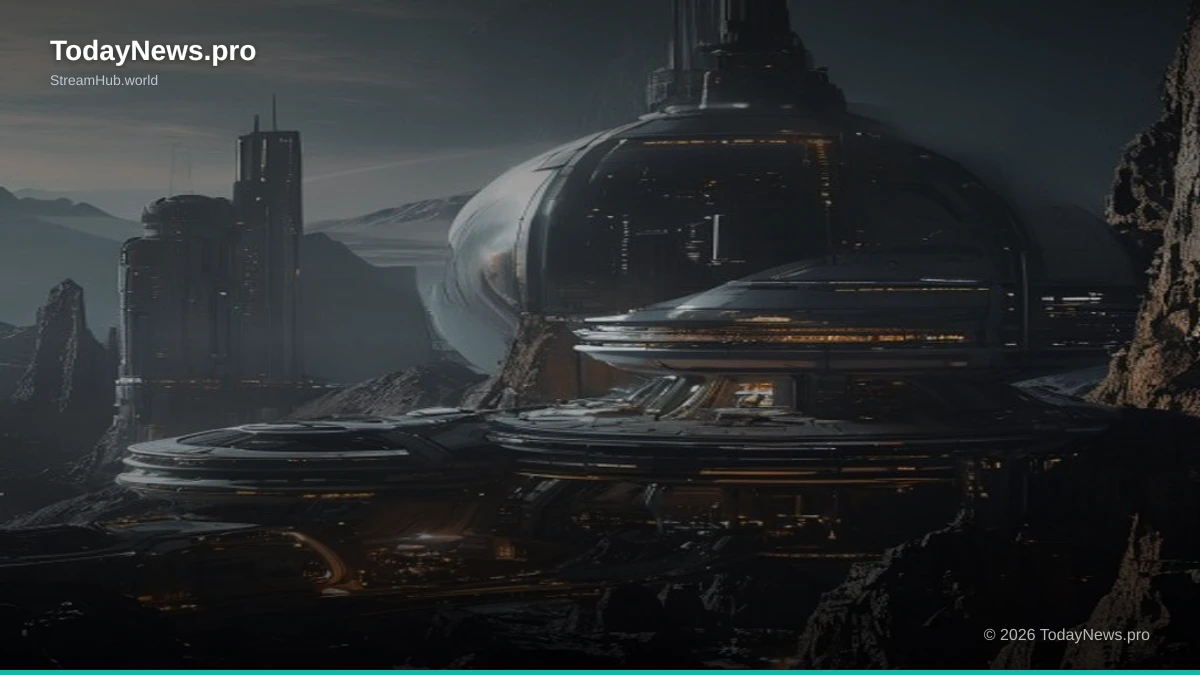
⏱ 15 min
The global space economy, projected to reach $2 trillion by 2030, is no longer a distant dream but a burgeoning reality, with The Final Frontier, Inc. (TFFI) positioning itself at the vanguard of this monumental shift by aggressively developing off-world economies and constructing self-sustaining extraterrestrial habitats.
The Dawn of Off-World Commerce: The Final Frontier, Inc.
The Final Frontier, Inc. (TFFI) represents a bold leap from mere space exploration to systematic space colonization and economic integration. Founded in 2035 by a consortium of disillusioned aerospace executives and visionary technologists, TFFI’s primary objective is to establish robust, self-sufficient human settlements beyond Earth, thereby diversifying humanity's presence and unlocking unprecedented economic opportunities. Unlike its predecessors, which primarily focused on governmental scientific missions or nascent satellite industries, TFFI is architecting a comprehensive ecosystem encompassing resource acquisition, advanced manufacturing, habitat construction, and even interplanetary tourism. The company’s strategic roadmap outlines a phased approach, commencing with the establishment of mining outposts on the Moon and near-Earth asteroids, followed by the construction of scalable, modular habitats on Mars and eventually, the Jovian moons. TFFI’s business model is predicated on the principle of in-situ resource utilization (ISRU), aiming to minimize reliance on costly Earth-based resupply missions. This involves extracting water ice for propellant and life support, mining rare earth elements crucial for advanced electronics, and utilizing regolith for construction materials.Early Victories and Foundational Investments
TFFI's initial success was fueled by significant private equity investments, coupled with strategic partnerships with established aerospace firms and governmental space agencies. Their first major undertaking, the "Lunar Gateway Initiative," involved deploying a modular orbital platform around the Moon to serve as a staging ground for subsequent lunar surface operations. This project not only validated TFFI's engineering capabilities but also secured crucial operational data and established vital supply chain links with Earth. The company's aggressive acquisition strategy has also been instrumental. By absorbing smaller, innovative startups specializing in advanced robotics, life support systems, and propulsion technologies, TFFI has rapidly consolidated a formidable technological portfolio. This vertical integration allows for greater control over the development cycle and reduces dependency on external vendors, a critical factor in the unforgiving vacuum of space.Visionaries of the Void: Leadership and Ideology
At the helm of The Final Frontier, Inc. is a team of individuals with unparalleled experience in aerospace, economics, and long-term strategic planning. CEO Dr. Anya Sharma, a former lead mission architect for the International Space Station, brings a pragmatic yet ambitious approach to TFFI's operations. Her leadership is characterized by a relentless focus on efficiency, safety, and a deep understanding of the complex logistical challenges inherent in off-world endeavors. Chief Technology Officer Jian Li, a pioneer in advanced robotics and AI, oversees the development of autonomous systems critical for resource extraction and habitat construction. His team is responsible for the innovative "Terraformer Bot" series, designed to prepare Martian regolith for biological cultivation and construction. The ideological undercurrent at TFFI emphasizes humanity's imperative to become a multi-planetary species, not just for survival but for the advancement of knowledge and the expansion of human civilization.The Ethical Compass: Governance and Sustainability
A significant aspect of TFFI's operational philosophy revolves around establishing ethical frameworks for space colonization. The company has established an independent ethics board comprising scientists, philosophers, and legal scholars to address potential issues such as resource ownership, environmental stewardship of celestial bodies, and the rights of future off-world inhabitants. This proactive approach aims to preempt the controversies that have plagued Earth-bound resource development. Dr. Sharma often articulates the company's vision: "We are not merely building outposts; we are laying the foundation for a new chapter in human history. This requires not only technological prowess but also a profound sense of responsibility towards the cosmos and its future stewards.""The sheer audacity of TFFI's ambition is matched only by its meticulous planning. They understand that success in space requires a paradigm shift in how we think about economics, resources, and human resilience."
— Dr. Evelyn Reed, Professor of Astronautical Engineering, Kepler University
Pioneering Habitats: From Lunar Domes to Martian Metropolises
The cornerstone of TFFI's long-term strategy is the development of scalable, habitable environments beyond Earth. Their initial focus has been on the Moon, leveraging its proximity and relative accessibility. The "Selene City" project, located near the lunar South Pole, is TFFI's flagship lunar settlement. It comprises interconnected geodesic domes constructed using 3D-printed regolith, providing radiation shielding and thermal regulation. These habitats are designed to be modular, allowing for expansion as the population grows. Advanced closed-loop life support systems recycle air and water with over 99% efficiency, minimizing the need for resupply. Internal environments are carefully controlled to simulate Earth-like conditions, fostering psychological well-being among residents.Mars: The Next Frontier for Habitation
Following the successful establishment of Selene City, TFFI has set its sights on Mars. The "Ares Prime" settlement is under construction in the Valles Marineris region, chosen for its geological diversity and potential subsurface water reserves. Martian habitats will employ similar regolith-based construction techniques but will also incorporate advanced atmospheric processing technologies to gradually create a more habitable environment over centuries. The design for Ares Prime includes subterranean levels for enhanced radiation protection and large, pressurized biodomes for agriculture and recreation. TFFI’s long-term vision for Mars is not merely a scientific outpost but a burgeoning city capable of supporting thousands, potentially millions, of inhabitants.2040
Target completion of Selene City Phase 1
99.5%
Life support system recycling efficiency
1,000+
Robotic units deployed for construction
Beyond the Inner Solar System: Jovian Ambitions
Looking further afield, TFFI has initiated feasibility studies for settlements on Europa and Ganymede, moons of Jupiter known to harbor vast subsurface oceans. These missions, scheduled for the late 2050s, will require unprecedented technological advancements in deep-space propulsion and sub-surface exploration. The potential for discovering extraterrestrial life and accessing unique resources makes these moons a long-term strategic priority.The Economic Engine: Resource Extraction and Manufacturing
TFFI's economic model is fundamentally driven by the exploitation of extraterrestrial resources. The Moon provides readily accessible helium-3, a potential fuel source for future fusion reactors, and rare earth elements critical for high-tech industries on Earth. Asteroid mining operations, utilizing autonomous robotic prospectors, are focused on near-Earth objects rich in platinum-group metals and water ice. The company has developed advanced automated mining systems capable of operating in extreme environments, from the vacuum of space to the low gravity of celestial bodies. These robots are equipped with sophisticated sensor suites to identify mineral deposits and extraction tools to efficiently harvest them.From Raw Materials to Finished Goods: Off-World Manufacturing
A key differentiator for TFFI is its commitment to establishing end-to-end manufacturing capabilities in space. Instead of simply shipping raw materials back to Earth, TFFI is building advanced fabrication facilities on the Moon and in orbit. These facilities will utilize advanced 3D printing, additive manufacturing, and material processing techniques to produce components, tools, and even spacecraft parts. This approach not only reduces transportation costs but also enables the rapid prototyping and customization of products tailored for the unique conditions of space. The ability to manufacture in space is crucial for supporting expanding settlements and for creating new industries, such as the production of specialized materials and pharmaceuticals that benefit from microgravity.| Resource | Primary Location(s) | Primary Use | Estimated Availability (Metric Tons) |
|---|---|---|---|
| Helium-3 | Lunar Regolith | Fusion Fuel | 400,000 - 800,000 |
| Water Ice | Lunar Polar Craters, Asteroids | Propellant, Life Support | Vast (Asteroids) / Significant (Moon) |
| Rare Earth Elements | Lunar Regolith, Asteroids | Electronics, Catalysts | Millions |
| Iron, Aluminum, Titanium | Asteroids, Lunar Regolith | Construction, Manufacturing | Trillions |
The Space-Based Economy: New Industries Emerge
The development of off-world economies by TFFI is not limited to resource extraction. The company is actively fostering new industries that can only exist in space. These include: * **Microgravity Manufacturing:** Producing high-purity pharmaceuticals, advanced alloys, and fiber optics in the absence of gravity. * **Space-Based Solar Power:** Deploying massive solar arrays in orbit to beam clean energy back to Earth. * **Interplanetary Logistics:** Developing efficient transportation networks between Earth, orbital facilities, and lunar/Martian settlements. * **Space Tourism:** Offering luxury orbital and lunar excursions, generating significant revenue and public engagement.Challenges and Controversies: Navigating the Unknown
Despite TFFI's ambitious progress, the path to off-world economic dominance is fraught with significant challenges. The sheer cost of space operations remains a formidable hurdle, requiring sustained investment and innovative financial models. The development of reliable, cost-effective propulsion systems and orbital infrastructure is paramount to reducing transit times and operational expenses. Furthermore, the harsh realities of the space environment pose constant threats. Radiation, extreme temperatures, and the vacuum of space demand robust engineering solutions and rigorous safety protocols. The psychological impact of prolonged isolation and confinement on settlers is another critical area of research and mitigation.The Space Race Renaissance and Geopolitical Tensions
TFFI's success has inadvertently reignited a modern "space race," with several nations and private entities vying for dominance in the burgeoning off-world economy. This competition, while spurring innovation, also raises concerns about potential geopolitical tensions and the militarization of space. TFFI advocates for international cooperation and the establishment of clear legal frameworks governing space resource utilization."The technological hurdles are immense, but the greatest challenge for TFFI and the entire space industry may be human. We need to ensure we are exporting our best selves, not just our ambitions, into the cosmos."
— Dr. Kenji Tanaka, Space Policy Analyst, Global Space Institute
Environmental Concerns and Ethical Dilemmas
The environmental impact of large-scale off-world resource extraction is a growing concern. While TFFI emphasizes sustainable practices and ISRU to minimize waste, the long-term consequences of altering celestial bodies are still poorly understood. Questions surrounding planetary protection—preventing the contamination of potentially habitable worlds with Earth microbes—are also critical.Projected TFFI Revenue Streams (2045-2055)
The Future Landscape: Interstellar Aspirations and Societal Impact
The ultimate vision of The Final Frontier, Inc. extends beyond the established orbits of Earth and Mars. The company is actively investing in research and development for advanced propulsion systems, including fusion and antimatter drives, that could eventually enable human missions to nearby star systems. This long-term goal of interstellar colonization, once the domain of science fiction, is now a tangible aspiration for TFFI. The societal impact of TFFI's endeavors is profound. By creating new economic frontiers and diverse living environments, the company aims to alleviate pressure on Earth's finite resources and provide new opportunities for human endeavor. The expansion of human civilization into space could also foster a renewed sense of global unity and purpose.Transforming Humanitys Future
TFFI believes that becoming a multi-planetary species is not just a matter of survival against existential threats but a fundamental step in the evolution of humanity. The challenges of establishing off-world economies and habitats will drive unprecedented innovation across all scientific and technological disciplines. This relentless pursuit of the unknown promises to redefine what it means to be human. The long-term implications of TFFI's work will shape not only the future of space exploration but also the future of human society itself. As we venture further from our home planet, we will undoubtedly learn more about ourselves and our place in the universe.Technological Cornerstones: Innovations Driving Expansion
The ambitious goals of The Final Frontier, Inc. are underpinned by a suite of cutting-edge technologies. Central to their operations is the advancement of **In-Situ Resource Utilization (ISRU)**. This involves sophisticated robotics and chemical processing plants that can extract water from lunar ice for propellant and life support, and process regolith into building materials. The development of advanced 3D printing technologies capable of utilizing these extraterrestrial materials is critical. Another key area is **Autonomous Robotics and AI**. TFFI's "Terraformer Bot" series and "MinerBot" units are designed for complex tasks such as excavation, construction, and resource prospecting with minimal human intervention. These robots are equipped with advanced navigation, object recognition, and task execution AI, enabling them to operate efficiently in remote and hazardous environments.70%
Increase in ISRU efficiency
150+
Patented AI algorithms for space operations
250+
Kilometers of operational lunar tunnels
Advanced Life Support and Habitat Systems
Creating sustainable living environments requires sophisticated **Closed-Loop Life Support Systems (CLSS)**. TFFI has invested heavily in systems that recycle water, air, and nutrients with near-perfect efficiency, mimicking Earth's biosphere. These systems are vital for reducing the mass and cost associated with resupply missions. For habitat construction, TFFI employs advanced **3D Printing and Additive Manufacturing**. Large-scale robotic printers are used to construct habitats from locally sourced regolith, offering significant advantages in cost and speed compared to launching pre-fabricated structures from Earth. This technology allows for the creation of complex, geometrically efficient structures that provide optimal protection against radiation and temperature fluctuations.Propulsion and Power Generation
The expansion of TFFI's operations necessitates advancements in **Propulsion Systems**. While current missions rely on sophisticated chemical and electric propulsion, the company is actively researching and developing next-generation technologies such as nuclear thermal propulsion and even early-stage fusion drives for faster transit times. For power generation, TFFI utilizes a combination of advanced solar arrays, radioisotope thermoelectric generators (RTGs), and is developing modular small modular reactors (SMRs) for its larger settlements. The long-term goal includes harnessing lunar helium-3 for fusion power, which would provide abundant, clean energy for off-world infrastructure.What is The Final Frontier, Inc. (TFFI)?
The Final Frontier, Inc. is a private aerospace company focused on establishing off-world economies and building self-sustaining human habitats on celestial bodies like the Moon and Mars.
What are the primary goals of TFFI?
TFFI's primary goals are to facilitate human colonization of space, develop robust extraterrestrial economies through resource extraction and manufacturing, and ensure the long-term survival and expansion of the human species.
How does TFFI plan to fund its ambitious projects?
TFFI is funded through a combination of private equity investments, strategic partnerships with governments and established aerospace firms, and anticipated revenues from early-stage space resource extraction and tourism.
What are the biggest challenges TFFI faces?
The biggest challenges include the immense cost of space operations, the harsh and dangerous space environment, developing reliable life support and habitation systems, and navigating potential geopolitical and ethical controversies surrounding space colonization.
When does TFFI expect to establish its first major Martian settlement?
While initial construction and robotic deployment are underway, TFFI aims for significant population settlement on Mars, dubbed "Ares Prime," to begin in the late 2040s, contingent on successful technological and logistical milestones.