

 Scott Wright
Global spending on over-the-top (OTT) video streaming services reached an estimated $167 billion in 2023, a figure projected to climb significantly as viewers increasingly demand more than just passive consumption of content.
The Shifting Sands of Spectacle: From Passive Viewing to Active Engagement
The very definition of entertainment is undergoing a profound metamorphosis. For decades, the consumption of visual media was a largely one-way street. Audiences would gather in darkened cinemas or around television sets, absorbing stories as dictated by creators. This passive model, while deeply ingrained, is now being challenged by a wave of technological innovation and evolving consumer expectations. Today's audiences are no longer content to merely watch; they yearn to participate, to influence, and to experience narratives in ways that blur the lines between observer and participant. This seismic shift is driven by a confluence of advancements, most notably in interactive streaming, virtual reality (VR) cinema, and the burgeoning field of personalized storytelling. The era of the passive spectator is rapidly fading, giving way to an age where the audience actively shapes their entertainment journey.The Erosion of the Fourth Wall
The traditional narrative structure, wherein the audience remains separate from the story's events, is being systematically dismantled. Interactive elements, whether through direct choices within a show or the immersive nature of VR, invite viewers to step behind the metaphorical fourth wall and influence outcomes or inhabit characters. This fundamental change redefines the relationship between content creator and consumer, transforming a broadcast into a dialogue, or even a co-creation.
Demographic Drivers of Change
Younger generations, particularly Gen Z and Millennials, are digital natives who have grown up with interactive technologies. Their expectations for engagement are naturally higher, influencing content development across all platforms. This demographic is not only driving demand but also actively participating in the creation and dissemination of entertainment through social media and user-generated content, further pushing the boundaries of what entertainment can be.
Interactive Streaming: The Audience Takes the Reins
Interactive streaming represents a significant leap from traditional linear viewing. Platforms like Netflix have pioneered this space, allowing viewers to make pivotal decisions that alter the course of a story. This isn't just about choosing which episode to watch next; it's about influencing character development, plot progression, and even the ultimate ending. Such experiences foster a deeper emotional connection with the content, as viewers feel a sense of ownership over the narrative's trajectory. The technology behind this involves sophisticated branching narratives, where each choice leads down a distinct path, requiring extensive content creation and complex algorithmic management.The Mechanics of Choice
Interactive narratives are built on a foundation of carefully crafted "choice points." At these junctures, viewers are presented with options, often timed, that dictate the subsequent scenes, dialogues, and character interactions. The complexity can range from simple binary decisions to intricate multi-layered pathways. This demands a meticulous approach to scriptwriting and production, ensuring that each potential storyline is fully realized and compelling.
Impact on Audience Engagement
The psychological impact of interactivity is profound. It transforms passive viewing into an active cognitive process. Viewers become invested not just in the story, but in their own agency within it. This can lead to higher rewatchability, as audiences seek to explore different narrative branches and discover hidden outcomes. Furthermore, the shared experience of discussing these choices and outcomes on social media amplifies engagement and builds community around content.
| Year | Interactive Streaming Users | VR/AR Content Viewers |
|---|---|---|
| 2022 | 15% | 8% |
| 2023 | 22% | 12% |
| 2024 (Projected) | 30% | 18% |
Pioneering Platforms and Content
Netflix has been at the forefront of interactive storytelling with titles like "Black Mirror: Bandersnatch," which garnered significant attention. Other platforms are exploring similar avenues, though the investment required for such complex productions remains a barrier. The success of these early ventures, however, signals a strong appetite for this type of content, encouraging further experimentation.
Virtual Reality Cinema: Stepping Inside the Story
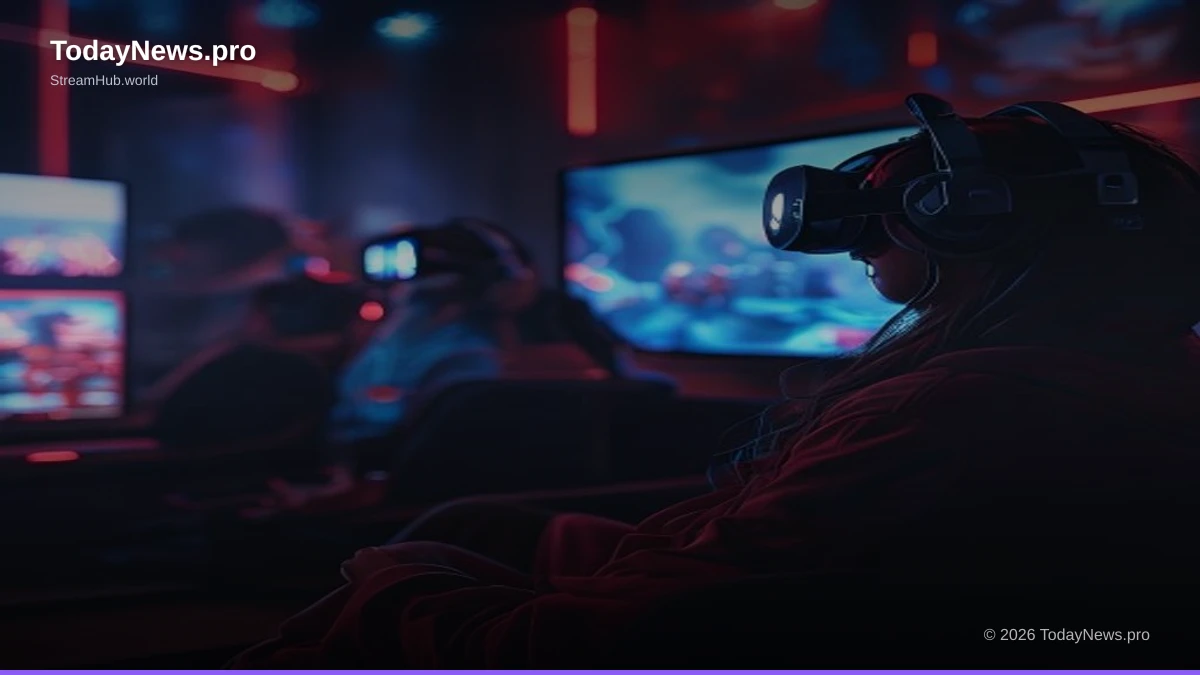
Virtual Reality (VR) cinema takes immersion to an entirely new level. Instead of watching a film on a screen, VR allows viewers to be present within the narrative environment. Wearing a VR headset, audiences can look around a 360-degree world, often interacting with elements of the scene. This technology transcends traditional filmmaking by offering a spatial and sensory experience that can evoke a far more powerful emotional response. From thrilling adventures to poignant dramas, VR cinema has the potential to transport viewers to worlds previously only imaginable.The Immersive Experience
The core of VR cinema lies in its ability to create a sense of presence. By engaging multiple senses, primarily sight and sound, VR can convincingly simulate being in a different time and place. This is achieved through high-resolution displays, spatial audio, and motion tracking that allows viewers to naturally orient themselves within the virtual environment. The feeling of "being there" is a powerful differentiator.
Types of VR Narratives
VR content is not a monolithic entity. It ranges from short, experiential films designed to showcase the technology's capabilities to more complex, narrative-driven features. Some VR experiences are passive, offering a cinematic view from a fixed point, while others allow for a degree of movement and exploration within the virtual space. The development of narrative techniques specific to VR is an ongoing area of research and creativity.
Challenges in VR Content Creation
Creating compelling VR narratives is technically demanding and expensive. Filmmakers must rethink traditional cinematic language, considering how audiences will navigate and experience the story from all angles. Ensuring comfortable and intuitive user experiences, avoiding motion sickness, and developing effective storytelling methods in an unbounded spatial environment are significant hurdles. The current limitations in widespread adoption of VR hardware also present a market challenge.
Personalized Narratives: Tailoring Tales to Individual Tastes
Beyond interactive choices and immersive environments, the evolution of entertainment is also marked by the rise of personalization. Leveraging advanced data analytics and artificial intelligence (AI), content providers are increasingly able to tailor narratives to individual viewer preferences. This can manifest in subtle ways, such as recommending content based on viewing history, or in more profound ways, like dynamically altering plot points, character dialogue, or even visual styles to match a viewer's known interests or emotional state.The Power of Data and AI
The engine behind personalized narratives is data. Every interaction a viewer has with a streaming service – what they watch, when they watch it, how long they watch, what they skip, and even their demographic information – contributes to a detailed profile. AI algorithms then process this data to predict preferences and dynamically adjust content. This allows for a hyper-targeted entertainment experience, where the content feels uniquely crafted for the individual.
Dynamic Story Generation
The most advanced forms of personalized narratives involve dynamic story generation. This means that elements of the story are not pre-scripted for every possible permutation, but are instead generated or adapted in real-time based on user data. Imagine a character's background changing subtly based on your known interests, or a narrative arc shifting to incorporate themes you've shown a preference for. This opens up a realm of infinite storytelling possibilities.
Ethical Considerations and Privacy
The deep personalization of content raises significant ethical questions. Concerns about data privacy are paramount. How much information is being collected, and how is it being used? There are also concerns about filter bubbles, where users are only exposed to content that reinforces their existing views, potentially limiting their perspectives. Transparency and user control over data are crucial for building trust in these personalized experiences.
The Technological Underpinnings: AI, Data, and Immersive Hardware
The advancements in interactive streaming, VR cinema, and personalized narratives are not happening in a vacuum. They are underpinned by rapid progress in several key technological areas. Artificial intelligence and machine learning are the brains behind personalization and the complex logic of interactive branching narratives. The explosion of big data provides the fuel for these AI systems. Meanwhile, advancements in hardware, from more powerful GPUs and displays for VR headsets to haptic feedback devices, are making truly immersive experiences possible.Artificial Intelligence and Machine Learning
AI is integral to every facet of this evolution. For interactive content, AI can manage complex branching logic, track user progress, and even dynamically adjust difficulty or pacing. In personalized narratives, AI analyzes vast datasets to understand user preferences, predict future interests, and generate tailored content. Machine learning models are constantly being refined to improve these capabilities, leading to more sophisticated and responsive entertainment experiences.
The Role of Big Data
The sheer volume of data generated by user interactions is staggering. Streaming platforms collect terabytes of information daily. This "big data" is essential for training AI models, identifying patterns in viewer behavior, and understanding what makes content engaging. The ability to collect, process, and analyze this data effectively is a competitive advantage for content providers.
Advancements in Immersive Hardware
The consumer VR hardware market is maturing. While still not ubiquitous, headsets are becoming more accessible, lighter, and more powerful. Displays offer higher resolutions and refresh rates, reducing eye strain and enhancing visual fidelity. The development of haptic feedback suits and gloves promises to add another layer of sensory immersion, allowing users to "feel" virtual objects and interactions. The evolution of these hardware components directly impacts the quality and believability of VR experiences.
For more on the technical aspects of VR development, explore resources from the Virtual Reality Wikipedia page.
Challenges and the Road Ahead: Monetization, Accessibility, and Artistic Integrity
Despite the exciting potential, the evolution of entertainment faces significant hurdles. Monetizing deeply interactive or personalized content presents new challenges for creators and platforms. Ensuring accessibility for all users, regardless of their technological proficiency or physical abilities, is crucial. Furthermore, the integration of these new technologies must be balanced with maintaining artistic integrity and fostering genuine creative expression.Monetization Models
Traditional subscription models may need to adapt. Will audiences pay a premium for truly interactive experiences? Or will advertising models evolve to accommodate personalized, non-intrusive placements within narratives? Microtransactions for in-story choices or cosmetic VR items are also potential avenues, but careful implementation is needed to avoid alienating audiences.
Ensuring Accessibility
VR hardware can be expensive, creating a barrier for many. Similarly, complex interactive interfaces might not be intuitive for all users. Developers must prioritize inclusive design, offering alternative control schemes, subtitling options for all audio, and ensuring that VR content is perceivable and operable by individuals with disabilities. The goal is to democratize these new forms of entertainment, not to create a digital divide.
The Balance of Art and Technology
There's a risk that the focus on technology and data could overshadow the core element of storytelling. Will personalized narratives become so tailored that they lose their universality and emotional resonance? Will interactive choices dilute the creator's original artistic vision? Finding the sweet spot where technology enhances, rather than dictates, the creative process is paramount for the long-term health of the entertainment industry.
Case Studies and Emerging Trends
The landscape of entertainment is constantly shifting, with new trends and innovative applications emerging regularly. Examining specific examples can illuminate the practical application of these evolving concepts. From experimental films to game-like narrative experiences, creators are pushing the boundaries in exciting ways.Experimental VR Narratives
Independent filmmakers and studios are exploring the unique capabilities of VR to tell stories in novel ways. Projects like "The Void" by Lucasfilm's ILMxLAB, which combines VR with physical sets and sensory effects, offer a glimpse into the future of location-based immersive entertainment. Other artists are using VR to create deeply personal and introspective experiences, leveraging the technology's ability to evoke strong emotional responses.
Interactive Documentaries
The documentary format is also being revolutionized. Interactive documentaries allow viewers to delve deeper into subjects, explore related information, and even influence the narrative's focus. This approach can foster a more engaged and informed audience, particularly for complex social or historical topics. A prime example is the interactive documentary "Bear 71," which invites viewers to experience the life of a grizzly bear through surveillance footage.
The Blurring Lines Between Games and Film
The distinction between video games and cinematic experiences is becoming increasingly blurred. Games like "Detroit: Become Human" or "The Last of Us" offer rich narratives, cinematic presentation, and player agency that rivals traditional films. Conversely, some films are adopting game-like interfaces and interactive elements, creating hybrid forms of entertainment that cater to a desire for both compelling stories and active participation.
For a broader overview of media trends, consult reports from organizations like Reuters Technology: Media & Entertainment.
The Future Landscape
The trajectory of entertainment is undeniably towards greater immersion, interactivity, and personalization. As technology continues to advance, we can anticipate even more sophisticated experiences. The lines between the physical and digital worlds will continue to blur, with augmented reality (AR) playing an increasingly significant role, overlaying digital information and experiences onto our real-world environments.Augmented Realitys Role
While VR offers complete immersion, AR provides a more integrated experience with the real world. Imagine watching a historical drama where characters appear in your living room, or attending a concert where visual effects are overlaid onto the live performance. AR has the potential to transform everyday environments into interactive entertainment spaces.
The Metaverse and Persistent Worlds
The concept of the metaverse, persistent, interconnected virtual worlds, holds immense promise for entertainment. In these spaces, users can socialize, play games, attend virtual events, and experience narratives in entirely new ways, often with a high degree of personalization and interactivity. This could lead to the development of entirely new forms of entertainment economy and social interaction.
Ethical Frameworks for the Future
As these technologies become more integrated into our lives, the need for robust ethical frameworks will only grow. Ensuring data privacy, combatting misinformation in immersive environments, and promoting digital well-being will be critical challenges. The industry must proactively address these issues to ensure that the evolution of entertainment benefits society as a whole.