

 Elena Kogan
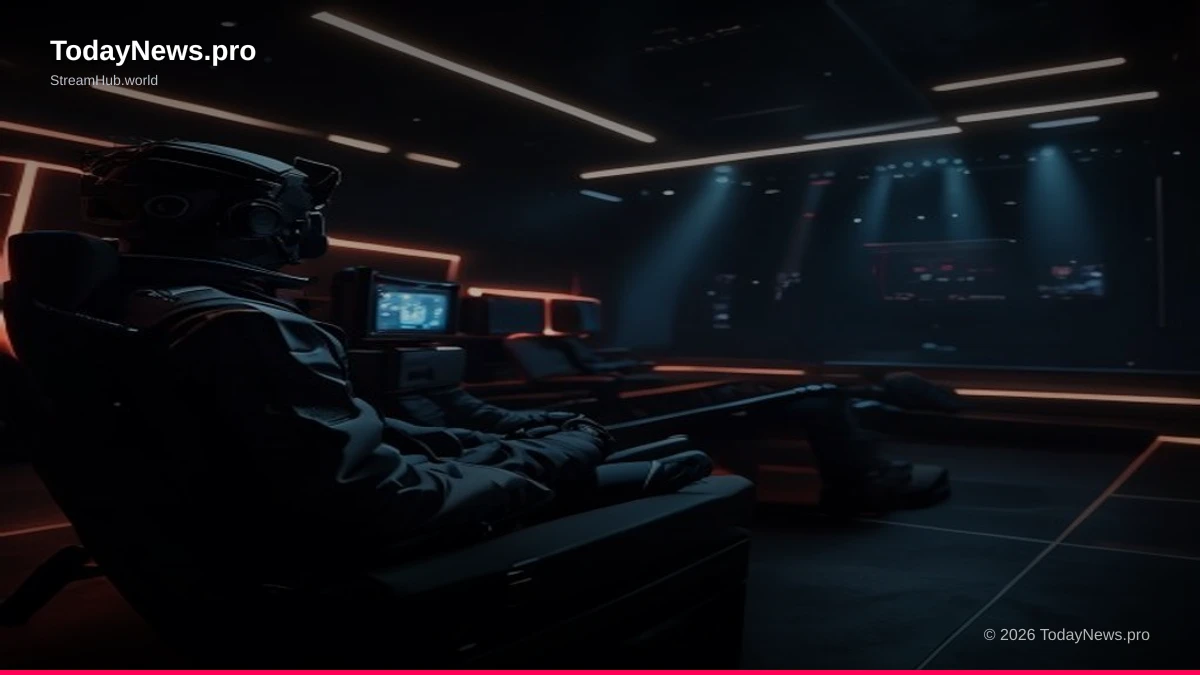
By 2023, the global market for interactive entertainment, encompassing video games and interactive films, was valued at over $200 billion, demonstrating a significant shift in audience consumption habits towards participatory storytelling.
The Dawn of Interactive Cinema: From Choose Your Own Adventure to Digital Frontiers
The concept of interactive storytelling is not a new phenomenon. For generations, audiences have yearned to influence narratives, to be more than passive observers. This desire found its earliest tangible forms in literature and theatre. The "Choose Your Own Adventure" book series, first published in the late 1970s, allowed young readers to make choices that dictated the progression of the story, offering multiple endings and a personalized experience. This simple yet revolutionary concept laid the groundwork for a more dynamic approach to narrative consumption.
Similarly, early forms of theatrical performance experimented with audience participation. While not directly cinematic, these stage plays explored breaking the fourth wall and involving the spectators in the unfolding drama, hinting at the potential for a more engaged viewing experience. These early forays, though primitive by today's standards, were crucial in establishing the fundamental principle of audience agency within a narrative framework.
The advent of cinema brought with it the promise of a visually rich and emotionally resonant medium. However, for decades, the cinematic experience remained largely linear and unidirectional. The storyteller held all the cards, and the audience was confined to a single, preordained journey. This inherent passivity, while responsible for some of the most profound and universally shared artistic experiences, also sparked a latent curiosity for what might happen if the audience could, even in a small way, steer the ship.
The Allure of Agency
The fundamental appeal of interactive storytelling lies in the fundamental human desire for control and agency. We want to feel that our choices matter, that our decisions have consequences. This psychological drive is amplified when applied to fictional worlds, offering a safe space to explore different outcomes and perspectives. Interactive cinema taps directly into this deep-seated need, transforming the viewer from a spectator into a co-creator of the narrative experience.
This shift in the viewer's role has profound implications for how stories are told and experienced. Instead of passively absorbing a predetermined plot, the audience becomes an active participant, constantly making decisions that shape the unfolding events. This can lead to a far more personal and memorable engagement with the story, as the viewer's unique path through the narrative creates a bespoke viewing experience.
From Page to Screen: Early Adaptations
The transition of interactive narrative concepts from the printed page to the screen was a natural progression, albeit one that faced significant technological barriers for many years. Early attempts often involved rudimentary branching narratives presented through slideshows or simple interactive discs. These were more akin to digital flipbooks than true cinema, but they served as important proof-of-concept experiments.
The limitations of early digital technology meant that creating truly seamless and complex interactive films was an enormous undertaking. Storage limitations, processing power, and the absence of sophisticated authoring tools confined these early experiments to niche markets and academic explorations. Nevertheless, the ambition to blend the visual power of film with the engagement of interactivity persisted, setting the stage for future innovations.
Early Experiments and Technological Hurdles
The dream of interactive cinema encountered significant hurdles in its nascent stages, primarily due to the limitations of the technology available. Early filmmaking was a purely analog medium, offering no room for digital manipulation or branching pathways. Even as the industry embraced color and sound, the core experience remained a fixed, linear projection. The idea of altering the film's course mid-showing was relegated to the realm of science fiction.
The advent of video, particularly in its early forms, began to chip away at these barriers. However, the recording and playback technologies of the mid-20th century were still largely incompatible with sophisticated interactivity. Creating multiple film segments that could be seamlessly switched based on viewer input was an immense logistical and technical challenge. It required specialized equipment and a level of precision that was difficult to achieve consistently.
The development of laserdisc technology in the late 1970s and early 1980s offered a glimmer of hope. Laserdiscs could store significantly more data than VHS tapes and allowed for random access to specific scenes. This enabled experimental interactive films like "Mystery Disc" (1983) and "Us" (1991), where viewers could select different paths or investigate clues. While these were groundbreaking for their time, they were often clunky in execution, with noticeable pauses and transitions that broke the immersion.
The Laserdisc Era: A Glimpse of Potential
The laserdisc format represented a significant leap forward for interactive video. Its ability to store high-quality video and audio, coupled with the capacity for chapter selection and still frame playback, opened up possibilities previously unimaginable. This format became the primary medium for early interactive movie experiments.
Titles like "Us" by Jane Doe and "Night Trap" (though more of a video game with interactive film elements) were pioneers. They allowed viewers to navigate through pre-recorded video clips, making choices at key junctures. The experience was often mediated by a separate interface, sometimes a remote control or a rudimentary on-screen menu. While the technology was still in its infancy, it demonstrated the core concept of viewer-driven narrative progression.
However, the limitations were clear. The amount of video that could be stored on a single disc was finite, and the branching logic was often simplistic. Transitions could be jarring, and the overall fidelity of the interactive experience was hampered by the technology's inherent constraints. Despite these drawbacks, the laserdisc era was a vital learning period, providing invaluable insights into what worked and what didn't for interactive storytelling.
The CD-ROM Revolution
The widespread adoption of CD-ROM drives in personal computers in the 1990s ushered in a new era of multimedia, and with it, more sophisticated interactive film experiences. CD-ROMs offered a greater storage capacity than laserdiscs and the ability to integrate video, audio, graphics, and text seamlessly. This allowed for more complex interactive narratives and a richer user interface.
Developers began experimenting with full-motion video (FMV) sequences interspersed with clickable hotspots, puzzles, and dialogue trees. Games like "Myst" (1993) and "The 7th Guest" (1993) showcased the potential of CD-ROMs for creating immersive worlds and engaging narratives, even if they weren't strictly "films" in the traditional sense. They demonstrated how interactivity could be woven into a cinematic presentation, blurring the lines between film and game.
This period also saw the rise of interactive movie games like "Phantasmagoria" (1995), which used extensive FMV sequences and a point-and-click interface to tell a horror story. While often criticized for their acting and plot, these titles represented a bold attempt to create a cohesive interactive cinematic experience. The technology was still a barrier to true fluidity, but the ambition to blend visual storytelling with player input was undeniable.
The Rise of Video Games: A Precursor to Immersive Storytelling
While not directly "cinema," the evolution of video games has been intrinsically linked to the development of interactive storytelling. From the simple pixelated adventures of the 1980s to the hyper-realistic, narrative-driven epics of today, video games have continuously pushed the boundaries of what's possible in terms of player agency, immersive worlds, and compelling narratives.
Early arcade games and home console titles focused on mechanics and high scores. However, as technology advanced, so did the ambition to tell richer stories. Text-based adventure games paved the way for more visual narratives, and the introduction of cutscenes in games like "Final Fantasy" series demonstrated that cinematic elements could be integrated into a gameplay experience.
The development of 3D graphics in the 1990s and early 2000s was a pivotal moment. It allowed for the creation of more believable and immersive environments, and developers began to explore more nuanced storytelling techniques. Games like "The Legend of Zelda: Ocarina of Time" (1998) and "Metal Gear Solid" (1998) showcased complex plots, character development, and cinematic presentation, proving that video games could offer experiences as emotionally resonant as traditional films.
From Pixels to Photorealism: Narrative Evolution
The journey of video game narratives mirrors the broader evolution of storytelling. Early games were limited by graphical capabilities, resulting in abstract or text-heavy plots. As processing power and graphical fidelity increased, so did the complexity of the stories that could be told. Developers moved from simple "save the princess" tropes to intricate plots involving moral dilemmas, character arcs, and branching storylines.
The advent of powerful game engines like Unreal Engine and Unity has enabled developers to create visually stunning and highly detailed worlds that rival those seen in Hollywood films. This has allowed for more sophisticated cinematic cutscenes and in-game narrative delivery. Games like "The Last of Us" (2013) and "Red Dead Redemption 2" (2018) are celebrated for their mature storytelling, complex characters, and emotional depth, proving that video games can be a powerful medium for narrative art.
Player Choice and Consequence
Perhaps the most significant contribution of video games to interactive storytelling is the emphasis on player choice and consequence. Unlike linear films, games often present players with decisions that have tangible impacts on the narrative, character relationships, and the overall outcome of the game. This fosters a deep sense of engagement and ownership over the story.
Titles like "Mass Effect" (2007-2017) and "The Witcher" series are renowned for their intricate dialogue systems and branching questlines, where player choices can lead to drastically different paths and endings. This level of agency is a cornerstone of what makes interactive storytelling so compelling, and it has directly influenced the development of interactive films.
Netflixs Bandersnatch and the Mainstream Breakthrough
For years, interactive films existed in a niche space, appealing to a dedicated audience interested in experimental forms of storytelling. However, in late 2018, Netflix, a global streaming giant, launched "Black Mirror: Bandersnatch," an interactive episode of the acclaimed anthology series. This event marked a significant turning point, bringing interactive cinema to a mainstream audience and sparking widespread discussion about its potential.
"Bandersnatch" allowed viewers to make choices for the protagonist, Stefan Butler, a young programmer attempting to adapt a complex fantasy novel into a video game. The choices, ranging from what cereal to eat to more profound decisions about life and death, dictated the narrative's progression, leading to a multitude of branching paths and distinct endings. The experience was seamlessly integrated into the Netflix platform, making it accessible to millions.
The critical and commercial success of "Bandersnatch" proved that interactive storytelling could be not only technically feasible on a large scale but also highly engaging for a broad audience. It validated the concept for producers and studios, paving the way for further investment and experimentation in the interactive film space. While not the first interactive film, its platform and reach made it an undeniable breakthrough.
The Technical Prowess of Bandersnatch
The implementation of "Bandersnatch" on Netflix was a remarkable technical achievement. Creating a branching narrative of such complexity required a sophisticated authoring tool and a robust streaming infrastructure. The platform had to seamlessly transition between different video segments based on viewer input, all while maintaining a smooth and immersive viewing experience.
Netflix developed proprietary technology to manage these branching pathways. This involved meticulously mapping out every possible decision tree and pre-rendering the various segments of the film. The system then had to dynamically select and play the correct sequence based on real-time viewer choices. This level of technical sophistication was unprecedented for a mainstream streaming service and set a new benchmark for interactive content.
Audience Reception and Impact
The reception to "Bandersnatch" was largely positive, with critics praising its innovative approach to storytelling and its ability to engage viewers on a deeper level. Audiences were fascinated by the novelty of making choices that directly influenced the narrative, leading to multiple viewings to explore different outcomes. The show became a cultural talking point, sparking conversations about free will, determinism, and the nature of storytelling itself.
The impact of "Bandersnatch" extended beyond just a single episode. It demonstrated to Hollywood executives and content creators the commercial viability of interactive cinema. It encouraged further investment in the technology and the creative talent needed to produce these complex narratives. While "Bandersnatch" wasn't the first of its kind, its widespread accessibility and critical acclaim cemented its status as a pivotal moment in the evolution of interactive film.
The Expanding Landscape: VR, AR, and Beyond
The evolution of interactive cinema has been profoundly shaped by advancements in immersive technologies, most notably Virtual Reality (VR) and Augmented Reality (AR). These technologies offer new paradigms for storytelling, moving beyond passive viewing to create truly embodied experiences where the audience is not just a participant but a presence within the narrative world.
Virtual Reality, by placing users within a completely simulated environment, allows for a level of immersion previously unattainable. Interactive VR films can place viewers directly into the shoes of a character, allowing them to explore their surroundings, interact with objects, and make decisions that have immediate and visceral consequences. This can lead to incredibly powerful emotional experiences, blurring the lines between fiction and reality.
Augmented Reality, on the other hand, overlays digital information and graphics onto the real world, creating a hybrid experience. This opens up possibilities for interactive narratives that unfold in familiar environments, transforming everyday spaces into stages for digital stories. AR storytelling can be highly personalized and context-aware, reacting to the user's location and the environment around them.
Virtual Reality: Embodied Narratives
Virtual Reality offers the ultimate in immersive storytelling, transporting viewers into fully realized digital worlds. In VR, the concept of a "screen" dissolves, and the audience becomes an active inhabitant of the narrative space. This allows for a profound sense of presence and agency, where every glance, movement, and interaction can contribute to the unfolding story.
Projects like "Carne y Arena" (2017), an immersive VR installation by Alejandro G. Iñárritu, explore profound human experiences by placing viewers in the shoes of refugees. This VR film doesn't rely on traditional plot structures but on visceral emotional impact derived from the participant's direct experience. Other VR narratives experiment with interactive elements, allowing users to solve puzzles, manipulate the environment, or engage in dialogue with virtual characters, all contributing to a deeply personal storytelling journey.
Augmented Reality: Blending Worlds
Augmented Reality presents a unique opportunity for interactive storytelling by seamlessly integrating digital narratives into the user's existing reality. This approach allows for location-based experiences, where stories can unfold in real-world settings, or for interactive elements to be overlaid onto everyday objects, transforming them into narrative devices.
Examples include AR games that use the user's surroundings as a playground for fantastical creatures or interactive AR experiences that allow users to explore historical events as if they were happening around them. The potential for AR in education, tourism, and entertainment is vast, offering new ways for stories to be told and experienced in a personalized and contextually relevant manner.
The Convergence of Technologies
The future of immersive storytelling likely lies in the convergence of these various technologies. We are already seeing the emergence of mixed reality (MR) experiences that blend elements of VR and AR, creating even more dynamic and interactive narrative environments. As these technologies mature and become more accessible, the possibilities for interactive cinema will continue to expand exponentially.
The development of more sophisticated AI will also play a crucial role, enabling more dynamic and responsive narratives. Imagine interactive films where characters can react intelligently to user input in ways that feel organic and unscripted, or where entire plotlines can be generated on the fly based on user preferences. This convergence promises a future where stories are not just consumed but actively co-created by the audience.
Challenges and Opportunities in Immersive Narrative Design
Despite the exciting advancements in interactive cinema, significant challenges remain in its creation and widespread adoption. Crafting compelling narratives that can accommodate multiple branching paths and player choices requires a fundamentally different approach to screenwriting and filmmaking. The traditional linear structure of storytelling must be deconstructed and reimagined.
One of the primary challenges is the sheer complexity of designing and producing interactive content. For every path a viewer can take, a corresponding narrative segment must be created. This significantly increases production costs, time, and the need for specialized talent. Furthermore, ensuring that all these branches coalesce into a satisfying and coherent experience for the viewer, regardless of their choices, is a monumental task.
However, these challenges also present immense opportunities. The demand for novel and engaging entertainment experiences is higher than ever. Interactive cinema offers a unique way to capture audience attention and provide a level of engagement that traditional media often struggles to achieve. The growing market for immersive experiences suggests a bright future for those who can master the art of interactive narrative design.
The Art of Branching Narratives
Designing effective branching narratives is a delicate balancing act. Writers must create a compelling core story while also weaving in meaningful choices that genuinely impact the plot without leading to nonsensical or unsatisfying outcomes. This requires a deep understanding of narrative structure, character development, and player psychology.
One of the key challenges is avoiding the illusion of choice. If the choices presented have no real consequence, the interactive element quickly loses its appeal. Conversely, if the choices are too numerous or too complex, the narrative can become unwieldy and difficult for the viewer to follow. Finding the sweet spot between meaningful agency and narrative coherence is paramount. Tools and methodologies for mapping complex narrative trees are continually evolving to address this.
Production Costs and Monetization
The creation of interactive films is inherently more expensive than traditional filmmaking. The need to produce multiple versions of scenes, develop complex branching logic, and implement interactive elements adds significant layers to the production pipeline. This can be a barrier to entry for independent creators and smaller studios.
Monetization strategies for interactive content are also still being explored. While subscription models like Netflix's are effective for large-scale productions, alternative models for smaller, independent interactive films are needed. This could include direct sales, in-app purchases for additional content, or even crowdfunding campaigns that allow audiences to directly support the creation of interactive stories they want to see.
Audience Engagement and Accessibility
While interactive cinema has the potential for deep audience engagement, accessibility remains a concern. Not everyone has access to the latest VR headsets or the bandwidth required for seamless streaming of complex interactive content. Furthermore, the learning curve for some interactive formats can be daunting for less tech-savvy audiences.
Efforts to make interactive experiences more accessible are crucial for their long-term success. This includes developing content that can be enjoyed on a wider range of devices, designing intuitive user interfaces, and providing clear tutorials. The goal is to ensure that the magic of interactive storytelling is available to as broad an audience as possible.
The Future of Interactive Cinema: What Lies Ahead?
The trajectory of interactive cinema is one of continuous innovation and expansion. As technology advances and creative talent becomes more adept at navigating the complexities of interactive storytelling, we can expect to see increasingly sophisticated and immersive experiences. The lines between film, gaming, and even live performance are likely to blur further.
The integration of artificial intelligence will undoubtedly play a pivotal role, enabling dynamic narratives that can adapt in real-time to viewer input, creating truly unique and personalized viewing experiences. Imagine AI-driven characters that can improvise dialogue and react to your choices in ways that feel entirely natural. This will elevate interactive cinema from pre-scripted branches to genuinely emergent storytelling.
Furthermore, the growing accessibility of VR and AR hardware, coupled with advancements in cloud computing, will make these immersive formats more commonplace. We may see interactive films become a standard offering on streaming platforms, akin to how on-demand viewing became the norm. The future promises a deeply personal, engaging, and participatory form of cinematic storytelling.
| Technology | Primary Impact on Interactive Cinema | Key Challenges |
|---|---|---|
| Laserdisc | Early experiments with branching pathways, random access to scenes. | Limited storage, jarring transitions, low video fidelity. |
| CD-ROM | Integration of FMV, puzzles, and more complex interfaces; rise of FMV games. | Storage limitations for extensive video, less seamless integration. |
| VR | Embodied experiences, deep immersion, sense of presence, player agency. | High hardware cost, motion sickness, complex content creation. |
| AR | Overlaying narratives onto real-world environments, context-aware storytelling. | Device dependency, limited field of view, environmental integration challenges. |
| AI | Dynamic and responsive narratives, emergent storytelling, personalized experiences. | Ethical considerations, computational power, ensuring narrative coherence. |
What is the difference between interactive cinema and video games?
Is interactive cinema expensive to produce?
Will interactive cinema replace traditional films?
For more on the impact of technology on media, you can refer to Reuters or explore the history of cinema on Wikipedia.