

 David Chen
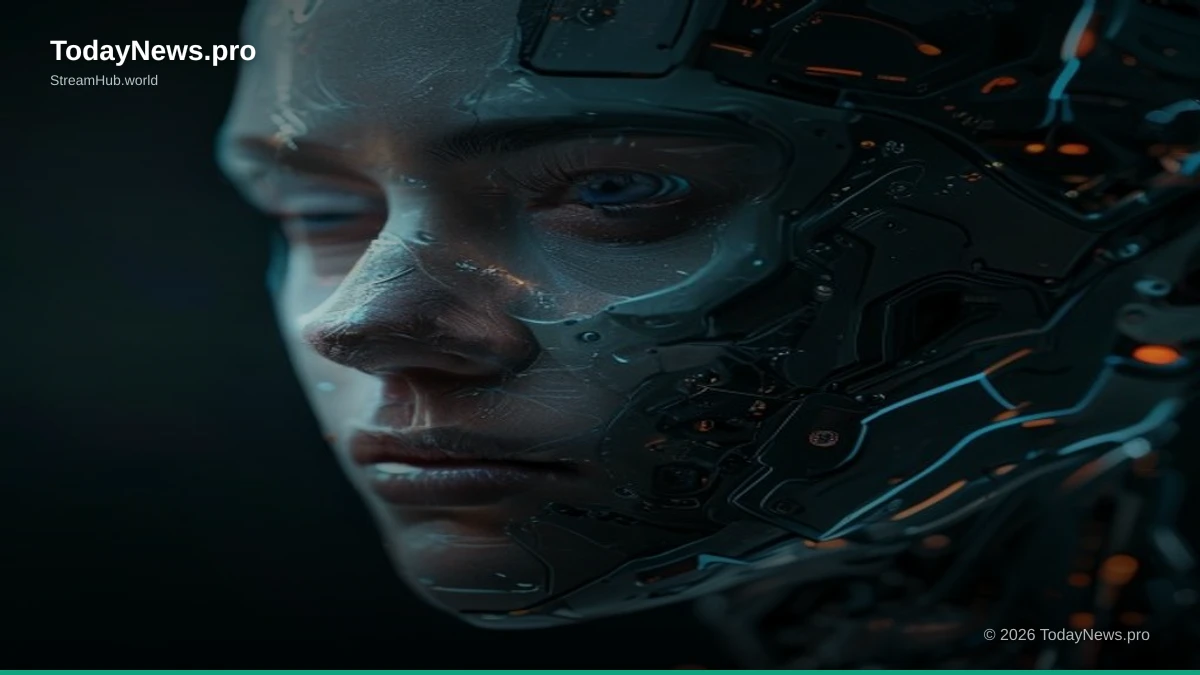
By 2025, an estimated 90% of online content could be AI-generated, a staggering projection that underscores the profound shift underway in how we consume and create information, posing unprecedented ethical challenges.
The Algorithmic Mirage: A World of Synthetic Realities
We are rapidly entering an era where the lines between reality and simulation are blurring at an unprecedented pace. Synthetic media, encompassing technologies like deepfakes and AI-generated art, is no longer confined to science fiction or niche research labs. It is permeating our digital lives, transforming industries, and forcing a fundamental re-evaluation of authenticity, trust, and truth itself. The ability to generate hyper-realistic images, videos, and audio with sophisticated algorithms means that what we see and hear online may increasingly be a fabrication, meticulously crafted to deceive or to delight.
This technological revolution, driven by advancements in machine learning and generative adversarial networks (GANs), presents a dual-edged sword. On one hand, it unlocks immense potential for creativity, innovation, and personalized experiences. On the other, it introduces significant risks, from the proliferation of misinformation and propaganda to the erosion of individual privacy and the undermining of democratic processes. The speed and scale at which synthetic media can be produced and disseminated are outpacing our current societal and regulatory frameworks, creating a pressing need for proactive ethical consideration and robust countermeasures.
The Genesis of Synthetic Media
The foundations of synthetic media lie in artificial intelligence, particularly deep learning models. Generative Adversarial Networks (GANs), first introduced by Ian Goodfellow and his colleagues in 2014, are a cornerstone. GANs involve two neural networks, a generator and a discriminator, locked in a perpetual competition. The generator creates synthetic data (e.g., images), while the discriminator tries to distinguish between real and fake data. Through this adversarial process, the generator becomes increasingly adept at producing highly convincing fakes. This fundamental breakthrough has paved the way for the creation of sophisticated deepfakes and strikingly original AI art.
Beyond GANs, other AI architectures like Variational Autoencoders (VAEs) and transformer models have also contributed significantly. VAEs are adept at learning complex data distributions, enabling the generation of novel data points that share characteristics with the training set. Transformer models, originally developed for natural language processing, have been adapted to generate sequences of data, including images and audio, leading to advancements in text-to-image and text-to-video generation. The rapid evolution of these underlying technologies means that the capabilities of synthetic media are expanding exponentially.
Deepfakes: The Double-Edged Sword of Visual Deception
Deepfakes, a portmanteau of "deep learning" and "fake," are synthetic media where a person's likeness is digitally manipulated to appear to say or do something they never did. Initially, deepfakes were primarily used for entertainment or satire, creating humorous impersonations. However, their potential for malicious use quickly became apparent. The ability to superimpose one person's face onto another's body, or to convincingly alter a person's speech patterns and facial expressions, opens a Pandora's Box of ethical concerns.
The implications are far-reaching. In the political arena, deepfakes can be weaponized to spread disinformation, sow discord, and influence election outcomes. Fabricated speeches or compromising videos of politicians could have devastating consequences for public trust and democratic stability. In the personal sphere, non-consensual deepfake pornography has emerged as a severe form of online harassment and abuse, disproportionately targeting women. The psychological and reputational damage inflicted by such violations can be irreparable. Furthermore, deepfakes can be used for sophisticated phishing attacks, identity theft, and even to extort individuals by creating fabricated evidence of wrongdoing.
The Evolution of Deepfake Technology
Early deepfake technology often suffered from noticeable artifacts, such as flickering, unnatural facial movements, or inconsistent lighting. However, continuous advancements have led to increasingly seamless and photorealistic results. Techniques like face-swapping, lip-syncing, and voice cloning have become more sophisticated, making it harder for the untrained eye, and sometimes even for expert analysis, to detect a fake. The accessibility of deepfake creation tools, while democratizing certain forms of creative expression, also lowers the barrier to entry for malicious actors.
The development of real-time deepfake generation is another significant frontier. Imagine video conferences where participants' appearances or voices can be manipulated on the fly. This capability raises concerns about live disinformation campaigns, impersonation in sensitive communications, and the further erosion of trust in digital interactions. The arms race between deepfake creators and detection technologies is ongoing, with each side constantly innovating to gain an advantage.
Case Studies in Deepfake Disruption
While specific instances are often difficult to definitively prove as malicious deepfakes due to the ease of digital alteration, several high-profile events have raised alarms. Reports of fabricated videos of world leaders making inflammatory statements during critical geopolitical moments have surfaced, though often debunked by fact-checkers. The non-consensual distribution of deepfake pornography, frequently involving celebrities and private individuals, has led to legal battles and calls for stronger protections. The potential for deepfakes to be used in corporate espionage or stock manipulation by fabricating statements from company executives is also a growing concern.
| Type of Deepfake | Potential Impact | Current Detection Difficulty |
|---|---|---|
| Political Disinformation | Election manipulation, social unrest, diplomatic crises | Moderate to High |
| Non-Consensual Pornography | Severe reputational damage, psychological trauma, harassment | Moderate |
| Financial Fraud/Impersonation | Stock market manipulation, identity theft, corporate espionage | Moderate |
| Personal Revenge/Harassment | Reputational ruin, cyberbullying, blackmail | Moderate |
AI Art: Creativity Unleashed or Copyright Conundrum?
The emergence of AI art generators, such as Midjourney, DALL-E 2, and Stable Diffusion, has democratized visual creation to an extraordinary degree. Users can now generate complex and aesthetically pleasing images simply by typing textual prompts. This technology is transforming artistic expression, graphic design, and even the advertising industry, offering new avenues for creativity and rapid prototyping of visual concepts. Artists can use AI as a powerful tool to augment their workflow, explore new styles, and overcome creative blocks.
However, this explosion of AI-generated art has also ignited a fierce debate surrounding copyright, ownership, and the very definition of authorship. When an AI generates an image based on a user's prompt, who owns the copyright? Is it the user who provided the prompt, the developers of the AI model, or the AI itself? Current copyright laws are ill-equipped to handle these questions, as they are predicated on human authorship. Furthermore, AI art models are trained on vast datasets of existing images, many of which are copyrighted. This raises concerns about potential copyright infringement and the ethical implications of using existing artistic works to train generative models without explicit permission or compensation for the original creators.
The Copyright Quandary
The U.S. Copyright Office, for example, has taken a stance that works generated solely by AI are not eligible for copyright protection because they lack human authorship. However, if a human significantly modifies or arranges AI-generated elements, the resulting work may be copyrightable. This nuanced position highlights the ongoing legal and philosophical struggle to define creativity and ownership in the age of AI. The potential for AI to generate art that is virtually indistinguishable from human-created art further complicates matters, making it challenging to enforce intellectual property rights.
The debate extends to the economic impact on human artists. Many fear that AI art generators could devalue their work, leading to reduced commissions and opportunities. The ability to produce vast quantities of high-quality imagery at a low cost could disrupt traditional art markets and freelance creative professions. This has led to calls for greater transparency in AI training data, fair compensation models for artists whose work is used in training datasets, and clearer legal frameworks to protect both human creators and the integrity of intellectual property.
AI as a Creative Partner
Despite the controversies, many artists and designers are embracing AI art as a collaborative tool. AI can serve as an infinite muse, generating novel ideas, variations, and styles that a human artist might not have conceived independently. It can accelerate the ideation process, allowing creators to visualize concepts rapidly. For instance, a game developer could use AI to generate hundreds of unique character designs or environmental assets within hours, rather than weeks or months. Similarly, architects might use AI to explore a multitude of building facade designs based on specific parameters.
The ethical considerations here shift from pure authorship to responsible integration. How can AI be used ethically to enhance, rather than replace, human creativity? This involves acknowledging the AI's role, ensuring that the final output reflects human intent and curation, and being transparent about the tools used. The focus is on AI as a co-creator, a powerful brush in the artist's hand, rather than an autonomous creator. This perspective reframes the debate from one of competition to one of collaboration, exploring how human and artificial intelligence can combine to produce art that is both innovative and ethically grounded.
The Erosion of Trust: Societal Implications of Synthetic Media
The proliferation of convincing synthetic media poses a profound threat to societal trust. When the authenticity of visual and auditory information can no longer be taken for granted, the foundations of our shared reality begin to crumble. This erosion of trust has cascading effects across various societal domains, from interpersonal relationships to the functioning of democratic institutions.
In journalism, the ability to fabricate news reports, create fake interviews, or alter evidence could severely undermine the press's role as a purveyor of truth. Citizens may become increasingly skeptical of all information, leading to a paralysis of critical thinking and a greater susceptibility to manipulation. In the legal system, deepfakes could be used to create fabricated evidence, making it harder to ascertain guilt or innocence. The concept of verifiable truth becomes a casualty when digital representations can be so easily manufactured and manipulated. This challenges the very notion of objective reality, pushing us towards a post-truth environment where subjective beliefs and manufactured narratives hold sway.
Impact on Democracy and Geopolitics
The weaponization of synthetic media in political campaigns is a grave concern. Fabricated videos of candidates, manufactured scandals, or the amplification of divisive rhetoric through AI-generated content can sway public opinion and destabilize elections. This is not a distant threat; instances of misinformation campaigns utilizing manipulated media have already been observed. Geopolitically, deepfakes could be used to provoke international incidents, spread propaganda, or sow discord between nations. The ability to create realistic but entirely false narratives about events or individuals could have destabilizing consequences on a global scale.
The challenge is exacerbated by the speed at which disinformation can spread online. A well-crafted deepfake can go viral within hours, reaching millions of people before it can be fact-checked or debunked. This asymmetry between creation and debunking is a critical vulnerability. Furthermore, foreign adversaries could leverage these tools to interfere in domestic affairs, creating a new and potent form of asymmetric warfare. The defense against such threats requires a multi-faceted approach involving technological solutions, robust media literacy programs, and international cooperation on regulatory frameworks.
Navigating the Ethical Labyrinth: Frameworks for Responsible AI
Addressing the ethical challenges of synthetic media requires a proactive and multifaceted approach. It necessitates the development of robust ethical frameworks, clear guidelines for creators and platforms, and an emphasis on digital literacy for the general public. The goal is not to stifle innovation but to ensure that these powerful technologies are developed and deployed in a manner that benefits society and mitigates potential harms.
One crucial area of focus is the development of ethical AI principles. These principles often include concepts like fairness, accountability, transparency, and safety. For synthetic media, this translates to ensuring that AI models are trained on diverse and unbiased data, that their outputs are predictable and controllable, and that there are clear lines of accountability when harm occurs. Transparency about the use of AI in content creation, through watermarking or metadata, is also a vital component. This allows users to distinguish between human-generated and AI-generated content, fostering a more informed digital environment.
The Role of Technology and Regulation
Technological solutions are at the forefront of the battle against malicious synthetic media. This includes developing advanced deepfake detection tools that can analyze subtle inconsistencies in video, audio, or image data. These tools can identify artifacts, inconsistencies in lighting, or unnatural physiological cues that betray a synthetic origin. Digital watermarking and blockchain-based provenance tracking offer promising avenues for verifying the authenticity and origin of digital content, creating an immutable record of its creation and modification history. However, it's an ongoing arms race, as detection technologies improve, so do the generation techniques.
Regulatory bodies worldwide are grappling with how to address synthetic media. Legislation is emerging to criminalize the creation and distribution of malicious deepfakes, particularly non-consensual pornography and political disinformation. However, crafting effective legislation is challenging. Overly broad regulations could stifle legitimate creative uses of AI. Conversely, weak regulations may prove insufficient to deter malicious actors. Finding the right balance requires careful consideration of free speech, innovation, and public safety. International cooperation is also crucial, as synthetic media transcends national borders.
Platform Responsibility and Content Moderation
Social media platforms and content hosting services play a pivotal role in the dissemination of synthetic media. They face the immense challenge of moderating vast amounts of user-generated content while balancing free expression with the need to combat harmful material. Developing effective content moderation policies that can accurately identify and flag or remove synthetic media, especially deepfakes, is a significant technical and ethical hurdle. This requires investment in AI-powered detection tools, human moderation teams, and clear appeals processes.
Some platforms are implementing policies that require users to disclose when they are posting AI-generated content. Others are working to detect and label potentially manipulated media. The effectiveness of these measures is still being evaluated. The debate continues about whether platforms should be held liable for the spread of harmful synthetic media, or if the responsibility lies solely with the creators and distributors. Striking a balance that encourages responsible platform practices without overburdening them or infringing on user rights is an ongoing challenge.
The Future of Truth: Detection, Regulation, and Digital Literacy
The future of truth in the digital age hinges on our collective ability to navigate the complexities of synthetic media. This requires a multi-pronged strategy encompassing technological advancements in detection, thoughtful and adaptive regulatory frameworks, and a fundamental enhancement of digital literacy among all citizens. Without these pillars, we risk entering a landscape where verifiable facts are perpetually questioned, and trust becomes a scarce commodity.
Technological innovation in detection will continue to be a crucial front. Researchers are constantly developing more sophisticated algorithms to identify subtle anomalies that betray synthetic origins. This includes analyzing pixel-level inconsistencies, temporal artifacts, and even the physiological patterns of synthesized human likenesses. The goal is to create tools that are not only accurate but also accessible, enabling journalists, fact-checkers, and even everyday users to critically evaluate the media they encounter.
Empowering the Digital Citizen
Perhaps the most enduring solution lies in fostering robust digital literacy. Equipping individuals with the critical thinking skills to question, verify, and contextualize information is paramount. This involves educating people about the existence and capabilities of synthetic media, teaching them to recognize potential red flags, and encouraging them to cross-reference information from multiple reputable sources. Educational initiatives, from school curricula to public awareness campaigns, are essential in building a more resilient and informed populace.
The ability to discern between authentic and synthetic content is no longer a niche skill but a fundamental requirement for engaged citizenship in the 21st century. This includes understanding how AI models work, the potential biases embedded within them, and the motives behind the creation and dissemination of synthetic media. A digitally literate society is less susceptible to manipulation and better equipped to participate in informed public discourse. As the technologies evolve, so too must our understanding and our critical faculties.
The path forward demands continuous dialogue between technologists, policymakers, ethicists, educators, and the public. It requires a commitment to transparency, accountability, and the pursuit of verifiable truth in an increasingly complex digital landscape. The ethical challenges of synthetic media are significant, but by addressing them head-on with foresight and collective action, we can strive to ensure that these powerful tools enhance, rather than erode, our understanding of reality and our capacity for trust.
For more information on the impact of AI on society, consult:
Reuters - Technology: Artificial Intelligence