

 Roger Evans
⏱ 15 min
The global deepfake market is projected to reach \$12.9 billion by 2030, signaling a seismic shift in how digital content is created and consumed.
The Shifting Sands of Digital Identity: Understanding Deepfakes
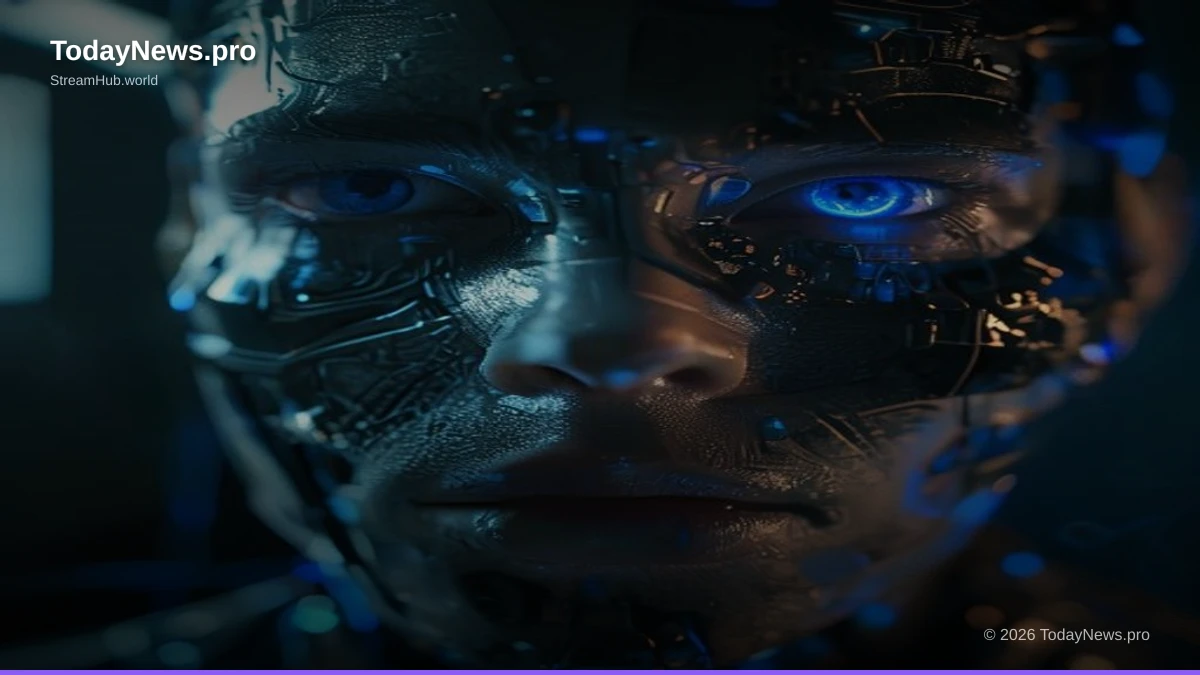
Deepfakes, a portmanteau of "deep learning" and "fake," represent a sophisticated form of artificial intelligence that can generate hyper-realistic synthetic media. At its core, this technology utilizes neural networks, particularly Generative Adversarial Networks (GANs), to manipulate or create visual and auditory content that is virtually indistinguishable from authentic material. Initially emerging as a niche interest within online communities, deepfakes have rapidly transitioned into a mainstream phenomenon, impacting industries from entertainment to politics and journalism. The fundamental principle involves training an AI model on a substantial dataset of existing media – images, videos, or audio – of a target individual. This trained model can then be used to overlay the likeness or voice of that individual onto entirely different content, or to synthesize entirely new performances. The implications of this capability are profound, challenging our very perception of truth and authenticity in the digital realm. The underlying technology behind deepfakes is complex but can be broadly understood through the concept of GANs. A GAN consists of two competing neural networks: a generator and a discriminator. The generator's task is to create synthetic data that mimics the real data it has been trained on. The discriminator's role is to distinguish between real data and the data generated by the generator. Through this adversarial process, the generator becomes increasingly adept at producing highly convincing fakes, while the discriminator becomes more sophisticated at detecting them. This continuous loop of improvement means that deepfake technology is constantly advancing, making detection a moving target. ### The Genesis and Evolution of Synthetic Media While the term "deepfake" gained prominence in the late 2010s, the concept of synthetic media is not entirely new. Early forms of digital manipulation have existed for decades, from simple photo editing to more advanced CGI. However, deep learning has democratized and exponentially enhanced the capabilities of synthetic media generation. What once required extensive technical expertise and significant computational resources is now becoming increasingly accessible, albeit with varying levels of quality. This democratization is a key factor in the rapid proliferation and diversification of deepfake applications, moving beyond mere novelty to practical, and sometimes concerning, uses.Ethical Frameworks for Synthetic Media: A Necessary Evolution
As deepfake technology becomes more powerful and accessible, the need for robust ethical frameworks to govern its creation and dissemination has never been more critical. These frameworks are not merely theoretical constructs but practical guides intended to mitigate the potential harms while fostering responsible innovation. The central challenge lies in balancing the immense creative potential of synthetic media with the significant risks of misinformation, defamation, and privacy violations. Establishing clear guidelines for consent, disclosure, and accountability is paramount to navigating this complex landscape. The development of ethical guidelines is a multi-stakeholder endeavor. It requires input from technologists, policymakers, ethicists, legal experts, and the public. Key considerations include: * **Consent:** When can an individual's likeness or voice be used in synthetic media? Is explicit consent always required? What about public figures? * **Disclosure:** Should all synthetic media be clearly labeled as such? What are the implications of failing to disclose? * **Accountability:** Who is responsible when deepfakes are used maliciously – the creator, the platform, or the disseminator? * **Bias:** How can we ensure that deepfake algorithms do not perpetuate or amplify existing societal biases? ### The Role of Industry Self-Regulation Many technology companies developing AI-powered content creation tools are recognizing their responsibility in shaping the ethical landscape of synthetic media. Initiatives range from developing watermarking technologies to embedding ethical usage policies into their platforms. However, the effectiveness of self-regulation is often debated, as it relies on voluntary compliance and may not adequately address the most egregious forms of misuse. The development of industry-wide standards and best practices, perhaps facilitated by independent bodies, could offer a more comprehensive approach."The power of synthetic media is undeniable, but without a strong ethical compass, it risks becoming a Pandora's Box of disinformation and reputational damage. We must proactively build guardrails."
### International Perspectives on Ethical AI
Different jurisdictions are approaching the regulation of deepfakes and synthetic media with varying degrees of urgency and legislative action. Some countries are enacting specific laws targeting the malicious use of deepfakes, while others are adapting existing legislation related to defamation, privacy, and intellectual property. The global nature of the internet means that international cooperation is essential to create a coherent and effective regulatory environment, preventing the technology from being exploited in regions with less stringent laws.
— Dr. Anya Sharma, AI Ethicist
Deepfakes in the Entertainment Industry: From Novelty to Norm
The entertainment industry has been one of the earliest and most enthusiastic adopters of deepfake technology, leveraging its capabilities for a variety of creative purposes. From resurrecting deceased actors for cameo appearances to de-aging performers for new roles or even creating entirely synthetic characters, deepfakes are revolutionizing pre-production and post-production workflows. This technology offers unprecedented opportunities to push the boundaries of storytelling and visual effects. Initially, deepfakes were experimented with in fan-made content or as special effects to achieve seemingly impossible feats. However, as the technology matured, major studios began integrating it into their professional pipelines. Examples include digitally de-aging actors like in "The Irishman" or bringing historical figures to life with a new level of realism. The ability to seamlessly alter performances, correct mistakes in shooting, or even create entirely new dialogue with an actor's voice opens up a vast array of creative possibilities that were previously the domain of expensive and time-consuming CGI. ### Reviving Legends and De-aging Stars One of the most talked-about applications of deepfake technology in film is its ability to bring back beloved actors who are no longer alive. While ethically complex, this allows for posthumous performances or cameos, fulfilling fan desires and offering new narrative avenues. Similarly, de-aging actors to portray younger versions of themselves has become a more cost-effective and seamless process compared to traditional methods, allowing actors to play characters across their entire lifespan within a single film. This is particularly impactful for franchises where actors have aged significantly over time.75%
of filmmakers surveyed believe deepfakes will become standard in VFX
50%
increase in efficiency for certain post-production tasks
30%
reduction in reshoot costs using synthetic performances
The Double-Edged Sword: Creative Potential vs. Malicious Misuse
The transformative power of deepfakes lies in their duality: they can be potent tools for artistic expression and innovation, but also insidious instruments of deception and harm. Understanding this dichotomy is crucial for developing responsible approaches to synthetic media. The same algorithms that can resurrect a beloved actor for a poignant cameo can be repurposed to create fabricated political speeches or non-consensual pornography, with devastating consequences for individuals and society. The ease with which convincing fake content can be produced raises significant concerns about the erosion of trust in digital media. When any image or video can be faked, the default assumption may shift from believing what we see to doubting everything. This can have far-reaching implications, from undermining democratic processes through political disinformation campaigns to causing immense personal distress and reputational damage through the creation of malicious deepfakes. The proliferation of non-consensual deepfake pornography, disproportionately targeting women, is a stark example of the harmful potential of this technology. ### The Threat of Disinformation Campaigns In the political arena, deepfakes pose a significant threat. The ability to create realistic videos of politicians saying or doing things they never did can be used to sway public opinion, sow discord, and destabilize democratic institutions. Imagine a fabricated video of a candidate admitting to a crime or making a hateful statement released just before an election. The speed at which such content can spread on social media, combined with the difficulty of debunking it effectively, makes it a potent weapon for disinformation."We are entering an era where seeing is no longer believing. The challenge is to arm citizens with critical thinking skills and to develop technological and legal countermeasures before malicious deepfakes cause irreparable damage to our social fabric."
### The Personal Toll of Malicious Deepfakes
Beyond the societal impact, malicious deepfakes inflict profound personal harm. The creation of non-consensual intimate imagery, often referred to as "revenge porn" when used in a retaliatory context, can have devastating psychological and social consequences for victims. These deepfakes can ruin reputations, destroy relationships, and lead to severe mental health issues. The ability to place an individual's face onto explicit content without their consent is a severe violation of privacy and bodily autonomy, and current legal frameworks are still catching up to effectively address this emerging threat.
— Professor Kenji Tanaka, Digital Media Studies
| Type of Misuse | Estimated Impact | Key Concerns |
|---|---|---|
| Political Disinformation | Voter manipulation, erosion of public trust, election interference | Rapid spread on social media, difficulty in real-time debunking |
| Non-Consensual Pornography | Severe psychological distress, reputational damage, privacy violation | Disproportionate targeting of women, difficulty in legal recourse |
| Financial Fraud/Scams | Identity theft, impersonation for financial gain | Sophisticated voice cloning for phishing attacks |
| Defamation and Harassment | Reputational ruin, personal attacks, cyberbullying | Targeted campaigns to discredit individuals |
Detecting the Undetectable: The Arms Race of Deepfake Technology
The rapid advancement of deepfake generation technology has spurred a parallel development in detection methods. This has evolved into an ongoing arms race, where researchers and developers are constantly creating new ways to identify synthetic media, only for creators of deepfakes to adapt and circumvent these new detection techniques. The goal is to create tools that can reliably distinguish authentic content from manipulated or entirely synthetic media, thereby safeguarding against misinformation and misuse. Early detection methods often relied on identifying subtle visual artifacts or inconsistencies that were characteristic of older deepfake algorithms. These might include unnatural blinking patterns, inconsistencies in facial symmetry, or peculiar lighting effects. However, as deepfake generators have become more sophisticated, these telltale signs have largely disappeared, making manual or simple algorithmic detection increasingly difficult. ### The Sophistication of Detection Tools Modern deepfake detection tools employ advanced machine learning techniques, often mirroring the approaches used in generation. These tools analyze a multitude of factors, including temporal consistency, micro-expressions, physiological signals (like heart rate variations inferred from subtle skin color changes), and even the unique digital fingerprint left by the generation process. Companies and research institutions are investing heavily in developing these AI-powered detection systems, often trained on massive datasets of both real and synthetic media. ### The Limitations of Detection Despite significant progress, deepfake detection remains a challenging endeavor. The constant evolution of generation techniques means that detection methods can quickly become obsolete. Furthermore, the computational resources required for real-time, highly accurate detection can be substantial, making widespread deployment a logistical challenge. There is also the question of intent: even if a deepfake can be detected, what recourse is available to those who have been targeted by it? The technological arms race highlights the need for a multi-faceted approach that combines technological solutions with legal and educational initiatives. Wikipedia: DeepfakeRegulating the Unseen: Legal and Societal Challenges
The legal and societal challenges posed by deepfakes are complex and far-reaching. Existing legal frameworks, often designed for a world of verifiable physical evidence, struggle to adequately address the nuances of synthetic media. This includes issues of defamation, intellectual property, privacy, and consent, all of which are complicated when the evidence itself can be fabricated. Crafting effective regulations requires a delicate balance between protecting individuals and free expression, while also preventing the weaponization of this technology. One of the primary hurdles is establishing clear definitions and liabilities. Who is legally responsible when a deepfake causes harm? Is it the individual who created it, the platform that hosted it, or the individuals who disseminated it further? Proving intent and malice can also be difficult, especially when dealing with anonymous creators or offshore hosting. Furthermore, the global nature of the internet means that laws enacted in one country may have limited effect on content originating elsewhere. ### Adapting Existing Laws and Creating New Ones Governments worldwide are grappling with how to regulate deepfakes. Some are exploring amendments to existing laws on defamation, impersonation, and fraud. Others are considering entirely new legislation specifically targeting the creation and distribution of malicious deepfakes, particularly non-consensual pornography and political disinformation. The challenge lies in crafting legislation that is specific enough to be enforceable but broad enough to adapt to the evolving nature of the technology without stifling legitimate creative uses. Reuters: Deepfakes Emerge as New Threat in 2024 Election Cycle ### The Role of Social Media Platforms Social media platforms play a critical role in the dissemination of deepfakes. Their content moderation policies, algorithmic amplification, and willingness to remove harmful content are all crucial factors in mitigating the spread of malicious synthetic media. Many platforms are investing in AI-powered detection tools and human moderation teams to identify and flag or remove deepfakes. However, the sheer volume of content uploaded daily presents a formidable challenge, and the effectiveness of these measures is subject to ongoing debate. Transparency in their moderation practices is also a key demand from policymakers and the public.The Future of Digital Reality: Coexisting with Synthetic Voices and Faces
The trajectory of deepfake technology suggests that synthetic media will become an increasingly integral part of our digital landscape, rather than a fleeting trend. This necessitates a fundamental shift in how we perceive and interact with digital content. The future is likely to involve a symbiotic relationship, where synthetic media is both a powerful tool for creativity and a constant challenge to our notions of authenticity. Learning to coexist with synthetic voices and faces will require a combination of technological advancements, robust ethical guidelines, and a more discerning public. As the technology matures, we can expect to see even more seamless integration of synthetic elements into everyday life. This could range from personalized virtual assistants with highly realistic avatars to dynamically generated movie scenes that adapt to individual viewer preferences. The educational sector might see historical figures brought to life for immersive learning experiences, while the gaming industry could offer infinitely customizable player avatars and NPCs. ### Cultivating Digital Literacy and Critical Thinking Perhaps the most crucial element for navigating this future is the cultivation of widespread digital literacy and critical thinking skills. Educating individuals about the existence and capabilities of deepfake technology, and providing them with tools and strategies to evaluate the authenticity of digital content, is paramount. This includes understanding common signs of manipulation, being wary of sensationalist content, and cross-referencing information from multiple reputable sources. The responsibility for discerning truth will increasingly fall on the individual consumer of information.80%
of users report difficulty distinguishing real from fake news
60%
of educators believe digital literacy is a top priority
70%
of consumers want clearer labeling of synthetic content
What is the primary difference between deepfakes and traditional CGI?
Traditional CGI creates entirely new digital elements from scratch. Deepfakes, on the other hand, manipulate existing real-world footage or audio by overlaying or synthesizing them with the likeness and voice of a specific individual, often using AI trained on extensive datasets of that person's appearances and speech.
Can deepfakes be used for good?
Yes, deepfakes have numerous beneficial applications. In the film industry, they are used for de-aging actors, resurrecting deceased performers, and creating more convincing special effects. They can also be used in education for historical reenactments, in accessibility for personalized communication tools, and for creative artistic expression.
Is it illegal to create deepfakes?
The legality of creating deepfakes varies significantly by jurisdiction and by the intent behind their creation. Creating deepfakes for artistic or entertainment purposes with consent is generally permissible. However, creating deepfakes with the intent to deceive, defame, harass, or create non-consensual pornography is illegal in many countries and carries severe penalties.
How can I protect myself from being targeted by deepfake technology?
While complete protection is difficult, individuals can take steps such as being cautious about what they share online, using strong privacy settings on social media, and being aware of common signs of deepfake manipulation. Reporting any suspected malicious deepfakes to platforms and relevant authorities is also crucial.