

 Roger Evans
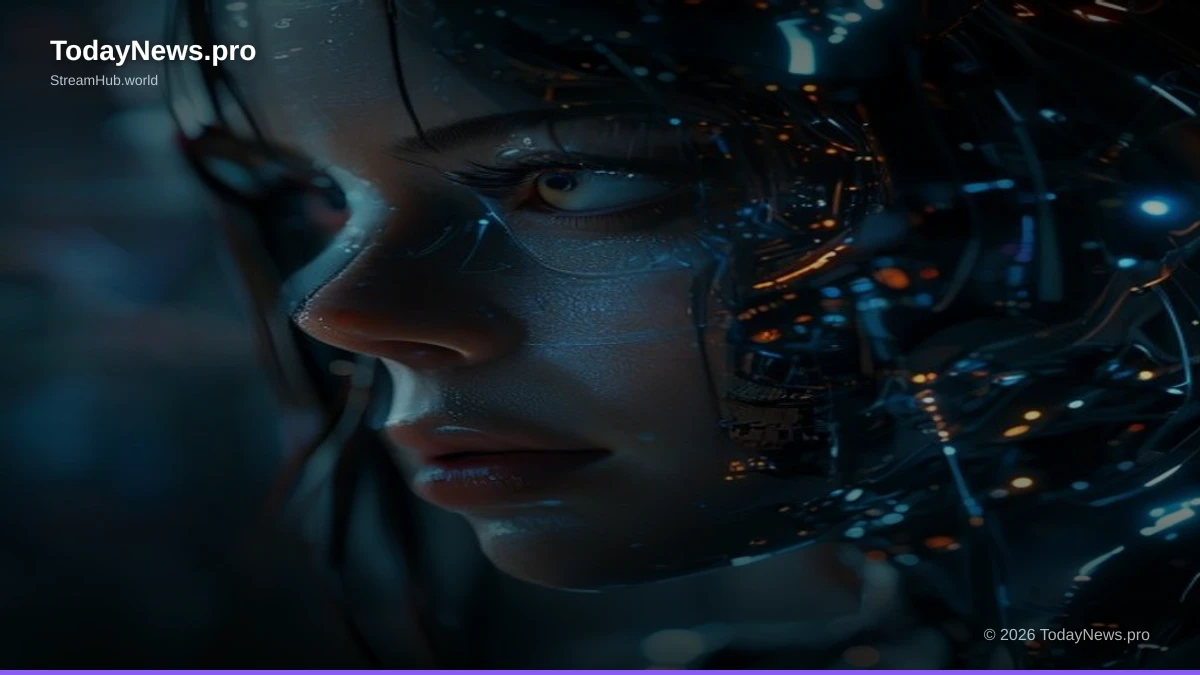
The global AI market in media and entertainment is projected to reach $45.8 billion by 2030, signaling a seismic shift in how creative content is conceived and produced.
The Algorithmic Muse: AIs Entry into Creative Storytelling
Artificial intelligence is no longer a futuristic concept confined to science fiction; it is actively, and often subtly, weaving itself into the fabric of the entertainment industry. From the initial spark of an idea to the final polish of a narrative, AI tools are emerging as collaborators, assistants, and even nascent creators. This integration is reshaping traditional workflows, challenging established notions of authorship, and opening up unprecedented avenues for imaginative expression across film, television, and interactive media.
The journey of AI in entertainment began with more utilitarian applications, such as optimizing distribution, analyzing audience sentiment, and automating post-production tasks like color grading. However, the recent advancements in natural language processing (NLP) and generative AI have propelled the technology into the core creative process. Tools capable of generating text, images, and even music are now readily available, prompting a re-evaluation of how stories are born and how characters are conceived.
This evolution is marked by a growing sophistication in AI's ability to understand context, mimic human writing styles, and even generate novel concepts. While the human touch remains paramount, AI is proving to be a powerful amplifier, capable of accelerating creative exploration and overcoming developmental bottlenecks. The entertainment landscape is therefore on the cusp of a profound transformation, driven by the intricate interplay between human creativity and algorithmic intelligence.
The Democratization of Creativity
One of the most significant impacts of AI is its potential to democratize creative processes. Individuals without extensive technical skills or traditional industry access can now leverage AI to bring their story ideas to life. This lowers the barrier to entry, fostering a more diverse range of voices and narratives. Aspiring filmmakers can generate storyboards, game developers can rapidly prototype narrative arcs, and writers can overcome creative blocks with AI-generated prompts and continuations.
Accelerating Ideation and Prototyping
The sheer speed at which AI can generate content is a game-changer. What might take a team of writers weeks to brainstorm and outline, an AI can produce in a matter of hours. This allows for rapid iteration and exploration of multiple story paths, character archetypes, and thematic explorations. This acceleration is particularly valuable in the early stages of development, where a broad exploration of concepts is often necessary before narrowing down to a viable direction.
Scriptwriting Revolution: From Prompt to Plot
The traditional scriptwriting process, often characterized by solitary contemplation and collaborative brainstorming, is now being augmented by AI. Large Language Models (LLMs) like GPT-3, GPT-4, and similar proprietary systems are being trained on vast corpuses of existing scripts, novels, and screenplays. This allows them to understand narrative structure, character dialogue, pacing, and thematic development. The output ranges from generating entire scene drafts based on simple prompts to suggesting plot twists, character motivations, and even specific lines of dialogue.
AI can analyze successful narrative patterns from blockbuster hits, identifying elements that resonate with audiences. This data-driven approach can inform script development, helping writers to craft stories that are not only compelling but also commercially viable. For instance, an AI could identify the optimal placement of exposition, the most engaging dialogue exchanges, or the predictable yet satisfying arcs of hero's journeys.
Furthermore, AI can serve as a tireless editor and continuity checker. It can identify plot holes, inconsistencies in character behavior, or repetitive phrasing, offering suggestions for improvement. This frees up human writers to focus on the more nuanced, emotional, and unique aspects of storytelling that still require human intuition and lived experience.
Prompt Engineering for Storytelling
The art of "prompt engineering" has emerged as a crucial skill in leveraging AI for scriptwriting. Crafting effective prompts requires a deep understanding of narrative elements and AI capabilities. A well-designed prompt can guide the AI to generate specific genres, tones, character dynamics, and plot points. For example, a prompt might read: "Generate a scene where a cynical detective, haunted by a past case, interrogates a mysterious witness in a dimly lit jazz club. The dialogue should be sharp and laced with subtext, hinting at a larger conspiracy."
AI-Assisted Dialogue Generation
Dialogue is the lifeblood of many narratives, and AI is proving surprisingly adept at crafting believable and engaging conversations. It can generate dialogue that reflects specific character voices, emotional states, and narrative functions. While AI-generated dialogue may sometimes lack the organic flow or unique quirks of human writing, it can provide excellent starting points, suggest alternative phrasing, or even generate entire conversational exchanges that a writer can then refine and imbue with personality.
Overcoming Writers Block
Writer's block is a perennial challenge in creative industries. AI can act as a powerful antidote by providing a constant stream of ideas, story fragments, and dialogue suggestions. When a writer feels stuck, they can turn to an AI for prompts, alternative plot directions, or character interactions. This can help to break through creative inertia and reignite the writing process. The AI doesn't replace the writer's ideas but rather serves as a catalyst for them.
| AI Scriptwriting Tool | Primary Function | Key Features |
|---|---|---|
| NovelAI | Generative Fiction Writing | Customizable AI models, character memory, world information, module training |
| Sudowrite | AI-powered Writing Assistant | Brainstorming, descriptive expansion, rephrasing, pacing suggestions |
| Jasper AI (formerly Jarvis) | Content Generation Platform | Story generation, script outlines, marketing copy, blog posts |
| InferKit | Text Generation API | Advanced text prediction, creative writing assistance, custom models |
Narrative Architectures: Crafting Immersive Game Worlds
The gaming industry, with its inherently complex and interactive nature, is a prime testing ground for AI's narrative capabilities. Beyond the procedural generation of levels and environments, AI is increasingly being used to build dynamic and responsive storylines that adapt to player choices. This moves beyond pre-scripted branching narratives, creating experiences that feel truly unique to each player.
AI can manage complex lore, track player actions, and dynamically adjust the narrative to maintain immersion and coherence. For instance, in an open-world RPG, an AI could orchestrate non-player character (NPC) interactions based on the player's reputation, influencing quest availability, dialogue options, and even the overall mood of the game world. This allows for a level of emergent storytelling that was previously unachievable.
Generative AI is also being employed to create vast amounts of in-game text, such as item descriptions, lore entries, and NPC backstories, significantly reducing the manual workload for narrative designers. This allows development teams to focus on the overarching narrative themes and character arcs, while AI handles the granular details of world-building.
Dynamic Branching Narratives
Traditional branching narratives in games are often limited by the pre-defined paths the developers can script. AI can introduce a new level of dynamism, where player actions trigger not just pre-programmed outcomes, but also emergent narrative events. An AI could interpret a player's decision to betray an ally, not just as a plot point, but as a catalyst for that ally to gather intelligence, recruit new followers, and potentially seek revenge later in the game, even if this wasn't explicitly written into a specific questline.
Procedural Storytelling and Player Agency
Procedural content generation has long been a staple of game development for creating vast worlds. AI is now being applied to procedural storytelling, generating unique questlines, character arcs, and even entire plotlines on the fly. This enhances player agency, as their choices have a more profound and unpredictable impact on the unfolding narrative. The game world becomes a living, breathing entity that reacts and evolves based on the player's interactions.
AI-Driven NPC Behavior and Dialogue
NPCs are crucial for bringing game worlds to life. AI can imbue NPCs with more sophisticated behaviors and conversational abilities. Instead of relying on repetitive dialogue trees, AI can generate context-aware conversations, allowing NPCs to react realistically to player actions, environmental changes, and even the actions of other NPCs. This can lead to more believable interactions and a deeper sense of immersion.
Character Genesis: Building Believable Personalities with AI
Characters are the heart of any story. AI is now being used to assist in the creation of complex, nuanced, and believable characters, moving beyond archetypes to develop individuals with unique motivations, backstories, and emotional depth.
AI can analyze vast datasets of human psychology, literature, and film to identify patterns in character development. This information can be used to generate character profiles, including their personality traits, fears, desires, and potential character arcs. For writers struggling to define a character, AI can provide a rich starting point, suggesting conflicting motivations or unexpected vulnerabilities that can make a character more compelling.
Beyond personality, AI can also help in the visual development of characters. Generative AI image models can create character concept art, explore different visual styles, and even generate realistic 3D models based on textual descriptions. This speeds up the pre-production process for visual media like film and video games.
AI-Powered Character Backstory Generation
A well-developed backstory is crucial for a character's believability. AI can assist in generating rich and intricate backstories, drawing upon historical contexts, social dynamics, and thematic elements of the narrative. It can create plausible childhood experiences, formative relationships, and pivotal life events that shape a character's present-day personality and motivations.
Developing Character Arcs and Motivations
Character arcs are the journeys of transformation characters undergo throughout a story. AI can help plot these arcs by suggesting potential conflicts, growth opportunities, and moments of revelation. By understanding the character's core traits and the narrative's thematic goals, AI can propose believable pathways for character development, ensuring their actions and reactions are consistent with their evolving personality.
The Ethical Tightrope: Bias, Authorship, and Authenticity
As AI becomes more integrated into creative processes, significant ethical questions arise. One of the most pressing concerns is the potential for AI to perpetuate or even amplify existing biases present in the data it is trained on. If an AI is trained on historical scripts that, for example, disproportionately feature male protagonists or perpetuate stereotypes, its output may reflect and reinforce these biases.
Authorship is another complex issue. When an AI generates a significant portion of a script or narrative, who is the author? Is it the programmer who created the AI, the user who prompted it, or the AI itself? Current legal frameworks are not well-equipped to handle these questions, leading to ongoing debates about copyright and intellectual property.
Authenticity is also a concern. While AI can mimic human creativity, it lacks genuine lived experience, emotions, and consciousness. This raises questions about whether AI-generated content can truly possess the depth and resonance that comes from human artistry. The debate is not about whether AI can create compelling narratives, but whether it can create narratives with genuine soul.
Algorithmic Bias and Representation
The datasets used to train AI models are often a reflection of historical societal imbalances. This means that AI can inadvertently learn and reproduce discriminatory patterns related to race, gender, sexuality, and other identity markers. For example, an AI trained on older film scripts might consistently cast women in subservient roles or portray minority characters in stereotypical ways. Addressing this requires careful curation of training data, bias detection algorithms, and diverse human oversight.
Copyright and Intellectual Property in the Age of AI
The question of who owns the copyright to AI-generated content is a legal minefield. Current copyright law generally requires human authorship. If an AI creates a story, is it public domain? Or does the copyright belong to the user who provided the prompt, or the company that developed the AI? These questions are likely to be tested in courts and debated by lawmakers for years to come. The emerging consensus leans towards AI as a tool, with copyright vesting in the human user who directs its creative output.
For more on copyright law and AI, see the U.S. Copyright Office's AI guidance.
The Value of Human Artistry
While AI can generate technically proficient narratives, it is argued that it cannot replicate the genuine emotional depth, personal perspective, and unique creative vision that stems from human experience. The "soul" of a story, the subtle nuances of human emotion, and the profound connections forged through shared human understanding are elements that AI, in its current form, cannot truly possess. The debate often centers on whether AI is a co-creator or a sophisticated tool that requires human guidance to imbue its output with authentic meaning.
The Future of Entertainment: Collaboration or Replacement?
The prevailing sentiment among industry experts is that AI is more likely to become a powerful collaborative tool rather than a complete replacement for human creatives. The future of entertainment is envisioned as a synergistic partnership, where AI handles repetitive tasks, generates initial ideas, and performs complex analyses, freeing up human artists, writers, and directors to focus on higher-level creative decisions, emotional nuance, and unique artistic expression.
This collaborative model could lead to increased efficiency, reduced production costs, and the ability to explore more ambitious and innovative projects. Imagine a director using AI to rapidly prototype different visual styles for a scene, or a writer employing AI to test out dozens of potential plot resolutions before settling on the most impactful one. The human element remains crucial for injecting originality, emotional intelligence, and the intangible spark of genius that defines great art.
Augmenting Human Creativity
The most optimistic outlook sees AI as an intelligent assistant that amplifies human creative potential. AI can handle the laborious aspects of content creation, such as generating variations, performing simulations, or managing vast amounts of data, allowing human creators to dedicate more time to conceptualization, refinement, and the injection of personal artistic vision. This augmentation can lead to faster iteration cycles and more polished final products.
New Roles and Skillsets
The integration of AI will undoubtedly lead to the emergence of new roles within the entertainment industry. "Prompt engineers" specializing in creative AI, AI ethicists guiding responsible development, and AI integration specialists will become increasingly important. Existing roles may also evolve, requiring professionals to develop new skills in working alongside AI tools and interpreting their outputs.
Case Studies and Emerging Trends
While the widespread adoption of AI in creative roles is still nascent, several early examples and emerging trends offer a glimpse into its potential. From independent filmmakers experimenting with AI-generated scripts to major studios exploring AI-powered character development, the industry is actively testing the boundaries of what's possible.
One notable trend is the use of AI in early-stage concept development. AI can generate numerous visual concepts for characters, sets, and even entire story worlds, providing a broad palette for human artists to draw from. Another trend is the use of AI for predictive analytics in storytelling, helping to identify narrative elements that are likely to resonate with specific audience demographics.
AI in Independent Filmmaking
Independent filmmakers, often operating with limited budgets and resources, are finding AI to be a valuable ally. Tools that can generate storyboards, draft scripts, or even create rudimentary animation can significantly lower the barrier to entry for aspiring filmmakers. This allows for more ambitious projects to be realized with fewer resources, fostering a more vibrant and diverse independent film scene.
For a look at AI in creative arts, see Wikipedia's entry on AI in Art.
The Rise of Generative AI Art and Music
The rapid advancements in generative AI for images and music are also impacting entertainment. Tools like Midjourney and DALL-E 2 are being used to create concept art, storyboards, and even visual effects. Similarly, AI music generators can produce soundtracks, ambient music, or jingles, providing composers with new sources of inspiration and rapidly generated audio assets.
Ethical AI Frameworks in Development
As AI's creative capabilities grow, so does the imperative for ethical development and deployment. Industry bodies, researchers, and tech companies are actively working on establishing guidelines and frameworks to ensure AI is used responsibly. This includes addressing issues of bias, transparency, and accountability, aiming to build AI systems that are fair, equitable, and beneficial to both creators and audiences.
Explore Reuters' reporting on ethical AI standards.