

 Emma Stone
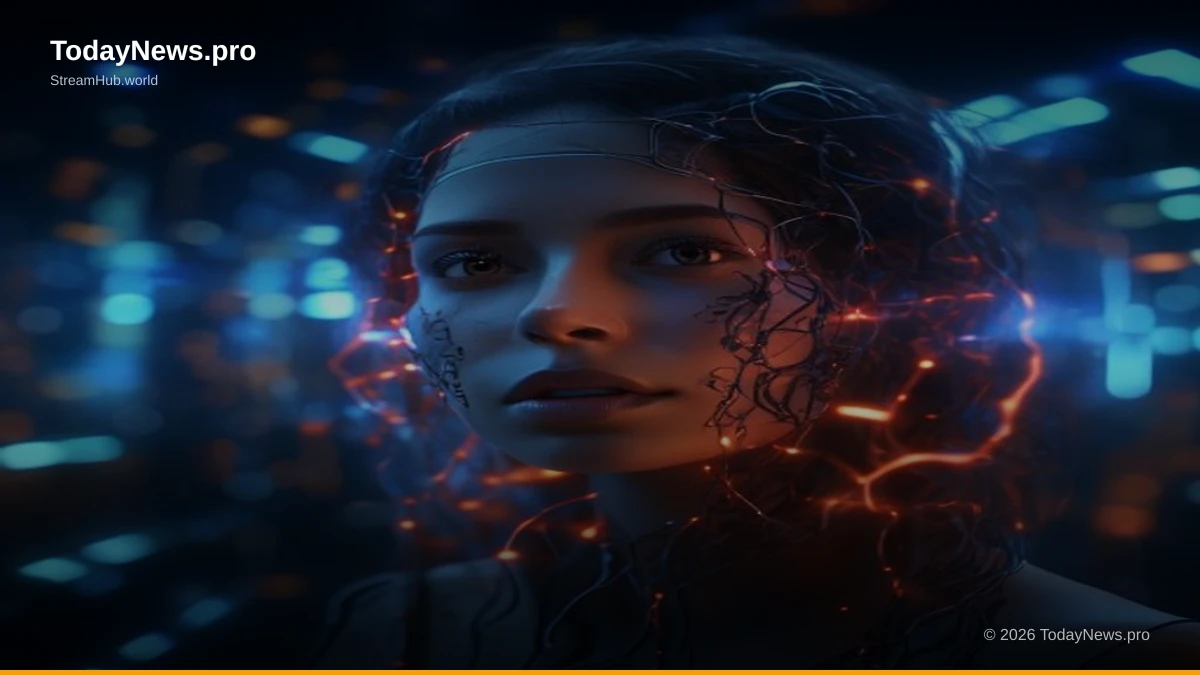
As of early 2024, over 5 billion people actively use the internet, a figure that continues to climb exponentially, yet the fundamental ownership and control over their digital personas remain largely dictated by centralized platforms.
The Dawn of Digital Selfhood: Beyond Web2s Silos
The internet, as we've known it for the past two decades, has been predominantly shaped by the Web2 paradigm. This era is characterized by user-generated content, social connectivity, and the ubiquitous presence of platforms like Meta, Google, and X (formerly Twitter). While these platforms have democratized content creation and fostered unprecedented global communication, they have also erected digital walled gardens. Our online identities, our data, and our digital assets are largely siloed within these ecosystems, controlled by corporate entities whose primary motivation is profit. This model, while convenient, has inherent vulnerabilities and limitations, fostering a sense of rented digital real estate rather than true ownership.
In Web2, your digital identity is a collection of fragmented profiles, login credentials scattered across countless services, and data points meticulously collected and monetized by intermediaries. Each login, each interaction, adds another layer to a profile that you don't entirely control. Think about it: if Facebook or Google decides to change its terms of service, or worse, shuts down, a significant portion of your digital presence could be compromised or lost. This lack of portability and true ownership is a growing concern for individuals navigating an increasingly digital world.
The advent of Web3, powered by blockchain technology, promises a radical departure from this centralized model. It envisions a decentralized internet where users have greater control over their data, identity, and digital assets. This shift is not merely a technological upgrade; it's a philosophical one, placing the individual at the center of their digital existence. The core tenet of Web3 is to move away from platforms owning users' data towards a system where users own their data and their digital selves.
The Web2 Identity Landscape: A Fragile Foundation
Consider the current state of online identity. We rely on usernames and passwords, often reused across multiple platforms, creating significant security risks. Data breaches are a constant threat, exposing sensitive personal information. Furthermore, platforms dictate the terms of engagement, often de-platforming users or censoring content without recourse. Our digital reputation, built over years of online activity, can be fragile and subject to the whims of a platform's algorithms or policies. This dependence on centralized authorities for our digital existence is akin to renting a home without any deed or long-term security.
The economic model of Web2 also relies heavily on the commodification of user data. Every click, every search, every interaction is tracked, analyzed, and used to serve targeted advertising. While this has fueled the growth of many free online services, it means that users are essentially the product, their attention and personal information being the currency. This creates an inherent power imbalance, where the platform holds the cards, and the user is merely a participant in a system designed for their exploitation, however unintentional.
Decentralization: The Bedrock of Web3 Identity
At the heart of Web3's revolution in digital identity lies decentralization. Unlike Web2, where data and control are concentrated in the servers of large corporations, Web3 leverages distributed ledger technology, most notably blockchain, to spread information and power across a network of participants. This means no single entity has absolute control, making the system more resilient, transparent, and resistant to censorship.
This fundamental shift impacts how we conceive of our digital selves. Instead of having an identity managed by a platform, Web3 aims for a self-sovereign identity (SSI). This means individuals will have a portable, verifiable digital identity that they control. This identity is not tied to any single platform but can be used across various decentralized applications (dApps) and services. Imagine a digital passport that you own and can present to any service, proving your identity without revealing more information than necessary.
The implications of this are profound. Users will no longer be beholden to the terms of service of a single company. They can choose which services to engage with, and how their data is shared. This empowers individuals to curate their online presence and benefit directly from their digital contributions. It's a move towards a more equitable internet, where the power dynamic shifts from corporations to individuals.
Blockchain as the Foundation for Trust and Verifiability
Blockchain technology provides the immutable and transparent ledger necessary for decentralized identity. When your identity attributes are recorded on a blockchain, they become verifiable and tamper-proof. This doesn't necessarily mean all your personal data is stored on the public blockchain (which would be a privacy concern). Instead, it often involves cryptographic proofs and decentralized identifiers (DIDs) that can be verified without revealing the underlying sensitive information. For instance, you could prove you are over 18 without revealing your exact birthdate.
This technology enables a new level of trust in online interactions. Instead of relying on a third party to vouch for your identity, your identity can be self-attested and cryptographically secured. This is crucial for areas like decentralized finance (DeFi), where knowing the identity of participants, even in a pseudonymous way, is vital for security and regulatory compliance. The ability to prove who you are, or what credentials you possess, without a central authority acting as an intermediary, is a game-changer.
Decentralized Identifiers (DIDs) and Verifiable Credentials (VCs)
Decentralized Identifiers (DIDs) are a key component of Web3 identity. They are globally unique identifiers that a person or organization creates and controls. DIDs are not issued by a central registry, nor are they dependent on any centralized infrastructure. They are anchored to a decentralized ledger, like a blockchain, which allows them to be discoverable and verifiable. Think of a DID as a unique, persistent digital address for your identity.
Complementing DIDs are Verifiable Credentials (VCs). These are tamper-evident digital credentials that can be issued by trusted authorities (like universities, employers, or governments) and then cryptographically proven by the holder to a relying party. For example, a university could issue a VC for a degree. You, as the holder of this VC, could then present it to a potential employer to prove your qualification, without the employer needing to directly contact the university. This streamlines verification processes and enhances privacy, as you control what information is shared and with whom.
Verifiable Credentials and Self-Sovereign Identity (SSI)
The concept of Self-Sovereign Identity (SSI) is a cornerstone of Web3's identity revolution. It posits that individuals should have ultimate control and ownership over their digital identities. This means being able to create, manage, and share identity information without relying on centralized authorities. SSI empowers users by giving them the agency to decide what information is shared, with whom, and for how long. This stands in stark contrast to the current Web2 model, where our data is often collected, stored, and monetized by platforms without our explicit, ongoing consent.
Verifiable Credentials (VCs) are the practical mechanism through which SSI is realized. Imagine a digital wallet that holds all your verified credentials – your driver's license, your university degree, your professional certifications, even your vaccination records. When you need to prove a specific piece of information, you present the relevant VC from your wallet. This VC is cryptographically signed by the issuer, making it highly trustworthy and resistant to forgery. The recipient can then verify the authenticity of the credential directly, without needing to contact the original issuer.
This system drastically reduces the need for intermediaries. Currently, to verify your age, you might show your driver's license to a bartender. In a Web3 future, you might present a verifiable credential for "over 21" from your digital wallet, proving you meet the age requirement without revealing your exact birthdate or other personal details on the license. This granular control over data sharing is a significant privacy enhancement.
Building a Portable Digital Reputation
Beyond formal credentials, Web3 also allows for the creation of a portable digital reputation. This reputation can be built through interactions across various decentralized applications and platforms. For example, a user's contributions to open-source projects, their participation in decentralized governance, or their engagement in online communities could all contribute to a verifiable reputation score. This score, managed by the user, could then be used to access opportunities or gain trust in new environments.
This moves away from platform-specific reputations. Currently, your reputation on Twitter is separate from your reputation on LinkedIn, and neither transfers to other platforms. In Web3, a unified, verifiable reputation could follow you, making your online history a more meaningful and transferable asset. This incentivizes good behavior and fosters a more trustworthy online ecosystem. It’s about building a digital legacy that you own and control.
The Role of Smart Contracts in Identity Management
Smart contracts, self-executing code deployed on a blockchain, play a crucial role in managing and enforcing identity rules within Web3. These contracts can automate the issuance, revocation, and verification of credentials. For instance, a smart contract could be programmed to automatically revoke a professional license if certain conditions are not met, or to grant access to a decentralized application based on the possession of a specific verifiable credential.
Furthermore, smart contracts enable the creation of decentralized autonomous organizations (DAOs), where membership and voting rights can be tied to specific identity attributes or token holdings. This allows for more sophisticated and secure forms of digital governance, where participation is transparent and auditable. The programmatic nature of smart contracts ensures that identity-related rules are applied consistently and without human error.
The Tokenization of Self: NFTs and Digital Avatars
The explosion of Non-Fungible Tokens (NFTs) has introduced a novel way to represent ownership and uniqueness in the digital realm, extending even to aspects of our digital identity. While initially popularized for digital art and collectibles, NFTs are increasingly being explored for their potential to represent unique digital assets, including digital avatars, virtual land, and even personal achievements or memberships. These tokens, minted on a blockchain, are inherently unique and provide irrefutable proof of ownership.
In the context of digital identity, NFTs can serve as unique identifiers for our virtual personas. As we spend more time in virtual worlds and metaverses, our avatars become extensions of ourselves. Owning an NFT avatar means that you truly own that digital representation, and can move it across different platforms or metaverses, rather than being tied to a proprietary avatar created within a single game or social platform. This fosters a more interoperable and personalized digital experience.
Beyond avatars, NFTs can also represent unique digital achievements or access rights. A certificate of completion for an online course, a ticket to a virtual event, or a membership in a decentralized community could all be tokenized as NFTs. This creates a verifiable and transferable record of your digital achievements and affiliations, contributing to your overall digital identity and reputation. It's about turning digital interactions and accomplishments into tangible, ownable assets.
Avatars as Extensions of Identity
The evolution of online gaming and virtual worlds has seen avatars transform from simple representations to sophisticated expressions of self. In Web3, the concept of the avatar is elevated. Instead of being confined to a single virtual environment, an NFT-based avatar can potentially exist across multiple metaverses. This means your digital alter ego, crafted with unique traits and customisations, can travel with you, interacting with different digital worlds and communities while maintaining its distinct identity.
This portability is a significant step towards a cohesive digital identity. Imagine purchasing a unique outfit or accessory as an NFT, and being able to equip it on your avatar in various virtual spaces. This not only allows for greater personal expression but also creates an economy around digital fashion and identity. The value of these digital assets is tied to their uniqueness and the owner's control, a stark contrast to the limited utility of in-game items in Web2 environments.
NFTs for Access and Membership
NFTs are also revolutionizing how we manage access and membership in digital communities. Owning a specific NFT can grant you entry into exclusive online clubs, private forums, or decentralized autonomous organizations (DAOs). This is a more dynamic and equitable approach to membership, as ownership of the NFT directly translates to rights and privileges within the community. It bypasses the need for centralized administration and KYC (Know Your Customer) processes in many cases, relying on the blockchain's inherent verifiability.
For instance, a DAO might require members to hold a specific NFT to vote on proposals. This ensures that only genuine stakeholders have a say in the organization's direction. These NFTs can also be traded, allowing for a fluid and market-driven approach to community participation. The ability to prove membership and its associated rights through a unique token is a powerful new mechanism for digital community building and governance.
Ownership in the Metaverse: Building Your Digital Estate
The rise of the metaverse, a persistent, interconnected set of virtual spaces, presents a new frontier for digital ownership. In Web3-native metaverses, users are not merely visitors or renters; they can become owners of virtual land, digital assets, and even experiences. This concept of "digital real estate" is powered by blockchain technology, where ownership of virtual plots and items is recorded as NFTs, providing indisputable proof of ownership.
This paradigm shift allows individuals and organizations to build, monetize, and develop their virtual properties. Just as in the physical world, owning land in the metaverse can provide opportunities for development, advertising, or hosting events. The value of these digital estates is driven by scarcity, utility, and community adoption, mirroring principles of traditional real estate but within a digital, decentralized framework.
Imagine creating a virtual art gallery on your owned metaverse land, selling NFTs of your digital creations, and earning cryptocurrency. Or perhaps you build a virtual concert venue and sell tickets as NFTs. The possibilities are vast, and for the first time, users can truly own and profit from their digital creations and investments within these immersive virtual worlds. This is the democratization of digital property rights.
Virtual Land and Decentralized Economies
Platforms like Decentraland and The Sandbox have pioneered the concept of virtual land ownership. Users can purchase plots of digital land, typically represented by NFTs, and then develop them according to their vision. This includes building structures, hosting interactive experiences, and even creating their own marketplaces for digital goods and services. The land itself becomes an asset that can appreciate in value, be traded, or leased to others.
These virtual economies are often powered by native cryptocurrencies, which facilitate transactions for land, assets, and services. This creates self-sustaining ecosystems where users can earn, spend, and invest within the metaverse. The ability to own and operate businesses within these virtual spaces, with true digital property rights, is a significant evolution from the centralized app stores and marketplaces of Web2. It fosters a sense of agency and entrepreneurialism in the digital realm.
Interoperability and the Future of Digital Assets
A key aspiration for the Web3 metaverse is interoperability – the ability for digital assets and identities to move seamlessly between different virtual worlds. While still in its nascent stages, the vision is that an NFT purchased in one metaverse could potentially be used or displayed in another. This would create a more unified and valuable digital ecosystem, where digital assets are not locked into proprietary platforms but can traverse the digital landscape.
This vision of interoperability is crucial for the long-term growth and user adoption of the metaverse. It ensures that users are not penalized for exploring different virtual environments and that their digital investments retain their value and utility across various platforms. As standards for interoperable digital assets evolve, the metaverse could become a truly interconnected digital universe where our online lives are as fluid and integrated as our physical ones.
Challenges and the Road Ahead for Web3 Identity
Despite the immense promise of Web3 for digital identity and ownership, significant hurdles remain before its widespread adoption. The technology, while revolutionary, is still complex and often unintuitive for the average user. The user experience needs substantial improvement to match the ease of use offered by current Web2 platforms. Concepts like private keys, seed phrases, and gas fees can be daunting and pose security risks if not managed correctly.
Scalability is another major concern. Many blockchains currently struggle to handle the transaction volume required for a global internet. While solutions like layer-2 scaling are being developed, ensuring that the infrastructure can support billions of users and countless interactions is paramount. Furthermore, regulatory clarity surrounding decentralized identities, digital assets, and cryptocurrencies is still evolving, creating uncertainty for businesses and individuals alike.
The risk of scams, phishing, and rug pulls is also prevalent in the nascent Web3 space. Users need to be educated about best practices for securing their digital assets and identities. Building trust in a decentralized system requires robust security measures and clear guidelines for user protection. Addressing these challenges will be critical for the mainstream adoption of Web3 identity solutions.
User Experience and Onboarding Barriers
The current onboarding process for Web3 can be a significant barrier to entry. Setting up a cryptocurrency wallet, managing private keys, and understanding concepts like transaction fees can be overwhelming for individuals accustomed to the simplicity of Web2 logins. While wallets are becoming more user-friendly, and decentralized identity solutions are striving for seamless integration, the learning curve is still steep.
For Web3 identity to truly take hold, it needs to be as effortless as signing up for an email account today. This involves abstracting away much of the underlying technical complexity, providing clear and accessible educational resources, and building intuitive interfaces that guide users through the process. The goal is to empower users without requiring them to become blockchain experts.
Security and Privacy Considerations
While blockchain technology offers inherent security benefits, the management of digital identities and assets introduces new security challenges. The loss or compromise of private keys, for example, can lead to the irreversible loss of access to a digital identity or valuable assets. This necessitates robust security practices, including multi-factor authentication, secure storage of credentials, and vigilant awareness of potential scams.
Balancing privacy with verifiability is another ongoing challenge. While decentralized identities aim to minimize data exposure, ensuring that sensitive information is never inadvertently revealed or misused is paramount. Advanced cryptographic techniques and careful design of identity protocols are essential to achieve this balance. The ultimate goal is to empower users with control while safeguarding their privacy.
The Social Impact: Empowering Users in the Digital Realm
The transition to Web3 and its implications for digital identity and ownership extend far beyond technological advancements; they represent a profound social shift. By returning control of data and digital assets to individuals, Web3 has the potential to democratize the internet, foster greater autonomy, and create more equitable digital economies. Users who were once passive consumers of digital services can become active participants and owners.
This empowerment can manifest in various ways. For creators, it means direct ownership of their work and a larger share of the revenue generated. For individuals, it means a more secure and private online existence, free from the constant surveillance and data exploitation inherent in the Web2 model. This shift could lead to a more resilient and user-centric internet, where individuals have a genuine stake in the digital world they inhabit.
The rise of decentralized organizations (DAOs) also hints at a future of more inclusive and transparent governance. By leveraging blockchain and token-based systems, DAOs allow communities to collectively manage resources and make decisions, fostering a sense of shared ownership and responsibility. This could pave the way for new forms of social organization and participation in the digital age.
will generate
over 100 zettabytes
of data by 2025
are concerned
about data privacy,
according to PwC
believe they have
more control
over their data
in Web3
| Web2 Identity | Web3 Identity |
|---|---|
| Platform-controlled | Self-Sovereign (User-controlled) |
| Data siloed in corporate servers | Decentralized identifiers (DIDs) and verifiable credentials (VCs) |
| Fragmented logins and profiles | Portable, unified digital identity |
| Data monetization by platforms | User control over data sharing and monetization |
| Limited asset ownership | True ownership of digital assets (NFTs) |
| Centralized authority for verification | Cryptographic verification and blockchain attestations |
The journey towards a fully realized Web3 identity is ongoing. It requires continued innovation in technology, a focus on user education, and collaboration between developers, policymakers, and the community. However, the trajectory is clear: the internet is evolving, and with it, our understanding and control over our digital selves.
For more on the foundational principles of blockchain technology, explore Wikipedia's comprehensive guide. To understand the evolving regulatory landscape and potential economic impacts, keep an eye on reports from reputable financial news sources like Reuters.