

 Scott Wright
⏱ 15 min
The global market for synthetic media, encompassing deepfakes and AI-generated content, is projected to reach over $2 billion by 2026, a significant surge driven by advancements in artificial intelligence and digital rendering technologies.
The Digital Doppelgänger: Deepfakes and the Shifting Sands of Authenticity
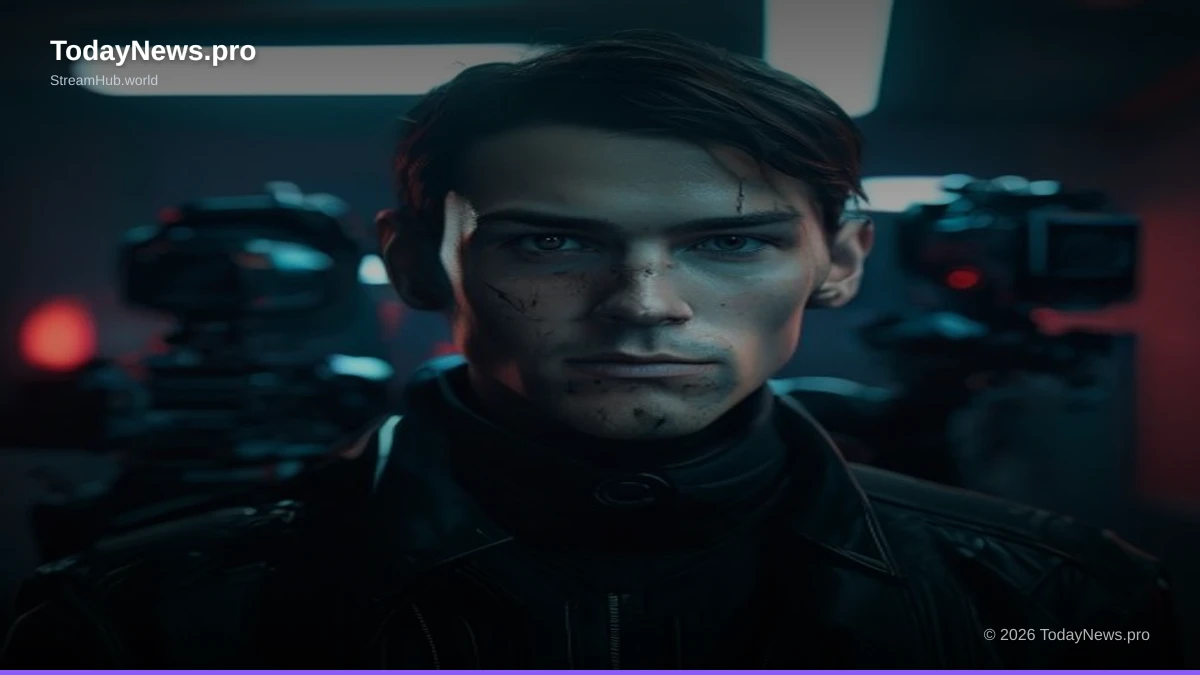
By 2026, deepfake technology will have evolved from a niche concern into a ubiquitous tool, blurring the lines between reality and fabrication in filmmaking. What began as a controversial method for creating manipulated videos, often with malicious intent, is now being harnessed by studios and independent creators alike for a variety of creative purposes. The ability to convincingly superimpose one person's likeness onto another, or to generate entirely new performances from scratch, opens up unprecedented avenues for storytelling. Imagine deceased actors "returning" to the screen for poignant cameos, or historical figures being brought to life with startling realism for documentaries. The ethical considerations are immense, as the potential for misinformation and defamation grows in parallel with creative utility. However, the allure of perfect digital replicas, capable of delivering flawless performances on demand and without the logistical complexities of human actors, is proving irresistible to the industry. The very definition of "performance" is being redefined, moving beyond the physical presence of an individual to the sophisticated manipulation of digital data.The Evolution of Deepfake Technology
The underlying algorithms powering deepfakes have undergone rapid refinement. Generative Adversarial Networks (GANs) and more advanced diffusion models are now capable of producing visuals with astounding detail and coherence. These technologies can synthesize not only facial features but also subtle body language, vocal inflections, and even emotional nuances. The computational power required, once a significant barrier, is becoming more accessible, democratizing the creation of high-fidelity synthetic media. This accessibility, however, amplifies concerns about misuse. The ease with which realistic but fabricated content can be generated raises significant challenges for content verification and media literacy. As the technology becomes more sophisticated, distinguishing between genuine and synthetic footage will require increasingly advanced detection methods, creating an ongoing arms race between creators and verifiers. The implications for historical documentation and even personal memory are profound, as the very notion of visual evidence becomes more suspect.Deepfakes in Narrative Storytelling
Beyond mere replication, deepfakes are being integrated into narrative structures. Directors can now de-age actors seamlessly for flashback sequences, create entirely digital characters that interact credibly with live actors, or even alter performances post-production to fine-tune emotional delivery. This allows for creative freedom previously unimaginable, enabling filmmakers to explore complex character arcs and ambitious visual concepts without being constrained by the limitations of physical performance or the aging process of actors. The ability to iterate on performances digitally also offers a more efficient workflow, allowing for rapid experimentation and refinement. For instance, a scene might be shot with an actor, and then digitally manipulated to explore different emotional intensities, providing the director with a wider palette of options. The potential for creating entirely synthetic lead characters, indistinguishable from human actors, is also on the horizon, promising a new era of digital performers."The line between digital artistry and deceptive manipulation is thinner than ever. By 2026, the ability to discern authenticity will be a critical skill, not just for audiences but for every stakeholder in the filmmaking process."
— Dr. Anya Sharma, Lead Researcher, Digital Forensics Lab
AI Actors: The Rise of the Synthetically Generated Performer
The concept of an "AI actor" is no longer confined to science fiction. By 2026, expect to see AI-generated characters, indistinguishable from their human counterparts in many contexts, taking on speaking roles and driving narratives. These digital performers offer several compelling advantages for filmmakers. They are perpetually available, require no physical accommodations, can be "cast" in any role regardless of age or physical type, and their performances can be precisely controlled and iterated upon. This doesn't necessarily spell the end of human actors, but rather a significant augmentation of the acting profession. AI actors will likely be developed by "training" sophisticated AI models on vast datasets of human performance, including facial expressions, vocal patterns, and body language. The ethical questions surrounding consent, intellectual property for the "data" used to train these actors, and the potential displacement of human talent are central to this evolving landscape.The Training and Development of AI Performers
The creation of convincing AI actors involves meticulous data collection and sophisticated machine learning algorithms. Studios are amassing extensive libraries of motion capture data, facial performance archives, and voice recordings from a diverse range of human actors. This data is then used to train AI models, enabling them to generate original performances that are emotionally resonant and physically believable. The goal is not merely to mimic, but to imbue these digital entities with a sense of personality and agency. The development process is akin to sculpting, where raw algorithmic potential is shaped through iterative training and fine-tuning. As the technology advances, the nuance and subtlety of human performance will become increasingly replicable, leading to AI actors capable of conveying a wide spectrum of emotions. The ongoing challenge is to move beyond mere technical replication to genuine artistic expression.Synergy Between Human and AI Performance
The most likely scenario for 2026 is not a complete replacement of human actors by AI, but a powerful synergy. Human actors may provide the foundational performance capture, with AI then used to enhance, refine, or even "re-perform" certain elements to achieve a desired aesthetic or emotional impact. Alternatively, AI actors can be used to populate crowd scenes with realistic background characters, or to perform dangerous stunts that would otherwise pose risks to human performers. This collaborative approach allows filmmakers to leverage the best of both worlds: the authenticity and emotional depth of human performance, combined with the precision, flexibility, and scalability of AI. The industry is exploring models where human actors lend their likeness and performance data for AI avatars, potentially creating new revenue streams and creative opportunities for performers.75%
of studios anticipate using AI-generated characters in some capacity by 2026.
30%
increase in pre-production time savings projected through AI actor integration.
10+
major AI acting platforms are expected to be in active development by 2026.
Virtual Production: From Green Screen to Immersive Realities
Virtual production, powered by real-time rendering engines and LED volumes, is rapidly transforming how films are made, moving beyond traditional green screen techniques to create fully realized, immersive environments. By 2026, this technology will be a standard tool in the filmmaker's arsenal, allowing for on-set visualization of digital sets and effects in real-time. This means directors and actors can see the digital world they are interacting with during filming, leading to more dynamic performances and a more intuitive creative process. The benefits extend to budget and scheduling, as many visual effects that were once relegated to post-production can now be integrated directly into the live-action shoot. This shift represents a fundamental redefinition of the physical set, blurring the lines between practical and digital filmmaking.The Power of LED Volumes
The cornerstone of modern virtual production is the LED volume – massive, curved LED screens that display highly detailed, photorealistic digital environments. These screens wrap around the actors and set, creating a convincing illusion of depth and perspective. As the camera moves, the virtual background dynamically adjusts, mimicking the parallax effect of real-world cinematography. This eliminates the need for extensive green screen compositing, reducing post-production time and cost. Furthermore, the lighting from the LED screens interacts naturally with the actors and practical sets, creating a more cohesive and believable image. The fidelity of these displays is rapidly improving, with higher resolutions, wider color gamuts, and faster refresh rates making the virtual worlds almost indistinguishable from reality.| Metric | 2023 | 2026 (Projected) |
|---|---|---|
| Global Virtual Production Market Size (USD billions) | 3.5 | 12.8 |
| Number of Active Virtual Production Stages | 150 | 500+ |
| Average Cost Reduction per Film (Percentage) | 15% | 30% |
Real-Time Rendering and In-Camera VFX
The integration of real-time rendering engines, such as Unreal Engine and Unity, is critical to the success of virtual production. These engines allow for the creation and manipulation of complex digital environments and assets within the shooting day. This enables "in-camera VFX" (ICVFX), where visual effects are rendered directly onto the LED screens and captured by the camera during the principal photography. This dramatically speeds up the workflow, allowing for immediate feedback and iteration. Directors can make adjustments to the virtual environment on the fly, and actors can react to their surroundings with a tangible sense of presence. This immersive experience also enhances the creative collaboration between different departments, as art directors, cinematographers, and VFX supervisors can work together on the virtual set simultaneously.The Democratization of Virtual Production
While initially the domain of major Hollywood studios due to the significant investment required, virtual production technology is becoming more accessible. Smaller studios and independent filmmakers are gaining access to smaller-scale LED stages and more affordable real-time rendering software. Cloud-based rendering solutions and collaborative platforms are further lowering the barrier to entry. This democratization means that innovative storytelling from a wider range of creators can now be realized with cutting-edge visual fidelity. The development of standardized workflows and asset libraries will further accelerate this trend, making virtual production a viable option for a broader spectrum of projects, from feature films to episodic television and even high-end commercials.Economic and Creative Implications: A Double-Edged Sword
The integration of deepfakes, AI actors, and virtual production presents a complex economic and creative landscape for the film industry by 2026. On one hand, these technologies promise significant cost savings, faster production timelines, and unprecedented creative freedom. On the other hand, they raise serious questions about intellectual property, fair compensation, and the potential displacement of human talent. The industry is grappling with how to adapt its business models and contractual agreements to accommodate these transformative shifts.Cost Savings and Efficiency Gains
The economic arguments for embracing these new technologies are compelling. Virtual production, by consolidating many VFX tasks into the shooting phase, can drastically reduce post-production costs and the lengthy turnaround times associated with traditional methods. Deepfakes can be used to de-age actors, create digital doubles for dangerous stunts, or even bring historical figures to life without the need for elaborate costumes or location shoots. AI actors, once developed, can be perpetually available and cost-effective for certain roles. This efficiency allows studios to allocate budgets more strategically, potentially greenlighting more ambitious projects or increasing the overall volume of content produced. The ability to iterate endlessly on performances digitally also minimizes expensive reshoots.New Creative Possibilities and Storytelling Frontiers
Creatively, these tools unlock possibilities that were previously the stuff of imagination. Filmmakers can now craft worlds and characters with unparalleled detail and realism. The ability to seamlessly blend live-action with fully realized digital environments and performances opens up entirely new genres and narrative approaches. Imagine historical epics where entire ancient cities are recreated with photorealistic accuracy, or science fiction films where alien species are brought to life with nuanced emotional performances. The capacity to manipulate and generate performances also allows for more intricate character development and exploration of themes that might be challenging or impossible to capture with traditional methods. The sheer scope of visual storytelling is expanding exponentially.Projected Impact on Production Budgets by 2026
Ethical Quagmires and Regulatory Hurdles
As these powerful technologies become more integrated into filmmaking, the ethical and legal ramifications are becoming increasingly apparent and urgent. By 2026, the industry will be wrestling with profound questions regarding consent, intellectual property, the authenticity of performances, and the potential for misuse. Establishing clear guidelines and regulations will be paramount to ensuring responsible development and deployment. The rapid pace of technological advancement often outstrips the ability of legal frameworks to keep pace, creating a challenging environment for all stakeholders.Consent, Likeness Rights, and Intellectual Property
A major ethical concern revolves around consent and the use of an actor's likeness. When an AI actor is trained on a human performer's data, who owns the resulting digital persona? If deceased actors are "resurrected" for new performances, what are the implications for their estates and legacy? The legal frameworks surrounding intellectual property are being stretched and challenged by these new forms of digital creation. Clear contractual agreements will be necessary to define ownership, usage rights, and compensation for performers whose data or likeness is used to train AI or generate deepfakes. This will likely lead to new types of performance contracts specifically addressing AI and synthetic media.The Erosion of Trust and the Challenge of Verification
The proliferation of convincing deepfakes poses a significant threat to public trust in visual media. The ability to fabricate seemingly real events and statements can be exploited for propaganda, disinformation campaigns, and reputational damage. Filmmakers and content creators face the challenge of assuring audiences that their work is authentic, while also navigating a landscape where synthetic media is increasingly indistinguishable from reality. This may lead to the development of new authentication technologies and watermarking standards for digital content, similar to how digital photography has evolved to include metadata for verification. The responsibility for educating audiences on media literacy will also become more critical. For more on the societal impact of deepfakes, see Wikipedia's entry on Deepfakes.The Future of Actor Representation and Labor
The rise of AI actors and sophisticated digital doubles raises questions about the future of acting as a profession. Unions and guilds are already beginning to negotiate these issues. Will human actors be relegated to providing the initial performance data for AI, or will there be a demand for actors who can imbue AI with a unique artistic sensibility? The industry needs to proactively address potential job displacement and ensure that human performers are fairly compensated and have their rights protected in this new paradigm. The debate will likely involve discussions about minimum guarantees for human actor involvement and the establishment of ethical guidelines for the creation and deployment of AI performers.The Filmmakers Toolkit of 2026: Adaptation is Key
By 2026, the filmmaker's toolkit will be a hybrid of traditional craftsmanship and cutting-edge digital innovation. Mastery of these new technologies will not replace fundamental storytelling skills, but rather augment them. Directors, cinematographers, editors, and visual effects artists will need to be adaptable, continuously learning and integrating new tools to achieve their creative visions. The ability to navigate the complexities of AI, virtual production, and synthetic media will be a defining characteristic of successful filmmakers in the coming years.New Skill Sets and Collaborative Workflows
The demands on filmmakers are evolving. Beyond traditional cinematography and directing, there will be an increasing need for skills in real-time rendering, 3D asset creation, motion capture directing, and AI performance direction. Collaborative workflows will become even more crucial, with close integration between live-action crews and virtual production teams. The lines between the roles of a traditional set designer and a virtual environment artist will blur. Understanding the capabilities and limitations of AI actors and deepfake technology will be essential for every member of the production team, from the script supervisor to the final sound mixer.The Evolving Role of the Director
The director's role will become even more multifaceted. They will need to be adept at guiding both human and digital performers, envisioning and directing in real-time virtual environments, and making critical decisions about where and how to deploy AI and synthetic media. The director's ability to communicate a clear artistic vision will be paramount, as these technologies offer immense power but require precise guidance to be effective. The creative control that AI and virtual production offer allows directors to explore nuances in performance and visual storytelling that were previously impossible. This empowers them to sculpt the final product with a level of detail and precision previously unimaginable.80%
of film schools are expected to offer courses on virtual production by 2026.
50%
of VFX professionals anticipate working with AI-generated assets daily.
1 in 3
independent films are projected to utilize some form of virtual production.
Looking Beyond 2026: The Unfolding Future
While 2026 offers a glimpse into the near future of filmmaking, the trajectory of these technologies suggests even more profound changes on the horizon. The convergence of AI, virtual reality, augmented reality, and advanced rendering will likely lead to entirely new forms of cinematic experience and storytelling. The industry is on the cusp of a revolution, and the next few years will lay the groundwork for innovations that are currently difficult to even conceive. The exploration of interactive narratives, personalized film experiences, and even entire virtual worlds as cinematic canvases are all within reach.Hyper-Realistic Digital Humans and Personalized Storytelling
The pursuit of perfectly rendered, emotionally convincing digital humans will continue. By 2030, it may be virtually impossible to distinguish AI-generated actors from their human counterparts in any visual medium. This will enable highly personalized storytelling, where audiences can potentially influence narrative outcomes or even have characters tailored to their preferences. Imagine a film where the protagonist's appearance or even personality subtly shifts based on viewer input, creating a truly unique experience for each individual. This blurs the lines between passive viewing and active participation.The Metaverse as a Cinematic Canvas
The development of persistent virtual worlds, often referred to as the metaverse, will offer new platforms for cinematic creation and exhibition. Filmmakers may create entire films within these virtual spaces, allowing for unprecedented immersion and interactivity. Audiences could potentially explore these worlds, interact with characters, and even participate in the unfolding narratives in ways that are not possible with traditional linear filmmaking. The concept of a "film" could expand to encompass entire explorable digital realities. For a look at the potential of such immersive platforms, explore Reuters' coverage of the Metaverse.Will AI actors replace human actors entirely?
It is highly unlikely that AI actors will entirely replace human actors. While they offer significant advantages in cost, availability, and precision, human actors bring a unique depth of emotional understanding, lived experience, and spontaneous creativity that AI currently struggles to replicate. The future will likely see a collaborative relationship between human and AI performers.
How can audiences distinguish between real and deepfake videos?
Distinguishing between real and deepfake videos is becoming increasingly challenging. Advanced AI detection tools are being developed, but these are in an ongoing arms race with deepfake technology. Critical media literacy, looking for subtle visual or auditory inconsistencies, and relying on reputable sources for information are crucial.
What are the main benefits of virtual production for filmmakers?
Virtual production offers significant benefits including dramatic reductions in post-production time and cost, increased creative control through real-time visualization, improved actor performance due to immersive on-set environments, and the ability to create complex digital sets and effects that are integrated directly into the shooting process, leading to more cohesive final visuals.