

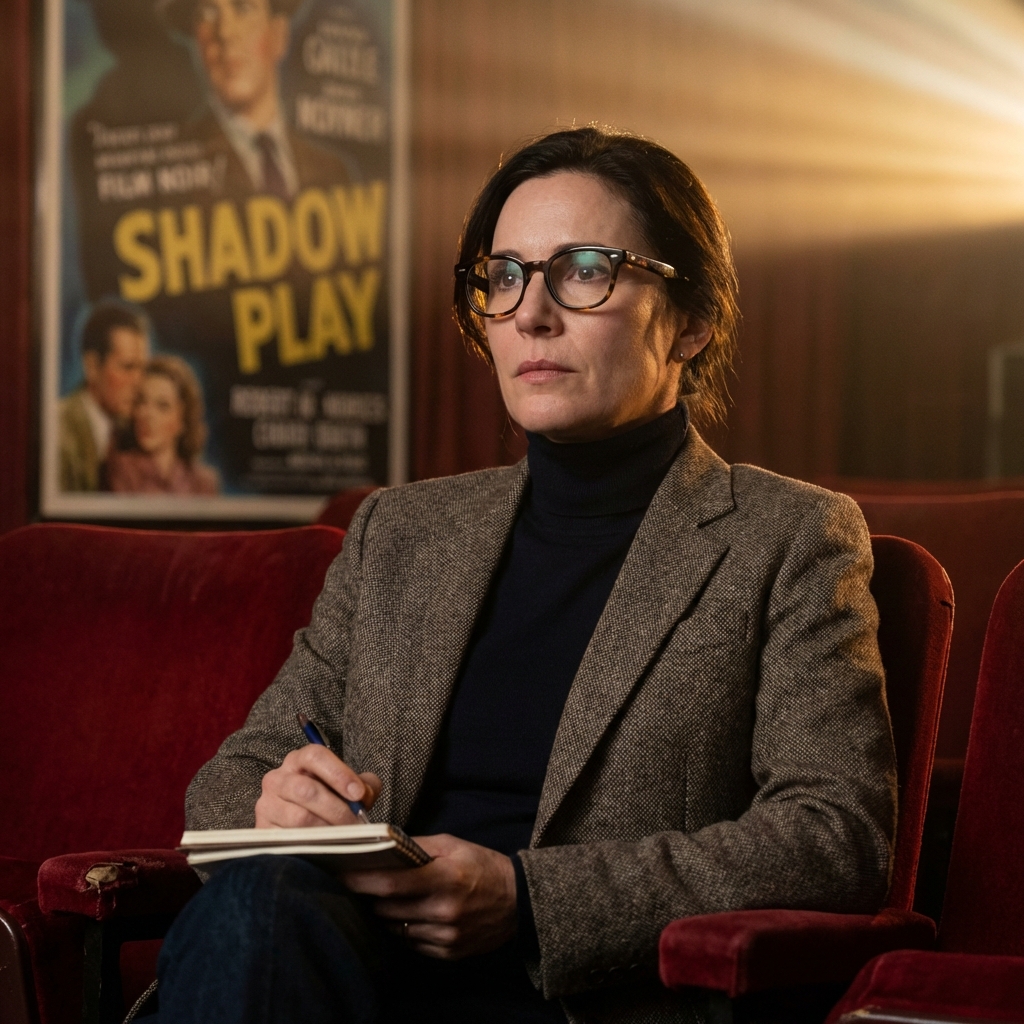
 Kenji Sato

⏱ 15 min
The global market for AI in media and entertainment is projected to reach $150 billion by 2029, a testament to its rapid integration into content creation, from scriptwriting to special effects. This explosive growth, however, is accompanied by profound ethical and practical challenges, particularly with the advent of sophisticated deepfake technology.
The Uncanny Valley: AIs Infiltration of the Silver Screen
Hollywood, once a bastion of tangible artistry and human performance, is increasingly embracing artificial intelligence. The allure of AI lies in its potential to revolutionize nearly every facet of filmmaking. From the nascent stages of script development, where AI algorithms can analyze vast datasets of successful narratives to suggest plot points and character arcs, to the intricate post-production processes, AI is proving to be an invaluable tool. Visual effects (VFX) studios are leveraging AI for everything from generating realistic digital environments and crowds to automating tedious rotoscoping tasks. This efficiency translates into reduced production times and potentially lower budgets, making ambitious cinematic visions more attainable. However, the most captivating and contentious application of AI in filmmaking is undoubtedly its ability to create hyper-realistic digital likenesses of actors, alive or deceased, and even entirely synthetic performers. This capability opens up a Pandora's Box of creative possibilities, allowing filmmakers to de-age actors seamlessly, resurrect historical figures with startling fidelity, or even cast performers who never existed. The ethical tightrope walk begins here, with questions surrounding consent, intellectual property, and the very definition of an actor's performance arising with each digital recreation. The uncanny valley, that psychological phenomenon where a robot or animation appears almost, but not quite, human, is becoming a less defined boundary as AI models grow more sophisticated.AI in Pre-Production and Scriptwriting
AI's influence begins long before the cameras roll. Natural language processing (NLP) models are being trained on massive libraries of screenplays, novels, and even audience feedback data. These systems can identify patterns in successful storytelling, suggesting narrative structures, character archetypes, and dialogue that resonates with target demographics. While not yet capable of generating a truly original masterpiece on its own, AI can act as a powerful co-writer, helping screenwriters overcome creative blocks and refine their work. Companies like ScriptBook are already offering AI-powered script analysis services, providing insights into a script's potential box office success and identifying areas for improvement.Enhancing Visual Effects and Animation
The realm of visual effects has been a fertile ground for AI integration. Machine learning algorithms are transforming how digital assets are created and manipulated. AI-powered tools can now generate photorealistic textures, complex character animations, and expansive virtual landscapes with unprecedented speed and detail. For instance, AI can be used to intelligently fill in gaps in motion capture data or to create realistic simulations of natural phenomena like fire, water, and smoke. This not only saves considerable manual labor for VFX artists but also allows for more dynamic and believable visual elements to be incorporated into films.The Rise of Digital Doubles and De-Aging
Perhaps the most discussed application of AI in filmmaking is the creation of digital doubles and the sophisticated de-aging of actors. Through techniques like neural rendering and generative adversarial networks (GANs), filmmakers can craft astonishingly lifelike digital replicas of actors. This technology was famously employed in films like "The Irishman," where Robert De Niro, Al Pacino, and Joe Pesci were digitally de-aged to appear as their younger selves across different time periods. The implications are vast: actors can potentially reprise iconic roles for decades, or filmmakers can cast actors who have passed away, bringing them back to the screen in new performances. This also raises complex questions about an actor's legacy and control over their digital likeness.From Pixels to Personas: The Technological Ascent
The technology underpinning AI's capabilities in media is evolving at a breakneck pace. At its core, much of this advancement relies on deep learning, a subset of machine learning that utilizes artificial neural networks with multiple layers to learn and make decisions. Generative Adversarial Networks (GANs) have been particularly revolutionary. A GAN consists of two neural networks: a generator, which creates new data instances (e.g., images, video frames), and a discriminator, which tries to distinguish between real and fake instances. Through a process of adversarial training, the generator becomes progressively better at producing realistic outputs that can fool the discriminator. This technology is what allows for the creation of convincing deepfakes – synthetic media where a person's likeness is replaced with someone else's, or where speech is manipulated to appear as if the person is saying something they never did. Initially, deepfakes were often crude and easily detectable, characterized by distorted facial features, unnatural blinking, or jarring audio. However, modern GANs and other advanced AI models, trained on vast datasets of human faces, movements, and vocal patterns, are now capable of producing deepfakes that are incredibly difficult to distinguish from authentic footage to the untrained eye. The computational power required has also decreased, making these tools more accessible to a wider range of users, from independent filmmakers to malicious actors.Generative Adversarial Networks (GANs) and Neural Rendering
GANs are the engine behind many of the most impressive AI-driven visual manipulations. By pitting two neural networks against each other – one creating synthetic content and the other discerning its authenticity – GANs learn to generate increasingly realistic outputs. Neural rendering, a related field, focuses on using neural networks to synthesize novel views of a scene or to reconstruct 3D objects from 2D images. This is crucial for creating seamless digital doubles that can be animated and placed in any environment, maintaining photorealism from every angle.The Role of Big Data and Computational Power
The effectiveness of these AI models is directly proportional to the amount and quality of data they are trained on, coupled with the available computational power. To create a convincing deepfake of an actor, an AI model needs to be fed thousands, if not millions, of images and video clips of that actor from various angles, lighting conditions, and with different facial expressions. Similarly, to generate realistic dialogue, the AI needs to be trained on extensive audio datasets. Advancements in Graphics Processing Units (GPUs) and cloud computing have made it possible to process these massive datasets efficiently, accelerating the development and deployment of sophisticated AI tools.Accessibility and the Democratization of Creation
As AI tools become more powerful and user-friendly, they are becoming accessible to a broader spectrum of creators. What once required immense technical expertise and resources is now within reach of independent filmmakers, content creators, and even amateur enthusiasts. This democratization of powerful AI tools is a double-edged sword. On one hand, it empowers new voices and innovative storytelling. On the other, it lowers the barrier to entry for creating and disseminating misleading or malicious content.| AI Application | Key Technologies | Primary Benefit |
|---|---|---|
| Script Analysis & Generation | Natural Language Processing (NLP), Machine Learning | Efficiency, Trend Identification |
| Visual Effects (VFX) | Deep Learning, GANs, Neural Rendering | Realism, Automation, Cost Reduction |
| Digital Doubles & De-Aging | GANs, Neural Rendering, Motion Capture | Creative Possibilities, Resurrecting Performers |
| Audio Synthesis & Manipulation | Speech Synthesis, Deep Learning | Voice Cloning, Dubbing Automation |
The Democratization of Hollywood: AIs Double-Edged Sword
The increasing accessibility of AI tools presents a paradigm shift for the media and entertainment industry. Independent filmmakers and content creators, previously constrained by prohibitively high costs for special effects or the need for extensive crews, can now leverage AI to bring their visions to life. This has the potential to foster a more diverse and innovative media landscape, allowing for stories to be told that might have been impossible under traditional production models. We are already seeing AI-powered tools that can generate entire animated sequences from simple text prompts or create realistic 3D models from a few photographs. However, this democratization comes with significant risks. The same AI technologies that enable filmmakers to create stunning visuals can also be used to generate highly convincing misinformation, propaganda, and non-consensual pornography. The ease with which deepfake videos can be created and disseminated online poses a severe threat to public trust, individual reputation, and democratic processes. As these tools become more sophisticated, differentiating between authentic and synthetic media will become increasingly challenging for the average consumer, creating an environment ripe for manipulation. The line between satire, artistic expression, and deliberate deception blurs dangerously.Empowering Independent Creators
For aspiring filmmakers and digital artists, AI offers unprecedented creative freedom. Tools that can generate realistic characters, environments, and special effects at a fraction of the cost of traditional methods are opening doors to new forms of storytelling. This could lead to a renaissance of independent cinema, where unique voices and experimental narratives can flourish without the gatekeeping of major studios. Imagine a solo creator developing a feature-length animated film with a complex narrative and stunning visuals, all powered by AI tools.The Perils of Misinformation and Disinformation
The flip side of creative empowerment is the potential for malicious use. The ability to create realistic-looking videos of public figures saying or doing things they never did is a powerful weapon. This can be used to influence public opinion during elections, incite social unrest, or damage the reputations of individuals and organizations. The speed at which misinformation can spread online, amplified by social media algorithms, makes deepfakes a particularly potent threat to societal stability and trust in information.Erosion of Trust in Media
As deepfake technology becomes more widespread and sophisticated, it threatens to erode public trust in all forms of media. If audiences cannot readily distinguish between genuine footage and fabricated content, the very concept of objective truth becomes compromised. This can lead to widespread skepticism, making it harder for legitimate news organizations to report on events accurately and for the public to make informed decisions. The implications for journalism and democracy are profound.Perceived Threat of Deepfakes by Sector
Ethical Minefields and Legal Labyrinths
The rapid advancement of AI in filmmaking has outpaced the development of ethical guidelines and legal frameworks, creating a complex and often contradictory landscape. One of the most pressing ethical concerns revolves around consent and posthumous image rights. When an actor's likeness is used to create a digital performance after their death, who holds the rights to that performance? The estate? The studio? Furthermore, what are the implications for the actor's legacy and artistic integrity? The potential for a deceased actor to be digitally "resurrected" for roles they never agreed to, or for their image to be used in ways they would have disapproved of, raises profound questions about individual autonomy and control over one's identity. Copyright law is also being challenged. If an AI generates a screenplay or a piece of music, who owns the copyright? Current legal systems are largely designed around human authorship, and the attribution of creative ownership to an AI is a thorny issue. The use of copyrighted material in training AI models also presents significant legal hurdles, with ongoing debates about fair use and the licensing of such data. The lack of clear legal precedent means that many of these questions will likely be settled through lengthy and costly court battles.Consent, Likeness, and Posthumous Rights
The ethical use of an actor's likeness, especially after their passing, is a significant concern. While some may view it as a tribute or a way to continue a beloved artist's work, others see it as a violation of their autonomy. The legal battles over the use of deceased celebrities' images for commercial purposes are a precursor to the complexities that will arise with AI-generated performances. Establishing clear guidelines for obtaining consent from actors or their estates for the use of their digital likeness is paramount.Copyright and Intellectual Property Quandaries
The traditional notions of authorship and copyright are being fundamentally challenged by AI. If an AI generates a script or a visual artwork, who is the author? Current copyright laws typically protect works created by humans. This ambiguity could lead to a deluge of legal disputes over ownership and royalties. Furthermore, the massive datasets used to train AI models often include copyrighted material, raising questions about the legality of this data acquisition and its use in generating new works.The Challenge of Detection and Provenance
As deepfake technology becomes more sophisticated, detecting synthetic media becomes increasingly difficult. While various watermarking and detection technologies are being developed, they are often in an arms race with the creators of deepfakes. Establishing the provenance of digital media – ensuring its authenticity and tracing its origin – will be crucial for combating misinformation and maintaining trust. Initiatives like the Content Authenticity Initiative are working towards creating verifiable digital provenance for media.2020
Year first major deepfake ban enacted (e.g., by some social media platforms)
75%
of Americans believe deepfakes pose a significant threat to society (Pew Research, hypothetical)
100+
lawsuits filed globally concerning deepfakes and AI-generated content (estimate)
The Future of Storytelling: Will AI Replace the Actor?
The question of whether AI will eventually replace human actors is one that looms large over the industry. While AI can generate incredibly realistic performances, there are inherent qualities of human acting that are currently difficult, if not impossible, to replicate. Nuance, emotion, subtext, and the unpredictable spark of human creativity are what make a performance truly captivating. An AI can be programmed to mimic emotions, but can it truly feel them or convey the depth of human experience that informs genuine artistic expression? Many industry professionals believe that AI will serve as a powerful tool to augment, rather than replace, human actors. AI could be used to handle the more physically demanding or repetitive aspects of a performance, allowing actors to focus on the emotional core of their characters. For example, an actor could perform a scene once, and AI could then generate multiple variations of that performance with different emotional intensities or nuances. Furthermore, AI could create entirely new types of performances, leading to novel forms of storytelling and character development that we cannot yet imagine. The collaborative potential between human artists and AI systems is immense, promising to push the boundaries of cinematic expression.Augmentation, Not Annihilation
The prevailing sentiment among many industry experts is that AI will act as a co-pilot for actors, enhancing their capabilities rather than rendering them obsolete. This could involve AI tools that help actors explore different performance choices, refine their movements, or even generate alternative dialogue options in real-time during a shoot. The goal is to free up actors to concentrate on the most human aspects of their craft.The Unreplicable Spark of Human Performance
The essence of acting lies in the interpretation of a character, the embodiment of emotion, and the creation of a unique, lived-in performance. While AI can simulate these elements with increasing accuracy, it lacks the consciousness, lived experience, and the intangible spark of human creativity that connects with an audience on a deeper level. The subtle tremor in a voice, the flicker of an eye, the unspoken understanding between characters – these are profoundly human qualities that AI may struggle to genuinely replicate.Emergence of New Artistic Forms
AI's integration into filmmaking is not just about replicating existing forms of performance but also about enabling entirely new ones. We might see the rise of "AI-driven performances" where the actor's input is more conceptual or directorial, guiding an AI to generate the visual and auditory aspects of the character. This could lead to entirely new genres and artistic expressions that blend human direction with AI execution, creating hybrid forms of entertainment.
"AI in filmmaking is not about replacing the soul of a performance, but about providing new palettes and brushes for artists to paint with. The challenge is to wield these tools responsibly, ensuring they enhance human creativity, not diminish it."
— Dr. Anya Sharma, Leading AI Ethicist
Navigating the Deepfake Dilemma: A Call for Regulation and Responsibility
The pervasive nature of deepfake technology demands a proactive approach involving regulation, technological safeguards, and heightened public awareness. Legislatures worldwide are beginning to grapple with how to address the harms caused by deepfakes, with discussions ranging from outright bans on non-consensual deepfakes to requirements for labeling synthetic media. However, crafting effective legislation that balances the need to protect individuals and society with the protection of free speech and artistic innovation is a complex undertaking. Technological solutions, such as robust watermarking and detection algorithms, are crucial. Initiatives focused on digital provenance can help verify the authenticity of media. Furthermore, media literacy education is vital to equip the public with the critical thinking skills needed to discern between genuine and manipulated content. Ultimately, a multi-faceted approach involving policymakers, technologists, media organizations, and the public is necessary to navigate the deepfake dilemma and ensure that AI serves as a force for good in the evolving landscape of filmmaking and media. The future of truth and trust in our digital world depends on it.The Imperative for Legislative Action
Governments are increasingly recognizing the need for legal frameworks to govern the creation and distribution of deepfakes. This includes criminalizing the creation and dissemination of malicious deepfakes, particularly those used for defamation, harassment, or political manipulation. The challenge lies in defining "malicious intent" and ensuring that regulations do not stifle legitimate creative expression or satire.Technological Countermeasures and Watermarking
The development of AI-powered tools to detect deepfakes is an ongoing battle. Watermarking techniques, which embed imperceptible digital signatures into authentic media, and blockchain-based solutions for tracking media provenance are promising avenues. However, these technologies must constantly evolve to keep pace with the advancements in deepfake generation.Promoting Media Literacy and Public Awareness
Perhaps the most critical long-term solution is to empower individuals with the knowledge and skills to critically evaluate the media they consume. Educational programs that teach about AI capabilities, the nature of deepfakes, and how to identify potential manipulation are essential. A more informed public is a more resilient public against the tide of misinformation.What is a deepfake?
A deepfake is a synthetic form of media where a person's likeness or voice is digitally altered or generated using artificial intelligence, typically deep learning techniques, to appear as if they are saying or doing something they did not.
Can deepfakes be detected?
Yes, there are detection methods, but they are in a constant race against the sophistication of deepfake generation technology. Advanced deepfakes can be very difficult to detect by the naked eye or even by some automated systems.
Who is responsible for the misuse of deepfakes?
Responsibility can lie with the creators and distributors of malicious deepfakes, as well as potentially with platforms that fail to adequately moderate their content. Legal frameworks are still evolving to address this issue comprehensively.
Will AI replace actors in Hollywood?
Most industry experts believe AI will augment, rather than replace, human actors, serving as a powerful tool to enhance creativity and explore new forms of performance. The unique human elements of acting are considered difficult to replicate.