

 Dr. Alan Grant
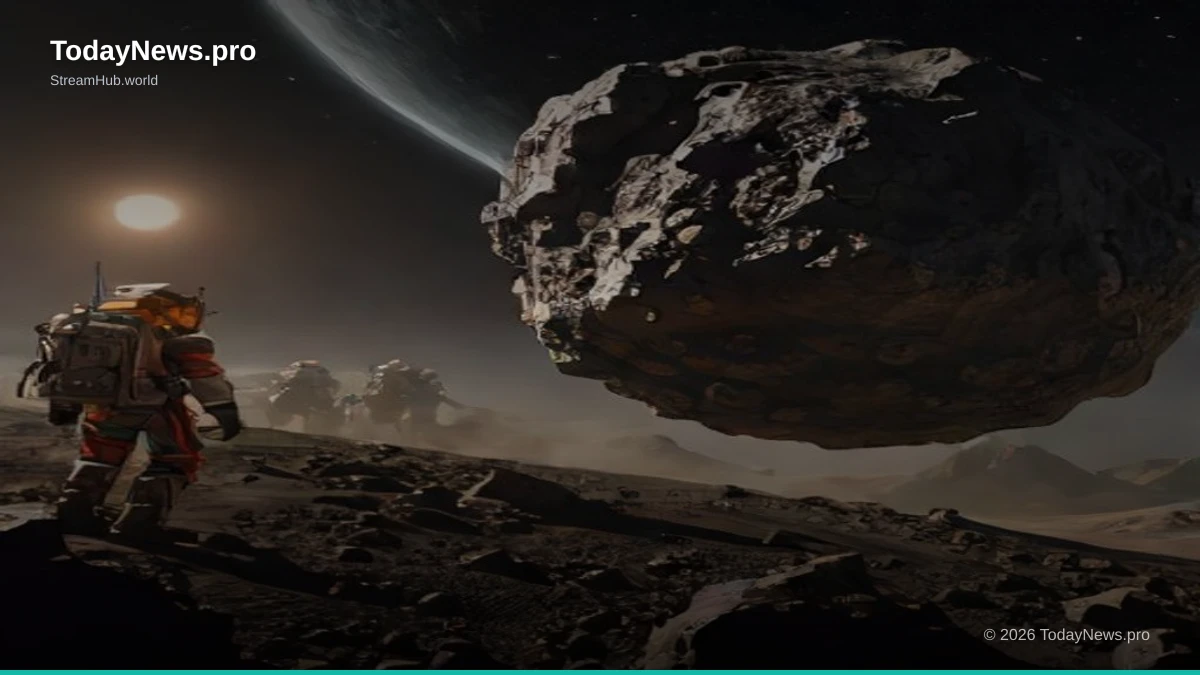
The New Gold Rush: Unearthing Spaces Untapped Wealth
The allure of space has shifted dramatically from scientific exploration to economic exploitation. Vast celestial bodies, once objects of curiosity, are now viewed as immense, untapped resource repositories. Estimates suggest that the asteroid belt alone could contain trillions of dollars worth of precious metals, rare earth elements, and vital industrial materials. These resources, rare and increasingly scarce on Earth, could fundamentally alter global supply chains and drive innovation across numerous terrestrial industries. The potential for a truly sustainable off-world economy, where resources are extracted and utilized in space, reducing reliance on Earth-bound production, is a significant driver.Precious Metals Abound
Asteroids, particularly M-type asteroids, are believed to be rich in platinum-group metals (PGMs) such as platinum, palladium, rhodium, and iridium. These metals are crucial for catalytic converters in vehicles, advanced electronics, and medical devices. A single asteroid, like 16 Psyche, is estimated to contain enough iron and nickel to meet global demand for centuries, with the potential for significant PGM deposits also present.
Water: The Space Travelers Essential Fuel
Beyond precious metals, water ice is proving to be an equally, if not more, valuable resource. Found in abundance on the Moon, particularly in permanently shadowed craters near the poles, and within asteroids, water can be processed into rocket propellant (liquid hydrogen and liquid oxygen) and breathable air. This capability is paramount for enabling sustained human presence and facilitating deeper space exploration, making the Moon and asteroids potential refueling stations for future missions.
Lunar Land Grab: Stakes are High for Earths Nearest Neighbor
The Moon, humanity's closest celestial neighbor, is the primary target for immediate resource extraction and infrastructure development. Its relative proximity makes it a more accessible and economically viable location for initial ventures compared to the asteroid belt. Several nations and private entities are actively pursuing lunar ambitions, ranging from scientific outposts to commercial bases.Establishing a Permanent Presence
The development of lunar bases is not just about resource extraction but also about establishing a foothold for broader space activities. These bases could serve as crucial nodes for scientific research, astronomical observation, and as staging points for missions to Mars and beyond. The infrastructure built on the Moon, such as landing pads, power generation, and habitation modules, will be foundational for future extraterrestrial settlements.
Resource Utilization Technologies
Significant research and development are underway for In-Situ Resource Utilization (ISRU) technologies tailored for the lunar environment. This includes systems for extracting and processing water ice, regolith (lunar soil) for construction materials, and potential mineral resources. Companies are exploring 3D printing with lunar regolith to build habitats and infrastructure, a vital step towards self-sufficiency.
Asteroid Mining: A Celestial Scramble for Platinum and Water
While the Moon offers immediate accessibility, the asteroid belt represents a far greater, albeit more challenging, prize. The sheer volume and diversity of resources available in asteroids present an almost unimaginable economic potential. However, the technical hurdles and vast distances involved make asteroid mining a more long-term endeavor, with initial missions focused on reconnaissance and small-scale sample return.The Promise of Near-Earth Asteroids (NEAs)
NEAs are asteroids whose orbits bring them close to Earth, making them prime targets for early mining missions. Their accessibility, combined with their potentially rich composition of metals and water, makes them particularly attractive. Missions are being planned to survey and characterize these asteroids to identify the most promising candidates for resource extraction.
Challenges of Deep Space Operations
Mining asteroids involves overcoming significant challenges, including the immense distances from Earth, the need for autonomous or remotely operated systems, and the harsh conditions of space. Developing the robotics, propulsion systems, and communication infrastructure capable of operating reliably in such environments is a monumental task.
| Asteroid Type | Primary Resources | Estimated Abundance |
|---|---|---|
| M-type (Metallic) | Iron, Nickel, Platinum-group metals | High concentration of iron-nickel alloys; PGMs potentially significant |
| C-type (Carbonaceous) | Water, Carbon compounds, Silicates, Organic molecules | Up to 20% water by mass; significant carbon content |
| S-type (Silicaceous) | Silicates, Nickel-iron, Oxygen | Abundant silicates; moderate nickel-iron content |
Technological Frontiers: The Tools of the Cosmic Trade
The realization of the cosmic economy hinges on advancements in a suite of cutting-edge technologies. From advanced robotics and AI to novel propulsion systems and in-space manufacturing, innovation is accelerating rapidly to meet the demands of off-world operations.Robotics and Artificial Intelligence
Autonomous robots will be essential for exploration, resource identification, extraction, and processing in the remote and hazardous environments of space. AI will play a critical role in decision-making, navigation, and optimizing resource utilization, reducing the need for constant human oversight and intervention, which is logistically challenging over vast distances.
Propulsion and Transportation
Developing efficient and cost-effective propulsion systems is crucial for reducing the cost of space missions. This includes advancements in chemical rockets, electric propulsion, and potentially more exotic technologies like nuclear thermal propulsion. The ability to transport large quantities of materials from space back to Earth or to construct infrastructure in orbit will require robust and reliable launch and in-space transportation capabilities.
In-Space Manufacturing and Construction
The ability to manufacture components and build structures in space using extracted resources is a game-changer. 3D printing with lunar regolith for habitats, or manufacturing spare parts for spacecraft using asteroid materials, significantly reduces the need to launch everything from Earth, drastically lowering mission costs and enabling greater autonomy.
Economic Drivers: Why Space Resources Matter Now
The economic case for space resource utilization is compelling and multifaceted. It's not solely about the intrinsic value of extraterrestrial materials but also about the strategic advantages and the potential to solve pressing terrestrial challenges.Resource Scarcity and Geopolitical Stability
As Earth's resources dwindle and demand grows, securing access to critical materials becomes a matter of national security and economic stability. Space offers a potential hedge against terrestrial supply chain disruptions and geopolitical conflicts that can impact the availability and price of essential resources. Diversifying resource acquisition to include off-world sources can enhance global economic resilience.
Enabling Deep Space Exploration
The economic viability of sustained human exploration beyond Earth orbit is directly linked to the ability to utilize local resources. Launching all the necessary fuel, water, and building materials from Earth is prohibitively expensive. ISRU on the Moon and asteroids makes deep space missions, including crewed missions to Mars, significantly more feasible and cost-effective.
New Markets and Industries
The development of a space-based economy will inevitably create entirely new markets and industries. This includes services for resource extraction, transportation, in-space manufacturing, life support, and even space tourism. The innovation spurred by these new frontiers will likely have significant spillover effects into terrestrial technologies.
Regulatory Hurdles: Navigating the Uncharted Legal Landscape
The rapid advancement of space resource utilization initiatives has outpaced the development of a comprehensive international legal framework. This creates uncertainty and potential for conflict, as existing space treaties were drafted in an era of national space programs, not private commercial exploitation.The Outer Space Treaty and Its Limitations
The 1967 Outer Space Treaty establishes principles such as the non-appropriation of outer space and the benefit of all humankind. However, it does not explicitly address resource extraction rights, leading to debates about ownership and legal claims over celestial bodies and their resources. Understanding and interpreting these principles in the context of commercial activities is a major challenge.
For more on the foundational principles of space law, see the Wikipedia entry on the Outer Space Treaty.
Developing a Framework for Space Commerce
Nations are beginning to establish their own legal frameworks for space resource activities. The United States, for instance, has enacted the Commercial Space Launch Competitiveness Act, which grants U.S. citizens the right to extract and own space resources. Other countries are exploring similar national legislation. The challenge lies in harmonizing these national approaches into a globally accepted framework to prevent disputes and encourage responsible development.
Recent developments in space law and policy are often covered by major news outlets. For an overview of current discussions, consult Reuters' coverage of space.
Ensuring Sustainability and Preventing Conflict
Beyond legal ownership, there is a pressing need to develop regulations that ensure the sustainable extraction of space resources, preventing environmental degradation in space and avoiding conflicts between competing entities. Establishing protocols for data sharing, impact assessments, and dispute resolution mechanisms will be crucial as more actors enter this domain.
The 2030 Horizon: Milestones and Predictions
By 2030, the landscape of the cosmic economy is expected to be significantly transformed, moving beyond ambitious plans to tangible operational successes. Several key milestones are anticipated, setting the stage for a robust off-world economic ecosystem.First Lunar Resource Extraction Operations
It is highly probable that by 2030, initial lunar resource extraction operations will be underway. This could involve private companies successfully demonstrating the capability to extract water ice from lunar polar craters for propellant production, or collecting regolith for construction material. These early successes will validate the technical and economic feasibility of lunar ISRU.
Asteroid Prospecting Missions Mature
While full-scale asteroid mining might still be nascent, by 2030, numerous robotic prospecting missions will have thoroughly characterized a significant number of near-Earth asteroids. These missions will provide the detailed data necessary for selecting the most economically viable targets for future extraction efforts, potentially leading to the first automated asteroid mining demonstrations.
Emergence of Space-Based Industries
The year 2030 could see the emergence of nascent space-based industries. This might include the first commercial ventures focused on in-space servicing, assembly, and manufacturing (ISAM), utilizing resources already in orbit or brought down from the Moon. The development of off-world infrastructure, such as orbital fuel depots, will also be a key development.
The race to mine asteroids and settle the Moon by 2030 is a testament to human ingenuity and ambition. It represents a pivotal moment where humanity is actively transforming its relationship with space from one of exploration to one of economic partnership. The challenges are immense, but the potential rewards – both for terrestrial economies and for humanity's future as a multi-planetary species – are extraordinary.