

 Dr. Alan Grant
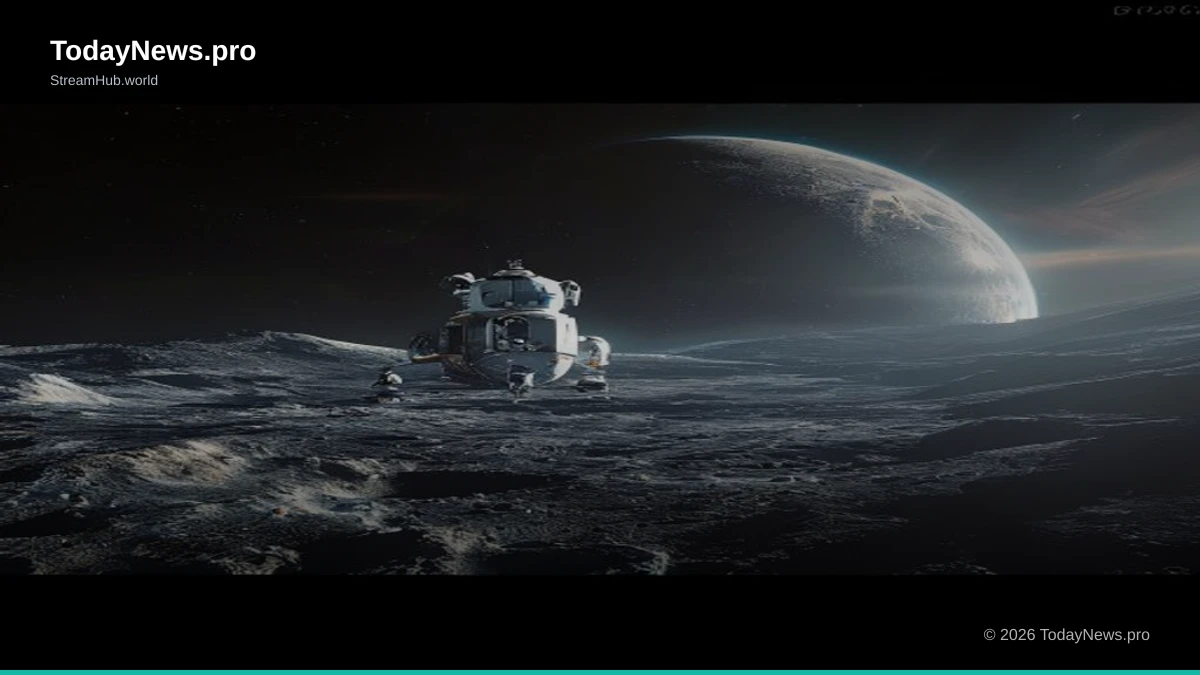
The global space economy, projected to reach $1 trillion by 2040, is no longer solely the domain of national governments; a robust commercial sector is rapidly transforming access to and utilization of space, with ambitious plans for lunar habitation at the forefront.
The Dawn of a New Space Age: Beyond Earths Orbit
For decades, venturing beyond Earth’s atmosphere was the exclusive purview of national space agencies like NASA, Roscosmos, and ESA. The risks were immense, the costs astronomical, and the objectives primarily scientific or geopolitical. However, a paradigm shift has occurred. The advent of reusable rocket technology, coupled with significant private investment, has dramatically lowered the barrier to entry for commercial space endeavors. This new era is characterized by innovation, increased accessibility, and a bold vision that extends far beyond low Earth orbit.
The narrative of space exploration is no longer confined to the footprints of astronauts on the Moon or the deployment of satellites. It is now increasingly about the establishment of sustainable human presences in extraterrestrial environments. This shift is driven by a confluence of technological advancements, evolving geopolitical landscapes, and a growing understanding of the potential economic and scientific benefits of off-world activities. The aspirations are no longer just about visiting; they are about inhabiting.
Technological Leaps Enabling New Frontiers
The key enabler of this new space age is undoubtedly the revolution in launch systems. Companies like SpaceX, with their Falcon 9 and Starship rockets, have pioneered reusable technology, slashing the cost per kilogram to orbit. This economic viability underpins all subsequent ambitions, from satellite constellations to interplanetary missions and nascent lunar bases. Furthermore, advancements in life support systems, in-situ resource utilization (ISRU), and advanced manufacturing are paving the way for self-sustaining off-world communities.
Consider the evolution of propulsion systems. While chemical rockets remain dominant, research into more efficient and powerful methods, such as nuclear thermal propulsion and electric propulsion, promises to shorten transit times to distant destinations and reduce payload mass requirements. Miniaturization of electronics and robotics also plays a crucial role, enabling more complex operations with smaller, more agile spacecraft.
The Shifting Landscape of Space Exploration
The traditional models of government-led, multi-decade programs are being augmented, and in some areas, surpassed, by agile, commercially driven initiatives. This decentralization of space capabilities fosters greater competition and accelerates the pace of innovation. It allows for more diverse objectives, ranging from deep space scientific research to the development of space-based industries. The involvement of a wider array of stakeholders means that the benefits of space exploration are being democratized.
This transition is not without its complexities. It necessitates new regulatory frameworks, international cooperation protocols, and ethical considerations regarding resource ownership and planetary protection. However, the momentum is undeniable, with numerous private entities now actively pursuing missions that were once the sole domain of national space agencies.
Commercializing the Cosmos: From Tourism to Infrastructure
The most visible manifestation of commercial space is the burgeoning suborbital and orbital tourism sector. Companies like Virgin Galactic and Blue Origin have already begun offering brief excursions to the edge of space, a testament to the growing accessibility of spaceflight. While currently an exclusive experience for the ultra-wealthy, the long-term vision is to make space travel more commonplace, akin to early aviation.
Beyond tourism, the commercial sector is making significant inroads into building space infrastructure. Satellite constellations for global internet access, like Starlink and OneWeb, are transforming connectivity. Companies are also developing orbital servicing vehicles, debris removal technologies, and even in-space manufacturing capabilities. These foundational elements are crucial for enabling more ambitious endeavors, including lunar settlement.
Space Tourism: The First Step to Off-World Experiences
The dream of space tourism, once confined to science fiction, is now a tangible reality. Passengers paying hundreds of thousands of dollars are experiencing weightlessness and breathtaking views of Earth. This sector serves as a vital testing ground for life support, safety protocols, and passenger handling in space environments. As technology matures and competition increases, ticket prices are expected to decrease, potentially opening up space tourism to a broader demographic in the future.
The psychological impact of seeing Earth from space, often referred to as the "overview effect," is also a significant factor being studied. Astronauts have long reported a profound shift in perspective after experiencing this phenomenon. Commercial space tourism offers the potential for more individuals to undergo this transformative experience, potentially fostering a greater sense of global unity and environmental stewardship.
Building the Foundation: Orbital Infrastructure and Services
The development of robust orbital infrastructure is paramount for any sustainable off-world presence. This includes the establishment of private space stations, orbital refueling depots, and advanced satellite servicing capabilities. These systems will not only support scientific research and commercial activities in Earth orbit but also act as crucial staging points for missions to the Moon and beyond. Companies are investing heavily in these areas, recognizing their strategic importance.
The rise of companies offering satellite servicing, such as refueling, repair, and even de-orbiting of defunct satellites, is critical for space sustainability. This reduces orbital debris and extends the lifespan of valuable space assets. The ability to maintain and upgrade infrastructure in orbit will be a key differentiator for future space-based economies.
The Rise of Lunar Logistics and Resource Utilization
As the focus shifts towards lunar habitation, the commercial sector is gearing up to provide essential logistics and resource utilization services. This includes developing lunar landers, surface mobility systems, and technologies for extracting and processing lunar resources like water ice and regolith. Companies are partnering with national space agencies to fulfill these critical roles, creating a symbiotic relationship between public and private interests.
The potential for utilizing lunar resources, known as in-situ resource utilization (ISRU), is a game-changer. Extracting water ice can provide water, oxygen for breathing, and hydrogen and oxygen for rocket propellant. Lunar regolith can potentially be used for construction materials, shielding, and even 3D printing components. This drastically reduces the mass that needs to be launched from Earth, making lunar bases far more cost-effective.
The Lure of the Moon: Gateway to the Solar System
The Moon, our closest celestial neighbor, has re-emerged as a primary target for human settlement. Its proximity (a mere three-day journey), relative accessibility, and potential resources make it an ideal stepping stone for more ambitious deep-space missions. The Artemis program, led by NASA with significant international and commercial partnerships, explicitly aims to establish a sustainable human presence on the Moon, serving as a proving ground for technologies and operational concepts needed for Mars.
The strategic advantages of a lunar presence are manifold. It offers a platform for scientific research, a potential staging point for asteroid mining operations, and a unique environment for testing advanced life support and habitation systems. Furthermore, the Moon could serve as a hub for space-based astronomy, unhindered by Earth's atmosphere. Its stable surface also makes it a compelling location for future industrial activities and even tourism.
Scientific Expeditions and Resource Prospecting
Scientific endeavors on the Moon are poised for a resurgence. Permanent lunar bases will enable long-term geological studies, the search for evidence of past or present life (if any existed), and detailed analysis of the Moon's formation and evolution. Robotic and human missions will focus on prospecting for valuable resources, particularly water ice, which is crucial for sustaining human life and fueling spacecraft. The potential existence of helium-3, a rare isotope on Earth with potential applications in fusion power, also adds to the economic allure.
The permanently shadowed regions near the lunar poles are of particular interest for water ice deposits. These areas, never exposed to direct sunlight, are incredibly cold, preserving volatile compounds. Missions are being designed to map these deposits with unprecedented accuracy and develop the technologies needed for their extraction and processing. Understanding the distribution and accessibility of these resources is key to planning any long-term lunar habitation.
Lunar Bases: A Stepping Stone to Mars
The Moon is often referred to as humanity's "Mars analog" – a place to test technologies, train astronauts, and refine operational procedures before embarking on the much longer and more complex journey to the Red Planet. Establishing a lunar base will allow us to gain invaluable experience in building and maintaining habitats, managing resources, and operating in a low-gravity, high-radiation environment. These lessons learned will be directly applicable to future Martian missions.
The challenges of a Mars mission are significantly amplified by the transit time and communication delays. The Moon offers a much more forgiving environment for developing the necessary expertise. Furthermore, a lunar base could serve as a refueling station or a repair depot for Mars-bound spacecraft, reducing the fuel and equipment that needs to be launched from Earth. This makes Mars more attainable within the current technological and economic paradigms.
Economic Opportunities: From Helium-3 to Lunar Tourism
The potential economic benefits of lunar presence are vast and varied. Beyond scientific research and resource extraction, the Moon could become a unique destination for tourism. Imagine hotels with unparalleled views of Earthrise or observatories offering crystal-clear views of the cosmos. The development of lunar industries, such as manufacturing using lunar materials or servicing orbital assets, could also create new economic frontiers. Helium-3, if fusion power becomes a reality, could be an incredibly valuable commodity.
The long-term vision involves not just outposts but thriving lunar settlements that contribute to the Earth's economy. This might include specialized manufacturing that benefits from the vacuum or unique lighting conditions, or even agricultural experiments in controlled lunar environments. The economic viability of these ventures hinges on continued technological advancement and the establishment of robust supply chains.
| Resource | Estimated Abundance | Primary Applications | Extraction Challenges |
|---|---|---|---|
| Water Ice | Significant deposits in polar craters | Drinking water, oxygen, rocket propellant (hydrogen/oxygen) | Low temperatures, excavation in shadowed regions |
| Regolith (Lunar Soil) | Vast quantities across the lunar surface | Construction materials (e.g., 3D printing), radiation shielding, potential for oxygen extraction | Processing for structural integrity, dust mitigation |
| Helium-3 | Trace amounts, primarily from solar wind implantation | Potential fuel for fusion reactors (long-term prospect) | Extremely difficult and energy-intensive extraction, requires advanced fusion technology |
| Rare Earth Elements | Suspected presence, but not definitively quantified | Industrial magnets, electronics, catalysts | Prospecting and extraction methods yet to be developed |
Lunar Habitats: Engineering for an Alien Environment
Creating a habitable environment on the Moon presents formidable engineering challenges. The Moon lacks a significant atmosphere, meaning no protection from solar and cosmic radiation, micrometeoroid impacts, or extreme temperature fluctuations. Gravity is only about one-sixth of Earth's, posing long-term physiological challenges for humans. Therefore, lunar habitats must be robust, self-sustaining, and designed to mitigate these harsh conditions.
The construction of lunar bases will likely involve a combination of pre-fabricated modules launched from Earth and structures built using local lunar materials. In-situ resource utilization (ISRU) is not just a concept for fuel and water; it's also critical for building materials. Regolith can be sintered, melted, or used as aggregate in concrete-like substances for creating shelters that offer significant radiation shielding.
Radiation Shielding and Life Support Systems
Protecting inhabitants from harmful radiation is a top priority. This can be achieved by burying habitats under several meters of lunar regolith, using water as a shielding material, or incorporating advanced composite materials. Life support systems will need to be closed-loop, recycling air, water, and waste with maximum efficiency to minimize reliance on resupply missions from Earth. The development of artificial gravity environments within habitats is also an area of active research to combat bone density loss and muscle atrophy associated with low-gravity living.
The constant bombardment of solar flares and galactic cosmic rays poses a significant health risk. Habitats will need to incorporate dedicated "storm shelters" with extra shielding, where astronauts can retreat during periods of intense solar activity. Furthermore, advanced monitoring systems will be essential to track radiation levels and ensure crew safety. The psychological impact of living in a confined, shielded environment also needs careful consideration.
Power Generation and Resource Management
Reliable and sustainable power is the backbone of any lunar settlement. Solar power is a primary candidate, but the long lunar nights (lasting about 14 Earth days) necessitate robust energy storage solutions, such as advanced batteries or fuel cells. Nuclear fission reactors, particularly small modular reactors (SMRs), are also being considered for their ability to provide continuous, high-density power, regardless of sunlight availability. Efficient resource management, including the recycling of water and oxygen, and the careful allocation of power, will be crucial for long-term sustainability.
The choice of power generation will significantly influence the design and location of lunar bases. Polar regions, with their near-constant sunlight on some peaks, offer advantages for solar power, but also present extreme temperature gradients. Equatorial regions might experience longer periods of darkness, making nuclear power more attractive. The interplay between resource availability and power needs will shape the initial settlement strategies.
Construction Techniques: 3D Printing and ISRU
The ability to build structures using local lunar materials is a transformative concept. 3D printing, or additive manufacturing, is being explored as a key technology for this purpose. Robots can be programmed to collect regolith, process it, and extrude it layer by layer to construct habitats, landing pads, roads, and other infrastructure. This dramatically reduces the amount of material that needs to be transported from Earth, slashing mission costs.
Companies are developing specialized 3D printers designed for the lunar environment, capable of operating in a vacuum and at extreme temperatures. These printers can utilize various lunar materials, including processed regolith and potentially even basalt fibers extracted from the lunar soil, to create durable and radiation-resistant structures. The vision is for autonomous construction robots to prepare the ground and build the basic shell of a habitat before human crews arrive.
Economic Prospects and Challenges of Lunar Living
The economic case for lunar habitation is multifaceted, encompassing resource extraction, scientific research, space tourism, and the potential for industrial development. However, significant challenges must be overcome. The initial investment required is immense, and the return on investment timelines are long. Establishing a self-sustaining economy on the Moon will require a careful balance of public funding, private investment, and innovative business models.
The development of a lunar economy is contingent upon several factors: the successful identification and extraction of valuable resources, the establishment of reliable and cost-effective transportation systems between Earth and the Moon, and the creation of a regulatory framework that encourages commercial activity while ensuring safety and environmental protection. The concept of "lunar commons" versus private ownership of resources is a complex issue that needs to be addressed.
Resource Extraction and Its Economic Impact
The prospect of mining lunar water ice for propellant is a particularly strong economic driver. Producing rocket fuel on the Moon could drastically reduce the cost of missions further into the solar system, making Mars and asteroid exploration more feasible. The potential for extracting rare earth elements or other valuable minerals could also create significant economic incentives for lunar development, though these are more speculative at present.
The economic viability of lunar mining hinges on the cost of extraction versus the market value of the extracted resources. If water can be produced on the Moon for significantly less than transporting it from Earth, it will be a transformative factor. This could lead to a new industry of "lunar propellant depots," servicing spacecraft in orbit or on their way to other destinations.
The Cost of Entry and Investment Models
The capital expenditure for establishing lunar infrastructure, including launch vehicles, landers, habitats, and power systems, is staggering. This necessitates diverse investment models, blending government funding for foundational research and exploration with private capital for commercial development and operationalization. Public-private partnerships, similar to those seen in the development of the International Space Station, are likely to be the most effective approach.
Venture capital is increasingly flowing into space ventures, but the Moon is a long-term play. Companies are looking for innovative ways to de-risk investments, such as developing technologies that have dual applications on Earth and in space. Government procurement of lunar services, such as cargo delivery and astronaut transport, also plays a crucial role in creating a stable market for commercial providers.
Regulatory Frameworks and International Cooperation
The Outer Space Treaty of 1967 provides a foundational framework for space activities, prohibiting national appropriation and promoting peaceful exploration. However, as commercial activities on the Moon expand, new legal and regulatory considerations will arise concerning resource ownership, property rights, and liability. International cooperation will be essential to establish clear guidelines and prevent potential conflicts.
The Artemis Accords, an initiative led by NASA, aim to establish a common set of principles for lunar exploration and utilization, emphasizing transparency, interoperability, and peaceful purposes. However, the interpretation and adherence to these accords by different nations and commercial entities will be a key factor in shaping the future of lunar governance. A robust and adaptable international legal framework is crucial for the sustainable development of lunar activities.
| Element | Estimated Cost Range (USD Billions) | Key Providers/Developers | Notes |
|---|---|---|---|
| Heavy-lift Launch Vehicle | $500M - $2B per launch | SpaceX (Starship), Blue Origin (New Glenn) | Reusable systems aim to reduce per-launch cost over time. |
| Lunar Lander (Cargo) | $1B - $3B per mission | Intuitive Machines, Astrobotic Technology, SpaceX | Cost depends on payload capacity and complexity. |
| Habitation Module (Initial, Inflatable) | $500M - $2B per module | Northrop Grumman, Bigelow Aerospace (historical) | Includes life support, radiation shielding. |
| Surface Power System (Solar + Storage) | $100M - $500M | Various aerospace and energy companies | Scalable based on power requirements. |
| ISRU Equipment (Water Ice Extraction) | $200M - $1B | Various technology developers | Early-stage technology development and deployment. |
The Human Element: Psychological and Societal Impacts
Beyond the engineering and economic considerations, the human element is central to the success of lunar living. The long-term psychological effects of living in isolation, in a confined and alien environment, are significant. Astronauts on the International Space Station, while in a much more familiar environment, have already provided valuable insights into the challenges of long-duration spaceflight, including social dynamics, cognitive function, and mental well-being.
The societal implications of establishing a permanent human presence off-world are profound. It raises questions about governance, ethics, and what it means to be human in a multi-planetary context. The creation of new communities beyond Earth could lead to unique cultural developments and societal structures, fundamentally altering our perception of humanity's place in the cosmos.
Psychological Well-being in Isolation
Maintaining the psychological health of lunar inhabitants will require careful planning. This includes providing opportunities for meaningful work, fostering strong social bonds within the crew, offering robust communication links with Earth, and creating aesthetically pleasing and psychologically supportive living spaces. The development of virtual reality environments for recreation and connection, as well as access to nature-like simulations, could play a crucial role.
The risk of "Earth-out-of-view" syndrome, where individuals feel disconnected from their home planet, needs to be addressed. Countermeasures might include regular virtual or augmented reality experiences that simulate Earth environments or foster a strong sense of community among lunar residents and their counterparts on Earth. Mental health professionals will be an integral part of lunar crews.
Societal Structures and Governance
As lunar settlements grow, questions of governance will inevitably arise. Will they operate under the laws of Earth nations, or will they develop their own unique legal and political systems? The establishment of a new society beyond Earth presents an opportunity to learn from historical mistakes and build more equitable and sustainable governance models. This could involve exploring concepts like direct democracy, advanced forms of collaborative decision-making, or entirely new political structures.
The development of a distinct "lunar culture" is also a fascinating prospect. The shared experience of living and working in an extreme environment, far from Earth, could foster unique traditions, values, and forms of expression. This cultural evolution will be shaped by the challenges and opportunities of lunar life, potentially leading to new forms of art, music, and social interaction.
The Future of Humanity: A Multi-Planetary Species
The establishment of permanent settlements on the Moon, and eventually Mars, represents a pivotal moment in human history – the transition towards becoming a multi-planetary species. This endeavor is not merely about scientific curiosity or economic gain; it is about ensuring the long-term survival and expansion of humanity. Having human populations spread across multiple celestial bodies offers a hedge against existential risks on Earth, such as asteroid impacts, supervolcanic eruptions, or global pandemics.
This ambition also holds the potential to inspire generations. The dream of living beyond Earth can galvanize scientific and technological innovation, foster global cooperation, and unite humanity behind a common, aspirational goal. It is a testament to our innate drive to explore, to push boundaries, and to seek out new horizons. The journey beyond Earth is a journey of self-discovery for our species.
Future Trajectories: Mars and Beyond
The Moon is just the beginning. The ultimate goal for many in the commercial space sector is Mars. Building on the lessons learned and technologies developed for lunar habitation, missions to the Red Planet are becoming increasingly ambitious. Private companies are not only looking to send humans to Mars but to establish permanent, self-sustaining colonies, transforming humanity into a truly interplanetary species.
Beyond Mars, the horizon extends further. The asteroid belt, with its vast mineral wealth, presents future opportunities for resource extraction. Missions to the moons of Jupiter and Saturn, while requiring significantly more advanced propulsion and life support, are also part of the long-term vision. The commercialization of space is unlocking a future where humanity's presence is not confined to a single planet but spans the solar system.
The Road to Mars: From Exploration to Colonization
Companies like SpaceX have explicitly stated their objective of colonizing Mars, envisioning fleets of Starship vehicles transporting thousands of people and vast amounts of cargo to establish a self-sufficient Martian civilization. This ambitious undertaking will require overcoming significant technological hurdles, including developing advanced life support systems, robust radiation shielding for long-duration transit and surface habitation, and efficient ISRU technologies to produce water, oxygen, and propellant on Mars.
The challenges of Mars are immense: a thin atmosphere, extreme temperatures, and higher radiation levels than the Moon. However, the potential rewards – scientific discovery, the expansion of human civilization, and the creation of a backup for humanity – are equally profound. The development of reusable, super-heavy lift launch vehicles is the critical enabler for such large-scale interplanetary operations.
Beyond Mars: Asteroid Mining and Outer Solar System Exploration
The asteroid belt is estimated to contain trillions of dollars worth of valuable resources, including platinum-group metals, water, and other minerals. Companies are exploring the feasibility of asteroid mining, which could fuel future space endeavors and provide resources for Earth. While technically challenging, the potential economic returns are immense, and the development of autonomous robotic mining systems is a key area of research.
The moons of Jupiter and Saturn, such as Europa and Titan, are also of great scientific interest, with potential for harboring life. While human missions to these distant worlds are a very long-term prospect, robotic probes and sophisticated observatories will continue to expand our knowledge of these fascinating celestial bodies. The commercial sector's increasing capabilities will undoubtedly play a role in facilitating these future scientific expeditions.
The Evolving Definition of Humanity
As we expand our presence into space, the very definition of "humanity" may evolve. Will new societies on other worlds develop distinct cultural identities? Will future generations born off-Earth have different physiological or psychological characteristics? The process of becoming a multi-planetary species is not just a technological or economic endeavor; it is a profound evolutionary and philosophical journey.
The challenges and opportunities presented by space colonization will undoubtedly shape our understanding of ourselves and our place in the universe. It is a future that is being built today, through innovation, investment, and the enduring human spirit of exploration. The journey beyond Earth is a testament to our limitless potential.