

 Eric Mason
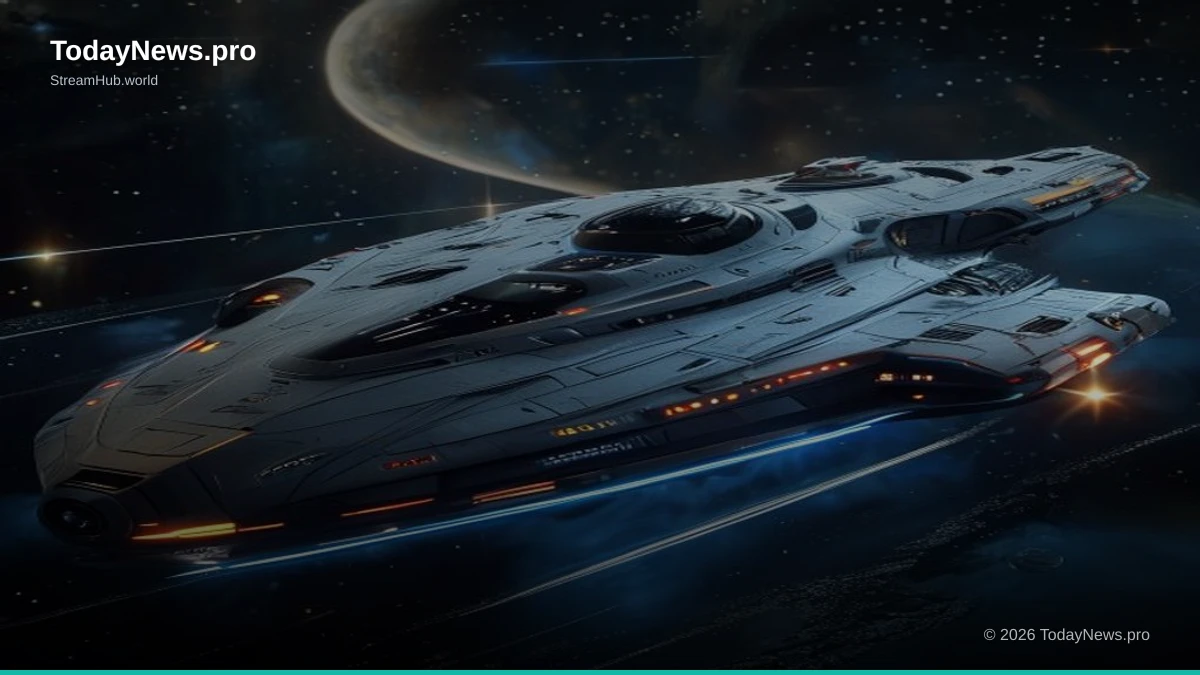
⏱ 35 min
In 2023, the global space economy was valued at approximately $530 billion, a figure projected to reach over $1 trillion by 2040, driven significantly by the burgeoning commercial space sector and the dream of accessible space tourism.
The Dawn of the Personal Starship: From Sci-Fi to Reality
For decades, the concept of venturing beyond Earth's atmosphere was confined to the realms of science fiction and the exclusive domain of national space agencies. Images of astronauts floating in zero gravity, the colossal machinery of rocket launches, and the hushed reverence surrounding the International Space Station painted a picture of an unattainable, awe-inspiring frontier. Yet, beneath this seemingly insurmountable barrier, a revolution has been brewing. Advances in material science, reusable rocket technology, and private sector investment have begun to democratize space, transforming it from a distant dream into a tangible destination. The "personal starship" is no longer a fanciful notion from a Hollywood blockbuster; it is the nascent reality of accessible commercial space travel, poised to redefine human experience and our relationship with the cosmos. This era promises not just to expand our horizons, but to fundamentally alter our perspective on our place within the universe. The journey from theoretical possibility to practical implementation has been arduous, marked by relentless innovation and significant risk. Early pioneers, often fueled by a combination of visionary zeal and substantial personal wealth, laid the groundwork for what is now a rapidly accelerating industry. Their successes and failures have provided invaluable lessons, paving the way for a more structured and scalable approach to civilian spaceflight.The Evolution of Spacecraft Design
Historically, spacecraft were single-use marvels of engineering, incredibly expensive to build and operate. The breakthrough of reusable rocket technology, pioneered by companies like SpaceX, has been a game-changer. This innovation dramatically reduces launch costs, making space more economically viable for a wider range of applications, including tourism. Furthermore, advancements in lighter, yet stronger materials, coupled with more efficient propulsion systems, are enabling the development of spacecraft that are not only safer but also more comfortable for passengers. The focus is shifting from purely functional capsules to vehicles designed with the passenger experience in mind.The Shifting Public Perception
Once viewed with trepidation, the idea of commercial space travel is slowly gaining traction. Public curiosity, fueled by media coverage and the visibility of private space missions, is transforming apprehension into anticipation. As more successful civilian flights are completed, the perceived risks diminish, and the allure of experiencing space firsthand grows stronger. This psychological shift is crucial for the widespread adoption of personal starships.The Pillars of Accessible Space Travel
The concept of "accessible" space travel is built upon several interconnected pillars, each playing a vital role in bringing the final frontier within reach of a broader population. These pillars represent not just technological advancements but also crucial economic and regulatory shifts that are making the dream a commercial reality. Without these foundational elements, the idea of a personal starship would remain firmly in the realm of imagination.Reusable Rocket Technology
The single most impactful innovation driving down the cost of space access is the development of reusable rockets. Companies like SpaceX have demonstrated that rockets can land vertically after delivering their payload, be refurbished, and used again for subsequent missions. This drastically reduces the per-launch cost compared to expendable rockets, which are discarded after a single use. This cost reduction is fundamental to making space tourism economically feasible for a larger segment of the population. The economics of spaceflight are fundamentally changing, moving from a model of perpetual, expensive creation to one of sustainable, repeated utilization.Miniaturization and Efficiency
Beyond rockets, the spacecraft themselves are becoming more efficient and capable. Advances in computing power, life support systems, and navigation allow for smaller, lighter, and more agile vehicles. This miniaturization not only reduces manufacturing costs but also allows for more flexible mission profiles. The development of sophisticated, yet user-friendly, interfaces also reduces the training burden for passengers, making space travel less intimidating.Private Investment and Market Demand
The influx of private capital into the space sector has been a powerful catalyst. Billionaires with a passion for space have funded ambitious ventures, but more importantly, this has attracted broader investment by demonstrating the potential for profit. This investment is crucial for research and development, infrastructure, and the scaling of operations. Simultaneously, a growing market demand, driven by aspirational consumers and scientific institutions, provides the economic incentive for these companies to continue innovating. The perceived value of a unique, transformative experience like space travel is a significant market driver.Key Players and Their Orbital Ambitions
The landscape of commercial space travel is dynamic and competitive, populated by a handful of visionary companies pushing the boundaries of what's possible. Each has a distinct approach and set of goals, contributing to the multifaceted development of accessible space experiences. Understanding these key players is essential to grasping the current state and future trajectory of personal starship aspirations.SpaceX: Revolutionizing Launch and Beyond
Founded by Elon Musk, SpaceX has been at the forefront of reusable rocket technology with its Falcon 9 and Falcon Heavy rockets. Their Starship program, a fully reusable super heavy-lift launch vehicle, is designed for interplanetary travel but also serves as the ultimate platform for orbital and suborbital tourism. SpaceX's ambitious vision includes lunar missions and eventual Mars colonization, with passenger flights to orbit and beyond being a key stepping stone. Their impact on launch costs cannot be overstated, directly enabling many of the commercial space endeavors we see today.Blue Origin: Suborbital Exploration and Future Growth
Jeff Bezos's Blue Origin focuses on suborbital flights with its New Shepard rocket. This system offers a few minutes of weightlessness and spectacular views of Earth from above the Karman line. While currently focused on short, awe-inspiring experiences, Blue Origin has long-term ambitions for orbital and even lunar missions with its New Glenn rocket. Their approach emphasizes a gradual, safety-first expansion into the space tourism market, building a robust foundation for future endeavors.2000
Founded Blue Origin
2002
Founded SpaceX
100+
Successful Falcon 9 Launches
10+
New Shepard Flights Completed
Virgin Galactic: Pioneering the Space Tourism Experience
Richard Branson's Virgin Galactic aims to provide a unique experience of reaching the edge of space aboard its VSS Unity spaceplane, launched from a carrier aircraft. Their model focuses on providing passengers with an extended period of weightlessness and breathtaking panoramic views. Virgin Galactic has a clear strategy for regular commercial flights, aiming to make space a destination for those seeking an extraordinary adventure. Their unique air-launch system offers a different approach to accessing space, potentially opening up new possibilities for operational flexibility.Other Emerging Players
Beyond these titans, numerous other companies are entering the fray, developing specialized capabilities for orbital hotels, space manufacturing, and unique space experiences. Companies like Axiom Space are building private space stations, which will serve as destinations for future space tourists and researchers, further expanding the possibilities of commercial space endeavors. The ecosystem is rapidly diversifying.The Journey to the Stars: What to Expect
Embarking on a journey beyond Earth's atmosphere is no longer an abstract concept for a select few. For those who can afford it, a commercial space flight offers an experience unlike any other, a profound shift in perspective that can be life-altering. The journey, from preparation to the return, is meticulously designed for safety and for maximizing the wonder of the experience.Suborbital Flights: A Taste of the Cosmos
The most accessible form of commercial space travel currently available are suborbital flights. These journeys, typically lasting around 10-15 minutes from launch to landing, take passengers to an altitude exceeding 100 kilometers, crossing the Karman line – the internationally recognized boundary of space. Passengers experience several minutes of weightlessness, allowing them to float freely within the cabin and gaze upon the curvature of the Earth against the blackness of space. The view is often described as transcendent, providing an unparalleled perspective on our planet and its fragility.Orbital Flights: A Day in Space
For those seeking a more extended experience, orbital flights offer the chance to circumnavigate the Earth multiple times. These missions, often involving stays at private space stations or the International Space Station (ISS) via private modules, can last for several days. Passengers can witness numerous sunrises and sunsets, observe weather patterns from a unique vantage point, and conduct simple experiments. The challenges are greater, requiring more rigorous training and a higher financial commitment, but the rewards are proportionally immense.The Passenger Experience: Training and Comfort
Commercial space travel is not simply about stepping onto a rocket. Passengers undergo comprehensive pre-flight training to familiarize themselves with the spacecraft, emergency procedures, and the physiological effects of spaceflight. This training ensures safety and maximizes the passenger's ability to enjoy the experience. Modern spacecraft are increasingly designed with passenger comfort in mind, featuring spacious cabins, advanced life support, and amenities that aim to make the journey as pleasant as possible, blending cutting-edge technology with human-centric design.Estimated Cost of Different Spaceflight Tiers (USD)
Economic and Societal Repercussions
The advent of accessible commercial space travel is not merely a technological feat; it carries profound economic and societal implications that are only beginning to unfold. This new era promises to stimulate innovation, create new industries, and potentially reshape our understanding of resource utilization and human potential. The ripple effects will extend far beyond the immediate experience of space tourism.The Space Tourism Economy
The direct economic impact of space tourism is significant. The market for orbital and suborbital flights is projected to grow exponentially, generating billions of dollars in revenue. This growth fuels further investment in research and development, leading to advancements in propulsion, materials, and life support systems that can have terrestrial applications. Beyond the flights themselves, this industry is creating jobs in manufacturing, engineering, operations, training, and hospitality. It’s fostering a new sector of the economy dedicated to the cosmos.Resource Utilization and In-Situ Manufacturing
Longer-term, accessible space travel opens the door to utilizing space-based resources. Asteroid mining, lunar resource extraction, and the establishment of orbital manufacturing facilities could revolutionize supply chains and reduce our reliance on Earth's finite resources. The ability to launch payloads more affordably makes these ambitious projects more feasible. This could lead to a new era of off-world industrialization and scientific discovery, transforming industries from energy to construction."The democratization of space access is not just about tourism; it's about unlocking humanity's potential for innovation, resourcefulness, and ultimately, survival. We are moving towards a multi-planetary future, and these early steps are critical."
— Dr. Anya Sharma, Chief Scientist, Stellar Horizons Institute
The Overview Effect and Global Perspective
One of the most frequently cited and profound impacts of space travel is the "Overview Effect"—a cognitive shift reported by astronauts and space tourists upon seeing Earth from space. This perspective often instills a deep sense of the planet's interconnectedness, beauty, and fragility. As more people experience this, it could foster a stronger global environmental consciousness and a greater appreciation for humanity's shared home. This psychological transformation could be one of the most valuable, albeit intangible, outcomes of accessible space travel.Challenges and the Road Ahead
Despite the rapid progress, the path to truly widespread and affordable personal starship travel is not without its hurdles. Several significant challenges must be addressed to ensure the continued growth and safety of the commercial space sector. Overcoming these obstacles will require continued innovation, robust regulatory frameworks, and sustained investment.Safety and Regulation
The paramount concern in any form of travel, especially one as inherently risky as spaceflight, is safety. While companies are investing heavily in redundant systems and rigorous testing, space remains an unforgiving environment. Establishing clear, internationally recognized safety standards and regulatory frameworks is crucial. This ensures that all operators adhere to the highest safety protocols, protecting passengers and the public. The evolution of aviation safety provides a valuable template for spaceflight regulation.| Challenge | Description | Potential Solutions |
|---|---|---|
| Safety Standards | Ensuring consistent, high levels of safety across various operators and mission types. | International collaboration on regulations, independent certification bodies, robust testing protocols. |
| Cost Reduction | Making space travel accessible to a significantly larger population beyond the ultra-wealthy. | Further advancements in reusable technology, economies of scale, development of new launch methods. |
| Environmental Impact | Mitigating the potential environmental effects of increased rocket launches, such as atmospheric pollution. | Development of cleaner propellants, optimized launch trajectories, research into atmospheric reentry effects. |
| Space Debris | Preventing the proliferation of orbital debris, which poses a significant threat to spacecraft. | Strict debris mitigation guidelines, active debris removal technologies, improved orbital traffic management. |
Cost and Affordability
Currently, commercial space travel remains prohibitively expensive for the vast majority of the global population. The cost of a suborbital flight is in the hundreds of thousands of dollars, while orbital missions can run into the tens of millions. Significant technological advancements and increased competition are necessary to drive these costs down. Innovations in manufacturing, propulsion, and operational efficiency will be key to making space accessible to a broader economic spectrum."The biggest hurdle isn't just the technology; it's convincing the world that space is a place for everyone, not just a select few. Affordability is key to realizing that vision, and that comes with sustained innovation and scaling."
— Captain Eva Rostova, Former ISS Commander and Space Consultant
Infrastructure and Logistics
As the frequency of spaceflights increases, so does the demand for supporting infrastructure. This includes more launch sites, advanced air traffic control for space, and potentially orbital docking facilities. Developing this infrastructure requires significant investment and coordinated planning between public and private entities. The logistical challenges of managing a growing number of missions and spacecraft in orbit are substantial.Sustainability and Environmental Concerns
The environmental impact of rocket launches, particularly concerning emissions released into the upper atmosphere, is a growing area of concern. As the frequency of launches increases, so does the potential for atmospheric pollution. Developing cleaner propulsion systems and more efficient launch profiles will be crucial for ensuring the long-term sustainability of commercial space activities. Research into the effects of rocket exhaust on atmospheric composition is ongoing and vital for guiding future development.The Future is Now: Your Personal Voyage
The era of accessible commercial space travel is not a distant fantasy; it is unfolding before our eyes. While the journey to making it truly mainstream will involve overcoming significant challenges, the foundations have been laid. For those with the means and the daring, a personal voyage to the stars is no longer an impossible dream. The companies leading this charge are not just building rockets; they are crafting experiences that promise to be transformative, offering a new perspective on our planet and our place in the universe. The "personal starship" is becoming a reality, ushering in a new chapter for humanity, one where the cosmos beckons not just for exploration, but for experience. The opportunities for discovery, for adventure, and for a profound shift in consciousness are now within reach, waiting for those ready to embark on the ultimate journey. The dream of spaceflight is evolving from a national endeavor to a personal one. As technology matures and costs decline, the allure of stepping beyond Earth's atmosphere will likely become an aspiration for a growing segment of the global population. The implications are far-reaching, promising not only new forms of travel and industry but also a renewed sense of wonder and unity for humanity.What is the current cost of a commercial space flight?
Currently, suborbital flights cost around $450,000 USD, while short orbital flights can range from $55 million USD upwards. Extended stays on private space stations can cost significantly more.
How long does a typical commercial space flight last?
Suborbital flights typically last about 10-15 minutes from launch to landing, with several minutes of weightlessness. Orbital flights can last for several days.
What kind of training is required for commercial space travel?
Passengers typically undergo pre-flight training covering spacecraft familiarization, emergency procedures, and the physiological effects of spaceflight to ensure safety and enhance the experience.
Which companies are currently offering commercial space flights?
The primary companies offering or planning commercial space flights include SpaceX, Blue Origin, and Virgin Galactic. Axiom Space is developing private space station modules.
When will space travel become more affordable?
While significant progress has been made, truly affordable space travel is still some time away. Continued technological advancements, economies of scale, and increased competition are expected to drive costs down over the next decade and beyond.