

 William Nye
As of 2024, the global neurotechnology market is valued at approximately $15.8 billion, with a projected compound annual growth rate (CAGR) of 12.5% through 2030, according to Grand View Research. While much of this investment focuses on medical interventions for Alzheimer’s and Parkinson’s, a burgeoning "shadow sector" is funneling billions into Whole Brain Emulation (WBE)—the theoretical process of scanning a physical brain and "uploading" its consciousness into a digital substrate. This is no longer the sole domain of science fiction; it is an industrial race involving high-resolution electron microscopy, exascale computing, and the controversial preservation of human remains.
The $37 Billion Quest for Digital Immortality
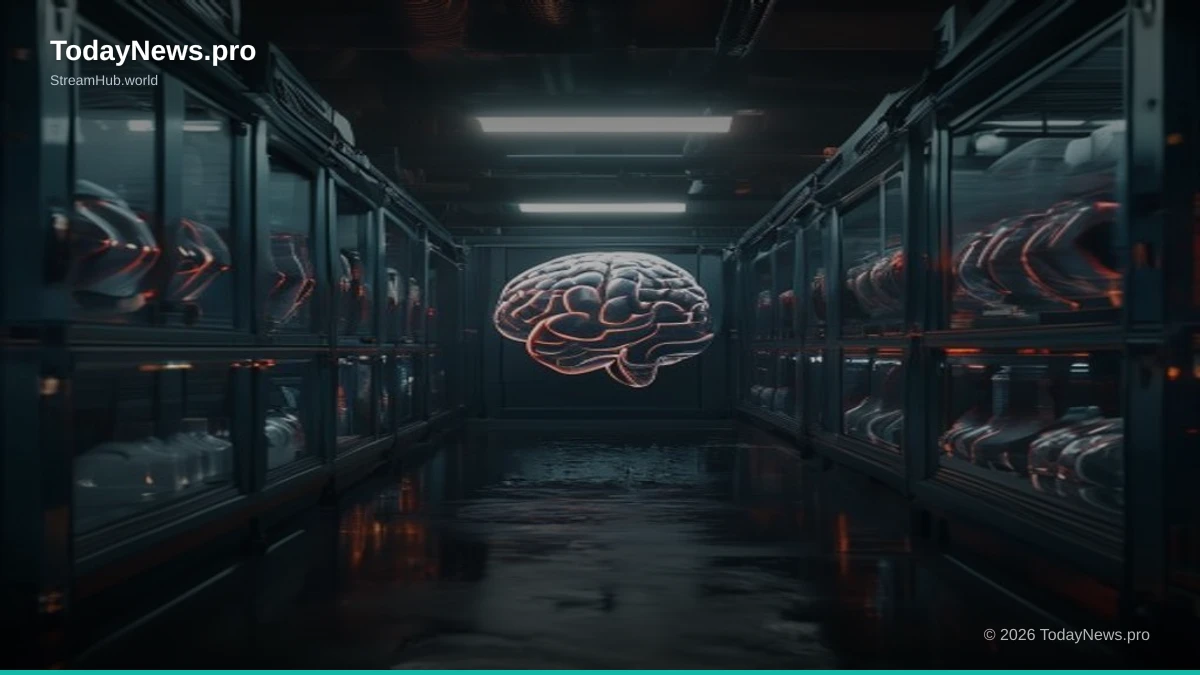
The concept of "Cold Storage" for the human brain has transitioned from fringe transhumanist forums to the boardrooms of Silicon Valley venture capital firms. The premise is simple yet terrifying: if the brain is a biological computer, its data (memories, personality, and consciousness) can be backed up. The technical reality, however, is a monumental challenge of data density and biological preservation.
Current estimates suggest that a single human brain contains roughly 86 billion neurons and upwards of 150 trillion synapses. To capture the "connectome"—the complete map of neural connections—at a resolution sufficient for reconstruction, researchers must slice the brain into sections thinner than a human hair and scan them using scanning electron microscopy (SEM). This process is currently destructive, meaning the biological "original" must be sacrificed to create the digital "backup."
The Connectome: Mapping the Human Hardware
The mapping of the human connectome is often compared to the Human Genome Project, but the scale of data is exponentially larger. While a human genome fits on a simple thumb drive (about 700MB), a high-resolution map of a single human brain would require approximately 2.5 petabytes (2,500 terabytes) of storage space. If we include the molecular state of every synapse—necessary for true cognitive replication—that number jumps into the zettabyte range.
Technological bottlenecks currently limit our ability to "read" the brain. The fastest current electron microscopes would take centuries to scan a full human brain at 5-nanometer resolution. However, companies like Nectome and various academic labs are developing parallel-beam technologies to reduce this timeframe to years, then months.
Vitrification vs. Chemical Fixation: How to Freeze a Mind
To back up a brain, one must first stop it from rotting. There are two primary schools of thought in the "Cold Storage" industry: Cryopreservation (freezing) and Chemopreservation (plasticizing). Each has distinct advantages and severe technical hurdles.
Cryopreservation (Vitrification)
Institutions like the Alcor Life Extension Foundation use vitrification, a process where biological tissue is cooled to ultra-low temperatures (around -196°C) while being infused with cryoprotectants. These "antifreeze" chemicals prevent ice crystals from forming, which would otherwise shred the delicate neural membranes. The goal is to keep the brain in a glass-like state until future technology can scan or revive it.
Aldehyde-Stabilized Cryopreservation (ASC)
ASC, often called "chemical fixation," involves perfusing the brain with glutaraldehyde. This chemical "fixes" the proteins and structures in place, essentially turning the brain into a durable plastic. This method preserves the connectome with exquisite detail, but it is inherently lethal. You cannot "wake up" a plastic brain; you can only scan its structure to build a digital replica.
| Method | State | Connectivity Preservation | Potential for Revival |
|---|---|---|---|
| Standard Cryonics | Frozen (Liquid Nitrogen) | Medium (Ice damage risk) | Biological Revival |
| ASC (Nectome) | Plasticized / Fixed | High (Nanoscale detail) | Digital Upload Only |
| Digital Mapping | Silicon Substrate | Theoretical | Artificial Intelligence |
The Compute Crisis: Why Your Brain Wont Fit on a Hard Drive
Even if we successfully map every neuron, we lack the "player" to run the "record." A human brain operates at an estimated 1 exaflop—a quintillion operations per second. While the world's fastest supercomputers, such as the Aurora at Argonne National Laboratory, have reached the exascale threshold, they consume megawatts of power and occupy the space of two tennis courts. The human brain does the same work on 20 watts of power (the energy of a dim lightbulb).
The "Cold Storage" reality means that today's backups are "write-only." We can save the data, but we cannot "run" the simulation. This creates a multi-generational gamble: individuals are paying hundreds of thousands of dollars to be preserved today, hoping that 100 years from now, computing power will be cheap enough and efficient enough to host their consciousness.
The Continuity Problem: Is the Backup Actually You?
The most profound hurdle for cognitive backups is not technical, but philosophical. This is known as the "Continuity of Self" problem. If your brain is scanned and a perfect digital replica is created, "you" (the biological observer) are still sitting in the chair. When the computer version of you is switched on, it will have all your memories and believe it is you. But from your perspective, you haven't moved.
This leads to the "Teleportation Paradox." If the original is destroyed during the scanning process (as is the case with ASC), did you travel into the computer, or did you simply die, leaving a very convincing ghost behind? For investors and early adopters, this distinction is the difference between eternal life and expensive suicide.
Regulatory Gaps and the Commercialization of the Soul
Currently, the "Brain Backup" industry operates in a legal vacuum. In the United States, companies like Alcor are regulated under the Uniform Anatomical Gift Act (UAGA), the same laws that govern organ donation. However, these laws were never intended to manage the "data rights" of a preserved individual. If a company goes bankrupt, what happens to the petabytes of neural data? Who owns the copyright to your personality?
Furthermore, there are concerns about "digital incarceration." If a mind is uploaded to a server owned by a corporation, that corporation could theoretically control the subjective speed of the mind's existence, its environment, and even its "off" switch. Without "Cognitive Human Rights," the reality of cold storage could shift from a dream of immortality to a corporate-owned purgatory.
Key Regulatory Risks
- Data Sovereignty: Can a digital consciousness own property or vote?
- Maintenance Contracts: What happens to the "frozen" if the company fails?
- Consent: Can a "backup" withdraw consent for its own existence?
The 2050 Roadmap: From Fruit Flies to Human Emulation
Industry analysts at TodayNews.pro suggest a three-phase rollout of cognitive backup technology over the next three decades. We are currently in Phase 1, characterized by "Partial Connectomics" and the mapping of small organisms. By 2035, we expect Phase 2: the first complete mapping of a mammalian brain (likely a mouse) and the ability to simulate basic neural pathways in real-time.
Phase 3, projected for 2050 and beyond, involves the first human "uploads." This will likely be restricted to the ultra-wealthy, as the cost of data storage and the specialized scanning equipment remains prohibitive. The question for society remains: will this technology create a permanent "digital elite," or will it eventually be democratized as a standard part of end-of-life care?
The technical reality of cold storage is that we are currently better at "writing" the data into cold storage than we are at "reading" it back. We are building a library of human minds, but we have yet to invent the alphabet needed to read the books. For now, the dream of digital immortality remains a high-stakes bet against time, biology, and the limits of silicon.