

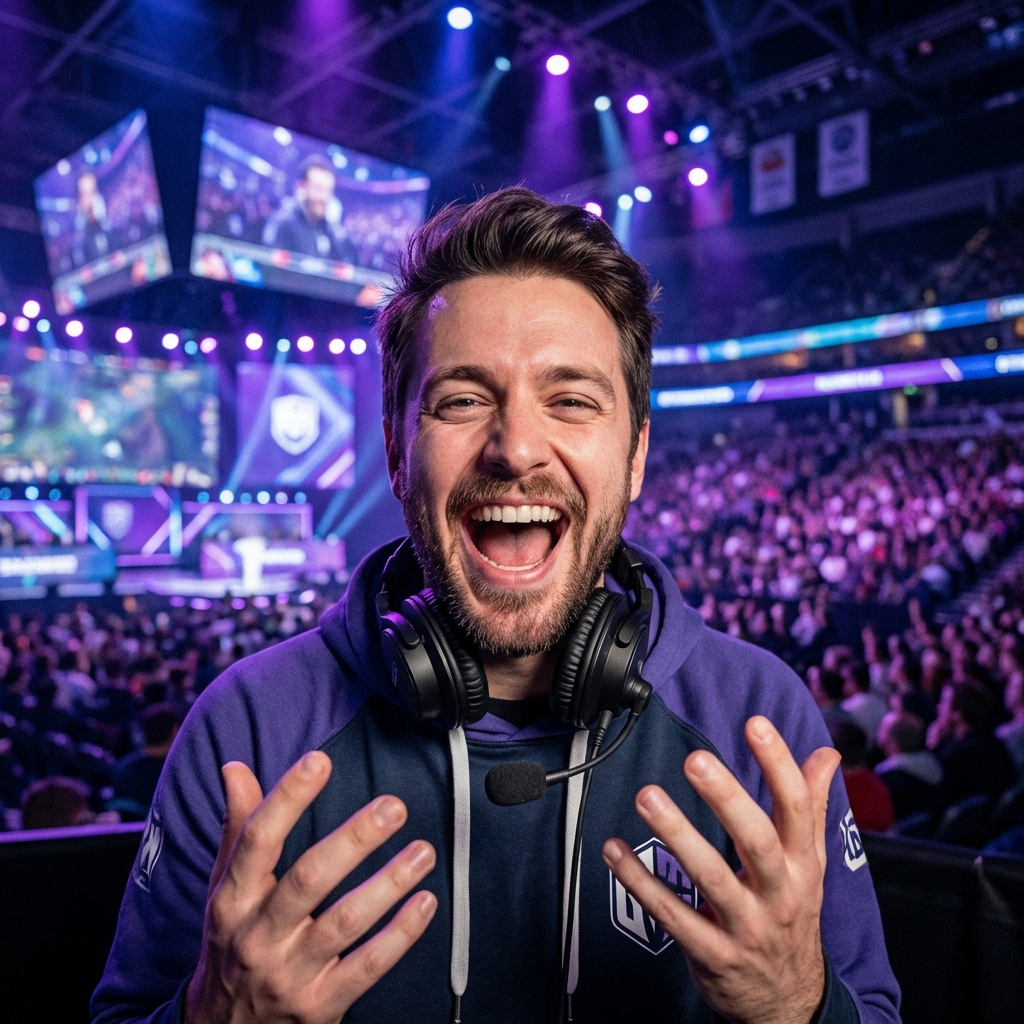
 Tom 'Retro' Baker

⏱ 18 min
The global cloud gaming market is projected to reach $16.86 billion by 2027, a testament to the accelerating shift towards streaming interactive entertainment, fundamentally altering how consumers access and engage with video games.
Cloud Gamings Ascendancy: A Paradigm Shift in Entertainment
The very definition of interactive entertainment is undergoing a seismic transformation, and at its epicenter lies cloud gaming. For decades, playing video games meant owning a dedicated piece of hardware – a console or a PC – capable of rendering complex graphics and running demanding software. This model inherently created barriers: the upfront cost of hardware, the need for physical space, and the limitations imposed by a device's lifespan. Cloud gaming, however, liberates players from these constraints by moving the processing power and storage to remote servers. Games are streamed to a user's device as if they were watching a video, with inputs sent back to the servers for near-instantaneous responses. This fundamental shift democratizes access, turning almost any internet-connected screen into a potential gaming portal.The Democratization of High-Fidelity Gaming
Historically, high-fidelity gaming experiences were the exclusive domain of those who could afford powerful, expensive hardware. A cutting-edge PC or the latest generation console represented a significant financial investment, often running into hundreds, if not thousands, of dollars. This created a tiered system where only a segment of the population could truly experience the most graphically intensive and technically demanding games. Cloud gaming fundamentally disrupts this exclusivity. By offloading the heavy lifting to data centers, players can access AAA titles on devices that might otherwise be incapable of running them – a budget laptop, a smartphone, or even a smart TV. This vastly expands the potential audience for sophisticated gaming experiences.From Physical Media to Digital Delivery
The transition from physical game media to digital downloads has been a precursor to the current streaming revolution. While digital downloads eliminated the need for cartridges or discs and offered convenience, they still required the game to be installed locally, consuming storage space and taking time to download. Cloud gaming takes this a step further. Games are not downloaded or installed; they are accessed on demand. This eliminates storage concerns entirely and drastically reduces the time between deciding to play a game and actually playing it. The entire library of a cloud gaming service becomes instantly available, akin to how one might browse and stream movies on a platform like Netflix.The Technological Evolution: From Latency Woes to Seamless Streams
The concept of streaming games isn't entirely new. Early attempts in the 2000s, like OnLive, struggled with the limitations of available internet infrastructure and nascent streaming technologies. Latency – the delay between a player's input and the on-screen reaction – was a significant hurdle, rendering fast-paced or competitive games unplayable. However, relentless advancements in internet speeds, particularly the widespread adoption of fiber optics and 5G mobile networks, coupled with sophisticated video compression and server infrastructure, have dramatically mitigated these issues. The development of sophisticated algorithms to predict player input and pre-render frames has also been crucial in creating a more fluid experience.Overcoming the Latency Barrier
Latency has been the Achilles' heel of cloud gaming. For an interactive experience to feel natural, the time lag between pressing a button and seeing the corresponding action on screen must be minimal. Early streaming attempts suffered from noticeable delays, making precise movements or quick reflexes impossible. This was particularly problematic for genres like first-person shooters or fighting games, where split-second decisions are critical. The current generation of cloud gaming services has made significant strides in reducing this latency. This is achieved through a combination of factors: * **Proximity of Servers:** Services strategically place data centers closer to their user base to minimize the physical distance data has to travel. * **Network Optimization:** Advanced routing and traffic management techniques ensure data packets arrive quickly and reliably. * **Predictive Algorithms:** Sophisticated software anticipates player actions, pre-rendering frames and reducing the need to wait for server response. * **High-Resolution Streaming:** While demanding, improvements in video codecs and adaptive streaming technologies allow for smooth playback even with fluctuating bandwidth.Bandwidth Requirements and Accessibility
While latency has improved, bandwidth remains a critical factor for a quality cloud gaming experience. Streaming high-definition video in real-time, along with transmitting player inputs, requires a stable and sufficiently fast internet connection. This has historically been a barrier in regions with less developed internet infrastructure. However, as broadband penetration increases globally and mobile networks like 5G become more prevalent, the accessibility of cloud gaming is expanding. The ability to play graphically demanding games on less powerful local hardware means that the primary bottleneck shifts from the user's device to their internet connection.90%
Of users report acceptable latency with stable broadband
25 Mbps
Recommended download speed for 1080p streaming
5G
Emerging as a viable platform for mobile cloud gaming
The Role of AI and Machine Learning
Artificial intelligence and machine learning are increasingly playing a pivotal role in refining the cloud gaming experience. These technologies are not just about making games themselves smarter, but about optimizing the streaming pipeline. AI can analyze network conditions in real-time to dynamically adjust video compression levels, ensuring the best possible visual quality without sacrificing responsiveness. Machine learning models can also be trained on vast datasets of player input patterns to improve predictive algorithms, further reducing perceived latency.Key Players and Their Strategies: A Competitive Landscape
The cloud gaming arena is a dynamic and fiercely competitive space, populated by tech giants and ambitious startups, each employing distinct strategies to capture market share. Microsoft's Xbox Cloud Gaming, part of its Game Pass subscription service, leverages its vast library of first-party and third-party titles. NVIDIA GeForce NOW focuses on empowering users to play games they already own on various storefronts, offering a flexible solution for PC gamers. Sony's PlayStation Plus Premium provides streaming access to a catalog of older PlayStation titles, alongside the ability to stream select PS4 and PS5 games. Amazon Luna offers a more modular approach, allowing users to subscribe to specific "channels" curated with different game genres or publishers.Microsofts Integrated Ecosystem Approach
Microsoft has positioned Xbox Cloud Gaming as an integral component of its Xbox Game Pass subscription. This strategy offers significant value to subscribers, providing access to a large and constantly updated library of games, many of which are available on day one of their release. The ability to stream these titles across a wide range of devices – from Xbox consoles and PCs to smartphones and tablets – significantly enhances the appeal of Game Pass. By tying cloud gaming to its existing subscription service, Microsoft aims to deepen player engagement within its ecosystem and attract new users who might not have previously considered purchasing an Xbox console.NVIDIAs PC-Centric Flexibility
NVIDIA GeForce NOW distinguishes itself by not selling games directly, but rather by allowing players to stream titles they already own from popular PC game stores like Steam, Epic Games Store, and Ubisoft Connect. This "bring your own games" model appeals to PC gamers who have invested heavily in their digital libraries and are hesitant to repurchase titles on a new platform. GeForce NOW acts as a powerful remote PC, capable of running demanding games at high settings, effectively upgrading a user's gaming capabilities without requiring new hardware. This flexibility is a key differentiator, attracting a segment of the market that values ownership and choice.| Platform | Primary Strategy | Device Support | Key Differentiator |
|---|---|---|---|
| Xbox Cloud Gaming | Subscription bundle (Game Pass) | Consoles, PC, Mobile, Tablets, Smart TVs | Day-one releases, vast library integration |
| GeForce NOW | Stream existing PC games | PC, Mac, Mobile, Tablets, Smart TVs, Browsers | Play games from multiple stores, high-end PC experience |
| PlayStation Plus Premium | Catalog streaming of older titles | Consoles, PC (limited) | Access to legacy PlayStation titles |
| Amazon Luna | Channel-based subscriptions | Fire TV, Fire Tablets, PC, Mac, Mobile, Web Browsers | Modular content access, variety of genres |
Amazon Lunas Modular Subscription Model
Amazon Luna has adopted a unique approach by offering a subscription service organized into different "channels." Users can subscribe to specific channels that focus on particular genres, publishers, or even specific game bundles. For instance, there's a "Retro Channel" for classic games, a "Family Channel" with kid-friendly titles, and a "Ubisoft+ Channel" for access to that publisher's extensive library. This modularity allows users to tailor their subscription to their specific gaming interests, potentially offering a more cost-effective solution than broad subscription services for those with niche tastes.User Experience and Accessibility: Breaking Down Barriers
The appeal of cloud gaming extends beyond its technological prowess to its profound impact on user experience and accessibility. The barrier to entry has never been lower. A gamer no longer needs a powerful, expensive machine. Instead, a stable internet connection and a compatible device – be it a smartphone, a tablet, a laptop, or even a smart TV – are all that is required to access a library of potentially hundreds of games. This democratization is particularly impactful for younger players, casual gamers, and those in emerging markets where the cost of traditional gaming hardware can be prohibitive.The Netflix of Gaming Appeal
The comparison to streaming services like Netflix and Spotify is frequently made, and for good reason. Cloud gaming services offer an "all-you-can-eat" buffet of entertainment, accessible on demand. This model eliminates the need for individual game purchases, which can quickly add up. Instead, a single monthly subscription grants access to a curated library of titles. This predictability in cost, coupled with the sheer volume and variety of games available, presents a compelling value proposition for consumers. The convenience of not having to manage storage, downloads, or updates further enhances the user experience, allowing players to jump into games almost instantaneously.Portability and Cross-Platform Play
The inherent nature of cloud gaming facilitates unprecedented levels of portability and cross-platform play. A player can start a game on their home PC, pause it, and then seamlessly pick up where they left off on their smartphone while commuting, or on a tablet during a lunch break. This fluidity breaks down the traditional boundaries between gaming sessions and devices. Furthermore, many cloud gaming services are actively working towards enabling cross-platform play, allowing friends to compete or cooperate regardless of the device they are using. This fosters a more connected and inclusive gaming community."Cloud gaming isn't just about convenience; it's about fundamentally expanding who gets to play and how they play. We're seeing a new era of accessibility unfold before our eyes, dismantling decades-old hardware barriers."
— Dr. Anya Sharma, Lead Researcher, Digital Entertainment Lab
Monetization Models and Business Impacts
The rise of cloud gaming has introduced new and evolving monetization models, moving beyond the traditional purchase of individual games. Subscription services, offering access to a library of titles for a recurring fee, have become the dominant model. This provides a predictable revenue stream for service providers and a clear cost for consumers. However, variations exist. Some services offer tiered subscriptions, with higher tiers granting access to premium content or faster streaming speeds. Others, like Amazon Luna, adopt a channel-based approach, allowing users to subscribe to specific content packages.Subscription Dominance and Tiered Offerings
The subscription model mirrors the success of streaming services in other media industries. For consumers, it offers a cost-effective way to access a vast library of games, often including new releases. For publishers, it provides a consistent revenue stream and a platform to showcase their back catalogs or new titles to a broader audience. However, the economics of these subscriptions are complex, requiring a delicate balance between content acquisition costs, infrastructure investment, and consumer price sensitivity. Many services are exploring tiered offerings to cater to different user needs and budgets.Impact on Hardware Manufacturers and Game Developers
Cloud gaming has a multifaceted impact on the existing gaming industry. For traditional hardware manufacturers like Sony and Microsoft, it presents both an opportunity and a challenge. While they benefit from selling subscriptions and leveraging their existing console user bases, the long-term reliance on dedicated hardware could diminish. For game developers, cloud gaming opens up new distribution channels and player bases, but it also necessitates a shift in development practices, potentially focusing on games that perform well in a streaming environment and ensuring compatibility across a wide range of devices. The revenue sharing models between cloud service providers and game developers are also a critical area of negotiation and evolution.$10-$15
Average monthly subscription fee
2x
Potential for increased game discovery via streaming
50%
Projected growth in subscription revenue for gaming services
The Future of Game Purchases
The long-term viability of the outright game purchase model in the age of cloud gaming is a subject of ongoing debate. While many players still value the ownership of digital or physical copies, the convenience and value proposition of subscription services are undeniable. It's likely that a hybrid model will emerge, where subscriptions provide access to a vast library, while premium or niche titles might still be available for individual purchase. The evolving digital marketplace will continue to shape these purchasing habits.The Future Horizon: Challenges and Opportunities
Despite its rapid ascent, cloud gaming is not without its hurdles. Ensuring consistent, high-quality streaming across diverse internet conditions remains a significant challenge. The development of compelling exclusive content for cloud platforms, akin to the console wars of the past, will be crucial for attracting and retaining subscribers. Furthermore, the perception of "owning" a game can be a psychological barrier for some consumers accustomed to traditional ownership models.Content Exclusivity and Library Growth
The battle for content is intensifying. While services like Xbox Cloud Gaming benefit from Microsoft's first-party studios and a steady stream of third-party deals, other providers are also striving to secure exclusive or high-profile titles. The ability to attract players will increasingly depend on the perceived value and uniqueness of the game libraries offered. As more developers embrace cloud-native development and streaming optimization, we can expect to see an influx of innovative titles designed to take full advantage of the technology.Addressing the Ownership Dilemma
For many gamers, the concept of "owning" a game is deeply ingrained. The ability to possess a digital license, play it offline, and have permanent access is a significant draw. Cloud gaming, by its nature, relies on ongoing access through a subscription and a stable internet connection. Addressing this "ownership" dilemma requires clear communication about the service's value and the benefits of instant access and a vast library. Some services are exploring models that offer a hybrid of subscription access and potential ownership options for certain titles. For more information on the evolving digital ownership landscape, see Wikipedia's entry on Digital Ownership."The biggest hurdle for cloud gaming's mainstream adoption isn't technology anymore, it's consumer mindset and building trust. Players need to feel confident that their investment in a subscription translates to sustained value and a reliable experience."
— Mark Jenkins, Senior Analyst, Gaming Market Insights
The Promise of Lower Hardware Costs
One of the most significant opportunities for cloud gaming lies in its potential to drastically reduce the cost of entry into high-fidelity gaming. As internet infrastructure continues to improve globally, cloud gaming can empower millions who were previously priced out of the market. This expansion of the gaming audience could lead to new forms of engagement and a more diverse gaming culture.Beyond Gaming: The Broader Implications of Streaming Technology
The advancements in cloud gaming are not confined to the realm of interactive entertainment; they have far-reaching implications for other digital industries. The sophisticated infrastructure, low-latency streaming protocols, and efficient data compression techniques developed for cloud gaming are directly applicable to other bandwidth-intensive applications. This includes high-definition video conferencing, real-time collaborative design tools, and even the burgeoning field of augmented and virtual reality experiences.Enhancing Remote Work and Collaboration
The COVID-19 pandemic accelerated the adoption of remote work, highlighting the need for seamless and efficient digital collaboration tools. Cloud gaming technologies can contribute to this by enabling the streaming of complex professional software applications, allowing users to access powerful workstations from any device. This could democratize access to high-end design, editing, and rendering software, making them accessible to a wider range of professionals and businesses. The ability to collaborate in real-time on demanding projects without requiring powerful local hardware is a significant advancement. For insights into the future of remote work, consult Reuters' coverage on the Future of Work.The Future of Immersive Experiences
Augmented reality (AR) and virtual reality (VR) are poised to become major components of future entertainment and productivity. However, the high computational demands of rendering realistic AR/VR environments have traditionally required expensive, tethered hardware. Cloud streaming could revolutionize this by offloading the heavy processing to remote servers, allowing for lighter, more affordable AR/VR headsets that stream content wirelessly. This could accelerate the adoption of immersive technologies for gaming, education, training, and social interaction, making them more accessible to the general public.What are the minimum internet speed requirements for cloud gaming?
While specific requirements vary by service and desired resolution, a stable internet connection of at least 25 Mbps is generally recommended for a smooth 1080p streaming experience. Higher speeds are beneficial for 4K streaming and reducing latency.
Can I play games I already own on cloud gaming services?
Some services, like NVIDIA GeForce NOW, are specifically designed for this purpose, allowing you to stream games from your existing PC game library. Other services offer their own curated libraries, and may not support games purchased elsewhere.
Is cloud gaming bad for the environment?
Cloud gaming's environmental impact is a complex issue. While it can reduce the need for individual, power-hungry gaming consoles and PCs, the massive data centers required for streaming consume significant amounts of energy. The overall impact depends on the energy sources used by these data centers and the efficiency of the streaming technology.
Will cloud gaming replace traditional consoles and PCs?
It is unlikely to completely replace them in the near future. Traditional hardware offers benefits like offline play, lower latency for competitive gaming, and a sense of ownership. However, cloud gaming is rapidly expanding the accessible gaming market and will likely coexist and complement traditional gaming platforms.