

 Scott Wright
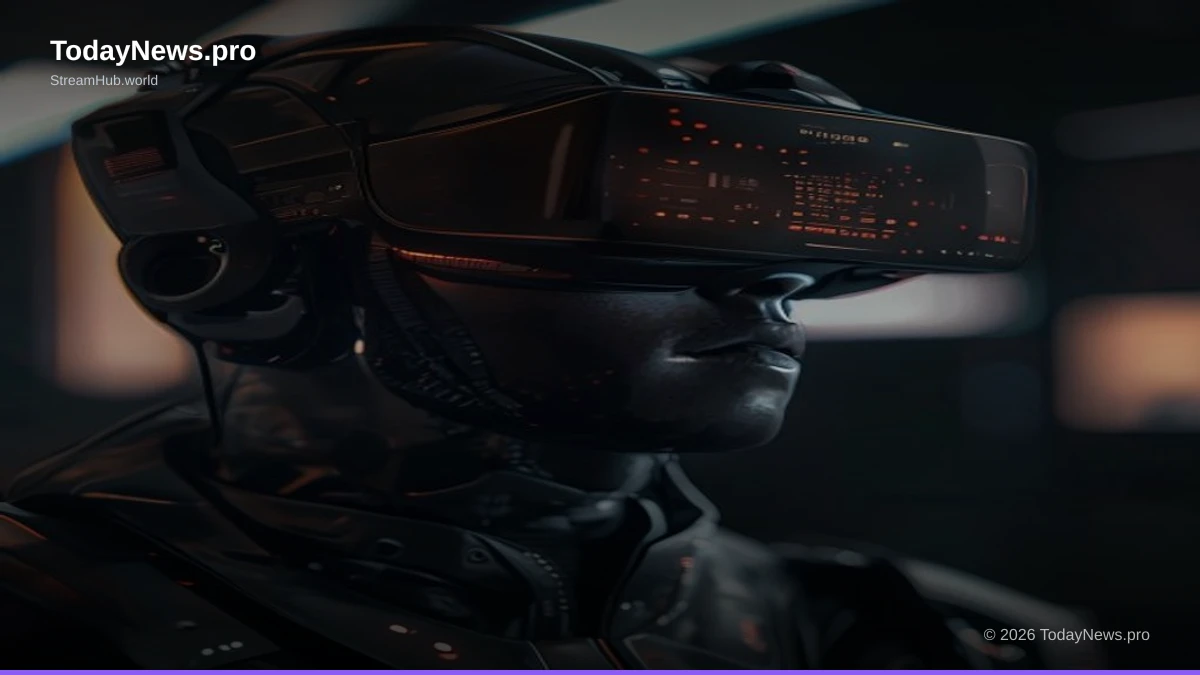
By 2030, the global AI in media and entertainment market is projected to reach over $117 billion, signaling a seismic shift driven by technologies like artificial intelligence and virtual reality that are fundamentally altering the bedrock of filmmaking and audience consumption.
The AI Directors Chair: Generative Storytelling and Scriptwriting
The very genesis of a film is undergoing a revolution. Artificial intelligence, once a tool for data analysis, is now stepping into the role of creative collaborator, and in some instances, the primary architect of cinematic narratives. Generative AI models, trained on vast datasets of existing scripts, novels, and historical footage, are capable of producing original storylines, character arcs, and even dialogue that can rival human output in complexity and emotional resonance. This doesn't just mean faster script generation; it opens up entirely new avenues for storytelling, allowing for the exploration of concepts and combinations that might not have been conceived through traditional human ideation alone.
Algorithmic Muse: Prompt Engineering for Screenplays
The craft of screenwriting is evolving with the advent of prompt engineering. Filmmakers and writers are learning to articulate their creative visions through precise textual or visual prompts fed into AI models. These prompts can range from simple requests like "write a noir detective story set in a rain-drenched futuristic city" to highly detailed specifications involving character motivations, plot twists, and thematic undertones. The AI then interprets these prompts, generating multiple script drafts, character backstories, and even detailed scene descriptions. This symbiotic relationship between human intent and AI execution promises to accelerate the pre-production phase significantly, allowing for rapid iteration and exploration of narrative possibilities.
Character Development and World-Building
Beyond plot, AI is proving invaluable in crafting believable characters and intricate worlds. By analyzing character archetypes, psychological profiles, and historical contexts, AI can generate nuanced personalities with consistent motivations and believable dialogue. Similarly, for science fiction or fantasy genres, AI can assist in world-building, creating unique alien species, historical timelines, and geographical landscapes with a level of detail that would be prohibitively time-consuming for human teams alone. This allows for richer, more immersive cinematic universes that captivate audiences on a deeper level.
| Year | Percentage of Studios Experimenting with AI Scriptwriting | Percentage of Independent Filmmakers Utilizing AI Tools |
|---|---|---|
| 2022 | 15% | 5% |
| 2023 | 28% | 12% |
| 2024 (Projected) | 45% | 25% |
| 2025 (Projected) | 60% | 40% |
Virtual Sets and Digital Actors: The Democratization of Production
The traditional limitations of physical sets and expensive location shoots are rapidly dissolving thanks to advancements in AI and VR. Virtual production, powered by real-time rendering engines and AI-driven asset creation, allows filmmakers to build and populate entire worlds within a studio environment. This not only offers unparalleled creative control but also dramatically reduces logistical costs and environmental impact. The rise of sophisticated digital actors, often indistinguishable from their real-life counterparts, further blurs the lines between the tangible and the digital, opening up exciting new possibilities for storytelling and performance.
The Rise of the Virtual Production Stage
LED volume stages, once a niche technology, are becoming the new standard for many productions. These massive, curved LED screens display highly realistic digital environments that react dynamically to the actors' movements and the camera's perspective. AI plays a crucial role in generating and optimizing these environments, ensuring photorealism and seamless integration with live-action footage. Filmmakers can now change the time of day, weather conditions, or even the entire backdrop with a few keystrokes, offering a flexibility previously unimaginable. This democratization means that independent filmmakers with access to these technologies can create visually stunning content that was once the exclusive domain of blockbuster studios.
Digital Doubles and AI-Powered Performances
The ability to create and animate digital actors has reached a remarkable level of sophistication. AI algorithms can now analyze motion capture data, facial expressions, and vocal performances to generate entirely synthetic characters with lifelike nuances. This technology offers solutions for replicating deceased actors, de-aging performers, or creating entirely new characters with unique physical attributes. Furthermore, AI can be used to imbue these digital actors with nuanced performances, subtly adjusting their expressions and gestures to enhance emotional impact. While ethical considerations around consent and representation are paramount, the creative potential for digital actors is undeniable.
AI in Visual Effects (VFX) and Animation
AI is revolutionizing the VFX pipeline, automating tedious tasks and enabling artists to focus on creative decision-making. AI-powered rotoscoping, for example, can isolate subjects from backgrounds with unprecedented speed and accuracy, significantly reducing the labor-intensive nature of this process. Similarly, AI algorithms are being developed to generate realistic textures, natural phenomena like smoke and fire, and complex particle simulations. In animation, AI can assist in generating secondary motion, facial rigging, and even character lip-syncing, leading to faster turnaround times and more fluid, lifelike animation.
AI in Post-Production: Efficiency Meets Artistry
The post-production phase, encompassing editing, sound design, color grading, and visual effects integration, is a fertile ground for AI-driven innovation. AI algorithms are streamlining workflows, automating repetitive tasks, and even offering creative suggestions to editors and sound designers. This not only accelerates the time from production to release but also allows for a more refined and artistically driven final product.
Intelligent Editing and Automated Cutdowns
AI-powered editing tools can analyze hours of footage, identify key moments, and even suggest optimal cuts based on pacing, emotional cues, or dialogue synchronization. For documentary filmmaking or news reporting, AI can automatically generate highlight reels or shorter versions of interviews, saving immense amounts of time. While human editors remain crucial for narrative flow and artistic interpretation, AI acts as an intelligent assistant, flagging crucial takes and speeding up the initial assembly process. This allows editors to dedicate more time to refining the emotional arc and thematic coherence of the film.
AI-Assisted Sound Design and Music Composition
The sonic landscape of a film is as critical as its visuals. AI is making significant inroads in sound design by identifying and isolating specific sounds within a recording, generating Foley effects, and even creating ambient soundscapes. For music, AI composers can generate original scores tailored to the mood and pacing of a scene, offering a vast library of royalty-free music or serving as a starting point for human composers. This technology can dramatically reduce the cost and time associated with licensing and composing original music, making high-quality sound design more accessible to a wider range of productions.
AI for Color Grading and Restoration
Color grading is an art form that profoundly impacts a film's mood and aesthetic. AI tools are now capable of analyzing footage and suggesting optimal color palettes based on genre conventions, thematic elements, or even specific emotional responses. For archival footage or older films, AI-powered restoration tools can intelligently remove noise, stabilize shaky frames, and even colorize black-and-white imagery, breathing new life into cinematic history. This not only saves significant manual effort but also can achieve results that are difficult for humans to replicate consistently.
The Immersive Canvas: VR as a Narrative Medium
Virtual reality offers a profoundly different way to experience stories, moving beyond the passive observation of a screen to active immersion within a narrative world. VR filmmaking, often referred to as immersive storytelling, places the viewer at the center of the action, allowing them to explore environments, interact with characters, and experience events from a first-person perspective. AI is playing a growing role in enhancing these experiences, from generating realistic virtual environments to creating responsive non-player characters (NPCs).
Building Worlds in VR: AI-Assisted Environment Design
Creating believable and engaging VR environments is a complex task. AI can assist by generating vast, detailed virtual landscapes, populating them with dynamic elements like flora and fauna, and ensuring realistic physics and lighting. This allows VR filmmakers to build expansive worlds that feel lived-in and authentic, enhancing the sense of presence for the viewer. AI can also help in optimizing these environments for performance, ensuring smooth frame rates and preventing motion sickness, which is crucial for a comfortable VR experience.
Interactive Narratives and AI-Driven Characters
The true power of VR lies in its potential for interactivity. AI can be used to create dynamic narratives where the viewer's choices directly influence the story's progression. This involves AI-powered NPCs that can react intelligently to the viewer's presence, engage in natural language conversations, and exhibit believable behaviors. Imagine a VR detective story where the player can question suspects and their responses are generated dynamically by an AI, leading to unique outcomes each time. This level of interactivity promises a deeply personal and replayable cinematic experience.
External research further supports this burgeoning field. A report by Reuters on immersive technologies highlighted the increasing investment in VR content creation, forecasting a significant growth in the market for interactive narratives. Wikipedia's entry on Virtual Reality provides a comprehensive overview of the technology's evolution and applications.
The Future of VR Distribution and Accessibility
As VR hardware becomes more accessible and affordable, the distribution of VR films is poised for significant growth. Streaming platforms are beginning to incorporate VR content, and dedicated VR app stores offer a growing library of immersive experiences. AI can play a role in optimizing streaming quality and recommending personalized VR content to users, further enhancing discoverability and engagement. The challenge remains in creating compelling content that justifies the investment in VR hardware, but the advancements in AI and production tools are rapidly paving the way.
Audience Engagement: Personalized Narratives and Interactive Cinema
The traditional one-size-fits-all approach to filmmaking is being challenged by the potential for personalized cinematic experiences. AI can analyze viewer preferences, historical viewing habits, and even real-time emotional responses to tailor content specifically for individual audiences. This extends beyond simple recommendations to the actual narrative itself, opening the door to adaptive storytelling and truly interactive cinema.
Personalized Story Arcs and Branching Narratives
Imagine a film where the protagonist's personality, the plot's direction, or even the ending changes based on your individual viewing profile. AI can dynamically adjust narrative elements, character interactions, and thematic focus to resonate more deeply with each viewer. This could involve subtle shifts in dialogue, alternative subplots, or entirely different thematic explorations of the same core story. For streaming services, this could lead to unprecedented levels of viewer retention and satisfaction.
AI-Powered Companion Experiences
Beyond the main film, AI can power companion experiences that extend the narrative universe. This could include interactive chatbots that act as characters from the film, virtual companions that offer behind-the-scenes insights, or AI-generated content that expands upon the film's lore and world-building. These experiences can deepen audience connection with the story and its characters, fostering a more engaged and loyal fanbase.
The Ethics of Algorithmic Storytelling
As AI takes a more prominent role in shaping cinematic narratives, ethical considerations become paramount. Questions arise about authorship, intellectual property, and the potential for AI to perpetuate existing biases present in its training data. Ensuring transparency in how AI is used and maintaining human oversight in creative decision-making will be crucial to fostering trust and maintaining the artistic integrity of filmmaking.
Ethical Frontiers and Creative Challenges
The integration of AI and VR into filmmaking is not without its challenges. Beyond the technological hurdles, significant ethical and creative considerations demand careful navigation. From the implications of AI-generated content on human creativity to the potential for bias and the need for new skill sets, the industry faces a complex evolving landscape.
Authorship, Copyright, and the Human Element
One of the most significant debates surrounds authorship and copyright when AI is involved in content creation. Who owns the rights to a script generated by an AI? How do we credit the AI's contribution? The traditional notions of authorship, rooted in human intent and originality, are being challenged. There is a growing consensus that AI should be viewed as a powerful tool for human creators, enhancing their capabilities rather than replacing them entirely. The human element of emotion, lived experience, and nuanced interpretation remains irreplaceable.
Bias in AI and Representation in Cinema
AI models are trained on vast datasets, and if these datasets contain inherent biases, the AI will reflect and potentially amplify them. This is a critical concern in filmmaking, where representation and diversity are increasingly important. AI used for character generation, scriptwriting, or even casting recommendations could inadvertently perpetuate stereotypes or exclude marginalized groups. Rigorous auditing of AI models and diverse training data are essential to ensure that AI contributes to a more inclusive and representative cinematic future, rather than reinforcing existing societal inequalities.
A report from Wikipedia on Artificial Intelligence discusses the challenges of bias in machine learning, a relevant concern for the film industry. Companies like Reuters have also reported on efforts to address bias in AI systems across various sectors.
The Evolving Skillset of Filmmakers
The rise of AI and VR necessitates an evolution in the skillsets required for filmmakers. While traditional crafts like cinematography, directing, and editing remain vital, new competencies are emerging. Proficiency in prompt engineering for AI, understanding of real-time rendering pipelines for virtual production, and expertise in interactive narrative design for VR are becoming increasingly valuable. Educational institutions and industry training programs will need to adapt to equip future generations of filmmakers with these critical new skills.
The Future Landscape: Whats Next for Cinematic Innovation
The convergence of AI and VR is not a distant possibility; it is the present reality shaping the future of cinema. As these technologies mature, we can expect even more profound transformations, blurring the lines between creator and audience, reality and simulation, and ultimately redefining what it means to tell and experience stories on screen.
AI as a Creative Partner and Co-Director
The future will likely see AI move beyond being a mere tool to becoming a genuine creative partner. Imagine an AI co-director that can offer real-time feedback on a scene's emotional impact, suggest alternative camera angles based on narrative intent, or even help mediate creative disagreements. This collaborative model, where human vision guides AI capabilities, promises to unlock new levels of artistic expression and efficiency.
Hyper-Personalized and Generative Films
The ultimate frontier is the fully generative film, where an entire movie can be created on-demand, tailored precisely to an individual viewer's preferences and even real-time mood. This could range from subtle variations in plot and character to entirely unique cinematic experiences crafted for each viewer. The concept of a single theatrical release might become a relic of the past, replaced by a dynamic, ever-evolving ecosystem of personalized content.
The Evolution of the Cinema Experience
Beyond the creation process, the viewing experience itself will be transformed. VR cinemas offering shared immersive experiences, interactive theaters where audiences can influence the narrative in real-time, and AI-powered projection systems that adapt to room acoustics and audience presence are all on the horizon. The communal aspect of cinema may evolve, but its fundamental power to transport and engage audiences will undoubtedly endure, albeit in new and exciting forms.