

 David Chen
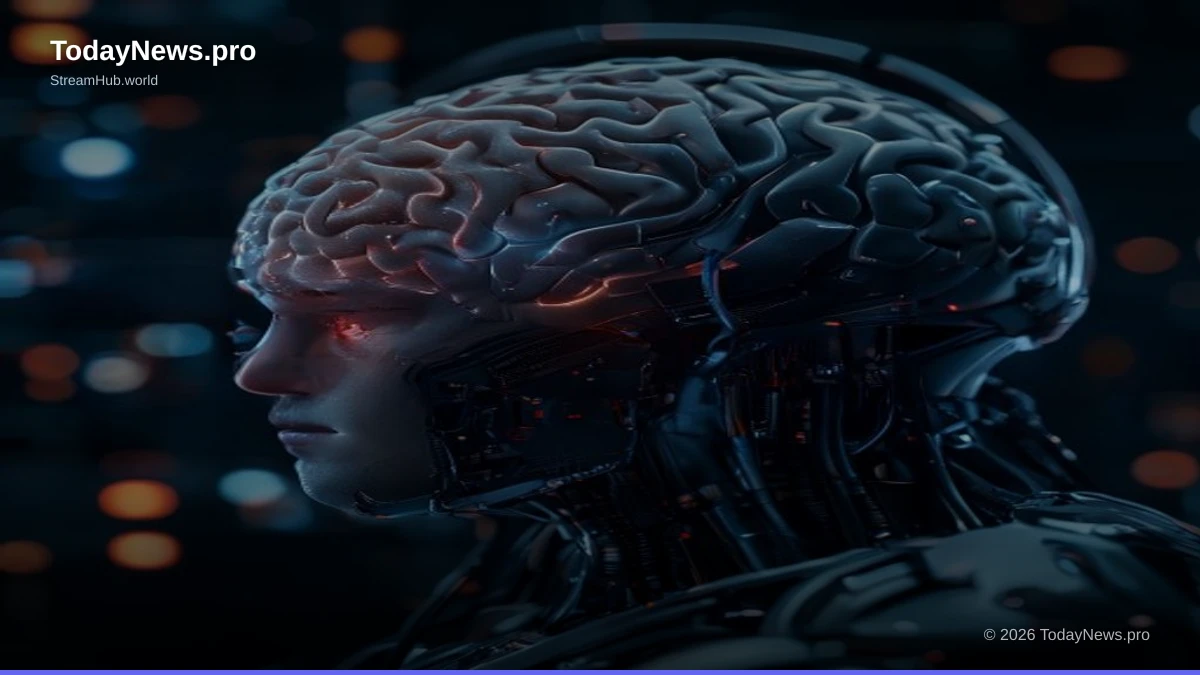
By 2030, the global Brain-Computer Interface (BCI) market is projected to reach over $6.8 billion, signaling a dramatic shift from niche research to mainstream adoption.
The Dawn of Neural Interfacing: From Lab Curiosity to Tangible Tools
For decades, the concept of directly linking the human brain to external devices remained firmly within the realm of science fiction. Visions of telepathic communication and mind-controlled robots dominated popular culture. However, behind the fantastical portrayals, dedicated researchers and engineers were meticulously laying the groundwork for what is now rapidly becoming a tangible reality. Early BCI experiments, often rudimentary and limited in scope, focused on understanding basic neural signals and their potential for external manipulation. These foundational studies, though appearing primitive by today's standards, were crucial in deciphering the complex language of our brains.
The initial breakthroughs were often incremental, focusing on specific neurological conditions. Researchers demonstrated that individuals with severe motor impairments, such as those suffering from locked-in syndrome or advanced amyotrophic lateral sclerosis (ALS), could learn to control cursors on a screen or select letters from an alphabet grid using only their thoughts. These early successes, while life-changing for the individuals involved, were largely confined to specialized medical settings and required extensive training and calibration. They served as powerful proof-of-concept, igniting further investment and accelerating the pace of innovation.
The transition from laboratory curiosity to a more accessible technology involved overcoming significant hurdles. The development of less invasive and more robust sensing technologies, coupled with advances in machine learning and artificial intelligence, has been pivotal. Algorithms are now capable of decoding complex neural patterns with unprecedented accuracy, allowing for more intuitive and nuanced control. This evolution has opened the door to a wider range of applications, moving beyond the immediate needs of restoring lost function to exploring the augmentation of existing human capabilities.
Early Pioneers and Their Groundbreaking Work
The history of BCI research is dotted with the names of visionary scientists who dared to bridge the gap between biology and technology. Early work by Jacques Vidal in the 1970s, exploring the concept of a "brain-computer interface," laid crucial theoretical groundwork. Later, researchers like Jonathan Wolpaw and his colleagues at the Wadsworth Center made significant strides in developing electroencephalography (EEG)-based BCIs for communication and control. Their persistent efforts, often with limited resources, provided the empirical evidence needed to validate the potential of neural interfaces.
These early pioneers faced immense challenges, including the signal-to-noise ratio limitations of non-invasive methods and the ethical considerations surrounding brain data. Despite these obstacles, their dedication to understanding neural signals and developing practical applications paved the way for the sophisticated technologies we see emerging today. The foundational principles they established continue to guide current research and development efforts.
The Rise of Non-Invasive Technologies
A significant turning point in BCI accessibility has been the advancement of non-invasive technologies. While invasive BCIs, which require surgical implantation of electrodes, offer higher signal fidelity, their inherent risks and costs limit widespread adoption. Technologies like electroencephalography (EEG), magnetoencephalography (MEG), and functional near-infrared spectroscopy (fNIRS) have become increasingly sophisticated and affordable. These methods allow for the detection of brain activity from outside the skull, making BCIs more approachable for both therapeutic and consumer applications.
EEG, the most common non-invasive technique, measures electrical activity generated by neuronal firing through electrodes placed on the scalp. While it offers good temporal resolution, its spatial resolution is relatively low, meaning it can detect *when* brain activity occurs more precisely than *where*. Advances in dense-array EEG systems and sophisticated signal processing algorithms are continuously improving its accuracy and utility. Similarly, fNIRS, which uses infrared light to measure changes in blood oxygenation, provides a complementary approach with its own set of advantages and limitations.
Decoding the Brain: The Science Behind BCI Technology
At its core, Brain-Computer Interface technology relies on the principle that our thoughts, intentions, and even emotions are reflected in distinct patterns of neural activity. These patterns, which manifest as electrical signals, magnetic fields, or changes in blood flow, can be detected by specialized sensors. The challenge lies in accurately capturing these subtle biological signals and then translating them into commands that external devices can understand and execute.
The process typically involves several key stages. First, data acquisition: sensors gather raw neural data. Second, signal processing: this data is cleaned, filtered, and amplified to remove noise and irrelevant signals. Third, feature extraction: specific characteristics or patterns within the processed signal are identified that correlate with particular mental states or intentions. Finally, translation and output: these extracted features are translated into commands, such as moving a cursor, typing a letter, or operating a prosthetic limb. Machine learning algorithms play a crucial role in this translation, learning to associate specific neural patterns with desired actions.
Invasive vs. Non-Invasive: A Spectrum of Signal Fidelity
The choice between invasive and non-invasive BCIs is a fundamental consideration, driven by the trade-off between signal quality and risk. Invasive BCIs, such as electrocorticography (ECoG) or microelectrode arrays implanted directly into the brain tissue, offer the highest fidelity signals. ECoG involves placing electrodes on the surface of the brain, while microelectrode arrays can record from individual neurons. These methods provide incredibly detailed insights into neural activity, enabling precise control and a richer understanding of brain function.
However, invasive procedures carry inherent risks, including infection, bleeding, and potential tissue damage. The long-term stability of implanted devices and the body's immune response to foreign materials are also significant concerns. Consequently, invasive BCIs are primarily reserved for severe medical conditions where the benefits clearly outweigh the risks, and their development often involves stringent regulatory oversight. Non-invasive methods, while less precise, offer a much safer and more accessible alternative for a broader range of applications.
The Role of Machine Learning and Artificial Intelligence
The sophistication of modern BCIs is inextricably linked to advances in machine learning (ML) and artificial intelligence (AI). Raw neural data is inherently noisy and complex, making direct interpretation challenging. ML algorithms are trained on vast datasets of neural activity paired with corresponding user intentions or actions. Through this training process, the algorithms learn to identify subtle patterns and correlations that would be imperceptible to human analysis.
Deep learning, a subset of ML, has proven particularly effective in BCI applications. Neural networks can automatically learn hierarchical representations of neural data, progressively extracting more abstract and meaningful features. This allows BCIs to adapt to individual users and their unique neural signatures, improving accuracy and reducing the need for extensive recalibration. As AI continues to evolve, so too will the capabilities and intuitiveness of BCI systems, enabling more seamless and natural interactions.
Signal Acquisition Techniques: EEG, ECoG, and Beyond
Several key techniques are employed for acquiring neural signals, each with its own strengths and weaknesses. Electroencephalography (EEG) remains the most widely used non-invasive method due to its affordability, portability, and ease of use. It measures the summed electrical activity of large populations of neurons via electrodes placed on the scalp. While offering excellent temporal resolution, its spatial resolution is limited, and it is susceptible to artifacts from muscle movements or eye blinks.
Electrocorticography (ECoG) represents a semi-invasive approach, where electrodes are placed directly on the surface of the dura mater, the outermost membrane covering the brain. This offers a significant improvement in signal quality over scalp EEG, providing better spatial resolution and reducing the impact of skull and scalp interference. For even higher resolution, microelectrode arrays are implanted directly into the brain parenchyma, allowing for the recording of single-neuron activity. However, these invasive methods are associated with higher risks and are typically reserved for clinical applications.
| Technique | Invasiveness | Spatial Resolution | Temporal Resolution | Typical Applications |
|---|---|---|---|---|
| EEG | Non-invasive | Low | High | Communication, motor control, diagnostics |
| fNIRS | Non-invasive | Medium | Medium | Cognitive state monitoring, attention studies |
| ECoG | Semi-invasive | Medium-High | High | Epilepsy monitoring, advanced motor control |
| Microelectrode Arrays | Invasive | Very High | Very High | Prosthetic control, neural prosthetics |
Current Applications: Restoring Hope and Function
The most profound and immediate impact of BCI technology is seen in its application for individuals with severe motor and communication disabilities. For those who have lost the ability to move or speak due to conditions like spinal cord injuries, stroke, ALS, or cerebral palsy, BCIs offer a lifeline. They provide a means to regain a degree of independence and reconnect with the world, transforming lives in ways previously unimaginable.
Restoring communication is a primary focus. BCIs enable individuals to control assistive devices, such as specialized keyboards or speech synthesizers, by simply thinking about typing or selecting words. This can dramatically improve their quality of life, allowing them to express their needs, engage in social interactions, and maintain relationships. Similarly, BCI-controlled prosthetics are becoming increasingly sophisticated, offering users the ability to control artificial limbs with remarkable dexterity, mimicking natural movements and restoring a sense of embodiment.
Restoring Communication and Mobility
For individuals who are unable to communicate through conventional means, BCIs are a revolutionary tool. Systems can translate brain signals associated with intended speech or typing into text or synthesized voice. This allows patients with conditions like locked-in syndrome to participate in conversations, write emails, and interact with their environment. The development of faster and more accurate algorithms has significantly reduced the time required to form sentences, making communication more fluid and less taxing.
In the realm of mobility, BCIs are empowering individuals with paralysis to regain control of their bodies. Through non-invasive or implanted sensors, users can learn to control robotic exoskeletons or functional electrical stimulation (FES) systems that activate paralyzed muscles. This can enable them to stand, walk, or perform simple arm movements, offering immense psychological and physical benefits. The sophistication of these systems is rapidly advancing, moving towards more natural and intuitive control.
Neurorehabilitation and Stroke Recovery
Beyond directly restoring function, BCIs are also proving valuable in neurorehabilitation. For stroke survivors or individuals with brain injuries, BCIs can facilitate motor relearning and recovery. By providing real-time feedback on brain activity associated with attempted movements, these systems can help rewire neural pathways. For instance, a patient might be encouraged to imagine moving their affected limb, and the BCI would detect this intention and provide visual or auditory cues, or even assist the movement with a robotic device.
This "closed-loop" system, where brain activity directly influences external feedback and therapeutic intervention, is thought to promote neuroplasticity – the brain's ability to reorganize itself by forming new neural connections. Studies have shown that BCI-assisted rehabilitation can lead to greater functional recovery compared to traditional therapy alone. This approach offers a personalized and potentially more efficient path to regaining lost motor skills and cognitive functions.
Prosthetic Control and Advanced Robotics
The integration of BCIs with advanced prosthetic limbs represents one of the most exciting frontiers in assistive technology. Instead of relying on simple switch-based controls, users can now potentially control multi-articulated prosthetic arms or legs using their thoughts. This allows for a much finer degree of control, enabling actions like grasping objects with varying pressure, or even performing tasks requiring intricate finger movements. Implanted electrode arrays are particularly effective here, offering the high-resolution data needed to decode the complex neural signals associated with intended limb movements.
The development of robotic systems that can interpret a wider range of user intentions, from simple movements to complex manipulations, is a testament to the progress in both BCI algorithms and robotic engineering. The goal is to create prosthetics that feel less like tools and more like extensions of the user's own body, significantly enhancing autonomy and participation in daily life. The ethical considerations surrounding such powerful interfaces are, however, becoming increasingly important as these technologies mature.
The Horizon of Enhancement: Augmenting Human Capabilities
While the restorative applications of BCIs are undeniably transformative, the technology's potential extends far beyond aiding those with disabilities. The prospect of using BCIs to enhance the cognitive and physical capabilities of healthy individuals is generating both immense excitement and considerable debate. This "human augmentation" frontier could redefine what it means to be human, offering unprecedented improvements in learning, memory, focus, and even sensory perception.
Imagine a future where students can absorb complex information at an accelerated rate, professionals can maintain peak focus for extended periods, or individuals can develop new skills with remarkable speed. This could involve direct neural interfaces that streamline information input, or systems that optimize cognitive processes by subtly modulating brain activity. The implications for education, work, and personal development are staggering, promising a leap in human potential.
Cognitive Enhancement: Learning, Memory, and Focus
The idea of directly enhancing cognitive functions through BCIs is rapidly moving from theoretical discussions to experimental trials. Researchers are exploring ways to use BCIs to improve learning speed by optimizing neural states conducive to information absorption. This could involve guiding users into brainwave patterns associated with enhanced memory formation or focused attention. For example, a BCI might detect when a user is beginning to lose focus during a learning session and provide subtle biofeedback to help them regain concentration.
Similarly, applications for memory enhancement are being investigated. While direct "memory uploading" remains science fiction, BCIs could potentially assist in strengthening memory recall or consolidating new memories. The ability to precisely modulate brain activity related to attention and working memory could have profound implications for productivity, problem-solving, and overall cognitive performance in a wide range of professions and daily activities.
Augmenting Sensory Perception and Motor Skills
BCIs also hold the potential to augment human sensory experiences and motor skills beyond our natural limitations. This could involve enabling humans to perceive new spectrums of light or sound, or to control external robotic systems with a level of dexterity and precision that far surpasses natural human capabilities. Imagine a surgeon controlling microscopic robotic instruments with thought alone, or an engineer operating complex machinery with enhanced reflexes.
Furthermore, BCIs could facilitate seamless integration with augmented reality (AR) and virtual reality (VR) environments, creating more immersive and intuitive experiences. The ability to interact with digital worlds as seamlessly as we do the physical world could revolutionize entertainment, training, and collaborative work. This level of integration moves beyond simple control to a true merging of human and machine capabilities.
The Promise of Accelerated Skill Acquisition
One of the most compelling prospects of BCI-driven enhancement is the potential for accelerated skill acquisition. Traditional learning processes can be slow and arduous, requiring significant time and practice to master new abilities. BCIs could potentially streamline this process by identifying and reinforcing the neural patterns associated with expert performance. By providing targeted neurofeedback or even directly modulating neural activity, BCIs might help individuals learn complex motor skills, languages, or even musical instruments at an unprecedented pace.
This capability could democratize access to expertise and knowledge, allowing individuals to adapt more quickly to evolving job markets and personal interests. The ethical considerations, however, are significant, raising questions about fairness, accessibility, and the very definition of human achievement when skills can be acquired so rapidly. As with all powerful technologies, careful consideration of societal impact is paramount.
Ethical Labyrinths and Societal Shifts
As Brain-Computer Interface technology moves beyond the realm of medical necessity and into the domain of human enhancement, a complex web of ethical considerations emerges. The potential for unprecedented cognitive and physical augmentation raises profound questions about fairness, privacy, autonomy, and the very definition of what it means to be human. These are not abstract philosophical debates; they are pressing issues that will shape the future trajectory of this powerful technology.
One of the most immediate concerns is equity. If BCI-based enhancements become reality, will they be accessible to everyone, or will they create a new divide between the cognitively and physically "enhanced" elite and the rest of society? This could exacerbate existing social and economic inequalities, leading to a future where access to advanced capabilities is dictated by wealth. Ensuring equitable access and preventing a "neuro-divide" will be a monumental challenge for policymakers and society alike.
Privacy and Security of Neural Data
Our thoughts, intentions, and even emotional states are arguably the most intimate forms of personal data. BCIs, by their very nature, collect and process this highly sensitive information. The implications for privacy and security are immense. Who owns this neural data? How will it be stored, protected, and used? The risk of unauthorized access, data breaches, or even the misuse of neural data for surveillance or manipulation is a significant concern.
Establishing robust legal frameworks and technical safeguards for neural data is paramount. Without strong protections, individuals may be hesitant to adopt BCI technologies, fearing that their innermost thoughts could be exposed or exploited. The development of privacy-preserving AI techniques and secure data management protocols will be critical in building trust and ensuring responsible innovation. For more on data privacy, consult Wikipedia's entry on data privacy.
Autonomy and Informed Consent
The sophisticated nature of BCIs raises questions about the user's autonomy and the nature of informed consent. When a BCI system subtly influences cognitive processes or augments decision-making, to what extent is the individual truly in control? Ensuring that users fully understand the capabilities and limitations of the technology they are interacting with, and that their consent is truly informed and ongoing, will be a complex undertaking. This becomes even more critical when BCIs are used for enhancement rather than solely for restoring function.
Furthermore, the potential for BCIs to be used coercively or to manipulate behavior poses a serious threat to individual autonomy. Robust ethical guidelines and regulatory oversight are essential to prevent the misuse of these powerful tools and to safeguard the fundamental rights of individuals. The concept of "mental privacy" is emerging as a critical area of concern in this regard.
The Definition of Humanity and Human Identity
Perhaps the most profound ethical challenge posed by BCI technology, particularly in the realm of enhancement, is its potential to redefine human identity and consciousness. As the lines blur between human and machine, and as cognitive and physical capabilities are augmented, we may face fundamental questions about what it means to be human. Will enhanced individuals be considered a distinct class? How will this impact our understanding of consciousness, free will, and personal responsibility?
These are not questions with easy answers. They require broad societal dialogue, involving ethicists, philosophers, scientists, policymakers, and the public. The development and deployment of BCI technologies must be guided by a deep consideration of their impact on our shared humanity and the values we hold dear. The ongoing discourse on the implications of transhumanism offers a framework for considering these long-term societal shifts.
The Future is Now: A Glimpse into the Next Decade
The trajectory of Brain-Computer Interface technology suggests that the coming decade will witness a rapid acceleration of innovation and adoption. While widespread, everyday use of highly advanced BCIs for enhancement may still be some years away, significant advancements in therapeutic applications and more accessible consumer-grade devices are on the immediate horizon. We can anticipate BCIs becoming more intuitive, more integrated into our daily lives, and more capable of performing complex tasks.
The focus will likely remain on improving non-invasive technologies, making them more accurate and user-friendly. This will democratize access and pave the way for broader consumer applications, such as advanced gaming interfaces, enhanced productivity tools, and even direct neural control of smart home devices. The integration of BCIs with existing wearable technology and artificial intelligence platforms will create a synergistic effect, unlocking new possibilities for human-computer interaction.
Advancements in Miniaturization and Wearability
The trend towards miniaturization and improved wearability is critical for the widespread adoption of BCIs. Future devices will likely be sleeker, more comfortable, and less conspicuous than current prototypes. Imagine headbands, earbuds, or even discreet patches that can monitor brain activity with high fidelity throughout the day. This will reduce the barriers to entry for both therapeutic and consumer applications, making BCIs a more seamless part of our lives.
The development of advanced materials and microelectronics will be key to achieving this. Furthermore, improvements in battery life and wireless connectivity will ensure that these devices are practical for prolonged use. The goal is to create BCIs that are as unobtrusive and integrated as smartphones are today, but with a far more profound interface to our cognitive processes.
Hybrid BCI Systems and Synergistic Technologies
The future of BCIs is not likely to be about single, isolated technologies, but rather about the integration of multiple systems to create more powerful and versatile interfaces. Hybrid BCI systems, which combine different sensing modalities (e.g., EEG with eye-tracking or EMG), will offer richer data streams and more robust control. Furthermore, the synergy between BCIs and other emerging technologies, such as advanced AI, augmented reality, and brain stimulation techniques, will unlock unprecedented capabilities.
For instance, a BCI could work in tandem with AR to overlay information directly into a user's field of vision based on their cognitive state, or to provide real-time feedback during skill acquisition. The convergence of these technologies promises to create a new generation of intelligent systems that can understand and respond to human intent at a deeper level than ever before.
The Evolution of Consumer-Grade BCIs
While highly sophisticated BCI systems will continue to advance in clinical settings, the next decade will also see the maturation of consumer-grade BCIs. These devices, while perhaps less precise than their medical counterparts, will offer novel ways to interact with technology and even to monitor personal well-being. Applications in gaming, mindfulness, and creative arts are likely to be among the first to gain widespread traction.
Imagine playing video games where your character's actions are directly influenced by your focus or emotional state, or using a BCI to guide your meditation practice. These applications, while seemingly less critical than medical interventions, will play a vital role in familiarizing the public with BCI technology and driving further innovation. Companies are actively investing in developing accessible and affordable BCI devices for the consumer market.
Navigating the Regulatory Landscape
As Brain-Computer Interface technology rapidly advances, the need for clear and effective regulatory frameworks becomes increasingly urgent. The existing regulatory landscape, largely designed for traditional medical devices and software, often struggles to keep pace with the unique challenges posed by BCIs. This is particularly true for BCIs that move beyond therapeutic applications and into the realm of human enhancement, where novel ethical and societal concerns arise.
Regulatory bodies worldwide are grappling with how to balance fostering innovation with ensuring public safety and addressing ethical considerations. The development of appropriate guidelines will be crucial for guiding research, approving new technologies, and establishing standards for data privacy and security. International collaboration will be essential to ensure that regulations are harmonized and effective across different jurisdictions.
Current Regulatory Challenges and Approvals
The approval process for medical BCI devices typically falls under the purview of agencies like the U.S. Food and Drug Administration (FDA) or the European Medicines Agency (EMA). These agencies assess the safety and efficacy of devices intended to diagnose, treat, or prevent disease. For invasive BCIs, the regulatory hurdles are significant, involving rigorous clinical trials and extensive documentation to mitigate surgical risks and ensure long-term performance.
However, the rapid evolution of AI-driven software components within BCIs presents a unique challenge. Traditional medical device regulations may not adequately address the dynamic and adaptive nature of AI algorithms, which can learn and change over time. Regulators are actively exploring new approaches to manage the lifecycle of AI-enabled medical devices, including BCI software. For insights into the FDA's approach, one can consult Reuters' reporting on FDA standards for AI in medical devices.
The Need for Ethical Guidelines and Standards
Beyond formal regulatory approval, there is a growing consensus on the need for robust ethical guidelines and industry standards for BCIs. These guidelines should address issues such as data privacy, informed consent, algorithmic bias, and the responsible development of enhancement technologies. Professional organizations, academic institutions, and multi-stakeholder consortia are actively working to develop such frameworks.
Establishing clear ethical principles can help guide researchers, developers, and policymakers, fostering a culture of responsibility and trust. As BCI technology becomes more integrated into society, these ethical considerations will become even more paramount, shaping public perception and influencing the long-term trajectory of innovation. The development of standards for interoperability and data security will also be crucial for enabling seamless integration and preventing proprietary lock-ins.
International Cooperation and Future Policy
Given the global nature of scientific research and technological development, international cooperation on BCI regulation and ethics is essential. Harmonized standards and collaborative approaches can prevent regulatory fragmentation and ensure that safety and ethical considerations are addressed consistently worldwide. This will facilitate cross-border research, market access for approved devices, and a more unified global approach to navigating the complex implications of BCI technology.
Looking ahead, policymakers will need to consider adaptive regulatory models that can evolve alongside the technology. This may involve establishing expert advisory committees, promoting public dialogue, and investing in ongoing research to understand the long-term societal impacts of BCIs. The proactive development of thoughtful policy will be key to harnessing the transformative potential of this technology while mitigating its risks.