

 William Nye
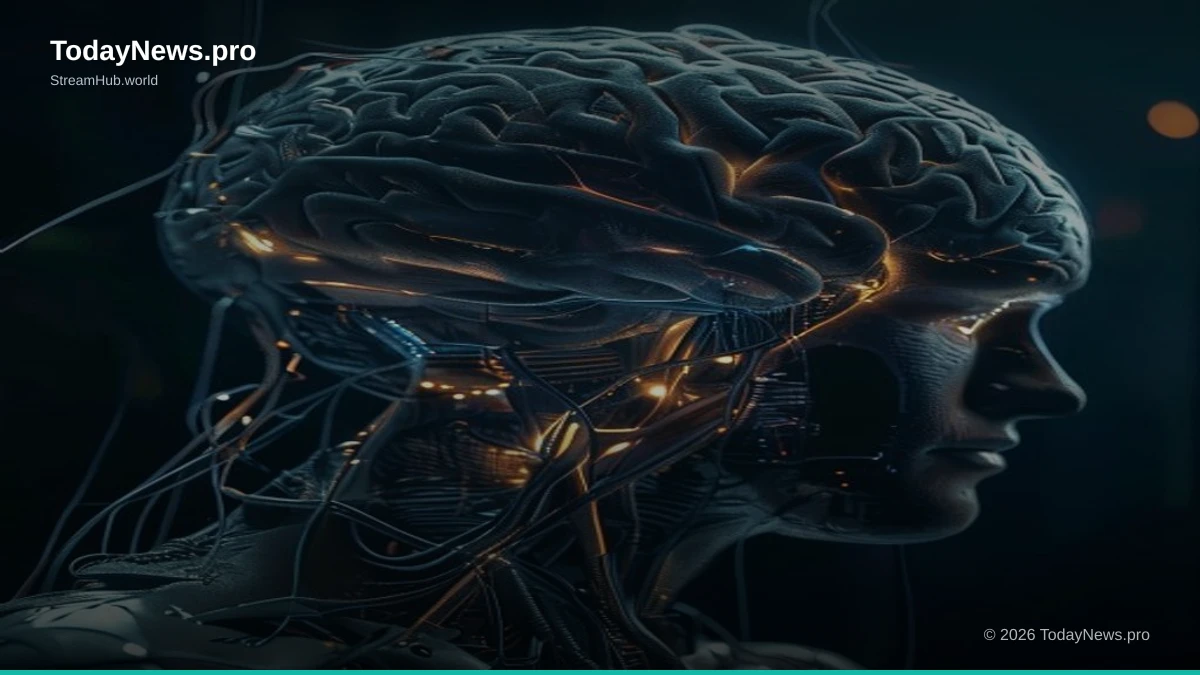
By 2026, over 1.5 million individuals worldwide are projected to benefit from neuroprosthetics and brain-computer interface (BCI) technologies, a significant leap from under 300,000 in 2020, according to a recent analysis by Global Market Insights.
Brain-Computer Interfaces: The Dawn of Enhanced Human Potential
The era of seamless integration between the human mind and machine intelligence is no longer the stuff of science fiction. Brain-Computer Interfaces (BCIs), technologies that establish a direct communication pathway between the brain and an external device, are rapidly evolving, promising to redefine human capabilities and address critical medical challenges. The period between 2026 and 2030 is poised to be a pivotal chapter in this revolution, moving BCIs from niche medical applications to broader societal integration and cognitive enhancement.
This transformative technology bypasses the traditional neuromuscular pathways, allowing individuals to control external devices, communicate, and even interact with digital environments using only their thoughts. The implications are vast, spanning from restoring lost motor function and sensory perception to augmenting human cognitive abilities and creating entirely new forms of interaction with the digital world. As we stand on the cusp of this new age, understanding the trajectory of BCI development is paramount.
The journey of BCIs has been marked by significant breakthroughs, fueled by advancements in neuroscience, materials science, and artificial intelligence. Early iterations focused on decoding basic brain signals for simple control tasks. Today, researchers are achieving remarkable feats, enabling complex actions and nuanced communication. The next five years are anticipated to witness an acceleration of these developments, with a focus on making these technologies more accessible, reliable, and sophisticated.
Defining the Interface
At its core, a BCI system involves three primary components: signal acquisition, signal processing, and output. Signal acquisition captures neural activity, typically through electroencephalography (EEG), electrocorticography (ECoG), or implanted microelectrode arrays. Signal processing then translates these raw neural signals into commands that can be understood by an external device. Finally, the output device, which could be a prosthetic limb, a computer cursor, or a speech synthesizer, executes the command.
The accuracy and speed of these processes are constantly being refined. Non-invasive methods like EEG offer convenience and safety but are limited in their spatial resolution and signal clarity. Invasive methods, while offering superior signal quality, carry inherent risks and require surgical implantation. The ongoing research aims to strike a balance, developing less invasive yet highly effective BCI solutions.
The Promise of Neuroplasticity
A critical aspect of BCI success lies in the brain's remarkable neuroplasticity – its ability to reorganize itself by forming new neural connections throughout life. BCIs leverage this property by providing users with feedback, helping their brains learn to generate specific neural patterns associated with desired actions. This adaptive learning process is key to achieving intuitive and fluid control over external devices.
The period from 2026 to 2030 will likely see more sophisticated machine learning algorithms being employed to interpret these complex neural patterns. These algorithms will be better at distinguishing subtle nuances in brain activity, leading to more precise and responsive BCI control. Furthermore, personalized training protocols will become increasingly prevalent, tailoring BCI adaptation to individual users' unique neural architectures.
The Technological Evolution: From Basic Signals to Complex Control
The evolution of BCI technology has been a remarkable journey, marked by incremental yet significant advancements. Early research, primarily within academic settings, focused on identifying and decoding fundamental brainwave patterns associated with specific mental states or intended actions. These initial systems were often cumbersome, requiring extensive calibration and offering limited functionality, typically restricted to simple binary choices or directional commands.
However, the convergence of several technological trends has dramatically accelerated BCI capabilities. Miniaturization of sensors, improvements in wireless data transmission, and the explosion of computational power, especially with the advent of specialized AI chips, have paved the way for more sophisticated and user-friendly BCI devices. The development of advanced machine learning and deep learning algorithms has been particularly crucial, enabling the interpretation of increasingly complex neural data with higher accuracy and lower latency.
Advancements in Signal Acquisition
The methods for acquiring brain signals have seen substantial innovation. Non-invasive techniques, such as electroencephalography (EEG), have become more portable and robust, with dry electrodes and advanced signal filtering reducing setup time and improving comfort. Companies are developing high-density EEG caps that can capture a richer spectrum of neural activity. For more precise applications, electrocorticography (ECoG), which involves placing electrodes on the surface of the brain, offers a better signal-to-noise ratio but requires a craniotomy.
The frontier of invasive BCI involves microelectrode arrays, such as those pioneered by Neuralink. These tiny arrays can record the activity of individual neurons, offering unparalleled resolution. While still largely experimental and primarily focused on severe paralysis, the progress in minimizing invasiveness and improving long-term biocompatibility of implanted devices is a critical area of research and development. The goal is to achieve high-fidelity neural decoding without compromising safety.
Sophistication in Signal Processing and Decoding
The true leap in BCI functionality comes from advanced signal processing and decoding algorithms. Machine learning, particularly deep learning, has revolutionized how neural signals are interpreted. Algorithms can now learn to recognize complex patterns associated with imagined movements, speech intentions, and even abstract thoughts. This allows for more intuitive and natural control of external devices.
By 2026, we can expect to see BCI systems capable of decoding not just intended motor actions but also more nuanced cognitive states. This includes the ability to infer emotional states, attention levels, and even the intent to communicate specific words or concepts. The integration of AI will enable BCIs to adapt in real-time to the user's brain activity, learning and improving performance continuously.
The Rise of Hybrid BCIs
Recognizing the limitations of relying on a single modality, hybrid BCIs are gaining traction. These systems combine brain signals with other physiological signals, such as eye movements, muscle activity (electromyography - EMG), or even speech recognition. By integrating data from multiple sources, hybrid BCIs can achieve higher accuracy, greater robustness, and a wider range of control capabilities.
For instance, a user with limited motor control might use a BCI to select letters on a virtual keyboard, while simultaneously using eye-tracking to confirm their selection. This synergistic approach leverages the strengths of each modality, creating a more comprehensive and effective communication or control system. The period 2026-2030 will see a significant push towards developing more seamless and intuitive hybrid BCI platforms.
| Year Range | Key Technological Focus | Primary Outcome |
|---|---|---|
| 2015-2020 | Basic EEG decoding, cursor control, prosthetic limb activation (rudimentary) | Proof of concept, initial clinical trials for severe paralysis |
| 2021-2025 | Improved EEG/ECoG signal processing, AI-driven decoding, hybrid BCIs (eye-tracking + EEG) | Enhanced communication speed, more complex prosthetic control, early consumer prototypes |
| 2026-2030 | High-density invasive arrays, advanced AI for nuanced decoding, direct neural stimulation, BCI for cognitive augmentation | Near-natural control of prosthetics, direct thought-to-speech, early applications in cognitive enhancement and gaming |
Key Applications: Revolutionizing Healthcare and Beyond
The most immediate and impactful applications of BCIs lie within the healthcare sector, offering profound improvements for individuals with disabilities. Restoring lost motor function and communication abilities are at the forefront of this revolution, bringing hope and renewed independence to millions.
Beyond healthcare, the potential for BCIs extends into areas like gaming, virtual reality, education, and even enhanced human performance, hinting at a future where the line between human and machine capabilities blurs significantly.
Restoring Motor Function and Mobility
For individuals suffering from paralysis due to spinal cord injury, stroke, or neurodegenerative diseases like ALS, BCIs offer a pathway to regain control over their bodies. Advanced BCI systems are enabling paralyzed individuals to operate robotic arms with remarkable dexterity, allowing them to grasp objects, feed themselves, and perform daily tasks. The development of implantable devices that directly stimulate muscles based on brain signals is also making significant strides, offering the potential for more naturalistic movement.
In the 2026-2030 timeframe, we anticipate seeing these systems become more refined, offering higher degrees of freedom and finer motor control. The integration of sensory feedback, allowing users to "feel" what their prosthetic limbs are touching, is a critical area of ongoing research that will dramatically enhance the usability and naturalness of these devices.
Enabling Communication for the Non-Verbal
BCIs are a lifeline for individuals who have lost the ability to speak or write. By decoding brain activity related to intended speech or communication, BCIs can translate thoughts into text or synthesized speech. This is a critical advancement for those with conditions like locked-in syndrome, where consciousness is intact but the ability to communicate is severely impaired.
Research is rapidly progressing towards faster and more accurate thought-to-speech interfaces. By 2026-2030, we can expect BCIs to move beyond selecting pre-defined words to decoding more spontaneous and nuanced linguistic intentions, potentially allowing for richer and more natural conversations. This will have a profound impact on the quality of life and social engagement for affected individuals.
Beyond Healthcare: Gaming, VR, and Augmentation
The allure of controlling video games or virtual environments with thought alone is a significant driver for BCI development. Companies are exploring BCIs for enhanced gaming experiences, allowing for more immersive and intuitive gameplay. The potential for real-time adaptation of game difficulty or narrative based on a player's cognitive state is also an exciting prospect.
In virtual and augmented reality (VR/AR), BCIs can provide a more seamless and natural interaction. Imagine navigating a virtual space or manipulating digital objects simply by thinking about it. Furthermore, BCIs hold promise for cognitive augmentation, potentially enhancing focus, memory, and learning capabilities. While these applications are further out, the foundations are being laid in the 2026-2030 period.
Ethical Frontiers and Societal Implications
As BCIs move closer to widespread adoption, they bring with them a complex web of ethical considerations and societal implications that demand careful examination. The profound intimacy of directly interfacing with the human brain raises questions about privacy, autonomy, and equity.
Ensuring responsible development and deployment will be crucial to harnessing the benefits of BCIs while mitigating potential risks. This involves thoughtful policy-making, public discourse, and a commitment to ethical innovation.
Privacy and Data Security
Brain data is arguably the most personal and sensitive form of information. BCIs generate vast amounts of neural data that, if mishandled, could reveal intimate details about an individual's thoughts, emotions, and intentions. Protecting this data from unauthorized access, misuse, or exploitation is paramount.
The development of robust encryption protocols, anonymization techniques, and strict data governance policies will be essential. Regulations similar to GDPR but tailored for neural data will likely emerge and be strengthened between 2026 and 2030 to safeguard user privacy. The question of who owns and controls this neural data—the user, the company, or a governing body—will be a central debate.
Autonomy and Agency
A key ethical concern is the potential for BCIs to influence or override an individual's autonomy. Will users always be in complete control, or could external forces or algorithmic biases subtly steer their decisions or actions? For individuals with severe disabilities, BCIs offer a path to increased autonomy, but the safeguards against unintended manipulation must be robust.
The possibility of "brain hacking" or malicious use of BCI technology, where external actors could potentially influence thoughts or actions, is a futuristic but serious concern. Developing secure BCI systems that are resistant to such interference is a critical research area. Public trust in BCI technology will heavily depend on transparency and demonstrable control for the user.
Equity and Access
As with many advanced technologies, there is a risk that BCIs could exacerbate existing societal inequalities. The high cost of development and implementation, especially for invasive technologies, could limit access to wealthy individuals or those in developed nations, creating a "neuro-divide."
Efforts to make BCI technology more affordable and accessible, particularly for therapeutic applications, will be crucial. This might involve government subsidies, open-source development initiatives, and a focus on non-invasive or less expensive BCI solutions. Ensuring equitable access is not just a matter of fairness but also of maximizing the societal benefit of these transformative technologies.
The 2026-2030 Horizon: Predictions and Projections
The next five years are poised to be a period of accelerated innovation and practical deployment for Brain-Computer Interfaces. While truly widespread consumer adoption of highly invasive technologies may still be several years away, significant milestones are expected in both therapeutic and early-stage augmentation applications.
This period will be characterized by a transition from research labs to real-world applications, with a focus on improving reliability, usability, and safety. The market will see a diversification of BCI solutions, catering to a broader range of needs and user groups.
Therapeutic Breakthroughs and Commercialization
The primary driver for BCI development in the near term will continue to be therapeutic applications. By 2026, we can expect to see more advanced neuroprosthetics for limb restoration and control becoming commercially available, albeit at a high price point. Communication aids for individuals with severe speech impairments will also see wider adoption, moving beyond experimental stages.
The focus will be on miniaturization, wireless connectivity, and improved battery life for implantable and wearable devices. Regulatory approvals for more sophisticated BCI systems in healthcare will likely increase, paving the way for broader clinical use. Companies will invest heavily in clinical trials to demonstrate the long-term efficacy and safety of their products.
Emergence of Consumer-Grade BCIs
While invasive BCIs will remain largely in the medical domain, non-invasive BCI technologies, particularly advanced EEG-based systems, will begin to make inroads into the consumer market. Applications in gaming, mindfulness, and basic cognitive training are likely to see early adoption.
These consumer-grade BCIs will prioritize ease of use, affordability, and a compelling user experience. They will likely offer features such as real-time feedback on focus and relaxation levels, enhanced gaming controls, and personalized learning experiences. The challenge will be to deliver meaningful functionality that justifies the investment for the average consumer.
AI-Powered Adaptive Interfaces
The integration of artificial intelligence will become even more critical. BCIs will evolve to become highly adaptive, learning from individual users' brain patterns and adjusting their performance in real-time. This AI-driven personalization will be key to achieving more intuitive and seamless human-machine interaction.
Machine learning algorithms will be trained on larger and more diverse datasets, enabling BCIs to decode a wider range of intentions and cognitive states. This will lead to more responsive and less frustrating user experiences, accelerating the adoption of BCI technology across various applications. The ability of BCIs to predict user needs and proactively assist will be a significant development.
Investment and Market Dynamics
The burgeoning field of Brain-Computer Interfaces is attracting significant investment from venture capitalists, established technology companies, and government research grants. This influx of capital is fueling rapid innovation and accelerating the development timeline for BCI technologies.
The market is expected to witness substantial growth, driven by both therapeutic needs and emerging consumer applications. Understanding the investment landscape and market trends is crucial for stakeholders looking to navigate this dynamic sector.
Venture Capital and Corporate Investment
Venture capital firms are actively investing in BCI startups, recognizing the transformative potential of the technology. Major technology companies are also making strategic acquisitions and R&D investments, signaling their intent to be at the forefront of this revolution. This competitive landscape is driving innovation and pushing the boundaries of what is possible.
The focus of investment is shifting towards companies demonstrating clear product-market fit, strong IP portfolios, and scalable manufacturing capabilities. The development of non-invasive and less costly BCI solutions is also attracting significant attention from investors looking for broader market penetration.
Market Size and Growth Projections
The global BCI market is projected to experience exponential growth in the coming years. Estimates vary, but many market research firms predict the market to reach tens of billions of dollars by the end of the decade. This growth will be fueled by an increasing prevalence of neurological disorders, an aging global population, and advancements in BCI technology that make it more accessible and effective.
The therapeutic segment, particularly for neurorehabilitation and assistive devices, is expected to dominate the market in the short to medium term. However, the consumer electronics segment, encompassing gaming and entertainment, is poised for rapid expansion as BCI technology becomes more user-friendly and affordable.
Key Players and Competitive Landscape
The BCI landscape is populated by a mix of established research institutions, dedicated BCI startups, and divisions within major tech corporations. Companies like Neuralink, Synchron, Paradromics, and Blackrock Neurotech are prominent in the invasive BCI space, focusing on medical applications. On the non-invasive front, companies such as Emotiv, NeuroSky, and NextMind (now part of Snap Inc.) are developing BCI solutions for consumers.
The competitive landscape is dynamic, with ongoing partnerships, mergers, and acquisitions. The race to secure patents, acquire talent, and gain regulatory approvals is intense. Key differentiators will include the accuracy and speed of decoding, the invasiveness and safety of the technology, and the user-friendliness of the interface.
For more information on market trends, refer to reports from leading industry analysis firms. A comprehensive overview of the neurological device market can often be found on financial news outlets.
Reuters Technology Wikipedia: Brain-Computer InterfaceChallenges and Roadblocks to Widespread Adoption
Despite the immense promise and rapid progress, several significant challenges stand in the way of widespread Brain-Computer Interface adoption. Overcoming these hurdles will be critical for BCIs to achieve their full potential and integrate seamlessly into society.
Addressing these challenges requires a multi-faceted approach involving technological refinement, ethical consensus, regulatory clarity, and public education.
Technical Limitations and Reliability
For non-invasive BCIs like EEG, signal quality can be affected by artifacts from muscle movements, eye blinks, and environmental noise, leading to inconsistent performance. Invasive BCIs, while offering superior signal quality, face challenges related to long-term biocompatibility, the risk of infection or tissue damage, and the degradation of electrode performance over time.
Achieving the necessary reliability and robustness for everyday use, especially in critical applications, remains a significant technical hurdle. The speed and accuracy of decoding also need continuous improvement to enable naturalistic interaction. Miniaturization and power consumption for implantable devices are ongoing engineering challenges.
Regulatory Hurdles and Standardization
The novelty and complexity of BCI technology present unique challenges for regulatory bodies like the FDA. Establishing clear pathways for approval, ensuring safety and efficacy, and developing appropriate standards for BCI devices are ongoing processes. The lack of standardized protocols for data collection, analysis, and performance benchmarking can also hinder research and development.
The ethical considerations surrounding BCIs add another layer of complexity to the regulatory process. Balancing innovation with public safety and privacy will require close collaboration between developers, regulators, and ethicists. The fragmented nature of the current BCI landscape, with various research groups and companies using different methodologies, also complicates standardization efforts.
Cost and Accessibility
Currently, many advanced BCI systems, particularly invasive ones, are prohibitively expensive, limiting their accessibility to a small segment of the population. The cost of surgical implantation, specialized hardware, and ongoing maintenance can create a significant financial barrier.
For BCIs to truly benefit a wide range of individuals, particularly those with disabilities who may have limited financial resources, strategies to reduce costs and improve accessibility are essential. This could involve developing more cost-effective manufacturing processes, leveraging open-source technologies, and seeking public funding and insurance coverage for approved medical devices. The affordability gap between therapeutic and consumer applications will also need to be managed.
The Future of Human-Machine Symbiosis
The trajectory of Brain-Computer Interfaces points towards a future where the boundaries between human cognition and machine intelligence become increasingly fluid. The period between 2026 and 2030 is not merely an incremental step but a foundational phase for this profound shift in human potential.
As we move beyond the immediate therapeutic applications, the concept of human-machine symbiosis, where humans and AI collaborate seamlessly to achieve outcomes impossible for either alone, will move from theoretical to tangible. This future promises unprecedented advancements but also necessitates careful ethical navigation.
Cognitive Augmentation and Enhanced Learning
Looking beyond restoring lost functions, BCIs are poised to augment human cognitive abilities. Imagine the capacity to learn new skills at an accelerated rate, access and process information instantaneously, or enhance focus and creativity through direct neural interfaces. These advancements could revolutionize education, scientific discovery, and problem-solving.
The development of BCIs capable of modulating neural activity in specific brain regions for enhanced cognitive functions is an active area of research. By 2030, we might see early applications of such technology, initially targeted at professional development and specialized fields, before potentially becoming more broadly accessible.
The Rise of Integrated Neuro-AI Systems
The ultimate vision for BCIs involves deep integration with artificial intelligence, creating hybrid systems that leverage the unique strengths of both biological and artificial intelligence. This could manifest as AI assistants that anticipate user needs based on neural cues, or AI systems that co-create with humans in real-time, enhancing artistic expression or complex design processes.
This symbiotic relationship could lead to unprecedented levels of innovation and problem-solving. The ethical considerations surrounding such deep integration will be paramount, requiring ongoing dialogue about control, consciousness, and the very definition of human intelligence. The next five years will lay the groundwork for these advanced integrated systems.
A New Era of Human Experience
The advent of sophisticated BCIs will fundamentally alter human experience. From the way we interact with technology and each other to our understanding of ourselves and our capabilities, the impact will be far-reaching. The potential for enhanced empathy, novel forms of art and entertainment, and a deeper understanding of the human mind itself is immense.
Navigating this new era requires a proactive approach to ethical development, robust policy frameworks, and inclusive public discourse. The period 2026-2030 will be a critical juncture, shaping whether this transformative technology leads to a future of enhanced human potential and well-being for all, or one that exacerbates existing divides.