

 Robert Stark
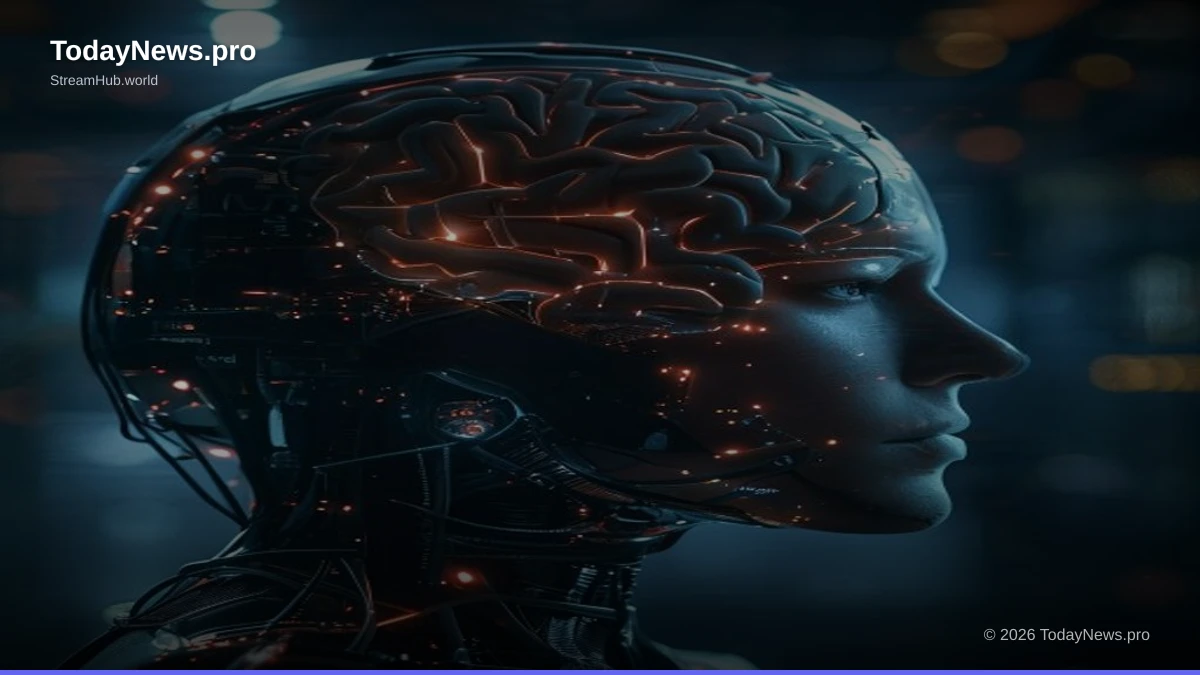
By 2030, the global market for brain-computer interface (BCI) technology is projected to reach over $5 billion, signaling a dramatic surge in interest and investment in this nascent field.
Brain-Computer Interfaces: The Dawn of a New Era
Brain-Computer Interfaces (BCIs) represent a paradigm shift in human-technology interaction, promising to bridge the gap between the biological and the digital. No longer confined to the realm of science fiction, BCIs are rapidly evolving from experimental curiosities into tangible technologies with the potential to revolutionize healthcare, communication, entertainment, and beyond. This advanced frontier of human-computer interaction is built upon the intricate signals generated by our brains, offering unprecedented avenues for control and augmentation.
At its core, a BCI system translates brain activity into commands that can operate external devices. This complex process involves the detection of neural signals, their processing, and the subsequent execution of desired actions. The implications are profound, offering hope for individuals with severe motor disabilities and opening up new possibilities for human enhancement.
Defining the BCI Landscape
A Brain-Computer Interface is fundamentally a direct communication pathway between the brain and an external device. Unlike traditional input methods that rely on muscles or sensory organs, BCIs bypass these pathways altogether. They harness the electrical, metabolic, or chemical activity of the brain, converting these neural signals into actionable commands.
This can range from simply moving a cursor on a screen to controlling sophisticated robotic prosthetics. The goal is to restore lost function, enhance existing capabilities, or even create entirely new ways for humans to interact with their environment and with each other.
A Brief History of Neural Exploration
The concept of understanding and utilizing brain signals is not new. Early research in neuroscience laid the groundwork, with pioneers like Hans Berger recording electroencephalography (EEG) in the 1920s. However, the systematic development of BCIs gained traction in the latter half of the 20th century, spurred by advancements in computational power and signal processing.
Initial applications were primarily focused on research and aiding individuals with paralysis. The development of non-invasive techniques, alongside more invasive but precise methods, has accelerated progress significantly in recent decades, moving BCIs closer to widespread adoption.
The Science Behind the Connection: How BCIs Work
The intricate workings of BCIs rely on sophisticated technologies that can accurately detect, decode, and translate brain signals. The fundamental principle involves capturing neural activity, processing it to extract meaningful patterns, and then mapping these patterns to control commands.
There are various methods for acquiring brain signals, each with its own advantages and limitations regarding invasiveness, resolution, and signal-to-noise ratio. The choice of method often depends on the specific application and the desired level of precision.
Signal Acquisition: Peeking into the Brain
The initial step in any BCI system is the acquisition of neural signals. This can be achieved through two primary categories of methods: invasive and non-invasive.
Non-invasive methods, such as Electroencephalography (EEG), Magnetoencephalography (MEG), and functional Near-Infrared Spectroscopy (fNIRS), detect brain activity from outside the skull. EEG, the most common, uses electrodes placed on the scalp to measure electrical activity. While easier to implement and less risky, these methods often suffer from lower signal resolution and are susceptible to noise.
Invasive methods involve surgically implanting electrodes directly into the brain. Electrocorticography (ECoG) places electrodes on the surface of the brain, while microelectrode arrays penetrate brain tissue. These techniques offer much higher signal fidelity and spatial resolution, allowing for more precise control, but come with inherent surgical risks and long-term biocompatibility challenges.
Signal Processing and Feature Extraction
Once raw neural data is acquired, it must be meticulously processed to extract relevant features. Brain signals are complex and often buried in noise. Sophisticated algorithms are employed to filter out unwanted artifacts, such as muscle movements or environmental interference.
Feature extraction involves identifying specific patterns within the processed signals that correlate with a user's intended command. This could include the frequency of brain waves (e.g., alpha, beta, theta rhythms), the amplitude of specific neural responses (e.g., P300 evoked potentials), or patterns of neuronal firing rates. Machine learning algorithms are crucial here, learning to recognize these distinct neural signatures.
Decoding and Command Translation
The extracted features are then decoded to translate the user's mental intent into executable commands. This is where the BCI system learns to associate specific neural patterns with particular actions. For example, imagining moving the left hand might consistently produce a particular EEG pattern, which the BCI learns to recognize and translate into a "move left" command.
The accuracy and speed of this decoding process are critical for the usability of the BCI. Advanced machine learning classifiers, such as Support Vector Machines (SVMs) or deep neural networks, are trained on large datasets of brain activity to improve the reliability of the translation. The user often engages in a training period where they practice thinking specific thoughts or performing mental tasks while the BCI learns their unique neural patterns.
Current Applications: From Medicine to Entertainment
While still in its relative infancy, BCI technology has already demonstrated significant potential across a diverse range of applications. The most impactful and widely researched areas are in medicine, aiming to restore function and improve the quality of life for individuals with disabilities.
Beyond healthcare, BCIs are beginning to make inroads into consumer markets, offering novel experiences in gaming, communication, and even cognitive training. The transition from lab to real-world use is accelerating, driven by both clinical needs and commercial interest.
Restoring Mobility and Communication
One of the most profound impacts of BCIs is in the field of neurorehabilitation and assistive technology. For individuals suffering from conditions like paralysis due to spinal cord injury, stroke, or amyotrophic lateral sclerosis (ALS), BCIs offer a lifeline.
BCI-controlled prosthetic limbs can allow amputees to regain a sense of touch and control. Similarly, communication systems powered by BCIs can enable non-verbal individuals to "speak" by selecting letters or words on a screen through their thoughts. These advancements are not just about restoring function; they are about restoring independence and dignity.
Enhancing Cognitive Performance and Training
The cognitive benefits of BCIs are also an active area of research and development. Neurofeedback, a technique that uses real-time displays of brain activity to teach self-regulation, can be enhanced by BCI technology.
This can aid in conditions like ADHD, anxiety, and depression, allowing individuals to learn to modulate their brainwave patterns. Furthermore, BCIs are being explored for cognitive enhancement in healthy individuals, aiming to improve focus, memory, and learning capabilities through targeted neural stimulation or feedback mechanisms.
The Future of Gaming and Entertainment
The gaming industry is a natural fit for BCI technology. Imagine controlling your character in a video game with the power of your thoughts, or experiencing immersive virtual reality environments that respond directly to your emotional state.
Companies are already experimenting with BCI-enabled games that can adapt difficulty based on a player's focus level or predict their next move. This promises a more intuitive and engaging gaming experience, blurring the lines between player and game world. The potential extends to other forms of entertainment, such as interactive storytelling or even direct neural interfaces for experiencing music or art.
Ethical Frontiers and Societal Implications
As BCI technology advances, it inevitably raises complex ethical questions and prompts consideration of its broader societal impact. The ability to directly interface with the human brain touches upon fundamental issues of privacy, autonomy, and equity.
Navigating these challenges will be crucial for ensuring that BCIs are developed and deployed responsibly, benefiting society as a whole rather than exacerbating existing inequalities or creating new ones.
Privacy and Data Security
Brain data is arguably the most intimate form of personal information. BCIs collect highly sensitive neural signals, which, if compromised, could reveal a person's thoughts, emotions, or even predispositions. Ensuring the robust security and privacy of this data is paramount.
Questions arise about who owns this neural data, how it can be used, and what safeguards are in place to prevent unauthorized access or misuse. Establishing clear ethical guidelines and robust regulatory frameworks will be essential for building public trust and preventing potential abuses.
The Reuters has reported on the growing concerns regarding data privacy in the burgeoning BCI sector, highlighting the need for proactive measures.
Autonomy and Agency
The very nature of BCIs, which can interpret and act upon neural signals, raises questions about human autonomy. If a BCI can predict or even influence our decisions, how does that affect our sense of self and free will?
Furthermore, the potential for "brain hacking" – where external entities could manipulate neural signals to influence behavior or perceptions – presents a significant ethical minefield. Maintaining user control and ensuring that BCIs act as tools rather than controllers is a critical consideration.
Equity and Accessibility
As with many emerging technologies, there is a risk that BCI advancements could widen existing socioeconomic divides. If these powerful tools are only accessible to the wealthy, they could create a new form of inequality, where some individuals are enhanced beyond the capabilities of others.
Ensuring equitable access to BCI technologies, particularly for therapeutic purposes, will be a significant societal challenge. Policies and initiatives will be needed to make these life-changing tools available to all who could benefit, regardless of their economic status.
The Future Landscape: What Lies Ahead for BCIs
The trajectory of BCI development suggests a future where these interfaces become increasingly sophisticated, seamlessly integrated into our daily lives, and capable of supporting a wider range of human activities.
Research is pushing the boundaries of what's possible, aiming for higher resolution, greater accuracy, and more intuitive user experiences. The convergence of AI, neuroscience, and engineering is paving the way for revolutionary applications.
Miniaturization and Wireless Integration
Current invasive BCI systems often involve cumbersome wired connections. The future will undoubtedly see significant advancements in miniaturization, leading to smaller, more discreet implants. Wireless data transmission will also become standard, offering greater freedom of movement and a more natural user experience.
Imagine a tiny, implantable device that continuously monitors neural activity, wirelessly transmitting data for analysis and control, all without the user even noticing it's there. This level of integration promises to make BCIs feel less like a medical device and more like a natural extension of oneself.
Closed-Loop Systems and Real-time Adaptation
Future BCIs will likely operate as "closed-loop" systems. This means they will not only read brain signals but also provide feedback or even direct stimulation to the brain in real-time. This bidirectional communication allows for more sophisticated control and adaptation.
For instance, a BCI could detect signs of fatigue or distraction and automatically adjust the interface or provide gentle neural cues to help the user re-engage. This adaptive capability could dramatically improve efficiency and user experience across various applications.
Augmented Cognition and Enhanced Human Capabilities
Beyond restoring lost functions, BCIs hold immense potential for augmenting human cognitive abilities. This could include enhanced memory recall, faster information processing, or even direct access to vast knowledge bases without needing to interact with a physical device.
The concept of "augmented cognition" suggests a future where humans and AI can collaborate more intimately, with BCIs serving as the bridge. This could lead to unprecedented leaps in scientific discovery, creative expression, and problem-solving.
Challenges and Hurdles on the Path to Integration
Despite the exciting progress, the widespread adoption of BCI technology faces significant hurdles. Overcoming these challenges will be critical for realizing the full potential of this transformative field.
These obstacles span technical limitations, regulatory complexities, and the crucial need for public acceptance and understanding.
Technical Limitations and Signal Fidelity
Achieving high-fidelity, reliable neural signal acquisition remains a core challenge. Non-invasive methods, while safer, often struggle with poor signal-to-noise ratios and limited spatial resolution. Invasive methods, while offering better data, carry surgical risks and potential long-term biocompatibility issues.
Developing novel electrode materials, advanced signal processing algorithms, and more robust implantable devices are key areas of ongoing research. Improving the longevity and stability of implanted devices is also a critical concern for invasive BCIs.
Regulatory Approval and Standardization
The path to regulatory approval for BCI devices, especially those that are implanted, is complex and often lengthy. Governing bodies need to establish clear guidelines and standards for safety, efficacy, and data privacy.
The lack of universal standards can hinder interoperability between different BCI systems and slow down the pace of innovation and commercialization. Collaboration between researchers, manufacturers, and regulatory agencies is essential to streamline this process.
User Training and Long-Term Usability
BCI systems, particularly those that rely on user intent, often require extensive training for individuals to become proficient. This training period can be demanding and time-consuming, potentially limiting adoption for those who need it most.
Furthermore, ensuring the long-term usability and comfort of BCI devices is crucial. Users need to be able to rely on these technologies consistently and without significant discomfort or maintenance burden. The goal is to create intuitive interfaces that require minimal effort to operate.
| Challenge Area | Specific Issues | Impact on Adoption |
|---|---|---|
| Technical | Signal-to-noise ratio, spatial resolution, electrode longevity, biocompatibility | Limits accuracy, reliability, and long-term use |
| Regulatory | Approval processes, lack of standardization, data privacy laws | Slows commercialization and market entry |
| Usability | User training time, comfort, maintenance, intuitiveness | Affects user acceptance and widespread adoption |
| Ethical | Privacy, autonomy, equity, potential for misuse | Requires careful consideration and public trust building |
Expert Perspectives on BCI Advancement
The future of brain-computer interfaces is a topic of intense fascination and rigorous study for experts across neuroscience, engineering, and ethics. Their insights offer a glimpse into the potential and the perils that lie ahead.
From the clinical applications to the philosophical implications, these leaders in the field are shaping the conversation and guiding the direction of BCI research and development.
The journey of BCI technology is a testament to human ingenuity and our relentless pursuit of understanding and interacting with the world around us. As these interfaces become more sophisticated and accessible, they promise to redefine what it means to be human in an increasingly technologically integrated society.
The integration of BCIs into society is not a question of 'if,' but 'when' and 'how.' The responsible development and deployment of this powerful technology will be paramount in shaping a future where the human mind and artificial intelligence can coexist and collaborate for the betterment of all.
For more information on the history and scientific underpinnings of brain-computer interfaces, consult resources like Wikipedia's entry on Brain-Computer Interfaces.