

 Maria Curry
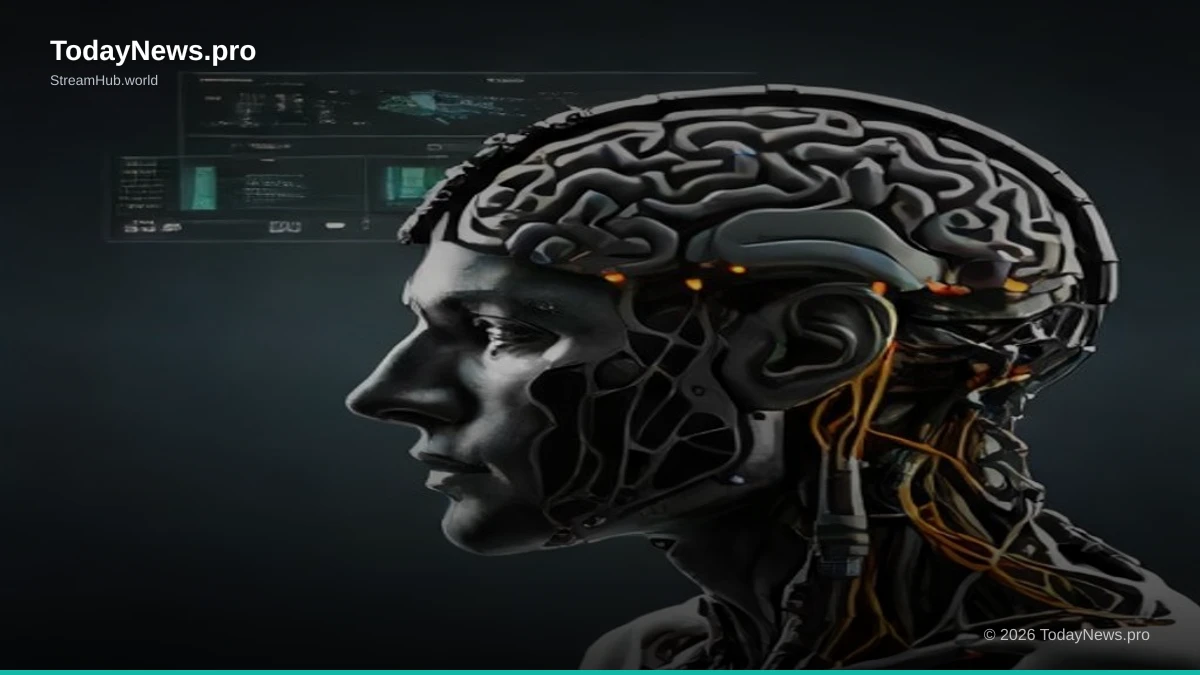
The Dawn of Direct Neural Communication
For millennia, human interaction with the world has been mediated by our senses and physical actions. We see, hear, touch, speak, and move to engage with our environment and communicate with others. This paradigm is on the cusp of a profound transformation, driven by the rapid advancements in Brain-Computer Interfaces (BCIs). These revolutionary technologies offer a direct pathway between the human brain and external devices, promising to redefine interaction, unlock new therapeutic possibilities, and fundamentally augment human capabilities.
At its core, a BCI system deciphers brain signals and translates them into commands that can control external devices, or conversely, translates external information into signals that can be perceived by the brain. This bidirectional communication bypasses the traditional motor pathways, opening up unprecedented avenues for individuals with severe motor impairments, but also for the general population seeking enhanced cognitive and physical abilities.
The concept of directly linking minds to machines is no longer confined to the realm of science fiction. It is a rapidly evolving scientific and engineering discipline, drawing expertise from neuroscience, computer science, engineering, and medicine. The ultimate goal is to create seamless, intuitive, and powerful interfaces that expand the very definition of human potential.
Current State of BCIs: A Spectrum of Innovation
BCIs can be broadly categorized based on their invasiveness. Non-invasive BCIs, such as electroencephalography (EEG) caps, measure electrical activity on the scalp. While offering ease of use and lower risk, they generally provide lower signal resolution and are susceptible to noise. Invasive BCIs, involving surgically implanted electrodes directly into the brain, offer superior signal quality and precision but come with inherent surgical risks and long-term biocompatibility concerns.
Semi-invasive BCIs, like electrocorticography (ECoG), place electrodes on the surface of the brain, offering a balance between signal fidelity and invasiveness.
Non-Invasive BCI Technologies
EEG remains the most widely accessible non-invasive BCI technology. Researchers and developers are continually refining EEG hardware to improve signal-to-noise ratios and reduce artifact interference. Advanced signal processing algorithms, including machine learning, are crucial for decoding complex neural patterns from EEG data. Applications range from controlling simple computer cursors and assistive communication devices to powering video games and cognitive training applications.
Invasive BCI Technologies
Invasive BCIs, particularly those utilizing microelectrode arrays, have demonstrated remarkable success in restoring motor function. Utah arrays and Neuropixels probes are examples of technologies that can record from hundreds or even thousands of individual neurons. These systems are at the forefront of research for prosthetic limb control, allowing individuals to manipulate robotic arms with a degree of dexterity previously unimaginable. The precision of these implants allows for finer control and more nuanced interaction with external devices.
Semi-Invasive BCI Technologies
ECoG offers a middle ground. By placing electrodes directly on the dura mater or brain surface, ECoG captures brain activity with higher spatial and temporal resolution than EEG, without the risks associated with deep brain penetration. This makes it suitable for applications where a higher degree of control is needed than what EEG can provide, but where full intracortical implantation is deemed too risky or unnecessary. ECoG has been used in epilepsy monitoring and has shown promise in restoring speech and motor function.
Therapeutic Frontiers: Restoring and Enhancing Capabilities
The most immediate and impactful applications of BCIs lie in the medical field, offering hope and restoring lost functionalities to individuals suffering from debilitating neurological conditions. For people with paralysis, BCIs can serve as a "digital bridge," reconnecting their brain's intentions to the outside world.
For individuals with amyotrophic lateral sclerosis (ALS), spinal cord injuries, stroke, or locked-in syndrome, the ability to communicate or control assistive devices through thought alone can be life-changing. BCIs are enabling these individuals to type messages, operate wheelchairs, and even control robotic limbs, thereby regaining a degree of autonomy and improving their quality of life significantly.
Restoring Motor Function
One of the most prominent areas of BCI research is the restoration of motor function. Invasive BCIs, in particular, are showing remarkable progress. Researchers have successfully enabled individuals with paralysis to control robotic arms with their thoughts, performing complex tasks such as grasping objects and even feeding themselves. This involves decoding motor intentions from neural signals in the motor cortex and translating them into commands for the prosthetic limb. The ability to learn and adapt the BCI system to the user's brain signals is a key factor in achieving fluid and naturalistic control.
Restoring Communication
For individuals who have lost the ability to speak or write due to neurological damage, BCIs offer a lifeline for communication. Non-invasive EEG-based BCIs can detect specific brain patterns associated with intended letters or words, allowing users to spell out messages. More advanced invasive systems are exploring the decoding of speech intentions directly from neural activity in speech-related brain regions, promising even faster and more natural communication. The development of robust and user-friendly communication interfaces is paramount for widespread adoption.
Treating Neurological Disorders
Beyond restoring lost function, BCIs are also being explored as therapeutic tools for a range of neurological and psychiatric disorders. For instance, deep brain stimulation (DBS) systems, which can be considered a form of BCI, are already used to treat Parkinson's disease and essential tremor. Emerging research is investigating closed-loop BCIs that can detect abnormal brain activity associated with conditions like epilepsy or depression and deliver targeted stimulation to counteract these patterns in real-time. This adaptive approach holds the potential for more personalized and effective treatments.
Human Augmentation: Beyond Restoration
While therapeutic applications are driving much of the current BCI development, the potential for human augmentation is equally, if not more, transformative. BCIs could move beyond simply restoring lost functions to enhancing existing human capabilities, creating what some futurists call "transhumanism." This prospect raises profound questions about the future of human evolution and societal structures.
Imagine a future where individuals can access information instantaneously, enhance their learning capabilities, or even communicate telepathically through advanced BCI systems. This could lead to significant leaps in productivity, creativity, and problem-solving across all sectors of society. The implications for education, work, and personal development are staggering.
Cognitive Enhancement
BCIs could offer unprecedented ways to enhance cognitive functions. This might include improving memory recall, boosting focus and attention, accelerating learning speeds, or even augmenting creativity. By directly interfacing with the brain, BCIs could potentially bypass the limitations of traditional learning methods, allowing for faster acquisition of knowledge and skills. This could revolutionize education and professional development, making lifelong learning more accessible and efficient.
Enhanced Sensory Perception
Beyond cognitive functions, BCIs could also enhance our sensory experiences. This could involve augmenting existing senses, such as providing super-vision or super-hearing, or even enabling the perception of entirely new senses, like infrared light or magnetic fields. For example, a BCI could translate data from an infrared camera directly into visual information the brain can interpret, allowing individuals to "see" heat signatures.
Seamless Human-Machine Integration
The ultimate vision of human augmentation through BCIs is a seamless integration between human and machine. This could manifest as a direct neural link to the internet, allowing for instant access to information, or the ability to control complex machinery with mere thought. Such integration could blur the lines between human and artificial intelligence, leading to hybrid forms of intelligence and interaction. This seamless integration promises to unlock new levels of efficiency and capability.
Ethical Labyrinths and Societal Implications
The rapid progress in BCI technology is accompanied by a complex web of ethical considerations and societal implications that demand careful examination. As BCIs become more sophisticated and pervasive, questions of privacy, security, autonomy, and equity will rise to the forefront.
The ability to read brain signals raises profound concerns about mental privacy. If our thoughts can be accessed, what safeguards will be in place to prevent their misuse? Similarly, the security of BCI systems is paramount. A compromised BCI could have devastating consequences for an individual's well-being and autonomy.
Privacy and Security Concerns
One of the most significant ethical challenges is the potential for mental privacy to be compromised. If brain activity can be decoded, there is a risk that sensitive thoughts, emotions, or intentions could be accessed without consent. Robust encryption and strict data governance policies will be essential to protect this intimate data. Furthermore, the cybersecurity of BCI systems is critical; a hacked BCI could lead to unauthorized control or manipulation of an individual's actions or perceptions.
The development of clear legal frameworks and international standards for BCI data protection will be crucial to building public trust. Without these, widespread adoption may be hampered by legitimate fears of surveillance and exploitation.
Autonomy and Agency
As BCIs become more integrated into our lives, questions about autonomy and agency will arise. If a BCI can influence decision-making or perception, how do we ensure that the individual remains in control? The line between enhancement and coercion could become blurred, necessitating careful design principles that prioritize user control and transparency. The definition of "self" could be challenged as external influences become more integrated.
Equity and Access
Another critical issue is equity and access. If BCIs offer significant advantages, who will have access to them? There is a risk that these technologies could exacerbate existing societal inequalities, creating a divide between those who can afford BCI enhancements and those who cannot. Ensuring equitable access to therapeutic BCIs and considering the societal impact of augmentation technologies are vital for a just future. Public investment and ethical development frameworks are key to mitigating this risk.
The development of affordable, accessible BCI solutions for therapeutic use is a priority, while the societal implications of augmentation technologies require proactive policy discussions.
The Road Ahead: Challenges and Predictions
Despite the remarkable progress, BCIs still face significant technical and practical challenges before they can become mainstream. Signal fidelity, long-term biocompatibility of implants, power consumption, and the computational power required for real-time decoding are all areas of ongoing research and development.
However, the pace of innovation is accelerating. Miniaturization of hardware, advances in AI and machine learning for signal processing, and novel materials for electrode development are continuously pushing the boundaries of what is possible. Predictions suggest that within the next decade, non-invasive BCIs will become increasingly common for consumer applications, while invasive BCIs will become more refined and safer for critical therapeutic interventions.
Technical Hurdles in BCI Development
One of the primary technical challenges is improving the signal-to-noise ratio, particularly for non-invasive BCIs. The skull and scalp act as significant barriers, attenuating and distorting brain signals. Developing more sensitive sensors and advanced signal processing techniques to filter out noise is crucial. For invasive BCIs, ensuring the long-term stability and biocompatibility of implanted electrodes is vital to prevent tissue damage and signal degradation over time.
The Role of Artificial Intelligence
Artificial intelligence and machine learning are indispensable to BCI progress. These algorithms are essential for decoding the complex and often noisy patterns of neural activity into meaningful commands. As AI models become more sophisticated, they can learn to adapt to individual brain variations and even predict user intentions with greater accuracy, leading to more intuitive and responsive BCI systems. Continuous learning algorithms will allow BCIs to improve over time with use.
Future Predictions and Timelines
Within the next five to ten years, we can expect to see more sophisticated non-invasive BCIs for consumer markets, enabling enhanced gaming, intuitive device control, and basic cognitive monitoring. For therapeutic applications, invasive BCIs will likely see wider adoption for restoring motor function and communication in individuals with severe paralysis, with improved success rates and reduced risks. Long-term predictions point towards a future where BCIs are seamlessly integrated into our daily lives, blurring the lines between human and machine, and enabling new forms of interaction and augmentation.
The integration of BCIs into virtual and augmented reality environments is also a key prediction, offering incredibly immersive and interactive experiences.
The Expanding Ecosystem of BCI Development
The BCI landscape is not solely defined by academic research; a burgeoning ecosystem of startups, established tech giants, and venture capital is fueling rapid innovation. Companies are focusing on specific applications, from consumer-grade EEG devices for meditation and focus to advanced neuroprosthetics and research platforms. This diverse ecosystem ensures that innovation is not confined to a single approach, but rather explores a multitude of pathways towards BCI realization.
Partnerships between research institutions and commercial entities are accelerating the translation of laboratory breakthroughs into tangible products. The increasing availability of BCI development kits and open-source software platforms is also democratizing access to this cutting-edge technology, empowering a wider range of developers and researchers to contribute to its advancement.
Key Players and Market Trends
Leading the charge are companies like Neuralink, Elon Musk's venture aiming for high-bandwidth brain-computer interfaces; Synchron, which is developing implantable BCI devices for individuals with paralysis; and established players in the medical device industry who are investing heavily in neurotechnology. The consumer electronics sector is also seeing a rise in companies offering EEG-based devices for wellness and cognitive enhancement. Market trends indicate a growing demand for solutions that address unmet medical needs, coupled with a burgeoning interest in personal cognitive optimization.
Investment in BCI startups has surged in recent years, reflecting the immense commercial and societal potential of this field. This influx of capital is driving aggressive research and development cycles.
Interdisciplinary Collaboration
The complexity of BCI development necessitates a highly interdisciplinary approach. Neuroscientists, computer engineers, material scientists, biomedical engineers, software developers, ethicists, and medical professionals must collaborate closely. This cross-pollination of ideas and expertise is essential for overcoming the multifaceted challenges inherent in creating brain-interface technologies that are safe, effective, and ethically sound. Universities and research institutes are increasingly fostering such collaborative environments.
The Future of Human-Computer Interaction
Ultimately, BCIs represent a paradigm shift in human-computer interaction. Moving beyond keyboards, mice, and touchscreens, BCIs offer a future where our thoughts can directly control our digital and physical environments. This could lead to more intuitive, efficient, and personalized technological experiences. The journey from scientific curiosity to widespread societal integration is complex and fraught with challenges, but the potential rewards—restoring function, enhancing abilities, and unlocking new frontiers of human experience—are immense.
The evolution of BCIs promises to redefine our relationship with technology and, perhaps, with ourselves.