

 Maria Curry
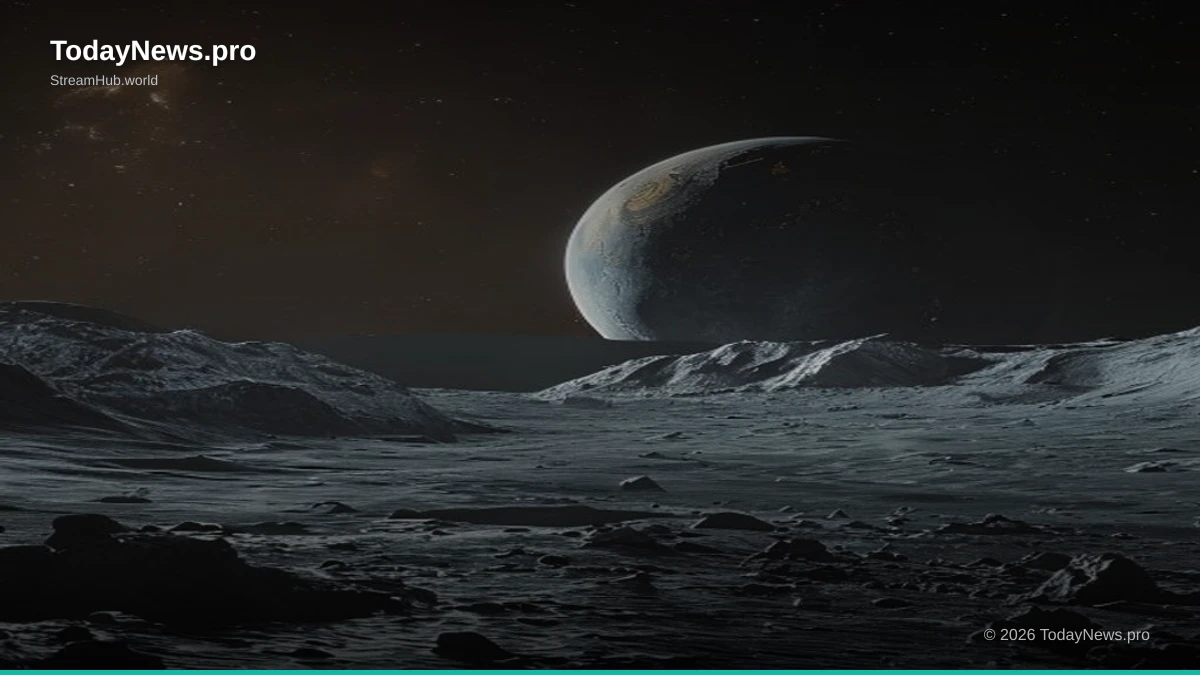
The global space economy is projected to reach $1.5 trillion by 2040, a staggering figure fueled by nascent but rapidly expanding industries in space resource extraction and off-world colonization.
The Celestial Frontier: Humanitys Next Great Venture
For millennia, humanity has gazed at the stars, dreaming of what lies beyond. Now, those dreams are rapidly coalescing into tangible economic and industrial ambitions. The Moon and Mars, once distant objects of scientific curiosity, are emerging as prime targets in what can only be described as a new gold rush – a race to claim and utilize the vast, untapped resources of our celestial neighbors. This endeavor is no longer confined to national space agencies; private corporations, venture capitalists, and international consortiums are pouring unprecedented investment into lunar and Martian exploration with the explicit goal of economic return. The allure is multifaceted: abundant raw materials, strategic locations for future space infrastructure, and the pioneering spirit of exploring and settling new worlds.
The narrative has shifted dramatically from purely scientific exploration to a pragmatic, profit-driven expansion. Early missions, while laying crucial groundwork, were expensive and yielded primarily knowledge. Today's efforts are more targeted, focusing on the identification and extraction of resources that can either be utilized in space (reducing the prohibitive cost of launching everything from Earth) or potentially brought back to Earth. This paradigm shift is driven by advancements in robotics, artificial intelligence, propulsion systems, and materials science, making previously impossible feats achievable.
This burgeoning space economy is not just about acquiring minerals; it's about establishing a sustainable human presence beyond Earth. Lunar bases could serve as staging grounds for deep-space missions, solar power stations beaming energy back to Earth, or even as tourist destinations. Mars, with its potential for terraforming and its tantalizing geological history, represents a long-term vision for human settlement and diversification of our species.
Early Pioneers and Modern Aspirations
The Apollo program and Soviet lunar missions provided invaluable data, but they were largely government-led initiatives focused on prestige and scientific discovery. The current era, however, is characterized by a powerful synergy between public and private entities. NASA's Artemis program, aiming to return humans to the Moon, is designed to foster commercial partnerships, creating opportunities for companies to develop lunar landers, habitats, and resource extraction technologies. Similarly, the increasing capabilities of private companies like SpaceX, Blue Origin, and numerous smaller startups are accelerating the pace of innovation and driving down launch costs, making lunar and Martian ventures more economically viable than ever before.
The vision is grand: to establish permanent lunar outposts, extract water ice from permanently shadowed craters, and mine Helium-3 for potential fusion power on Earth. For Mars, the focus is on in-situ resource utilization (ISRU) – using local materials to produce water, oxygen, and fuel, thereby minimizing reliance on Earth-based resupply. This is crucial for long-duration missions and eventual human settlement.
The Economic Drivers
The economic drivers are compelling. The sheer volume of valuable materials available on the Moon and Mars is staggering. Water ice, essential for life support and rocket propellant, is found in abundance in polar regions of the Moon. Helium-3, a rare isotope on Earth, is present in high concentrations in lunar regolith, deposited by solar winds over billions of years. It is a potential fuel for future fusion reactors, offering a clean and virtually inexhaustible energy source.
Beyond these marquee resources, there are also common terrestrial elements like titanium, aluminum, and rare earth elements, which are becoming increasingly scarce and expensive on Earth. Accessing these extraterrestrial reserves could revolutionize industries from electronics to advanced manufacturing. The potential for extraterrestrial mining is not merely about supplementing Earth's resources; it's about creating entirely new supply chains and economic ecosystems in space.
| Resource | Estimated Abundance/Potential | Primary Use Case |
|---|---|---|
| Water Ice | Billions of tons (in polar craters) | Life support, rocket propellant |
| Helium-3 | Estimated 1 million tons | Fusion power fuel |
| Titanium | High concentrations in regolith | Aerospace, medical implants |
| Aluminum | Abundant in lunar crust | Construction, manufacturing |
| Rare Earth Elements | Present in various regolith types | Electronics, magnets |
Lunar Resources: The Water Ice and Helium-3 Bonanza
The Moon, our closest celestial neighbor, is emerging as the immediate focus for extraterrestrial resource extraction. Its proximity makes it an ideal proving ground for the technologies and logistics required for space-based operations. The most coveted resource on the Moon is undoubtedly water ice, particularly found in the permanently shadowed regions (PSRs) near the lunar poles. These craters, perpetually shielded from direct sunlight, act as natural deep-freeze storage units, preserving water ice that likely arrived on comets and asteroids over eons. The significance of lunar water ice cannot be overstated. It is the foundation of any sustainable off-world presence. It provides drinking water and breathable oxygen for astronauts, and crucially, it can be electrolyzed into hydrogen and oxygen, the two primary components of rocket propellant. This means future spacecraft could refuel on the Moon, dramatically reducing the cost and complexity of missions venturing further into the solar system.
Beyond water, Helium-3 (³He) holds immense potential for a future powered by clean energy. This isotope is a byproduct of nuclear fusion, but terrestrial fusion reactors are still largely experimental. The Moon, however, is a treasure trove of ³He. It has been deposited by the solar wind over billions of years, becoming embedded in the lunar regolith (soil). Estimates suggest the Moon could contain up to a million tons of ³He, enough to power Earth's energy needs for centuries. While extracting and processing ³He for terrestrial fusion power presents significant engineering challenges, the prospect of a virtually limitless, clean energy source makes it a compelling long-term investment. Companies and space agencies are actively studying methods for extracting and purifying this valuable isotope.
Water Ice: The Lifeblood of Lunar Operations
The discovery and confirmation of significant water ice deposits, particularly in regions like Shackleton Crater at the lunar south pole, have fundamentally altered the calculus for lunar exploration and development. Instruments on missions like NASA's Lunar Reconnaissance Orbiter (LRO) have provided compelling evidence. The challenge now lies in efficient and cost-effective extraction. Various concepts are being explored, ranging from robotic excavators and drills to in-situ melting techniques. The ability to "live off the land" by producing water and propellant locally is the cornerstone of making lunar bases self-sustaining and reducing the immense cost of transporting these essential commodities from Earth.
The economic implications are profound. Imagine a future where refueling stations on the Moon are as common as truck stops on Earth. This would enable a much more robust cis-lunar economy, supporting everything from orbital manufacturing to space tourism. Companies are already developing technologies for ice mining and water processing, anticipating a future lunar market for these vital resources.
Helium-3: Fueling the Future
The concept of using Helium-3 for fusion power has been a staple of science fiction for decades, but it's gaining serious traction in the scientific and industrial communities. The primary advantage of a ³He-³He fusion reaction (or a ³He-deuterium reaction) is that it produces fewer high-energy neutrons compared to other fusion cycles, leading to less radioactive waste and making reactor design potentially simpler and safer. However, the challenges are substantial. The concentration of ³He in lunar regolith is still relatively low, requiring the processing of vast quantities of material to yield significant amounts of the isotope. Furthermore, the development of practical, large-scale fusion reactors capable of utilizing ³He is still in its nascent stages.
Despite these hurdles, the potential reward – a clean, abundant energy source – is driving research and development. China, in particular, has expressed significant interest in lunar Helium-3, with its national space agency indicating long-term goals for its extraction. This highlights the geopolitical dimension of the new space race, with nations vying for future energy dominance.
Martian Riches: Potential for In-Situ Resource Utilization
While the Moon offers immediate opportunities due to its proximity, Mars represents the long-term prize for human expansion and settlement. The Red Planet is not just a scientific curiosity; it possesses resources that are critical for establishing a self-sustaining presence, making in-situ resource utilization (ISRU) the cornerstone of any Martian endeavor. The most abundant and immediately useful resource on Mars is carbon dioxide (CO₂), which makes up over 95% of its atmosphere. This CO₂ is vital for producing breathable oxygen and rocket propellant. Systems like MOXIE (Mars Oxygen In-Situ Resource Utilization Experiment) on NASA's Perseverance rover have already demonstrated the feasibility of generating oxygen from the Martian atmosphere.
Water is also present on Mars, primarily in the form of ice locked beneath the surface and in the polar ice caps. While not as readily accessible as lunar water ice, Martian subsurface water ice represents a critical resource for life support and propellant production. Missions are continuously working to map these reserves and develop technologies for their extraction. The presence of diverse minerals and geological formations also suggests the potential for extracting construction materials, metals, and other elements necessary for building habitats and infrastructure on Mars.
Atmospheric Resources: Oxygen and Propellant Production
The ability to generate oxygen and rocket propellant on Mars is a game-changer for human exploration. Current mission architectures rely on launching vast quantities of propellant from Earth, an astronomically expensive undertaking. By utilizing the Martian atmosphere, future missions can dramatically reduce their payload mass and increase their operational flexibility. MOXIE's success on Perseverance has been a significant validation of this concept. It proves that generating oxygen from the thin Martian atmosphere is technologically achievable, laying the groundwork for larger-scale oxygen production facilities needed for future human missions and eventual return journeys.
The Sabatier reaction, a chemical process that combines hydrogen with atmospheric CO₂ to produce methane (CH₄) and water (H₂O), is another key ISRU technology. The methane can then be used as rocket propellant, and the water can be electrolyzed for oxygen and further hydrogen. This closed-loop system minimizes the need for resupply from Earth, making long-duration human stays and even permanent settlements feasible.
Subsurface Ice and Mineral Wealth
The search for and extraction of subsurface water ice on Mars is a high priority. Orbiters and rovers have provided evidence of widespread water ice deposits, particularly at mid-latitudes and within impact craters. Technologies for drilling, excavating, and melting this ice are under development. Once extracted, this water can be used for drinking, agriculture in controlled environments, and as a source of hydrogen for fuel. The potential for Martian agriculture, while challenging due to the planet's harsh conditions, is a key aspect of long-term settlement, reducing reliance on imported food supplies.
Mars also holds geological potential for mineral extraction. While the specific economic viability of mining individual elements on Mars for return to Earth is currently speculative, the availability of materials for construction is paramount. Martian regolith can be used to create bricks, concrete-like materials, and shielding for habitats, protecting astronauts from radiation and the harsh Martian environment. The development of 3D printing technologies that can utilize Martian soil is a critical area of research, enabling the construction of shelters and infrastructure in situ.
The Economic Imperative: Why Invest Billions in Space?
The astronomical sums being invested in space resource exploration and utilization – billions of dollars from governments and private entities – beg a critical question: why? The answer lies in a complex interplay of factors, including the promise of immense future returns, strategic national interests, technological advancement, and the fundamental human drive for exploration and expansion. The potential for resource extraction on the Moon and Mars offers the prospect of entirely new industries and supply chains that could dwarf current terrestrial markets.
Consider the implications of unlocking a virtually inexhaustible supply of clean energy through Helium-3 fusion power or securing vital elements that are becoming scarce on Earth. The economic disruption and opportunity would be profound. Furthermore, establishing off-world infrastructure, such as lunar fuel depots or Martian manufacturing hubs, creates a robust cis-lunar and interplanetary economy. This economy would support further exploration, scientific discovery, and eventually, human settlement, creating jobs and fostering innovation across a wide spectrum of industries.
Future Market Potential
The projected growth of the global space economy, already in the hundreds of billions of dollars, is expected to surge with the advent of space resource utilization. Companies are not just investing in exploration; they are building the foundational infrastructure for future markets. These markets could include: space-based solar power, asteroid mining (a related but distinct frontier), lunar tourism, off-world manufacturing, and even the return of rare isotopes or precious metals to Earth. The long-term potential is so vast that current investment figures, while large, may be a mere fraction of the ultimate economic payoff.
The development of technologies for space mining, propulsion, life support, and robotics will also have significant spillover effects on terrestrial industries, driving innovation in areas like automation, advanced materials, and sustainable energy. This technological dividend is an important, albeit often overlooked, aspect of the economic imperative.
Strategic National Interests and Scientific Advancement
Beyond pure economics, national security and strategic advantage play a crucial role. Nations that lead in space resource utilization will gain significant geopolitical leverage. Control over lunar resources, for example, could provide strategic advantages for deep-space missions or even for establishing a commanding presence in Earth orbit. The development of advanced space capabilities also enhances a nation's technological prowess and its ability to project power and influence globally.
Scientifically, the exploration of the Moon and Mars offers unparalleled opportunities to understand the origins of our solar system, the potential for life beyond Earth, and the fundamental processes of planetary formation. The resources extracted will fuel not only economic endeavors but also a new era of scientific discovery, pushing the boundaries of our knowledge about the universe and our place within it.
Technological Hurdles and Innovations Role
The ambitious goals of lunar and Martian resource utilization are, by necessity, pushing the boundaries of current technological capabilities. Significant challenges remain in areas such as robotic excavation, in-situ processing, power generation, radiation shielding, and sustainable life support systems. However, it is precisely these challenges that are driving an unprecedented wave of innovation. The space industry is a powerful engine for technological advancement, with solutions developed for extraterrestrial environments often finding applications on Earth.
Key areas requiring breakthrough innovations include autonomous robotics capable of operating in harsh, remote environments with minimal human intervention, efficient and scalable methods for extracting and refining extraterrestrial resources, and advanced manufacturing techniques that can leverage local materials. The development of closed-loop life support systems that can recycle air, water, and waste with near-perfect efficiency is also critical for long-duration human missions and settlements.
Robotics and Automation
The deployment of advanced robotic systems is fundamental to all aspects of extraterrestrial resource extraction. These robots must be rugged, reliable, and capable of performing complex tasks, from surveying mineral deposits and drilling into ice to excavating regolith and transporting materials. Artificial intelligence and machine learning are playing an increasingly vital role, enabling robots to make decisions autonomously, adapt to unexpected conditions, and optimize their operations. The development of swarms of cooperative robots, capable of working together to achieve common goals, is also a promising avenue for increasing efficiency and coverage.
The precision required for mining, processing, and construction necessitates sophisticated robotic arms, manipulators, and mobile platforms. Furthermore, the ability to remotely operate and maintain these systems, or to design them for extreme longevity and self-repair, is crucial given the communication delays and the inhospitable nature of lunar and Martian environments.
In-Situ Processing and Manufacturing
Extracting raw materials is only the first step; these materials must then be processed into usable forms. This requires the development of miniaturized, highly efficient processing plants that can operate in vacuum or low-pressure environments, with limited power and human oversight. For water ice, this means developing robust melting and purification systems. For Helium-3, it involves complex separation and enrichment techniques. For construction materials, it entails processes like sintering regolith to create bricks or extruding it for 3D printing.
The advent of advanced manufacturing techniques, particularly additive manufacturing (3D printing), is revolutionizing the potential for in-situ utilization. Using Martian or lunar regolith as feedstock, structures, tools, and spare parts can be printed directly on-site, dramatically reducing the need to transport these items from Earth. This capability is essential for building habitats, landing pads, and other critical infrastructure for future missions and settlements.
Power Generation and Life Support
Any significant operation on the Moon or Mars will require reliable and substantial power sources. Solar power is a viable option, especially on the Moon where sunlight is plentiful (though lunar nights present challenges). Nuclear power, in the form of small modular reactors, is also being considered as a more consistent and powerful energy solution, particularly for long-term bases and deep-space missions. The ability to generate power efficiently and store it for periods of darkness or low solar activity is critical.
Creating a sustainable living environment for humans off-world demands advanced life support systems. These systems must be highly efficient, recycling air, water, and waste with minimal loss. Developing robust bioregenerative life support systems, which integrate biological processes (like plant growth) with mechanical systems, is a key area of research. The goal is to create self-sustaining ecosystems that can support human life indefinitely, minimizing reliance on Earth-based resupply.
The Geopolitical Landscape: A New Space Race?
The prospect of valuable resources on the Moon and Mars has inevitably injected a significant geopolitical dimension into space exploration. While the Outer Space Treaty of 1967 prohibits national appropriation of celestial bodies, its interpretation and enforcement in the context of resource extraction are subjects of ongoing debate. Nations and private entities are keenly aware that being the first to effectively claim and utilize significant resources could confer immense economic and strategic advantages.
This has led to a resurgence of national ambition in space, with countries like the United States, China, Russia, and the European Union all pursuing ambitious lunar and Martian programs. The Artemis Accords, spearheaded by NASA, aim to establish a framework for international cooperation in lunar exploration and resource utilization, seeking to promote norms of responsible behavior. However, the growing commercial interest and the potential for competition raise questions about future governance and the prevention of conflict in space.
National Ambitions and International Cooperation
The United States, through NASA's Artemis program, is actively encouraging international partnerships and private sector involvement, positioning itself as a leader in establishing lunar infrastructure and resource utilization frameworks. China, with its rapidly advancing space program, has also declared ambitious lunar exploration goals, including the potential for resource extraction. This creates a dynamic where both competition and cooperation are at play. International collaborations can leverage diverse expertise and resources, accelerating progress, but national interests can also lead to parallel or competing efforts.
The establishment of lunar bases, fuel depots, and mining operations by different national or commercial entities could lead to complex interdependencies and potential points of friction. Establishing clear rules of the road for resource claims, operational zones, and data sharing will be crucial for maintaining peace and fostering sustainable development in space.
The Artemis Accords and Future Governance
The Artemis Accords represent an effort by the United States and its partners to create a set of principles for responsible lunar exploration and utilization. These principles include transparency, interoperability, emergency assistance, and the designation of "safety zones" around operational areas to prevent harmful interference. The goal is to build a safe and prosperous future in space based on peaceful exploration and the peaceful use of space resources.
However, not all space-faring nations have signed the Artemis Accords, and the exact legal ramifications of resource extraction under existing international law remain a subject of debate. As more entities become capable of extracting and utilizing extraterrestrial resources, the need for robust international agreements and governance mechanisms will become increasingly urgent. This will involve navigating complex questions of ownership, access, environmental protection, and dispute resolution. The future of the "new gold rush" will likely be shaped as much by diplomacy and law as by technological prowess.
Reuters: Moon resource rush intensifies
Ethical Considerations and Future Governance
As humanity ventures further into space and begins to harness extraterrestrial resources, a host of ethical considerations come to the fore. These range from environmental protection of celestial bodies to the equitable distribution of benefits and the long-term governance of off-world settlements. The decisions made now will have a profound impact on the future of human civilization beyond Earth.
One of the primary ethical concerns is the potential for environmental degradation of the Moon and Mars. While these bodies may seem barren, they hold invaluable scientific records of the early solar system. Unregulated mining and industrial activity could irrevocably damage these pristine environments, destroying evidence crucial for scientific understanding. Therefore, the development of environmentally responsible extraction practices and the establishment of protected scientific preserves will be paramount.
Environmental Stewardship of Celestial Bodies
The concept of planetary protection, which aims to prevent the biological contamination of other worlds and the Earth from extraterrestrial materials, is already a cornerstone of space exploration. This ethical framework needs to be expanded to encompass the preservation of geological and scientific integrity. As we extract resources, we must do so in a way that minimizes disruption and preserves the scientific value of these celestial bodies for future generations. This may involve strict regulations on mining locations, waste disposal, and the overall footprint of human activity.
The potential for irreversible damage underscores the need for careful planning and international consensus on best practices. Future governance structures will need to incorporate robust environmental impact assessments and enforcement mechanisms to ensure the sustainable utilization of space resources.
Equity, Access, and Governance
Who benefits from the vast resources of the Moon and Mars? This is a fundamental question of equity. Will these celestial riches be controlled by a few wealthy nations or corporations, or will they be shared for the benefit of all humanity? The principle of space as the "province of all mankind," as enshrined in the Outer Space Treaty, suggests a more equitable distribution of benefits. However, translating this principle into practical governance mechanisms in the face of intense commercial and national competition will be a significant challenge.
Furthermore, as permanent settlements are established, questions of governance will arise. What legal systems will apply? How will disputes be resolved? How will these off-world communities be represented? These are complex issues that will require careful consideration and international dialogue to ensure that the expansion of humanity into space is conducted in a just and equitable manner, fostering collaboration rather than conflict.
United Nations Office for Outer Space Affairs: Outer Space Treaty