

 Maria Curry
⏱ 20 min
In 2023, over 100,000 individuals worldwide were estimated to be using brain-computer interfaces (BCIs) for medical or experimental purposes, a number projected to grow exponentially as the technology matures.
The Dawn of Direct Brain-Computer Interaction
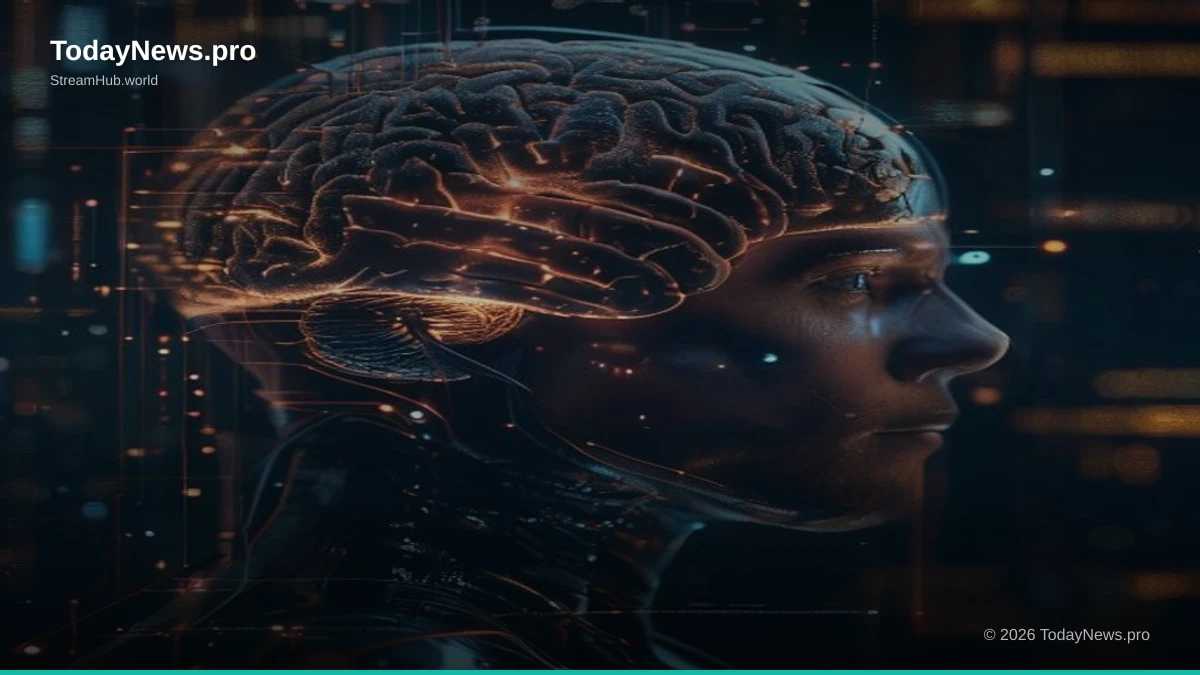
The concept of directly interfacing with the human brain, once confined to the realm of science fiction, is rapidly materializing into tangible technological advancements. Brain-Computer Interfaces (BCIs), also known as Brain-Machine Interfaces (BMIs), represent a revolutionary leap in human-technology interaction. They establish a direct communication pathway between the brain's electrical activity and an external device, bypassing the conventional neuromuscular pathways. This breakthrough promises to fundamentally alter how we interact with our environment, enhance our cognitive abilities, and even redefine what it means to be connected. From assisting individuals with severe motor impairments to potentially unlocking new levels of human intelligence, BCIs are at the forefront of a paradigm shift. The journey towards BCI technology began with early electroencephalography (EEG) experiments in the early 20th century, which allowed researchers to detect and measure brainwave patterns. While these early methods were rudimentary, they laid the groundwork for understanding the electrical symphony of the brain. The subsequent decades saw incremental progress, fueled by advancements in neuroscience, computer science, and materials engineering. The advent of digital computing and sophisticated signal processing techniques in the late 20th century proved to be a watershed moment, enabling more precise interpretation of neural signals. Today, BCIs are moving beyond purely academic research, with significant investment pouring into their development for both therapeutic and augmentative applications. The potential applications are vast and varied, touching upon critical areas of human life. For individuals suffering from paralysis, ALS, or other debilitating conditions, BCIs offer a lifeline, restoring lost motor functions and enabling communication. Beyond the medical sphere, the prospect of enhanced cognition – improved memory, faster learning, and sharper focus – is a compelling driver for BCI research. Furthermore, the idea of direct mental communication, or a form of "telepathy," is no longer an abstract fantasy but a nascent possibility being explored through advanced neural interfaces. This article delves into the intricate world of BCIs, exploring the technologies powering them, their transformative applications, the ethical considerations they raise, and the tantalizing future they portend.Decoding the Neural Language: Technologies at Play
The success of any BCI hinges on its ability to accurately and efficiently interpret the complex electrical signals generated by the brain. This is achieved through a variety of sensing technologies, each with its own strengths, limitations, and invasiveness levels. The fundamental challenge lies in translating the subtle nuances of neural activity into actionable commands for external devices.Non-Invasive BCIs
The least invasive approach utilizes sensors placed on the scalp to detect electrical activity. Electroencephalography (EEG) is the most common non-invasive BCI technology. It employs an array of electrodes attached to a cap worn by the user, which capture the collective electrical signals from large populations of neurons. While EEG is safe, cost-effective, and relatively easy to use, its signals are diffuse, making it difficult to pinpoint specific neural activity with high spatial resolution. This can limit the speed and accuracy of commands. Other non-invasive techniques include magnetoencephalography (MEG), which measures magnetic fields produced by electrical currents in the brain, and functional near-infrared spectroscopy (fNIRS), which uses light to measure changes in blood oxygenation levels.High
Ease of Use
Low
Spatial Resolution
Moderate
Temporal Resolution
Non-invasive
Safety
Partially Invasive BCIs
Moving towards higher signal fidelity, partially invasive BCIs involve surgically placing electrodes beneath the skull but still outside the brain tissue itself. Electrocorticography (ECoG) is a prime example. Here, electrode grids are placed directly on the surface of the dura mater or arachnoid mater, the outer membranes covering the brain. This proximity allows ECoG to capture much clearer and more localized neural signals compared to EEG, offering improved spatial and temporal resolution. However, it still requires surgery, carrying inherent risks.Invasive BCIs
The most direct and highest-fidelity BCI approach involves implanting microelectrode arrays directly into the brain tissue. These invasive BCIs, such as Utah Array or Neuropixels probes, can record the activity of individual neurons or small groups of neurons. This allows for unprecedented precision in decoding neural intent, enabling fine-grained control of external devices. The trade-offs include the significant risks associated with brain surgery, the potential for tissue damage or immune response around the implant, and the need for a percutaneous connection or wireless transmitter for data transmission. Despite these challenges, invasive BCIs have yielded the most impressive results in restoring complex motor functions."The brain is an incredibly complex electrical organ. To truly understand and interact with it, we need to be able to listen to its individual components, and that's where invasive BCIs, despite their risks, offer unparalleled insight and capability." — Dr. Anya Sharma, Lead Neuroscientist, Neuralink Research Division
Enhancing Human Potential: Cognitive Augmentation
Beyond restoring lost function, BCIs hold immense promise for augmenting human cognitive abilities, pushing the boundaries of what our minds can achieve. This area of research explores how direct neural interfaces can amplify learning, improve memory recall, enhance focus, and even facilitate novel forms of problem-solving.Memory and Learning
One of the most exciting frontiers is the potential for BCIs to enhance memory formation and retrieval. Researchers are exploring ways to use BCIs to read and even write neural patterns associated with learning and memory. For instance, by identifying the neural signatures of successful memory encoding, a BCI could potentially reinforce these patterns during learning, leading to better retention. Conversely, for individuals suffering from memory disorders like Alzheimer's, BCIs might offer a way to bypass damaged neural pathways and access stored information. Early studies have shown that stimulating specific brain regions involved in memory consolidation can improve recall in animal models and, to a lesser extent, in human participants. The future may see BCIs that actively guide learning processes, making education and skill acquisition more efficient.Focus and Productivity
In today's hyper-connected and distracting world, the ability to maintain focus is a valuable commodity. BCIs could offer a solution by monitoring brain states related to attention and concentration. Imagine a system that detects when your focus is waning and subtly intervenes, perhaps by delivering a gentle auditory cue or even a mild electrical stimulation to a specific brain region, guiding you back to a state of optimal concentration. This could revolutionize productivity for students, professionals, and anyone engaged in cognitively demanding tasks. Furthermore, BCIs could be used to optimize work environments, adjusting lighting or soundscapes based on real-time neural feedback to foster peak performance.| Cognitive Enhancement Area | Current BCI Applications | Future Potential |
|---|---|---|
| Memory Formation & Recall | Experimental memory reinforcement studies. | Active memory enhancement, targeted memory retrieval for cognitive disorders. |
| Learning Speed & Efficiency | Studies on accelerated skill acquisition. | Personalized learning pathways, rapid skill mastery. |
| Focus & Attention Control | Brainwave monitoring for attention states. | Real-time attention regulation, distraction mitigation. |
| Problem Solving & Creativity | Exploratory research into enhanced cognitive flexibility. | Facilitating novel idea generation, optimized decision-making. |
Bridging Divides: BCIs for Connection and Communication
Perhaps the most profound impact of BCIs lies in their potential to restore lost connections and create new modes of human interaction, particularly for individuals facing severe communication barriers.Restoring Functionality
For individuals who have lost the ability to speak or move due to conditions like paralysis, stroke, or neurodegenerative diseases, BCIs are a beacon of hope. Invasive BCIs have demonstrated the remarkable ability to allow users to control prosthetic limbs with their thoughts, restoring a degree of physical autonomy. Furthermore, BCIs can translate neural signals associated with intended speech into text or synthesized voice, giving a voice back to those who have lost it. These systems are continuously improving, offering faster response times and more natural control. The emotional and social impact of regaining the ability to communicate and interact with the world is immeasurable, offering individuals a pathway back to independence and social engagement.BCI-Controlled Prosthetic Limb Accuracy
Telepathy and Beyond
The ultimate frontier in BCI-driven connection is the concept of direct brain-to-brain communication, often referred to as "telepathy." While true telepathy remains speculative, researchers are making strides in creating rudimentary forms of this communication. Studies have demonstrated the ability to transmit simple motor commands or binary information from one brain to another through linked BCIs. For instance, a person thinking of a specific action could, via a BCI, trigger a response in another person's brain, leading to a corresponding action. This could involve one person controlling a cursor on a screen for another, or even transmitting basic emotional states. While still in its infancy, this technology could fundamentally alter human relationships, collaboration, and our understanding of consciousness itself. The implications for remote collaboration, empathy training, and even interspecies communication are staggering."We are moving from a paradigm of interacting with machines to a paradigm of interacting with each other through machines, and eventually, perhaps, directly. The ethical implications of such direct mental connections are profound and require careful consideration." — Dr. Jian Li, Professor of Neurotechnology Ethics, Stanford University
The Ethical Labyrinth: Navigating Uncharted Territories
As BCIs become more sophisticated and pervasive, they present a complex web of ethical challenges that demand careful consideration and proactive regulation. The ability to access and potentially manipulate the human brain raises fundamental questions about privacy, autonomy, equity, and the very definition of human identity.Privacy and Security of Neural Data
The data generated by BCIs is arguably the most intimate form of personal information. It reflects not only our conscious thoughts and intentions but potentially our subconscious biases, emotions, and even our innermost desires. Protecting this neural data from unauthorized access, misuse, or sale is paramount. The risk of "brain hacking," where malicious actors could potentially access or even alter a user's neural signals, is a significant concern. Robust encryption, stringent access controls, and clear legal frameworks are essential to safeguard the privacy of neural data. The potential for this data to be used for surveillance, targeted advertising, or even political manipulation underscores the urgent need for comprehensive data protection regulations specifically tailored to BCI technology. Learn more about BCIs on Wikipedia.Equity and Access
As BCI technology advances, there is a significant risk of exacerbating existing societal inequalities. The development and deployment of sophisticated BCIs are likely to be expensive, potentially creating a divide between those who can afford cognitive enhancement and restorative technologies and those who cannot. This could lead to a future where access to enhanced cognitive abilities and improved quality of life is determined by socioeconomic status. Ensuring equitable access to these transformative technologies is a critical ethical imperative. This requires not only addressing the cost of development and implementation but also considering the global reach and accessibility of these tools, ensuring they benefit all of humanity, not just a privileged few.The Future Landscape: Predictions and Possibilities
The trajectory of BCI technology suggests a future brimming with transformative potential, extending far beyond current applications. As research continues to unravel the complexities of the brain and refine interface technologies, we can anticipate a landscape where BCIs are seamlessly integrated into our daily lives, augmenting our abilities and reshaping our interactions. One significant trend will be the increasing prevalence of non-invasive BCIs, driven by advancements in sensor technology and signal processing. These will become more sophisticated, offering higher resolution and greater reliability, making them accessible for a wider range of applications, from everyday productivity tools to advanced gaming experiences. The miniaturization of these devices will also play a crucial role, leading to wearable BCI systems that are discreet and comfortable for long-term use. The convergence of BCIs with artificial intelligence (AI) is another area ripe for explosion. AI algorithms will become indispensable for decoding complex neural signals and personalizing BCI experiences. This synergy could lead to BCIs that not only understand our intentions but also anticipate our needs, offering proactive assistance and enhanced cognitive support. Imagine AI-powered BCIs that can predict moments of optimal learning or creative insight, guiding users towards peak performance. The medical applications of BCIs will continue to expand, offering new hope for individuals with neurological disorders. We can expect to see more advanced prosthetic control, refined communication devices, and even novel therapeutic interventions targeting conditions like epilepsy, depression, and Parkinson's disease. BCIs might also play a crucial role in neurorehabilitation, accelerating recovery from stroke or traumatic brain injury. However, the most profound changes may lie in how BCIs redefine human connection and experience. The development of more sophisticated brain-to-brain interfaces could lead to entirely new forms of communication and collaboration, fostering deeper understanding and empathy. The line between the digital and biological worlds will continue to blur, leading to augmented realities that are not just visually experienced but sensorially and cognitively integrated. The ethical considerations surrounding these advancements will remain paramount, requiring ongoing dialogue and robust regulatory frameworks to ensure that the future of BCIs is one of empowerment and progress for all.Are BCIs safe?
The safety of BCIs depends on their invasiveness. Non-invasive BCIs like EEG are generally considered safe, with minimal risks. Partially invasive and invasive BCIs, which require surgery, carry the inherent risks associated with surgical procedures, including infection, bleeding, and potential tissue damage. Long-term effects of implanted devices are still being studied.
Can BCIs read my thoughts?
Current BCIs can detect patterns of brain activity associated with specific intentions, commands, or mental states. They cannot 'read' complex thoughts or consciousness in the way often depicted in fiction. The technology is focused on decoding specific neural signals for control purposes.
Who will benefit from BCI technology?
Initially, BCIs are primarily aimed at individuals with severe motor impairments or communication disabilities. However, as the technology evolves, it has the potential to benefit a much wider population, including those seeking cognitive enhancement, improved learning, and novel forms of interaction.
What are the biggest ethical concerns surrounding BCIs?
Key ethical concerns include the privacy and security of neural data, the potential for misuse and manipulation, issues of autonomy and consent, and the equitable access to these technologies, which could exacerbate societal inequalities.