

 Elena Kogan
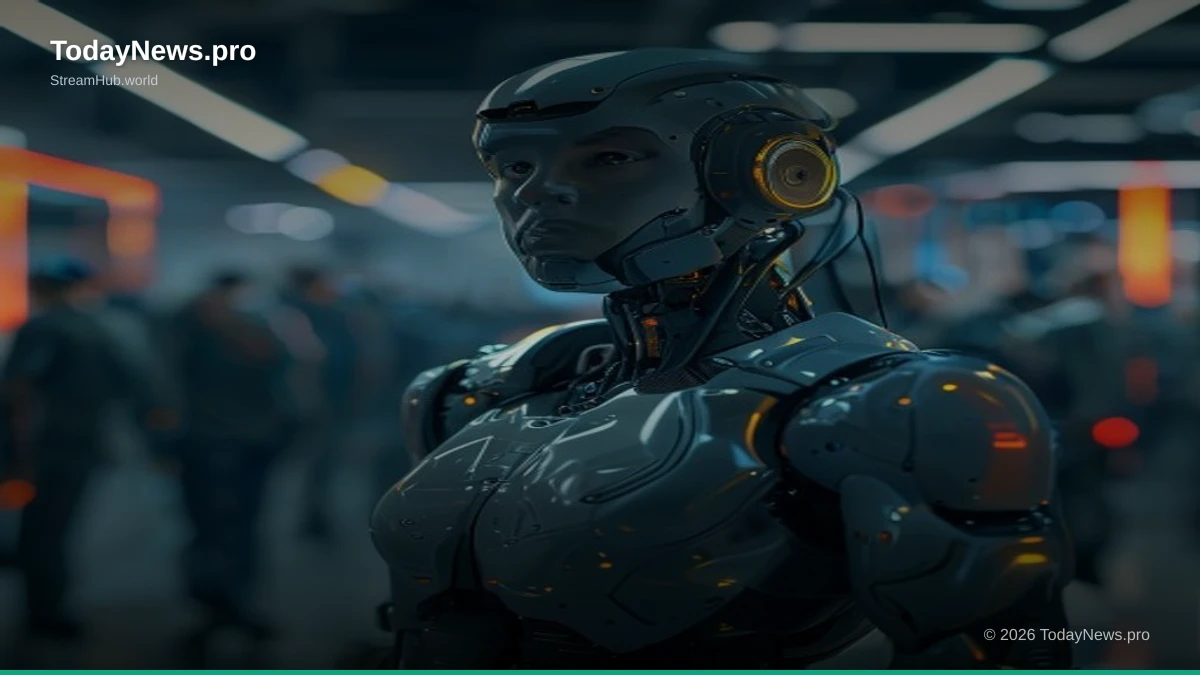
By 2030, it is projected that up to 30% of current work activities globally could be automated, fundamentally reshaping careers and entire industries. This isn't a distant sci-fi concept; it's a rapidly unfolding reality driven by advancements in artificial intelligence, robotics, and machine learning.
The Inevitable March of Automation
The current wave of automation is unlike previous industrial revolutions. While past eras focused on mechanizing physical labor, today's AI-driven automation targets cognitive tasks, data analysis, and even creative endeavors. This expansion of automation's reach means virtually no sector will remain untouched. From manufacturing floors to executive suites, intelligent systems are poised to become indispensable colleagues, if not outright replacements, for human workers.
Defining the Automated Workforce
The "automated workforce" encompasses a spectrum of technologies. This includes industrial robots performing intricate assembly tasks, autonomous vehicles navigating complex logistics, sophisticated AI algorithms analyzing vast datasets, and natural language processing (NLP) tools engaging in customer service interactions. These technologies are not merely tools; they are increasingly capable of independent decision-making and continuous learning, blurring the lines between machine and human contribution.
Key Drivers of Automation Adoption
Several factors are accelerating the adoption of automation. The pursuit of increased efficiency and productivity remains paramount for businesses seeking a competitive edge. Furthermore, advancements in sensor technology, cloud computing, and edge AI have made sophisticated automation solutions more accessible and cost-effective. The global push for sustainability also plays a role, as automated systems can optimize resource usage and reduce waste. The COVID-19 pandemic further catalyzed adoption by highlighting the need for resilient supply chains and contactless operations.
Industry-Specific Transformations
The impact of automation will not be uniform. Certain industries, characterized by repetitive tasks, data-intensive operations, or hazardous environments, will experience more profound and immediate shifts. Understanding these sector-specific changes is crucial for proactive adaptation.
Manufacturing and Logistics
Manufacturing has long been at the forefront of automation. By 2030, expect fully autonomous factories where robots handle everything from raw material handling to final product inspection. In logistics, self-driving trucks, drones for last-mile delivery, and AI-powered warehouse management systems will revolutionize supply chains. This will lead to faster, more efficient, and potentially safer operations, but also a significant reduction in manual labor roles.
| Industry | Projected Automation Impact (by 2030) | Key Technologies |
|---|---|---|
| Manufacturing | High (80% of repetitive tasks) | Robotics, AI-powered quality control, 3D printing |
| Transportation & Logistics | Very High (Autonomous vehicles, warehouse automation) | Autonomous driving, drone delivery, AI route optimization |
| Customer Service | Medium-High (Chatbots, virtual assistants) | NLP, Machine Learning, Conversational AI |
| Healthcare | Medium (Diagnostics, robotic surgery) | AI image analysis, surgical robots, predictive diagnostics |
| Finance | Medium (Algorithmic trading, fraud detection) | AI-driven analytics, blockchain, RPA |
Healthcare
The healthcare sector will see a significant augmentation of human capabilities. AI will excel in diagnostic imaging analysis, identifying anomalies that might be missed by the human eye. Robotic surgery will become more precise and minimally invasive. Predictive analytics will help forecast disease outbreaks and individual patient risks. While administrative tasks will be heavily automated, roles requiring empathy, complex decision-making, and patient interaction will remain vital, albeit augmented by AI tools.
Retail and E-commerce
Customer service in retail will be transformed by AI-powered chatbots and personalized recommendation engines. Inventory management will become hyper-efficient through automated systems and predictive ordering. In physical stores, robots might handle stocking shelves and cleaning. E-commerce fulfillment centers will increasingly rely on automated picking and packing systems. The focus will shift towards creating unique customer experiences and managing the human-robot interface.
The Evolving Skill Landscape
The rise of the automated workforce necessitates a fundamental reevaluation of human skills. Routine and predictable tasks are most susceptible to automation, while skills that leverage human creativity, critical thinking, emotional intelligence, and complex problem-solving will become increasingly valuable. This shift demands a proactive approach to reskilling and upskilling.
In-Demand Skills for the Future
Tomorrow's most sought-after professionals will possess a blend of technical proficiency and uniquely human attributes. Digital literacy, data analysis, AI proficiency, and an understanding of automation systems will be baseline requirements for many roles. Beyond technical skills, employers will prioritize critical thinking, creativity, collaboration, adaptability, and emotional intelligence. The ability to learn and unlearn rapidly will be a defining characteristic of career success.
Reskilling and Upskilling Imperatives
For individuals, the imperative is clear: embrace lifelong learning. This means actively seeking out training programs, online courses, and certifications in emerging fields. For organizations, investing in employee development is no longer a perk but a strategic necessity. Companies that provide robust reskilling and upskilling opportunities will retain talent, foster innovation, and adapt more effectively to market changes. Educational institutions must also pivot to equip students with future-proof skills.
The Rise of Human-AI Collaboration Roles
Rather than a simple displacement, many roles will evolve into "human-AI collaboration." These positions will involve humans working alongside intelligent systems, leveraging AI's processing power and data analysis capabilities while applying human judgment, creativity, and ethical considerations. Examples include AI trainers, data ethicists, AI system supervisors, and human-AI interface designers.
Economic and Societal Repercussions
The widespread adoption of automation carries significant economic and societal implications. While it promises increased productivity and potential economic growth, it also raises concerns about job displacement, income inequality, and the need for new social safety nets.
Job Displacement and Creation
The most pressing concern is the potential for mass job displacement. As automation takes over tasks previously performed by humans, unemployment rates in certain sectors could rise. However, historical patterns suggest that technological advancements also create new jobs, often in areas that are difficult to predict. The challenge lies in ensuring that the pace of job creation matches or exceeds the pace of displacement, and that displaced workers have the skills to fill new roles.
Income Inequality and the Wealth Gap
Automation has the potential to exacerbate income inequality. Those with the skills to thrive in an automated economy—developers, data scientists, AI specialists—are likely to see their incomes rise. Conversely, individuals in roles susceptible to automation may face stagnant wages or unemployment, widening the gap between the haves and have-nots. Policy interventions may be necessary to redistribute the gains from automation and ensure a more equitable distribution of wealth.
The Need for New Social Contracts
As the nature of work changes, so too must our social contracts. Discussions around universal basic income (UBI), shorter workweeks, and enhanced social safety nets are becoming increasingly relevant. Governments and societies will need to explore innovative solutions to ensure that everyone benefits from the increased prosperity automation can bring, not just a select few. This includes investing in education, healthcare, and retraining programs accessible to all.
For further reading on economic impacts, consult resources like the Reuters Technology section on AI and its economic implications.
Navigating the Transition: Strategies for Individuals and Organizations
Successfully navigating the automated future requires a multi-faceted approach, involving proactive planning and strategic adaptation from both individuals and the organizations they work for.
For Individuals: Embrace Lifelong Learning and Adaptability
The most critical strategy for individuals is to cultivate a mindset of continuous learning. This means staying abreast of technological trends, identifying skills gaps, and actively pursuing education and training. Developing transferable skills such as problem-solving, communication, and critical thinking will provide a solid foundation regardless of specific job roles. Networking and building professional relationships also remain invaluable.
For Organizations: Invest in Human Capital and Agile Structures
Businesses must view automation not as a way to simply cut costs, but as an opportunity to augment human capabilities and drive innovation. This involves strategic investment in employee training and development, fostering a culture of learning, and redesigning jobs to leverage human-AI collaboration. Agile organizational structures that can quickly adapt to technological shifts and market demands will be essential. Ethical considerations regarding the deployment of AI and its impact on the workforce must also be a central part of any strategy.
The Role of Government and Policy
Governments have a crucial role to play in managing this transition. This includes investing in public education and vocational training programs, creating incentives for businesses to retrain their employees, and exploring new social policies that can support citizens through periods of economic change. Regulatory frameworks that ensure fair competition, data privacy, and ethical AI development will also be vital.
Understanding the historical context of technological shifts can be insightful. For instance, exploring Wikipedia's entry on the Fourth Industrial Revolution provides a broader perspective.
The Human Element in an Automated Future
Amidst the rise of intelligent machines, the value of distinctly human qualities will not diminish; it will likely increase. The ability to connect, empathize, create, and lead will become even more critical as routine tasks are delegated to automation.
The Uniquely Human Skills
Skills such as creativity, empathy, critical thinking, and complex problem-solving are areas where humans currently hold a significant advantage over AI. The capacity for abstract thought, emotional intelligence, and nuanced interpersonal communication will be highly prized. Roles that involve leadership, mentoring, and strategic decision-making will remain firmly in human hands.
The Future of Work is Collaborative
The most optimistic and likely scenario is one of human-AI collaboration. This partnership will allow us to tackle challenges of unprecedented scale and complexity. Imagine doctors using AI to diagnose diseases with unparalleled accuracy, or scientists using AI to accelerate breakthroughs in climate research. The synergy between human ingenuity and machine efficiency holds immense potential.
Ethical Considerations and Regulatory Frameworks
The rapid advancement of automation and AI brings with it a host of ethical dilemmas and the urgent need for robust regulatory frameworks to ensure responsible development and deployment.
Bias in AI and Algorithmic Fairness
A significant ethical challenge is the potential for AI systems to perpetuate or even amplify existing societal biases. If AI is trained on biased data, it can lead to discriminatory outcomes in areas like hiring, lending, and criminal justice. Developing AI that is fair, transparent, and accountable is paramount.
Data Privacy and Security
Automated systems often rely on vast amounts of data. Ensuring the privacy and security of this data is a critical concern. Robust regulations are needed to protect individuals' personal information and prevent its misuse by automated systems or the entities controlling them.
The Need for Global Governance
Automation and AI are global phenomena. Developing effective regulatory frameworks will require international cooperation. Establishing common standards and best practices for AI development and deployment can help mitigate risks and ensure that the benefits of automation are shared broadly. Discussions on AI safety and control are ongoing, highlighting the importance of proactive governance. More information can be found on the Reuters Technology section covering AI regulation.