

 Maria Gonzalez
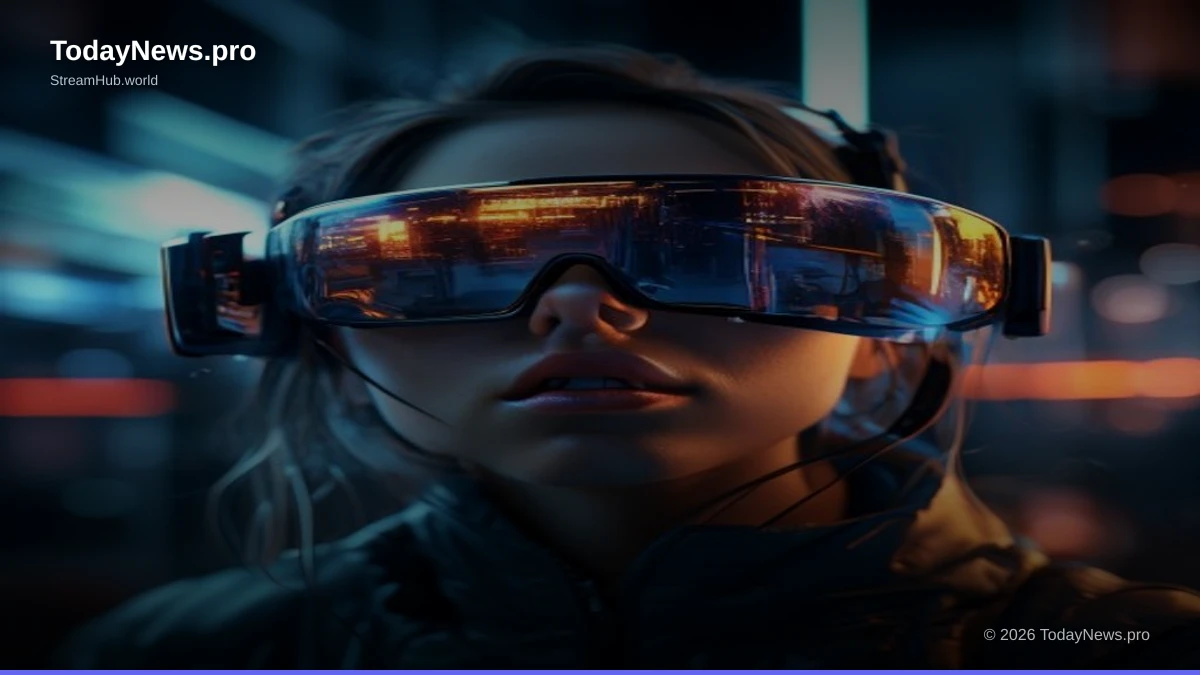
By 2030, the global market for augmented reality (AR) hardware, encompassing smart glasses and other wearable devices, is projected to reach a staggering $72.6 billion, signaling a seismic shift in how we interact with digital information and the physical world.
The Dawn of Ubiquitous AR: Beyond the Gimmick
Augmented reality, once confined to the realm of science fiction and niche gaming applications, is rapidly maturing into a pervasive technology poised to redefine our daily existence. The advent of sleek, powerful AR glasses, moving beyond clunky prototypes and into commercially viable products, marks the true beginning of this transformation. These devices promise to overlay digital information directly onto our field of vision, creating a blended reality that enhances our capabilities and enriches our experiences without isolating us from our surroundings. Unlike virtual reality (VR), which immerses users in entirely digital environments, AR augments the existing world, making it a far more practical and integrated technology for everyday use.
The evolution from bulky headsets to lightweight, stylish glasses is crucial for widespread adoption. Companies are investing billions in research and development, focusing on miniaturization, battery efficiency, improved display technology, and intuitive user interfaces. This push is not just about creating a new gadget; it's about building a new paradigm of human-computer interaction. Imagine receiving real-time navigation cues overlaid on the street, having product information appear as you browse a store, or collaborating with colleagues on a 3D model as if it were physically present. The potential applications are vast, touching nearly every facet of life, from personal productivity to professional workflows and social interactions.
The Evolution of AR Hardware
Early AR experiences were often limited to smartphone apps, requiring users to hold up their devices to scan their environment. While this demonstrated the concept, it was far from seamless. The development of dedicated AR glasses, such as those being pioneered by tech giants and innovative startups, represents a significant leap forward. These devices aim to be as unobtrusive as traditional eyewear, offering discreet yet powerful computing and display capabilities. The focus is on natural interaction, utilizing voice commands, subtle gestures, and eye-tracking to control the augmented experience. This shift from a handheld device to an always-on, integrated accessory is what will truly unlock AR's potential to become ubiquitous.
The technological hurdles are considerable. Achieving a high resolution, wide field of view, and long battery life in a compact form factor requires breakthroughs in micro-optics, power management, and efficient processing. Furthermore, the integration of sophisticated sensors, including cameras, depth sensors, and inertial measurement units (IMUs), is necessary for accurate environmental understanding and digital object placement. The development of AI and machine learning algorithms is also critical to interpret the user's context and provide relevant augmented information proactively and intelligently.
Bridging the Digital and Physical Realms
The core promise of AR glasses lies in their ability to seamlessly blend the digital and physical worlds. Instead of looking down at a screen, users will see information, notifications, and interactive elements superimposed onto their real-world view. This could mean seeing the names and titles of people you meet, having step-by-step instructions appear for assembling furniture, or viewing real-time performance metrics while exercising. The goal is to make technology a more intuitive and less intrusive part of our lives, enhancing our perception and decision-making without creating a barrier between us and our immediate environment. This creates a richer, more informed, and ultimately more efficient way of experiencing the world.
The implications for accessibility are also profound. For individuals with visual impairments, AR could provide enhanced navigation, object recognition, and reading assistance. For those with hearing impairments, AR could offer real-time captioning of conversations. The potential to personalize our perception of reality, tailoring it to individual needs and preferences, is a revolutionary aspect of this technology. As AR glasses become more sophisticated, they will likely offer customizable overlays, allowing users to choose what information they see and how it is presented, fostering a truly personalized augmented experience.
Transforming the Workplace: From Blueprints to Boardrooms
The impact of AR glasses on the professional landscape is arguably where the most immediate and transformative changes will occur. Industries ranging from manufacturing and engineering to healthcare and retail are poised to benefit immensely from the hands-free, context-aware information delivery that AR provides. Imagine a mechanic receiving step-by-step repair instructions overlaid directly onto an engine, or a surgeon viewing patient vitals and imaging data projected onto their field of view during an operation. The efficiency gains, error reduction, and enhanced training opportunities are substantial.
In construction and architecture, AR glasses can revolutionize the way designs are visualized and projects are managed. Architects can walk through virtual models superimposed onto the actual construction site, identifying potential clashes or design flaws before they become costly problems. Project managers can access real-time progress updates, view schematics, and communicate with remote teams through immersive holographic projections. This level of real-time, visual feedback and collaborative capability can streamline complex workflows and significantly improve project outcomes.
Manufacturing and Maintenance: Precision at Your Fingertips
The factory floor is set to become a prime beneficiary of AR technology. Technicians can access digital manuals, diagnostic information, and assembly guides without needing to consult separate screens or paper documents. This hands-free operation is critical in environments where safety and efficiency are paramount. For complex machinery, AR can highlight specific components, provide real-time sensor data, and guide operators through intricate maintenance procedures, reducing downtime and improving the longevity of equipment.
Consider a scenario where a critical piece of machinery requires maintenance. Instead of a seasoned technician being the only one who can diagnose and fix the issue, a junior technician, guided by an experienced remote expert through AR glasses, can perform the repair. The expert can see exactly what the technician sees and draw annotations, point to specific parts, or even overlay holographic instructions directly into the technician's view. This not only speeds up repairs but also facilitates knowledge transfer and upskilling of the workforce.
| Industry | AR Application | Potential Efficiency Gain |
|---|---|---|
| Manufacturing | Assembly guidance, quality control, remote assistance | Up to 25% |
| Healthcare | Surgical visualization, patient monitoring, training | Up to 15% in procedural efficiency |
| Logistics | Warehouse picking, inventory management, route optimization | Up to 30% in picking accuracy and speed |
| Field Service | Remote expert guidance, troubleshooting, documentation | Up to 40% reduction in travel time for experts |
Training and Education: Immersive Learning Experiences
AR glasses offer a revolutionary approach to training and education. They can create immersive, interactive learning environments that are far more engaging and effective than traditional methods. Medical students can practice surgical procedures on virtual patients, engineers can interact with complex 3D models of machinery, and emergency responders can train for high-pressure scenarios in realistic simulated environments. The ability to learn by doing, in a safe and controlled augmented space, significantly accelerates skill acquisition and knowledge retention.
For corporate training, AR can be used to onboard new employees, teach them about company products and services, and familiarize them with workplace procedures. Imagine a new sales representative being able to see holographic product demonstrations and customer interaction scenarios overlaid in their office, or a new factory worker being guided through the assembly of a product with visual cues and instructions appearing directly in their line of sight. This hands-on, experiential learning approach is proving to be far more effective in preparing individuals for their roles.
Collaboration and Communication: A New Dimension
AR glasses will fundamentally change how we collaborate, especially in remote or distributed teams. Instead of flat video calls, colleagues can appear as lifelike avatars in a shared augmented space, allowing for more natural and intuitive interactions. Brainstorming sessions can involve manipulating 3D objects together, designers can review prototypes in real-time, and project teams can conduct virtual site visits as if they were physically present. This enhanced sense of presence and shared context can foster stronger connections and more effective teamwork, regardless of geographical location.
The ability to share one's perspective directly through AR glasses also opens new avenues for remote assistance and mentorship. An expert can see exactly what a junior employee is seeing and provide guidance, a supervisor can review a quality control check remotely, or a customer service representative can guide a user through a product setup by seeing their environment. This real-time, visual feedback loop is invaluable for problem-solving and knowledge dissemination.
Augmented Reality in Everyday Life: A Seamless Overlay
Beyond the professional realm, AR glasses are poised to become an integral part of our personal lives, offering convenience, information, and entertainment in ways we are only beginning to imagine. The vision is a world where digital information is contextually relevant and seamlessly integrated into our perception, enhancing our understanding and interaction with the physical world without demanding our full attention away from it.
Think about navigating a new city. Instead of constantly glancing at a phone screen, AR glasses can project directional arrows and street names directly onto your path. Walking through a museum, you could look at an artifact and instantly see detailed information about its history and origin appear before your eyes. Social interactions could be enhanced with discreet notifications about upcoming appointments or the ability to see the names of people you've met before, aiding recall.
Navigation and Information Access
Navigation is one of the most immediately practical applications for AR glasses. Imagine walking down a street and seeing real-time directions appear as if they were painted on the pavement. This eliminates the need to repeatedly check a map app, allowing users to remain more aware of their surroundings and reducing the risk of accidents. Beyond directions, AR can provide contextual information about points of interest, restaurants, and businesses as you pass them, making exploration and discovery more intuitive and engaging.
The ability to access information hands-free and eyes-up will redefine how we engage with the digital world. Searching for information, making calls, or sending messages can be done with simple voice commands or subtle gestures, freeing up our hands and minds for other tasks. This constant, yet unobtrusive, access to relevant data will make our daily routines more efficient and informed. For instance, while cooking, you could have recipes or unit conversions appear directly in your vision, or while shopping, product reviews and price comparisons could be instantly accessible.
Entertainment and Social Interaction
The entertainment landscape is also ripe for AR disruption. Games can extend beyond the confines of a screen, with virtual characters and elements interacting with the real world. Imagine playing a strategy game where your living room becomes the battlefield, or a scavenger hunt that uses your local park as the game map. The line between the digital and physical will blur, creating more immersive and interactive gaming experiences.
Social media and communication platforms will also evolve. AR could allow for shared augmented experiences, where friends can interact with virtual objects or play games together in the same physical space, even if they are miles apart. It could also enable more engaging forms of communication, such as sending holographic messages or experiencing virtual gatherings with a greater sense of presence. The potential for richer, more immersive social connections is significant.
Personal Productivity and Well-being
AR glasses can act as personalized digital assistants, subtly reminding us of tasks, appointments, and goals. They could provide real-time feedback on posture while working, guide us through meditation exercises, or track our fitness metrics during workouts in a more integrated way than current wearables. The goal is to empower individuals to manage their lives more effectively and improve their overall well-being through discreet, intelligent assistance.
For individuals with specific needs, AR offers remarkable potential. For example, it could assist with memory recall by displaying reminders of names, faces, or important information. It could also aid in learning new languages by overlaying translations on signs or spoken words in real-time. The ability to augment our perception and cognitive abilities in such a personalized manner opens up a world of possibilities for enhanced living.
The Tech Backbone: Powering the Augmented Future
The realization of AR glasses as an everyday technology hinges on significant advancements across several interconnected technological domains. Miniaturization, power efficiency, advanced optics, and sophisticated sensor integration are paramount. The processing power required to render complex augmented environments in real-time, while simultaneously understanding the user's surroundings and responding to their input, demands cutting-edge hardware and software optimization.
The development of specialized processors, such as AI accelerators and dedicated graphics units, designed for mobile and wearable devices will be crucial. These components need to be powerful enough to handle demanding AR computations while consuming minimal battery power to ensure all-day usability. Furthermore, the creation of intuitive and responsive user interfaces that rely on natural inputs like gaze, voice, and gesture is a key area of focus for developers aiming to make AR glasses feel as natural to use as traditional eyewear.
Display Technology: Clarity and Field of View
The quality of the visual experience is dictated by the display technology used in AR glasses. Current iterations often struggle with limitations in brightness, resolution, and field of view (FoV). For AR to be truly immersive and useful, displays need to be bright enough to be visible in direct sunlight, have a resolution comparable to high-definition screens, and offer a wide FoV that mimics human vision, preventing the sensation of looking through a small window. Technologies like micro-OLEDs and waveguide displays are showing great promise in achieving these goals.
Waveguide technology, for instance, allows light to be projected from tiny projectors through a series of optical elements embedded within the lens itself. This enables a more compact and aesthetically pleasing design while offering a wider FoV. The challenge lies in achieving high brightness and color accuracy across the entire display area, ensuring that digital elements are rendered vividly and naturally alongside the real world. Achieving a FoV of 100 degrees or more, similar to natural human vision, is a critical benchmark for widespread adoption.
Sensors and Environmental Understanding
For AR glasses to accurately place digital objects into the real world and respond to the user's environment, they require a sophisticated array of sensors. This typically includes cameras for visual tracking and object recognition, depth sensors (like LiDAR) to understand the 3D geometry of the surroundings, and inertial measurement units (IMUs) to track the wearer's head movements. The seamless integration and interpretation of data from these sensors are what enable AR experiences to feel "anchored" and realistic.
Simultaneous Localization and Mapping (SLAM) algorithms are fundamental to AR. These algorithms allow the device to build a 3D map of its environment while simultaneously tracking its own position within that map. This enables digital objects to remain in place as the user moves around, creating a stable and convincing augmented reality. Advancements in AI and machine learning are continuously improving the accuracy and robustness of SLAM, allowing for operation in a wider range of environments and lighting conditions.
Connectivity and Processing Power
AR glasses will rely heavily on high-speed wireless connectivity, such as 5G and Wi-Fi 6/6E, to stream complex data, access cloud-based processing, and interact with other devices. While on-board processing will handle many real-time tasks, offloading computationally intensive operations to the cloud can significantly reduce the size and power consumption of the glasses themselves. This hybrid approach ensures a fluid and responsive experience.
The integration of powerful, yet energy-efficient, processors is key. Companies are developing custom System-on-Chips (SoCs) specifically for AR and VR applications, designed to handle the unique demands of these immersive technologies. These chips need to be adept at parallel processing for graphics rendering, AI inference for environmental understanding, and sensor fusion, all while operating within strict thermal and power budgets. The continued evolution of mobile chip architecture, driven by demands from smartphones, will directly benefit the development of AR hardware.
Challenges and Ethical Considerations
As AR glasses move towards mainstream adoption, a host of challenges and ethical considerations come to the forefront. Privacy concerns are paramount, given that these devices are equipped with cameras and microphones that are constantly capturing data about the user and their surroundings. The potential for misuse, surveillance, and the erosion of personal privacy needs to be addressed proactively through robust security measures and clear ethical guidelines.
Furthermore, the psychological impact of living in an augmented reality, the potential for digital addiction, and the societal implications of a world where digital overlays can alter our perception of reality require careful consideration. Ensuring equitable access and preventing a digital divide are also crucial aspects to address as this technology matures and becomes more integrated into our lives.
Privacy and Data Security
The pervasive nature of AR glasses raises significant privacy questions. If devices are constantly recording video and audio, who has access to that data? How is it stored, and how is it protected from unauthorized access? The potential for AR glasses to be used for surveillance, both by individuals and by corporations or governments, is a serious concern. Clear regulations and industry standards are needed to define what data can be collected, how it can be used, and who owns it.
Moreover, the "always-on" nature of these devices means that even unintentional captures of sensitive information are possible. Robust encryption, user consent mechanisms, and transparent data policies will be essential to building trust and ensuring that AR technology is developed and deployed responsibly. The debate around data ownership and the right to privacy in an augmented world is only just beginning.
Reuters: Privacy concerns linger over Apple Vision Pro launch
Social and Psychological Impacts
The constant immersion in augmented reality could have profound psychological effects. Will users become less engaged with the physical world, preferring the curated and enhanced digital layer? Could AR contribute to social isolation if interactions are increasingly mediated by technology? The potential for digital addiction, where individuals become overly reliant on augmented experiences, is also a concern.
Furthermore, the ability to selectively filter or enhance one's perception of reality raises questions about shared experiences and objective truth. If individuals can choose to see only positive information or ignore certain aspects of their environment, how does this impact social cohesion and empathy? These are complex societal questions that will require ongoing dialogue and research as AR becomes more integrated into our lives.
Accessibility and Digital Divide
As AR technology advances, ensuring that it is accessible to everyone, regardless of their socioeconomic status, age, or physical abilities, is crucial. The initial cost of AR glasses may be prohibitive for many, potentially creating a new digital divide where only the affluent can access the benefits of augmented reality. This could exacerbate existing inequalities and create new ones.
Efforts must be made to develop affordable AR solutions and to ensure that the technology is designed with accessibility in mind from the outset. This includes considering users with disabilities, ensuring intuitive interfaces, and providing adequate training and support. The goal should be to democratize access to AR's transformative potential, rather than creating a technology that further stratifies society.
The Road Ahead: Predictions and Possibilities
The trajectory of augmented reality glasses suggests a future where they become as commonplace as smartphones are today, seamlessly integrated into our daily routines and professional workflows. The current pace of innovation indicates that within the next decade, we can expect AR glasses to become lighter, more powerful, more affordable, and significantly more intuitive to use.
The possibilities are vast and extend far beyond current imaginations. From personalized learning experiences that adapt to individual needs and paces, to revolutionary approaches to healthcare and remote collaboration, AR glasses are poised to reshape our world in fundamental ways. As the technology matures and the ecosystem of AR applications expands, its transformative potential will become increasingly apparent, ushering in an era of blended realities that enhance human capabilities and enrich our lives.
The Evolution Towards Seamless Integration
The ultimate goal for AR glasses is to become an invisible, yet indispensable, part of our lives. This means achieving a form factor that is indistinguishable from traditional eyewear, with advanced capabilities seamlessly integrated. Battery life will improve to support all-day usage, and user interfaces will become so intuitive that interaction feels completely natural and effortless. The distinction between the digital and physical will continue to blur, creating a fluid and dynamic augmented reality.
We can anticipate the development of specialized AR glasses for different use cases, much like we have smartphones optimized for photography or gaming. This could include highly durable, ruggedized versions for industrial environments, sleek and stylish designs for everyday consumers, and specialized medical-grade devices for healthcare professionals. The increasing competition and innovation in the AR hardware market will drive down costs and accelerate the adoption of these diverse form factors.
New Ecosystems and Applications
The growth of AR glasses will undoubtedly foster the development of entirely new software ecosystems and application categories. Developers will create innovative AR experiences that leverage the unique capabilities of these devices, ranging from immersive educational tools and interactive entertainment to advanced productivity suites and sophisticated design applications. The app stores for AR will become vibrant marketplaces for digital content and experiences.
We will likely see the emergence of entirely new forms of art, storytelling, and social interaction that are only possible within an augmented reality framework. The way we consume media, learn new skills, and connect with others will be fundamentally transformed by the creative possibilities that AR unlocks. The potential for user-generated AR content, allowing individuals to create and share their own augmented experiences, will further fuel this innovation.
A Glimpse into the Future of Human-Computer Interaction
Augmented reality glasses represent a significant evolution in human-computer interaction, moving us beyond the limitations of screens and keyboards towards a more natural, intuitive, and integrated digital experience. The ability to interact with information and digital content in a spatial, contextual, and hands-free manner will fundamentally alter how we work, learn, play, and live.
As this technology matures, it has the potential to augment our perception, enhance our cognitive abilities, and create entirely new ways of experiencing and interacting with the world around us. The journey has just begun, but the destination promises a future where technology is not a separate entity we engage with, but an integral and enhancing layer of our reality.