

 Linda Wu
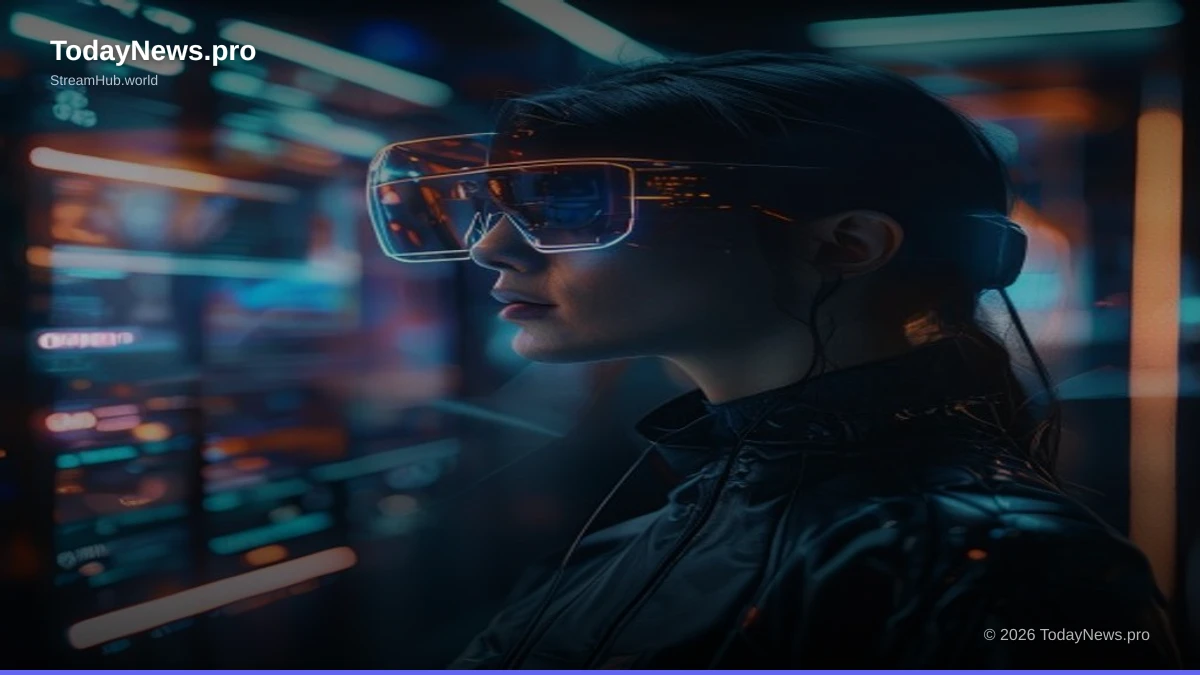
By 2030, the global augmented reality market is projected to reach a staggering $209.2 billion, signaling a monumental shift in how we interact with technology and the world around us.
The Dawn of the Invisible Interface
For decades, our primary interface with digital information has been a rectangular screen – a window into another world, requiring our focused attention and often separating us from our immediate physical surroundings. We tap, swipe, and type, tethered to devices that, while powerful, represent a distinct barrier. But the future promises something far more profound: an invisible interface, where digital information is not confined to a screen but layered seamlessly onto our reality, accessible and intuitive, becoming an extension of our senses. This is the promise of augmented reality (AR), and by 2030, it's poised to move from niche applications and early-adopter gadgets into the fabric of our daily lives, transforming how we work, learn, communicate, and navigate the world.
The current generation of AR, often experienced through bulky headsets or smartphone apps, offers a glimpse of this potential. Think of real-time language translation overlaid on signs as you travel, or interactive 3D models appearing in your living room for educational purposes. However, the true vision of the invisible interface is one where AR is so unobtrusive, so integrated, that we barely perceive it as a separate technology. It will feel as natural as putting on glasses, offering contextually relevant information precisely when and where we need it, without demanding our complete attention.
This gradual integration will be driven by advancements in hardware, software, and sensor technology, coupled with a growing consumer appetite for more intuitive and immersive digital experiences. The transition will not be a sudden upheaval but a progressive evolution, where each innovation builds upon the last, making AR more accessible, more powerful, and ultimately, more indispensable.
Defining the Invisible Interface
The concept of an "invisible interface" in the context of AR refers to a user experience where the digital overlay is so natural and contextually aware that it feels like an inherent part of the user's perception. It’s not about wearing a device that screams "tech;" it’s about experiencing digital augmentation as if it were a natural extension of reality. This means AR elements should appear relevant to the user’s current task, environment, and even emotional state, adapting dynamically to provide the most helpful information or interaction without being intrusive. Imagine walking down a street and seeing navigation cues subtly guiding you, or looking at a restaurant and having its menu and reviews appear without needing to pull out your phone. This is the ultimate goal: a digital layer that enhances, rather than distracts from, our physical world.
This contrasts sharply with current interfaces that often demand a significant cognitive load. Traditional screens require users to actively seek information, process visual cues from a distinct digital realm, and often perform manual input. The invisible interface, by contrast, aims to reduce this friction to near zero. Information will be delivered proactively, predictively, and in a format that is easily digestible within the user's natural field of vision and awareness. The "interface" itself will fade into the background, with the focus shifting entirely to the information and its utility.
From Novelty to Necessity
The journey of AR from a technological novelty to a daily necessity by 2030 will be marked by a series of iterative improvements and strategic market penetration. Initially, AR applications will continue to refine existing use cases, such as gaming and entertainment, where the immersive potential is most readily apparent. However, the real growth will occur as AR proves its value in practical, everyday scenarios. Industries like retail, education, and professional services will be early adopters, recognizing the efficiency and engagement gains AR can provide. As these applications mature and become more sophisticated, they will gradually seep into consumer consciousness, demonstrating their utility in ways that make them indispensable.
The critical factor for this transition will be the development of form factors that are comfortable and socially acceptable for prolonged wear. While current AR glasses can still be conspicuous, future iterations are expected to resemble regular eyeglasses, making them suitable for all-day use. This shift in hardware will be a major catalyst, enabling AR to become truly integrated into daily life, rather than an occasional tool. The "invisible" aspect is not just about the interface’s subtlety, but also about the device's discreetness.
Beyond the Screen: ARs Gradual Infiltration
The transition to an AR-dominated interface won't happen overnight. Instead, it will be a carefully orchestrated infiltration, starting with areas where the benefits are most pronounced and gradually expanding into every corner of our lives. The first wave will likely see AR enhance existing digital interactions, making them more contextual and immersive. For instance, shopping applications will evolve beyond static product images to allowing users to virtually "try on" clothes or place furniture in their homes with realistic scale and lighting. Navigation will move beyond turn-by-turn directions on a phone to an overlay of directional arrows and points of interest directly onto the user's view of the street.
The core of this infiltration lies in making AR less of a conscious choice and more of an ambient layer of digital intelligence. This means devices will become smaller, more powerful, and more integrated into everyday objects. Think of smart contact lenses that project information, or subtle earbud-like devices that provide audio cues and context. The goal is to reduce the cognitive load associated with accessing digital information, making it as effortless as looking up and seeing something.
The Evolution of AR Hardware
The future of AR hardware by 2030 is largely defined by the pursuit of a lightweight, stylish, and powerful device that can be worn for extended periods without discomfort or social stigma. We are moving beyond the bulky, utilitarian headsets of today towards sleek, glasses-like form factors. These future devices will likely incorporate advanced optics capable of displaying high-resolution, transparent visuals directly into the wearer's field of view. Micro-LED or waveguide displays will become commonplace, offering vibrant colors and deep blacks while remaining virtually invisible to onlookers. Power efficiency will be paramount, with integrated processors and batteries designed for all-day usage, potentially supplemented by wireless charging pads or kinetic energy harvesting.
Connectivity will be seamless, leveraging advanced Wi-Fi standards and 5G/6G networks for instantaneous data transfer. Sensors will become increasingly sophisticated, including advanced cameras, LiDAR scanners for precise environmental mapping, eye-tracking technology for intuitive control, and even biometric sensors to gauge user state and adapt the AR experience accordingly. The ultimate aim is a device that is so integrated and unobtrusive that users forget they are wearing it, making AR a truly ambient technology.
Software and AI: The Intelligence Layer
The intelligence behind the invisible AR interface will be powered by sophisticated artificial intelligence and machine learning algorithms. These AI systems will be responsible for understanding the user's environment, their intent, and their context to deliver the most relevant AR content. Computer vision will enable devices to recognize objects, places, and people, while natural language processing will allow for intuitive voice commands and conversational interactions. AI will also be crucial for predictive analytics, anticipating user needs before they are explicitly stated. For example, if you're looking at a particular product in a store, AI could proactively pull up reviews, price comparisons, or even discount offers.
The development of robust AR operating systems and development platforms will be essential. These platforms will allow developers to create a vast ecosystem of AR applications that can interact seamlessly with each other and the physical world. Spatial computing, which allows for the manipulation of digital objects within a 3D space, will become a fundamental aspect of AR software, enabling more natural and intuitive interactions. The AI will act as the conductor, orchestrating the flow of information and ensuring that the AR experience feels fluid, personalized, and truly invisible.
The Role of 5G and Beyond
The rollout of 5G and future 6G networks is a foundational element for the widespread adoption of seamless AR. These advanced mobile networks provide the ultra-low latency and high bandwidth necessary for AR experiences to function in real-time. Low latency is critical for AR, as any delay between user action and digital response can break the immersion and lead to motion sickness. High bandwidth ensures that complex 3D models, high-definition video streams, and vast amounts of data can be transmitted instantly to AR devices, enabling rich and dynamic visual overlays. Without the robust infrastructure that 5G and 6G offer, AR experiences would be limited to less demanding, less interactive applications.
Beyond mere speed, these networks will also enable a more distributed computing model. Instead of relying solely on the processing power of the AR device itself, much of the heavy lifting can be offloaded to edge computing servers. This allows for more sophisticated AI processing, complex rendering, and real-time data analysis, all while keeping the AR hardware itself lightweight and power-efficient. This distributed intelligence is key to achieving the seamless, invisible interface that users will come to expect.
The Everyday Revolution: How AR Will Reshape Our Daily Routines
By 2030, the impact of AR will be felt across virtually every facet of daily life. Imagine waking up and your AR glasses subtly display your schedule for the day, along with weather updates, all without you needing to glance at a phone. Commuting will be revolutionized, with navigation cues projected directly onto the road or sidewalk, highlighting optimal routes, traffic conditions, and even points of interest. Public transport information could appear as you approach a station, detailing arrival times and platform numbers.
In the workplace, AR will become an indispensable tool for training, collaboration, and information access. Technicians could receive step-by-step repair instructions overlaid onto machinery, surgeons could view patient data and imaging in real-time during operations, and architects could visualize building designs in situ. The home environment will also be transformed, with AR assisting in cooking by displaying recipes step-by-step, aiding in DIY projects with visual guides, and even providing interactive entertainment and educational experiences for children.
Enhanced Navigation and Exploration
Navigating the world will be fundamentally different with AR. Gone will be the days of fumbling with smartphones or squinting at GPS maps. Instead, intuitive, context-aware directional cues will be subtly overlaid onto your field of vision. As you walk or drive, arrows will appear on the pavement or road, guiding you to your destination with unparalleled precision. Points of interest will be highlighted as you look at them, with information such as store hours, restaurant menus, or historical facts appearing holographically. This will be particularly transformative for tourism, allowing visitors to explore new cities with a rich layer of contextual information at their fingertips, enhancing their understanding and appreciation of their surroundings.
Even indoor navigation will be revolutionized. Imagine walking through a large shopping mall or an airport, with AR guiding you directly to your desired store or gate. This seamless transition from outdoor to indoor navigation, all managed by a single, unobtrusive interface, will make navigating complex environments effortless. The environmental mapping capabilities of AR devices will allow for highly accurate positioning, ensuring that the digital information is always anchored correctly to the physical world, creating a truly integrated experience.
Transforming Education and Learning
The educational landscape will undergo a seismic shift with the widespread adoption of AR. Traditional textbooks will be augmented, and in some cases replaced, by interactive 3D models and simulations. Students will be able to explore the human anatomy in intricate detail, dissect a virtual frog, or witness historical events unfold before their eyes. Complex scientific concepts, such as molecular structures or astronomical phenomena, will become tangible and explorable. This hands-on, experiential learning approach will foster deeper understanding and retention, catering to diverse learning styles.
AR will also democratize access to high-quality educational content. Remote learning will become more engaging, with virtual field trips and collaborative AR projects bridging geographical distances. Lifelong learning will also be empowered, as professionals can access on-demand training modules and skill-building simulations that are tailored to their specific needs and delivered directly in their work environment. The ability to visualize abstract concepts and practice skills in a safe, simulated environment will be a game-changer for education at all levels.
Revolutionizing the Workplace
The professional sphere will witness some of the most profound impacts of AR. In manufacturing and engineering, AR will enable remote assistance, allowing experienced technicians to guide on-site workers through complex repairs or assembly processes by annotating their field of view in real-time. Design and prototyping will be accelerated, as engineers and architects can visualize and iterate on 3D models in a physical space, fostering better collaboration and reducing costly errors. For sales teams, AR will allow for immersive product demonstrations that go far beyond static brochures or videos.
Field service technicians will benefit from AR by having access to schematics, diagnostic information, and troubleshooting guides overlaid directly onto the equipment they are servicing. This will reduce downtime, improve first-time fix rates, and enhance overall efficiency. In logistics, AR can guide warehouse workers to the correct items for picking and packing, improving accuracy and speed. The ability to overlay digital information onto the physical task at hand will streamline operations and boost productivity across numerous industries.
Data from a recent industry survey highlights the anticipated impact:
| Industry | Projected AR Adoption by 2030 | Key Benefits |
|---|---|---|
| Manufacturing | 85% | Remote assistance, training, quality control |
| Healthcare | 70% | Surgical guidance, patient education, diagnostics |
| Retail | 75% | Virtual try-ons, product visualization, enhanced shopping |
| Logistics | 80% | Warehouse picking, delivery route optimization |
| Education | 65% | Immersive learning, interactive simulations |
The Technological Underpinnings: Powering the Seamless Experience
Achieving the seamless, invisible interface of AR by 2030 hinges on several critical technological advancements. At the forefront is the miniaturization and efficiency of processing units. Future AR devices will require powerful, low-power processors capable of handling complex real-time rendering, AI inference, and sensor data fusion without draining batteries excessively or generating uncomfortable heat. This will likely involve advancements in specialized AR chips and system-on-a-chip (SoC) designs that integrate multiple functions onto a single die. The ability to process vast amounts of spatial data and contextual information locally, or with minimal reliance on cloud connectivity, is paramount for a truly responsive experience.
Furthermore, the development of advanced display technologies is crucial. We are moving beyond current screens towards micro-displays that can project high-resolution, wide field-of-view imagery with exceptional brightness and clarity. Technologies like waveguides, which bend light to project images onto the lens, are key to creating transparent displays that blend seamlessly with the real world. The aim is for these displays to be indistinguishable from normal vision when not actively displaying AR content, ensuring the "invisibility" of the interface.
Advanced Optics and Display Technologies
The visual fidelity of AR experiences will be dictated by breakthroughs in optics and display technology. By 2030, we can expect to see the widespread adoption of advanced waveguide technology, which is crucial for creating sleek, lightweight AR glasses. These waveguides will enable a wide field of view (FOV) of 100 degrees or more, approaching natural human vision, and will project crisp, bright, and high-resolution images directly into the user's eye. Micro-OLED or Micro-LED displays will serve as the light source for these waveguides, offering superior contrast ratios, vibrant colors, and energy efficiency compared to current technologies.
Eye-tracking technology will become an integral part of AR displays, enabling foveated rendering. This technique allows the system to render only the area the user is directly looking at in high detail, significantly reducing computational load and improving power efficiency. It also facilitates more natural interaction, where the user's gaze can be used as a form of input. The goal is a display that is not only visually impressive but also energy-efficient and responsive to the user's every intention.
Sensor Fusion and Spatial Mapping
The core of AR's ability to overlay digital information onto the real world lies in its sophisticated understanding of the physical environment. This is achieved through a combination of advanced sensors and precise spatial mapping. By 2030, AR devices will be equipped with a suite of sensors, including high-resolution cameras, LiDAR scanners, inertial measurement units (IMUs), and depth sensors. LiDAR (Light Detection and Ranging) technology will play a pivotal role, allowing devices to create detailed 3D maps of their surroundings in real-time, accurately capturing geometry, surface textures, and object placement.
This sensor data will be fused together by advanced algorithms to create a persistent, dynamic digital twin of the user's environment. This spatial map will allow AR content to be anchored precisely to real-world objects and surfaces, maintaining its position and orientation even as the user moves. It will also enable intelligent occlusion, where virtual objects realistically appear to be hidden behind real-world objects, further enhancing immersion. The ability to precisely understand and map the physical world in real-time is what allows AR to feel truly integrated and contextual.
AI and Machine Learning for Contextual Awareness
The intelligence that elevates AR from a display technology to an invisible interface is powered by AI and machine learning. By 2030, AI will be adept at interpreting the fused sensor data to understand not just the physical environment, but also the user's context and intent. This includes recognizing objects, identifying people, understanding spoken commands, and even inferring user activity and emotional state. This contextual awareness allows the AR system to proactively deliver relevant information and assistance without being prompted.
For instance, if the AI detects you are looking at a specific piece of machinery, it can automatically display its maintenance history or a troubleshooting guide. If it recognizes you are in a meeting, it can mute non-essential notifications or display relevant documents. This predictive and adaptive nature of AI is what transforms AR from a reactive tool into an intuitive, almost sentient, digital companion. The continuous learning and refinement of these AI models will be key to achieving the seamless, personalized experiences that define the invisible interface.
Challenges and Ethical Considerations
As AR becomes more integrated into our lives, it presents a unique set of challenges and ethical considerations that must be addressed proactively. Foremost among these is privacy. AR devices, with their sophisticated cameras and sensors, will constantly be capturing data about our surroundings and our behavior. Ensuring that this data is collected, stored, and used responsibly is paramount. Robust privacy regulations and user controls will be necessary to prevent misuse and safeguard personal information. The potential for constant surveillance, both by corporations and governments, is a significant concern that requires careful ethical deliberation and technological safeguards.
Another critical area is digital well-being and the potential for addiction or over-reliance on AR. The seamless nature of the interface could blur the lines between the digital and physical, leading to users becoming disengaged from their immediate reality. Designing AR experiences that promote healthy usage and prevent digital overload will be essential. Furthermore, the accessibility of AR technology must be considered. Ensuring that AR solutions are affordable and usable by people of all abilities and backgrounds will be crucial to avoid creating a new digital divide.
Privacy and Data Security
The pervasive nature of AR technology, with its ability to constantly scan and interpret the environment, raises significant privacy concerns. Devices equipped with cameras, microphones, and location sensors will be collecting vast amounts of personal data. This data could include sensitive information such as facial recognition data, conversations, browsing habits, and precise location tracking. The risk of this data being accessed by unauthorized parties, either through hacking or through overreaching corporate data collection policies, is substantial. By 2030, we will need robust data encryption, anonymization techniques, and transparent data usage policies to build user trust and ensure compliance with evolving privacy regulations. Users must have clear control over what data is collected, how it is used, and with whom it is shared. The development of privacy-preserving AR technologies, such as on-device processing for sensitive data, will be crucial.
Digital Well-being and Cognitive Load
The seamless integration of AR into daily life, while beneficial, also carries the risk of digital overload and a diminished connection to physical reality. The constant stream of information, notifications, and virtual overlays could lead to increased stress, reduced attention spans, and difficulty in disengaging from the digital world. Designing AR experiences that prioritize user well-being will be a critical challenge. This includes developing features that allow users to customize notification levels, set usage limits, and create "digital-free" zones or times. Furthermore, AR applications should be designed to augment, rather than replace, real-world interactions and experiences, fostering a healthy balance between the digital and physical realms. The goal is to enhance human capabilities without diminishing our capacity for deep focus and genuine connection.
Accessibility and the Digital Divide
As AR technology becomes more integrated, ensuring its accessibility to everyone is a significant ethical imperative. The cost of advanced AR hardware and the requirement for reliable internet connectivity could create a new digital divide, excluding individuals and communities who cannot afford the technology or access the necessary infrastructure. By 2030, efforts must be made to develop more affordable AR devices and to ensure that AR-enabled services are available through public channels or subsidized programs. Furthermore, AR interfaces themselves need to be designed with accessibility in mind, accommodating users with various disabilities. This includes features like adjustable font sizes, customizable visual cues, voice control for individuals with motor impairments, and compatibility with assistive technologies. A truly integrated AR future must be inclusive.
The Economic Impact and Market Projections
The economic ramifications of AR integration by 2030 are immense. The market is not just growing; it's poised for explosive expansion as the technology matures and its utility becomes undeniable across a wide array of sectors. Industry analysts predict a compound annual growth rate (CAGR) exceeding 40% in the coming years, driven by increasing investment in hardware, software development, and content creation. The early stages of AR adoption have seen significant venture capital funding, and as mainstream use cases emerge, this will translate into substantial revenue streams for hardware manufacturers, software developers, and service providers.
The ripple effect will extend far beyond the tech industry. Industries that embrace AR early will see significant gains in efficiency, customer engagement, and innovation, leading to competitive advantages. New job categories will emerge, from AR content creators and spatial designers to AR hardware technicians and AI ethicists. The global economy will be reshaped by the productivity boosts and new market opportunities that AR unlocks, creating a significant economic stimulus. This technological shift represents not just an evolution in how we interact with computers, but a fundamental recalibration of the digital economy.
According to recent market research:
| Year | Global AR Market Size (USD Billions) |
|---|---|
| 2025 | $78.4 |
| 2026 | $101.2 |
| 2027 | $135.5 |
| 2028 | $175.8 |
| 2029 | $209.2 |
| 2030 | $255.0 (projected) |
The growth is projected to continue at a significant pace beyond 2030, underscoring AR's long-term economic importance.
Investment Trends and Venture Capital
The AR landscape is currently a hotbed for investment, with venture capital firms pouring billions of dollars into startups and established tech giants alike. This influx of capital is fueling rapid innovation in hardware, software, and content development. Companies are focused on refining display technologies, improving processing power, enhancing sensor capabilities, and developing user-friendly AR operating systems. Major tech players are making strategic acquisitions and investing heavily in their own AR research and development divisions, signaling a strong belief in the technology’s future. The focus of this investment is shifting from purely experimental applications to those with clear commercial viability and a path to mass adoption. We are witnessing the creation of an entirely new tech ecosystem, with AR at its core.
New Job Creation and Skill Demands
The widespread adoption of AR by 2030 will fundamentally alter the job market, creating new roles and demanding new skill sets. We can anticipate a surge in demand for AR content creators, responsible for designing and building the immersive experiences that will populate our digital overlays. Spatial designers will be crucial for crafting intuitive and aesthetically pleasing AR environments. Furthermore, there will be a growing need for AR software engineers specializing in areas like spatial computing, computer vision, and AI integration. The ethical implications of AR will also necessitate new roles, such as AI ethicists and data privacy specialists focused on augmented reality.
Beyond these new roles, existing professions will need to adapt. For example, graphic designers will need to understand 3D modeling and AR rendering, while educators will require training in creating and delivering AR-enhanced curricula. The demand for individuals who can bridge the gap between the physical and digital worlds will be at an all-time high, making AR-related skills increasingly valuable in the global workforce. This represents a significant opportunity for reskilling and upskilling initiatives worldwide.
Looking Ahead: The Future of Human-Computer Interaction
The evolution of AR towards an invisible interface by 2030 is not merely about a new gadget; it's about a fundamental redefinition of how humans interact with technology and, consequently, with the world itself. We are moving beyond the era of screens and keyboards towards a more natural, intuitive, and integrated form of computing. This shift represents the next frontier in human-computer interaction (HCI), where digital information becomes an ambient layer that enhances our cognitive abilities, streamlines our tasks, and enriches our experiences without demanding our full, undivided attention.
The trajectory suggests a future where the distinction between the digital and physical worlds becomes increasingly blurred, leading to a more fluid and seamless existence. As AR technology continues to advance, it will pave the way for even more sophisticated interfaces, potentially leading to direct neural interfaces or other forms of brain-computer interaction. However, the immediate future, leading up to 2030, is firmly rooted in the realization of the invisible AR interface, making technology feel less like a tool we use and more like an extension of ourselves, seamlessly integrated into the fabric of our daily lives.
This transformation has been anticipated by industry leaders for years:
The implications of this shift are profound, promising a future where technology empowers us more deeply and intuitively than ever before. For more on the evolution of HCI, you can explore resources on Wikipedia.