

 Marcus Thorne
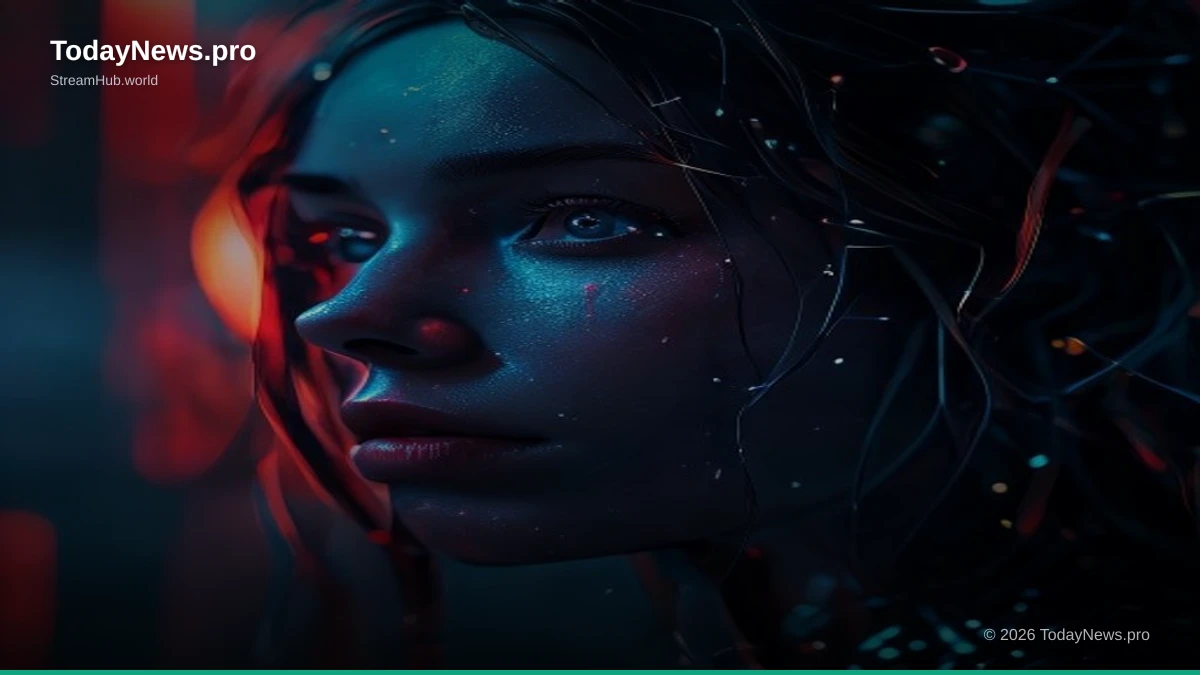
By 2026, artificial intelligence is no longer a novelty in creative fields; it's a fundamental force, influencing an estimated 40% of all new artistic and media content produced globally, a figure projected to climb past 60% by 2030.
The Algorithmic Muse: A New Dawn for Creativity
The year is 2026, and the world of art, music, literature, and design is undergoing a profound metamorphosis. Gone are the days when artificial intelligence was relegated to the realm of analytical tasks or simple automation. Today, AI has emerged as a potent, even indispensable, creative partner, a digital muse capable of generating novel ideas, pushing artistic boundaries, and democratizing access to creative tools. This isn't science fiction; it's the palpable reality shaping the landscape of human ingenuity. The sheer volume of AI-generated art, music, and literature entering the market has become staggering, forcing a re-evaluation of what constitutes creativity, authorship, and even the very definition of art itself. As algorithms become more sophisticated, their ability to understand nuance, evoke emotion, and construct complex narratives challenges our preconceived notions of human-exclusive artistic expression. The integration is so deep that distinguishing between human-conceived and AI-assisted works is becoming increasingly difficult, blurring lines and sparking vibrant debates across academic, artistic, and public spheres. This evolution is not merely about new tools; it’s about a fundamental reimagining of the creative process.
For decades, the idea of machines creating art was a philosophical curiosity, explored in speculative fiction and early computational art experiments. However, the rapid advancements in machine learning, particularly in areas like neural networks and transformer architectures, have transformed this curiosity into a practical, pervasive reality. The ability of AI models to process vast datasets of existing human creations – from classical paintings and symphonies to contemporary novels and film scripts – and then to synthesize entirely new works in a similar, or even novel, style is astonishing. This capacity for learning and extrapolation has unlocked unprecedented creative potential, moving AI from a passive observer to an active participant in the artistic dialogue. The accessibility of these tools, often through user-friendly interfaces and cloud-based platforms, has also broadened the creative spectrum, enabling individuals without traditional artistic training to manifest their visions. This democratization is fostering a new wave of creators, empowered by algorithmic assistance.
The Democratization of Creative Tools
Perhaps one of the most significant impacts of AI in the creative sphere is its role in democratizing the creation process. Previously, producing high-quality art, music, or writing often required years of dedicated training, expensive equipment, and specialized software. Now, AI-powered tools can lower these barriers dramatically. A budding writer can use AI to brainstorm plot points, generate character descriptions, or even draft entire passages, acting as a tireless co-author. A musician can leverage AI to compose melodies, generate backing tracks, or explore intricate harmonic progressions. Visual artists can utilize AI to generate initial concepts, experiment with different styles, or create complex textures and backgrounds that would be prohibitively time-consuming or technically challenging to produce manually. This accessibility is empowering a broader demographic to engage with creative pursuits, fostering a more diverse and vibrant artistic ecosystem. It's a paradigm shift that moves creative expression from the exclusive domain of the highly skilled to a more inclusive space for all with an idea to share.
AI as an Idea Generator
Beyond merely replicating styles, AI is proving to be an exceptional engine for conceptual ideation. By analyzing trends, identifying patterns, and extrapolating from existing data in ways that transcend human cognitive limitations, AI can propose entirely novel concepts. For instance, an AI might identify overlooked connections between disparate artistic movements or suggest thematic juxtapositions that a human artist might not readily conceive. This capacity for divergent thinking, for exploring the "what ifs" of artistic possibility, positions AI not just as a tool for execution, but as a genuine source of inspiration. Artists are increasingly using AI prompts not just to generate finished pieces, but to kickstart their own creative thought processes, sparking new directions and pushing them beyond their usual stylistic comfort zones. The algorithms learn from an enormous corpus of human creation, enabling them to synthesize new possibilities that might not have emerged through purely human iterative development. This collaborative brainstorming is proving to be a powerful accelerant for artistic innovation.
Generative AI: The Catalyst for Artistic Evolution
Generative AI models, such as large language models (LLMs) for text and diffusion models for images, are the driving force behind this artistic revolution. These sophisticated algorithms can produce original content – text, images, music, code, and more – that is often indistinguishable from human-created work, and sometimes even surpasses it in technical complexity or conceptual novelty. The rapid evolution of these models has led to breakthroughs in realism, style transfer, and creative synthesis, making them indispensable tools for a growing number of artists and creators. Their ability to learn from immense datasets of existing art allows them to grasp complex aesthetic principles, understand thematic coherence, and generate output that resonates emotionally and intellectually. This is not simply a matter of imitation; it's about sophisticated pattern recognition, interpolation, and extrapolation that can lead to entirely new artistic expressions. The underlying technology, powered by deep learning and vast computational resources, allows for an unprecedented level of detail and creativity.
The core of generative AI's impact lies in its capacity to learn and then create. Models are trained on massive datasets, absorbing patterns, styles, and structures from millions of examples. For text generation, this means understanding grammar, narrative flow, character development, and stylistic nuances across genres. For image generation, it involves learning about composition, color theory, lighting, and the representation of objects and scenes. When prompted, these models don't just recall information; they synthesize new outputs based on their learned understanding. This process allows them to generate novel stories, paint unique landscapes, compose original melodies, or even design innovative product prototypes. The sophistication of these models means that the output is not merely derivative; it often exhibits a degree of emergent creativity, producing results that surprise even their creators. This ability to generate truly novel content is what sets generative AI apart and makes it such a powerful force in reshaping human creativity.
Text Generation: From Drafts to Discourse
In literature and journalism, generative AI has become an invaluable assistant. LLMs can draft articles, summarize complex documents, brainstorm plotlines for novels, write poetry, and even generate dialogue for screenplays. While human oversight remains crucial for fact-checking, nuance, and emotional depth, AI can significantly accelerate the writing process, freeing up creators to focus on higher-level conceptual work and refinement. Journalists at "TodayNews.pro" are increasingly leveraging AI for preliminary research, generating initial drafts of routine reports, and identifying trending topics. This allows our human reporters to dedicate more time to in-depth investigative journalism and complex storytelling. The ability to quickly generate coherent and contextually relevant text has also opened up new avenues for interactive storytelling and personalized content creation, where narratives can adapt dynamically to reader input.
Image and Visual Arts: Pixels and Possibilities
The visual arts have witnessed perhaps the most dramatic and visible impact of generative AI. Diffusion models and GANs (Generative Adversarial Networks) can produce photorealistic images, fantastical illustrations, and abstract art pieces with astonishing detail and creativity. Artists are using these tools to generate concept art, create unique textures, experiment with styles, and even produce finished artworks. The accessibility of these tools has led to a surge in AI-generated art exhibitions and online galleries, sparking conversations about originality, authorship, and the future of traditional art forms. Some artists have embraced AI as a direct collaborator, guiding the algorithms with intricate prompts to achieve specific aesthetic visions, while others use it as a rapid prototyping tool to explore a multitude of visual ideas before committing to a final piece. The results range from breathtakingly beautiful to eerily surreal, pushing the boundaries of what is visually conceivable.
Music and Sound Design: Algorithmic Harmonies
The realm of music composition and sound design is also being transformed. AI can generate original melodies, harmonies, rhythms, and even complete musical pieces in various genres. It can assist in sound mixing, create custom sound effects, and even generate personalized soundtracks for games or films. Musicians are using AI to overcome creative blocks, explore new sonic palettes, and generate backing tracks for their compositions. AI-powered tools can analyze a composer's existing work and suggest new melodic or harmonic ideas that are consistent with their style, or conversely, propose entirely new directions that break from convention. The ability to generate music on demand, tailored to specific moods or requirements, is opening up new possibilities for media production, advertising, and interactive entertainment. The field of generative music is rapidly expanding, with AI composers becoming increasingly sophisticated and capable of producing emotionally resonant and complex musical arrangements.
Beyond Imitation: AI as a Collaborative Partner
The narrative surrounding AI in creativity is rapidly evolving from one of simple imitation to one of genuine collaboration. Instead of viewing AI as a tool that merely replicates existing styles, forward-thinking creators are embracing it as a partner that can augment their own abilities, spark new ideas, and push their creative boundaries. This partnership is characterized by a dynamic interplay, where human intention guides AI generation, and the AI's output, in turn, inspires and informs the human creator's next steps. This symbiotic relationship allows for a more iterative and exploratory creative process, leading to outcomes that might not have been possible through human effort alone. The algorithms are not replacing the artist; they are empowering them with new capabilities and perspectives, fostering a richer and more complex creative dialogue.
This collaborative paradigm shifts the focus from the AI as a sole creator to the human as a conductor, a curator, and a visionary who leverages AI's strengths. The human artist provides the initial concept, the emotional direction, the thematic intent, and the critical discernment. The AI, in turn, acts as an incredibly powerful, tireless, and unconventional assistant, capable of generating a multitude of variations, exploring vast stylistic possibilities, and executing complex tasks with precision. This interplay is crucial; raw AI output often requires human refinement, interpretation, and contextualization to achieve its full artistic potential. It's a process of co-creation, where the strengths of both human intuition and algorithmic processing power are combined to produce something truly novel and impactful. The most exciting developments are happening at this intersection, where human intent meets algorithmic possibility.
Prompt Engineering: The Art of Dialogue
The skill of "prompt engineering" has emerged as a critical new discipline. This involves crafting precise, evocative, and often complex instructions for AI models to achieve desired creative outcomes. It's a form of digital dialogue, where understanding the nuances of language, artistic terminology, and the AI's internal logic is paramount. Skilled prompt engineers can guide AI to generate specific styles, moods, compositions, and thematic elements, effectively translating their creative vision into actionable instructions for the algorithm. This is not merely about typing a few keywords; it often involves iterative refinement, experimenting with different phrasing, and understanding how the AI interprets abstract concepts. The ability to effectively communicate with generative AI is becoming a highly valued skill in many creative fields, acting as a bridge between human imagination and algorithmic execution.
Augmenting Human Skills
AI serves as a powerful amplifier for human creative skills. For a graphic designer, AI can generate dozens of logo variations in minutes, allowing them to explore a wider range of initial concepts before refining their favorites. For a composer, AI can help them overcome writer's block by suggesting melodic continuations or harmonic progressions, enabling them to maintain creative momentum. For a writer, AI can assist with research, outline generation, or even provide alternative phrasings, freeing them to concentrate on narrative arc and emotional depth. This augmentation doesn't diminish human skill; it elevates it, allowing creators to achieve more in less time and to explore creative avenues that might have previously been inaccessible due to technical limitations or sheer time constraints. It’s about leveraging computational power to enhance, not replace, human talent and vision.
AI as a Conceptual Catalyst
Beyond execution, AI is increasingly acting as a conceptual catalyst, presenting artists with novel ideas and unexpected juxtapositions that can spark entirely new creative directions. By analyzing vast datasets and identifying subtle patterns or correlations that humans might miss, AI can propose thematic linkages or stylistic fusions that are genuinely surprising. An artist looking for inspiration might feed a series of unrelated concepts into an AI, and the resulting output could reveal an unexpected thematic resonance or a unique visual metaphor that they hadn't considered. This capacity for "thinking outside the box" in a computational sense allows AI to act as a powerful brainstorming partner, helping artists to break free from their established patterns of thought and explore uncharted creative territories. This process of algorithmic serendipity can lead to groundbreaking artistic innovations.
The Shifting Landscape of Creative Industries
The widespread adoption of AI is fundamentally reshaping the economic and operational models of creative industries. From advertising and marketing to film production and game development, businesses are integrating AI to streamline workflows, personalize content, and create experiences at an unprecedented scale. This integration is leading to both opportunities and challenges, prompting a re-evaluation of job roles, skill requirements, and the very definition of creative output. Companies that effectively harness AI are gaining a competitive edge, while those that lag behind risk becoming obsolete. The speed of change necessitates continuous adaptation and strategic foresight to navigate this evolving landscape. The question is no longer *if* AI will impact these industries, but *how* deeply and *how quickly* they will adapt to its transformative power. The economic models are being rewritten, and the value chain of creative production is being reconfigured.
The advertising industry, for example, is using AI to generate personalized ad copy and visuals tailored to individual consumer preferences, optimizing campaigns for engagement and conversion. Film studios are employing AI for script analysis, special effects generation, and even for creating synthetic actors in certain scenarios. Game developers are using AI to create more dynamic and responsive game environments, intelligent non-player characters (NPCs), and procedurally generated content that offers endless replayability. The music industry is exploring AI for royalty-free background music generation, personalized playlist curation, and even for assisting artists in the songwriting and production process. These applications are not merely incremental improvements; they represent a paradigm shift in how creative content is conceived, produced, and consumed. The accessibility and power of these tools are driving a significant increase in the volume and diversity of creative output available to consumers.
New Business Models and Revenue Streams
AI is not just changing how creative content is made; it's also creating entirely new business models and revenue streams. Platforms offering AI-powered design tools, content generation services, and personalized creative experiences are emerging and gaining traction. The market for AI-generated art, music, and writing is expanding, with new marketplaces and licensing opportunities appearing. Furthermore, companies are developing AI-driven analytics tools to help creators understand audience engagement and optimize their content strategies. This has led to the rise of "AI artists" and "AI storytellers" as recognized roles, and the emergence of platforms that facilitate the sale and licensing of AI-generated creative assets. The ability to generate high-quality content at scale and at a lower cost is disrupting traditional production pipelines and opening up new economic frontiers for creative ventures. The accessibility of these tools also allows for niche markets and personalized content to flourish in ways that were previously impossible.
Impact on Employment and Skill Requirements
The integration of AI in creative industries inevitably raises questions about employment. While some tasks may be automated, leading to a potential displacement of certain roles, new opportunities are also emerging. There is a growing demand for individuals who can effectively use, manage, and collaborate with AI tools – prompt engineers, AI art directors, AI content strategists, and AI ethics consultants. The focus is shifting from purely manual execution to skills in creative direction, conceptualization, critical evaluation, and the ability to effectively integrate AI into existing workflows. Educational institutions and professional development programs are adapting to equip individuals with these new competencies, ensuring that the workforce can evolve alongside technological advancements. The future of creative employment lies in the synergy between human expertise and AI capabilities, creating hybrid roles that leverage the strengths of both.
Personalized Content and Audience Engagement
One of the most significant benefits AI brings to creative industries is its ability to enable hyper-personalization of content. By analyzing user data and preferences, AI can tailor everything from marketing messages and website experiences to story narratives and music recommendations. This leads to a more engaging and relevant experience for the audience, fostering deeper connections and increased loyalty. In media, this means dynamic storytelling where plot points or character interactions can adapt based on viewer choices, or music streaming services that curate playlists with an uncanny understanding of individual taste. This level of personalization was previously unattainable, but AI makes it scalable and efficient. The result is a more intimate and responsive creative landscape, where content feels uniquely crafted for each individual consumer. This has profound implications for how content is created and consumed, moving towards a more bespoke and interactive model.
Ethical Dimensions and the Future of Authorship
As AI-generated content proliferates, critical ethical questions arise, particularly concerning authorship, copyright, and intellectual property. When an AI creates a piece of art, who owns it? The programmer, the user who provided the prompt, or the AI itself? These questions are complex and are actively being debated in legal and philosophical circles. Furthermore, the potential for AI to generate misinformation or biased content necessitates robust ethical frameworks and responsible development practices. Ensuring transparency about AI's role in content creation and establishing clear guidelines for its use are paramount to maintaining trust and integrity in the creative ecosystem. The legal frameworks surrounding intellectual property are struggling to keep pace with the rapid advancements in AI, leading to ongoing litigation and legislative discussions. The future of authorship is being redefined in real-time.
The issue of copyright is particularly thorny. Current copyright laws are largely designed around human creators and their original works. Applying these laws to AI-generated content presents significant challenges. If an AI is trained on copyrighted material, does its output constitute infringement? If AI can produce novel works, can it hold copyright? These are not abstract academic discussions; they have real-world implications for artists, businesses, and the legal system. Many jurisdictions are grappling with how to define ownership and protect creative works in the age of AI. The potential for AI to generate content that is derivative of existing copyrighted material, but technically novel enough to evade current definitions of infringement, poses a significant challenge to the established order of intellectual property rights. The global community is in a race to establish clear and equitable legal precedents.
Copyright and Ownership Quandaries
The question of copyright for AI-generated works remains a contentious area. In many legal systems, copyright protection is granted to original works of authorship created by a human. This poses a challenge for content created solely by AI, as there is no human author in the traditional sense. Some legal interpretations suggest that the copyright might belong to the individual or entity that directed the AI, akin to commissioning a work. Others argue for new legal frameworks that acknowledge AI as a creative agent, or for a public domain status for purely AI-generated content. The landscape is constantly shifting, with court cases and legislative proposals attempting to address these evolving realities. The World Intellectual Property Organization (WIPO) is actively engaged in discussions to develop international guidelines. For instance, a recent report from the U.S. Copyright Office highlighted the need for clarity regarding the human authorship requirement for copyright registration.
Reuters Article on AI CopyrightBias and Misinformation in AI Output
AI models learn from the data they are trained on, and if that data contains biases – whether racial, gender, or cultural – the AI's output can reflect and even amplify those biases. This can lead to the creation of content that is discriminatory, stereotypical, or perpetuates harmful narratives. Furthermore, the ease with which AI can generate realistic-looking text and images makes it a potent tool for spreading misinformation and deepfakes. Developers and users must be vigilant in identifying and mitigating bias, and robust systems for content moderation and verification are becoming increasingly essential. Transparency about the data sources used for training AI models, and the implementation of fairness metrics, are crucial steps in addressing these ethical concerns. The potential for AI to be weaponized for disinformation campaigns is a significant societal risk that requires ongoing attention and proactive countermeasures.
The Evolving Definition of Artist
The advent of AI challenges our traditional understanding of what it means to be an "artist." If an AI can generate compelling visual art, music, or literature, does the individual who prompts the AI qualify as an artist? Many argue that the creative intent, the conceptualization, and the curatorial judgment involved in guiding AI are artistic acts in themselves. Others maintain that true artistry requires a direct human touch, personal experience, and emotional expression. This debate is pushing us to reconsider the essence of creativity. Perhaps the definition of an artist will expand to include those who excel at collaborating with intelligent machines, acting as visionary directors of algorithmic expression. The conversation is ongoing and will likely lead to a broader, more inclusive understanding of artistic creation in the years to come. The human role is evolving from a solitary creator to a conductor of creative forces, both human and artificial.
Navigating the Algorithmic Canvas: Skills for the Future
The rapid integration of AI into creative processes necessitates a recalibration of essential skills for professionals and aspiring creators alike. While traditional artistic competencies remain valuable, new proficiencies are becoming indispensable. These include the ability to effectively communicate with AI through prompt engineering, understand AI’s limitations and capabilities, and possess a strong critical faculty to curate and refine AI-generated output. Furthermore, an appreciation for ethical considerations, an understanding of data literacy, and a capacity for continuous learning are crucial for navigating this evolving landscape. The future belongs to those who can seamlessly blend human intuition and creative vision with the powerful capabilities of artificial intelligence.
The notion of "prompt engineering" as a core skill highlights the interactive nature of AI-assisted creation. It’s not just about having an idea, but about being able to translate that idea into a language that an AI can understand and execute effectively. This requires a blend of linguistic precision, imaginative foresight, and an understanding of how AI models interpret input. Beyond this, critical evaluation skills are paramount. AI can generate a vast amount of content, but human discernment is needed to identify what is truly valuable, artistically significant, or ethically sound. This involves a deep understanding of aesthetics, cultural context, and narrative coherence. The ability to iterate and refine AI outputs, guiding the machine towards a desired outcome, becomes a key artistic practice.
Mastering Prompt Engineering
Prompt engineering is more than just typing keywords; it’s an art form in itself. It involves understanding how to construct clear, descriptive, and contextually rich prompts to guide generative AI models. This includes specifying desired styles, moods, subjects, compositions, and even technical parameters like resolution or lighting. Experienced prompt engineers often employ a systematic approach, iterating through multiple prompts, refining them based on the AI's output, and experimenting with different phrasing to achieve nuanced results. This skill requires a deep understanding of the AI model’s capabilities and limitations, as well as a creative imagination to envision the potential of the generated output. It bridges the gap between human intent and algorithmic execution, becoming a crucial skill for anyone seeking to leverage AI for creative purposes. The ability to communicate effectively with AI is the new literacy of the digital creative age.
Critical Evaluation and Curation
As AI becomes more adept at generating content, the human role of critical evaluation and curation becomes even more vital. Creators are tasked with sifting through vast amounts of AI-generated material to identify the most compelling, original, and relevant outputs. This requires a sophisticated understanding of artistic principles, aesthetic judgment, and an awareness of current trends and cultural contexts. The ability to discern quality, to identify what resonates emotionally or intellectually, and to select and refine AI-generated elements into a cohesive and impactful final piece is a hallmark of successful AI-assisted creativity. This curation process is not merely about selection; it's about making informed artistic decisions that elevate the AI's raw output into something truly meaningful and impactful. It's the human touch that imbues the AI's creations with purpose and resonance.
Ethical Awareness and Responsible Use
Navigating the ethical landscape of AI in creativity is paramount. This includes understanding the potential for bias in AI-generated content, being aware of issues surrounding intellectual property and copyright, and ensuring transparency about the role of AI in the creative process. Responsible use also involves actively working to mitigate harm, such as the creation of misinformation or deepfakes, and advocating for fair practices within the industry. Creators who prioritize ethical considerations will build greater trust with their audiences and contribute to a more responsible and sustainable creative ecosystem. The future of AI in creativity depends on a collective commitment to ethical development and application, ensuring that these powerful tools are used for good.
Case Studies: AIs Impact Across Disciplines
The transformative influence of AI is evident across a wide spectrum of creative disciplines. From the hyper-realistic digital paintings generated by advanced diffusion models to the intricate musical compositions produced by AI algorithms, the applications are diverse and impactful. In the realm of literature, AI is assisting authors in plot development and character creation, while in game development, it's enabling the creation of more dynamic and responsive virtual worlds. These case studies illustrate not just the capabilities of AI, but also the innovative ways in which human creators are collaborating with these technologies to push artistic boundaries and redefine creative possibilities.
Consider the work of digital artist Refik Anadol, whose large-scale AI-driven data sculptures transform vast public datasets into mesmerizing visual experiences. His projects, often displayed in prominent public spaces, demonstrate how AI can be used to reveal hidden patterns and beauty within complex information. In music, companies like Amper Music have developed AI systems that can compose original soundtracks for videos and other media, allowing content creators to access custom music quickly and affordably. These examples are just a glimpse into the growing impact of AI, showcasing its potential to democratize access to sophisticated creative tools and enable new forms of artistic expression.
AI in Digital Art and Visual Media
Digital artists are leveraging AI tools like Midjourney, Stable Diffusion, and DALL-E 2 to generate stunning visuals, from photorealistic portraits to surreal dreamscapes. These platforms allow artists to experiment with an infinite array of styles, concepts, and compositions with unprecedented speed. For instance, artists are using AI to generate concept art for films and video games, design unique textures and patterns for digital art, and even create entire virtual worlds. The ability to generate complex imagery with simple text prompts has democratized visual creation, allowing individuals with limited traditional art skills to bring their imaginative visions to life. The resulting artworks often possess a unique aesthetic that blends algorithmic precision with human-guided creativity, pushing the boundaries of visual storytelling and design. The accessibility of these tools has led to a surge in independent artists and designers who can now compete with larger studios.
AIs Role in Music and Audio Production
In the music industry, AI is revolutionizing composition and production. Tools like Google's Magenta project and OpenAI's Jukebox can generate original musical pieces in various styles, often with impressive coherence and emotional depth. Musicians are using AI to brainstorm melodic ideas, create backing tracks, and even assist in mastering and mixing their tracks. AI can analyze vast libraries of music to identify patterns and predict what will sound pleasing to the ear, offering composers new avenues for exploration. Furthermore, AI-powered audio tools are being used for sound design in film and games, generating realistic sound effects and immersive soundscapes. The ability to generate custom music on demand for specific moods or contexts is transforming areas like advertising and content creation, making sophisticated audio production more accessible than ever before. The emergence of AI-generated full-length albums signifies a new frontier in musical creation.
AI in Writing and Narrative Creation
Generative AI models are proving to be powerful allies for writers. Large Language Models (LLMs) like GPT-4 can assist in drafting articles, generating story ideas, writing poetry, creating dialogue, and even summarizing complex texts. Novelists are using AI to brainstorm plot twists, develop character backstories, and explore alternative narrative paths. Journalists are employing AI for preliminary research, fact-checking assistance, and generating routine reports, freeing up human journalists for more in-depth investigative work. The ability to quickly generate coherent and contextually relevant text has also opened up possibilities for interactive fiction and personalized storytelling, where narratives can adapt dynamically to reader input. While human oversight remains critical for nuance, originality, and emotional depth, AI significantly accelerates the writing process and opens up new creative avenues for storytelling. The potential for AI-generated content to be used in educational materials and professional documentation is also expanding rapidly.