

 Marcus Thorne
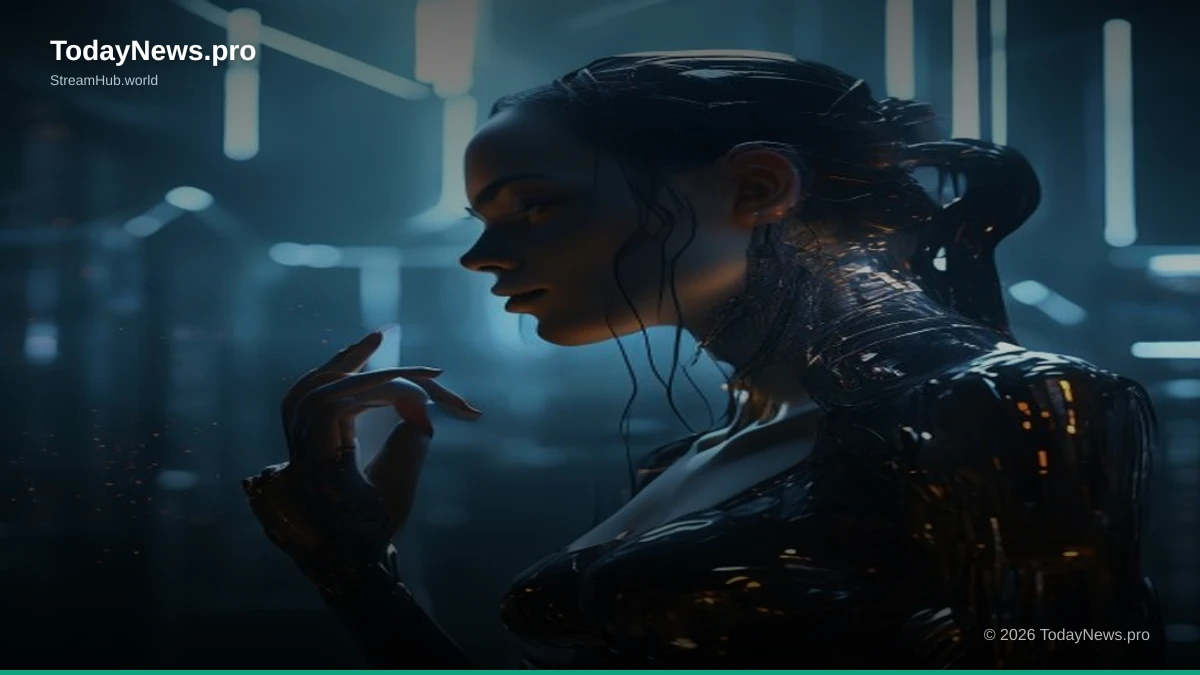
The global market for generative AI is projected to reach $110.8 billion by 2030, indicating a seismic shift in how creative industries operate and how human ingenuity is expressed. This exponential growth signifies more than just technological advancement; it represents a fundamental reshaping of the very definition of creativity itself, ushering in an era where human artists and artificial intelligences are increasingly intertwined.
The Algorithmic Muse: How AI is Reshaping Human Creativity
The concept of creativity has long been considered a uniquely human attribute, a spark of inspiration born from emotion, experience, and intuition. However, the rapid advancements in artificial intelligence, particularly in the realm of generative models, are challenging this deeply held belief. AI is no longer merely a tool to assist human artists; it is evolving into a collaborator, a co-creator, and in some instances, a progenitor of entirely novel artistic expressions.
This transformation is not a singular event but a multifaceted revolution impacting every creative discipline. From the visual arts and music composition to literature and game development, AI is introducing new methodologies, accelerating workflows, and even democratizing access to creative tools previously available only to seasoned professionals. The implications are profound, prompting a re-evaluation of authorship, originality, and the very essence of what it means to be a creator in the 21st century.
From Tools to Collaborators: The Evolution of AI in the Creative Process
Initially, artificial intelligence served as a sophisticated assistant in creative fields. Think of AI-powered editing software that suggests stylistic improvements, or predictive text algorithms that help writers overcome writer's block. These applications focused on enhancing efficiency and augmenting existing human capabilities.
However, the advent of deep learning and neural networks has enabled AI to move beyond mere assistance. Generative Adversarial Networks (GANs) and large language models (LLMs) can now produce original content that often indistinguishable from human-created work. This shift marks AI's transition from a passive tool to an active participant in the creative dialogue.
The Rise of Generative AI
Generative AI models are trained on vast datasets of existing creative works – images, music, text, and more. Through complex algorithms, they learn patterns, styles, and structures, enabling them to generate new content that exhibits similar characteristics. This capability has opened up unprecedented avenues for artistic exploration.
For instance, AI can now generate photorealistic images from simple text prompts, compose original musical pieces in various genres, and even write entire scripts for films or novels. This transformative power is democratizing creativity, allowing individuals with limited traditional artistic skills to bring their ideas to life.
AI as a Creative Partner
The most exciting development is the emergence of AI as a genuine creative partner. Instead of dictating the outcome, AI can engage in a dynamic, iterative process with human creators. Artists can provide initial concepts, and AI can offer variations, suggest unexpected directions, or even generate entirely new elements that the human might not have conceived.
This collaborative dynamic fosters a unique synergy, where human intuition and AI's computational power combine to push the boundaries of artistic possibility. It's a partnership that can lead to novel aesthetics and innovative forms of expression that would have been impossible with human effort alone.
The Generative Revolution: AIs Impact on Visual Arts and Design
The visual arts have been one of the most visibly transformed domains by generative AI. Text-to-image models have exploded in popularity, allowing anyone with an idea to conjure complex and often stunning visuals with simple descriptive language. This has democratized image creation to an unprecedented degree.
Platforms like Midjourney, DALL-E 2, and Stable Diffusion have become household names, enabling users to generate everything from fantastical landscapes to hyperrealistic portraits with remarkable ease. The artistic community is actively engaging with these tools, exploring their potential for concept art, illustration, and even fine art creation.
Painting with Pixels: AI as a Visual Artist
AI-generated art is no longer a novelty; it's a burgeoning art form in its own right. Artists are using AI to generate initial concepts, explore different stylistic interpretations of a theme, or create entirely new visual languages. The process often involves a back-and-forth dialogue between the human artist and the AI, refining prompts and guiding the output.
This has led to debates about authorship. When an AI generates an image based on a human's prompt, who is the artist? Is it the person who wrote the prompt, the developers of the AI, or the AI itself? This ambiguity is prompting a re-examination of copyright laws and intellectual property in the digital age.
Beyond the Brushstroke: AI in Graphic Design and Architecture
In graphic design, AI is revolutionizing the creation of logos, marketing materials, and user interfaces. AI algorithms can generate numerous design options based on brand guidelines and aesthetic preferences, significantly reducing the time spent on initial concept development.
Similarly, in architecture, AI is being used for generative design, exploring thousands of design possibilities based on specific constraints and goals, such as optimizing for natural light, energy efficiency, or structural integrity. This allows architects to discover innovative and highly efficient building forms.
Composing the Future: AIs Influence on Music and Sound
The realm of music, often seen as the most abstract and emotionally resonant art form, is also being profoundly impacted by AI. Generative music models are capable of creating original melodies, harmonies, and even full orchestral arrangements across a wide spectrum of genres.
These AI systems can learn from vast libraries of existing music, understanding patterns of rhythm, tempo, and instrumentation. This allows them to generate music that is not only technically proficient but also emotionally evocative, blurring the lines between human and machine composition.
Melodies from Machines: AI Music Generation
AI-powered music generators can assist composers by providing thematic ideas, generating background scores, or even producing complete tracks for various applications, from film scores to background music for videos. Tools like Amper Music, AIVA, and Google's Magenta project are at the forefront of this revolution.
While some AI-generated music is intended to be a final product, others are used as starting points for human musicians. A composer might take an AI-generated melody and develop it further, adding their own unique touch and emotional depth. This collaborative approach ensures that the human element remains central to the creative process.
| AI Music Generator | Primary Function | Genre Focus | Output Format |
|---|---|---|---|
| AIVA | Classical and Cinematic Scores | Orchestral, Electronic | MIDI, WAV |
| Amper Music | Royalty-Free Background Music | Pop, Electronic, Ambient | WAV, MP3 |
| Google Magenta | Experimental and Generative Music | Diverse, often novel | MIDI, WAV, MP3 |
| Soundraw | Customizable AI Music | Wide range, user-driven | WAV, MP3 |
The Algorithmic Orchestra: AI in Sound Design and Production
Beyond composition, AI is also transforming sound design and music production. AI can be used to generate realistic sound effects, automatically mix and master tracks, or even create new sonic textures that have never been heard before. This accelerates post-production workflows and opens up new possibilities for sonic exploration.
For example, AI can analyze a piece of music and automatically balance the levels of different instruments, apply effects, and even suggest mastering settings. This empowers independent artists and small studios to achieve professional-sounding results without needing extensive technical expertise or expensive equipment.
Narratives Crafted by Code: AI in Literature and Screenwriting
The written word, perhaps the most direct conduit of human thought and emotion, is also seeing AI make significant inroads. Large language models are capable of generating coherent and contextually relevant text, paving the way for AI-assisted writing in literature, journalism, and screenwriting.
These models can help writers brainstorm ideas, overcome writer's block, generate draft content, and even suggest plot twists or character developments. The impact is particularly felt in areas requiring repetitive or formulaic writing, freeing up human writers for more complex and nuanced creative tasks.
Whispers from the Algorithm: AI-Assisted Writing
AI writing assistants can draft emails, articles, marketing copy, and even creative stories. While the quality can vary, the ability to quickly generate text can be invaluable for content creators, bloggers, and journalists. The output can then be refined and edited by human writers to imbue it with a unique voice and emotional depth.
The ethical considerations here are paramount. Ensuring transparency about AI-generated content and maintaining journalistic integrity are critical. The goal is to augment, not replace, the human writer, preserving the authenticity and unique perspective that human authors bring.
For more on the ethical considerations of AI in writing, see Wikipedia's entry on AI and Creativity.
The Unfolding Plot: AI in Game Development and Interactive Storytelling
In game development, AI is revolutionizing character dialogue, quest generation, and even the creation of dynamic game worlds. AI can generate endless variations of dialogue for non-player characters (NPCs), making games feel more alive and responsive to player actions.
Furthermore, AI can be used to procedurally generate entire game levels, environments, and storylines, offering players unique and replayable experiences. This not only saves development time but also allows for the creation of vast, emergent narratives that adapt to player choices in real-time.
The potential for AI in interactive storytelling is immense, promising experiences where narratives unfold dynamically based on user input, creating truly personalized and engaging journeys.
Ethical Labyrinths and Creative Frontiers
As AI becomes more deeply integrated into creative processes, a host of ethical questions arise. The very definition of creativity, authorship, and originality is being challenged, forcing us to confront new paradigms.
The rapid advancement of AI in creative fields necessitates careful consideration of its societal impact, ensuring that technology serves to augment human potential rather than diminish it.
Authorship, Copyright, and the Human Element
One of the most pressing issues is that of authorship and copyright. When an AI generates a piece of art, music, or text, who owns the intellectual property? Is it the AI developer, the user who provided the prompt, or the AI itself? Current legal frameworks are not adequately equipped to address these novel scenarios.
The courts are actively grappling with these copyright challenges, and the outcomes will have significant implications for the future of creative industries.
Furthermore, the debate about the "human element" in art is intensifying. While AI can mimic style and form, many argue that it lacks the lived experience, emotional depth, and subjective consciousness that are integral to true artistic expression. The question remains whether AI can ever truly "feel" or convey the profound emotions that human artists channel into their work.
Democratizing Creativity or Devaluing It?
AI has the potential to democratize creativity, giving individuals without traditional artistic training the ability to express themselves visually, musically, or literarily. This can lead to a more inclusive and diverse creative landscape.
However, there is also a concern that the ease with which AI can generate content might devalue human craftsmanship and skill. If anyone can generate a photorealistic image with a few keystrokes, what becomes of the years of practice and dedication required to master traditional artistic techniques?
The Future is a Collaboration: Human-AI Synergy
The most likely future for creativity is one of deep collaboration between humans and AI. Instead of viewing AI as a competitor, we should embrace it as a powerful new partner. AI can handle the laborious tasks, generate endless variations, and provide novel perspectives, while humans provide the vision, intent, and emotional resonance.
This synergy can unlock unprecedented levels of innovation, leading to entirely new art forms, storytelling techniques, and modes of expression. The algorithmic muse is not here to replace human creativity, but to inspire and amplify it, ushering in an era of unparalleled creative possibility.