

 Sarah Jenkins
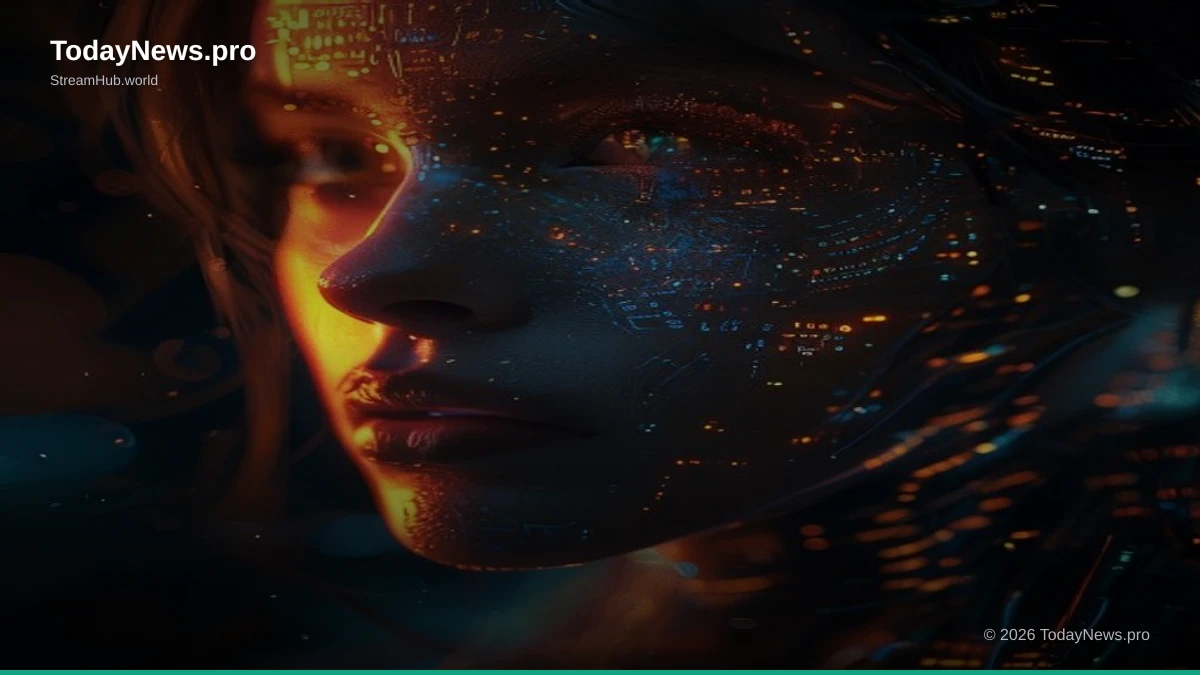
The Algorithmic Muse: A New Dawn for Creativity
For millennia, art has been the exclusive domain of human ingenuity, a reflection of our emotions, experiences, and unique perspectives. The artist, armed with tangible tools and an intangible spirit, translated internal worlds into external forms. Today, this landscape is undergoing a seismic shift. Artificial intelligence, once a concept confined to science fiction, has emerged as a potent collaborator, a digital muse capable of generating, augmenting, and even conceptualizing art in ways previously unimaginable. This transformation is not merely about efficiency; it is fundamentally altering our understanding of creativity, authorship, and the very essence of artistic endeavor. The algorithmic muse is here, and its influence is reshaping the canvases, melodies, and narratives of our time.
The advent of sophisticated AI models, particularly those based on deep learning and neural networks, has unlocked unprecedented capabilities. These systems, trained on vast datasets of existing art, music, and literature, can now produce novel outputs that often defy easy categorization. They can mimic styles, synthesize new aesthetics, and even exhibit a form of emergent creativity that challenges our anthropocentric views of artistic production. From photorealistic images generated from simple text prompts to original musical compositions that evoke specific emotions, AI is proving to be a versatile and powerful tool in the hands of both seasoned artists and curious newcomers.
This article delves into the multifaceted impact of AI across the creative spectrum. We will explore the technical underpinnings, the practical applications, the emerging ethical debates, and the profound implications for the future of art, music, and storytelling. As AI continues its rapid evolution, understanding its role is no longer an academic exercise but a crucial step in navigating the future of human expression. The lines between human and machine creativity are blurring, and the results are nothing short of revolutionary.
Generative Art: Pixels and Palettes Reimagined
The realm of visual arts has perhaps seen the most immediate and visually striking impact of AI. Generative adversarial networks (GANs) and diffusion models have become household names among digital artists and tech enthusiasts, democratizing the creation of complex and often breathtaking imagery. These AI systems learn from millions of existing images, identifying patterns, styles, and compositional elements. When fed a text prompt, they can synthesize entirely new visuals that are often indistinguishable from human-created art, and sometimes surpass it in novelty or technical execution.
From Text Prompts to Masterpieces
Tools like DALL-E 2, Midjourney, and Stable Diffusion have empowered individuals with no formal art training to visualize intricate concepts. A user might type "a surrealist painting of a clock melting into a desert landscape under a sky filled with bioluminescent jellyfish," and within seconds, the AI renders a unique interpretation. This capability has democratized visual creation, allowing for rapid prototyping of ideas, the generation of concept art for games and films, and the creation of unique digital assets for various platforms. The speed and versatility are astounding, enabling an iterative process of refinement through prompt engineering.
This new paradigm shifts the artist's role from sole creator to a curator and director of AI. The skill lies in crafting precise and evocative prompts, understanding how the AI interprets language, and iterating on the outputs to achieve a desired aesthetic. It's a form of digital alchemy, where words are transformed into visual realities.
AI as a Style Emancipator
Beyond mere image generation, AI is being used to explore novel aesthetic territories. AI models can be trained on specific artistic styles, from the Renaissance masters to contemporary abstract expressionism. Artists can then use these models to create new works that blend these styles, or apply a learned style to an entirely new subject matter. This allows for a playful exploration of art history and the creation of hybrid aesthetics that would be painstakingly difficult, if not impossible, to achieve through traditional methods. The potential for creating entirely new art movements, driven by algorithmic innovation, is very real.
The sheer volume of art being generated is staggering. A single prompt can yield dozens of variations, each with subtle differences. This abundance presents both opportunities and challenges, forcing us to re-evaluate what constitutes unique artistic value in an era of effortless reproduction.
Key Players in Generative Art
The landscape of generative art is constantly evolving, with new models and platforms emerging regularly. The leading platforms have significantly lowered the barrier to entry for visual content creation.
The Symphony of Code: AIs Impact on Music Creation
Music, with its inherent mathematical structures and emotional resonance, has also become a fertile ground for AI innovation. AI-powered tools are assisting composers, producers, and even amateur musicians in generating melodies, harmonies, rhythms, and even complete musical pieces. The ability of AI to analyze vast musical corpora allows it to learn complex harmonic progressions, stylistic nuances, and instrumental voicings.
AI as a Compositional Partner
Platforms like Amper Music, AIVA (Artificial Intelligence Virtual Artist), and Google's Magenta project are enabling musicians to overcome creative blocks and explore new sonic territories. A composer might provide a mood, genre, and tempo, and the AI can generate a full orchestral score or a catchy electronic loop. This is not about replacing human creativity but augmenting it, providing rapid ideation and freeing up composers to focus on higher-level artistic decisions, such as arrangement, performance nuance, and emotional expression.
The process can involve iterative feedback loops. A human musician might select a generated melody, tweak it, and then ask the AI to develop harmonies that complement it. This collaborative approach allows for a rapid exploration of musical ideas, pushing the boundaries of traditional compositional techniques.
From Sound Design to Performance
AI's influence extends beyond composition to sound design and even performance. AI can generate entirely new instrument sounds or modify existing ones in novel ways. Furthermore, AI is being used to create realistic virtual performers or to analyze and mimic the performance styles of human musicians. This opens up possibilities for personalized music generation, adaptive soundtracks for games and films that respond to player actions or viewer emotions, and new forms of interactive musical experiences.
The potential for AI to democratize music creation is also significant. Individuals with a passion for music but lacking formal training can now use AI tools to bring their sonic ideas to life. This could lead to a more diverse and vibrant musical landscape, with a wider range of voices and styles emerging.
The Evolution of Music Production Tools
The integration of AI into Digital Audio Workstations (DAWs) and other music production software is becoming increasingly common, offering features that streamline complex tasks and inspire new creative directions.
| AI Music Tool | Primary Function | Typical User |
|---|---|---|
| AIVA | Composition of orchestral and film scores | Film composers, Game developers |
| Amper Music | Customizable track generation for media | Video editors, Content creators |
| Google Magenta | Experimentation in AI music generation and performance | Researchers, Musicians, Developers |
| Soundraw | AI-generated music for content creators | Social media influencers, Podcasters |
Narrative Architects: AI and the Future of Storytelling
The art of storytelling, perhaps the most fundamental of human creative expressions, is also being profoundly reshaped by AI. From generating plot ideas and character backstories to writing entire scripts and novels, AI is proving to be a surprisingly capable narrative architect. Large language models (LLMs) like GPT-3 and its successors have demonstrated an impressive ability to understand context, maintain coherence, and generate human-like text.
From Plot Bunnies to Full-Fledged Novels
Writers can use AI as a powerful brainstorming tool. If a writer is stuck on a plot point, they can feed the existing narrative into an LLM and ask for suggestions on how to proceed. AI can generate character dialogues, descriptive passages, or even entirely new plot twists. This can accelerate the writing process and help overcome writer's block. Some AI models are even capable of generating entire short stories or chapters based on a simple premise.
Tools like Sudowrite and Jasper.ai are specifically designed to assist writers, offering features such as story generation, paragraph expansion, and rephrasing. This allows authors to explore multiple narrative paths quickly and efficiently, refining their ideas before committing to a particular direction. The goal is not to automate writing entirely, but to empower writers with a sophisticated co-pilot.
AI in Screenwriting and Game Development
The film and gaming industries are also exploring the potential of AI in narrative creation. AI can assist in generating dialogue for non-player characters (NPCs) in video games, creating dynamic storylines that adapt to player choices, or even helping to draft screenplays. The ability to generate vast amounts of dialogue and narrative variations can significantly speed up development cycles and allow for more complex and emergent storytelling experiences.
The potential for AI to generate personalized stories for individual readers or viewers is also a fascinating prospect. Imagine a book or a movie that subtly adapts its plot or character arcs based on your preferences or past interactions. This level of personalization could revolutionize how we consume narrative content.
The Challenge of Authenticity and Voice
While AI can mimic human writing styles with remarkable accuracy, a persistent question remains about authenticity and a unique authorial voice. Can an AI truly convey genuine emotion or a singular perspective? Currently, AI excels at synthesizing information and generating coherent text based on patterns it has learned. The nuanced understanding of human experience, the subjective interpretation of the world, and the unique life experiences that shape an author's voice are still areas where human creators hold a distinct advantage.
Ethical Brushstrokes and Copyright Conundrums
The rapid rise of AI-generated art, music, and literature has brought to the forefront a complex web of ethical considerations and legal challenges, particularly concerning copyright and intellectual property. As AI systems learn from vast datasets of existing works, questions arise about originality, ownership, and fair use.
The Ownership Quandary
Who owns the copyright to a piece of art generated by an AI? Is it the programmer who created the AI, the user who provided the prompt, or the AI itself? Current legal frameworks, designed for human creators, struggle to accommodate AI-generated content. In many jurisdictions, copyright protection is reserved for works created by human authors. This leaves a significant grey area for AI-generated outputs, potentially devaluing them or leaving them unprotected.
The debate extends to the training data itself. If an AI is trained on millions of copyrighted images without explicit permission, are the outputs derivative works? This has led to lawsuits against AI companies, such as the ongoing legal battles involving artists and AI image generators. The outcome of these cases will have profound implications for the future of AI-driven creative industries.
Bias in Algorithmic Creation
AI models are trained on data that reflects the biases present in society. This means that AI-generated art, music, and stories can inadvertently perpetuate or even amplify existing stereotypes related to race, gender, and culture. For instance, if a dataset predominantly features images of certain demographics in specific roles, the AI might reproduce those biases in its outputs. Addressing this requires careful curation of training data and ongoing efforts to de-bias AI algorithms.
The transparency of AI models, often referred to as the "black box" problem, also poses an ethical challenge. Understanding how an AI arrives at a particular creative output can be difficult, making it challenging to identify and rectify bias or to understand the generative process itself.
The Economic Impact on Artists
The accessibility and low cost of AI-generated content raise concerns about its potential to displace human artists, musicians, and writers. Freelance artists are already seeing a decrease in demand for certain types of work, as companies opt for faster and cheaper AI-generated alternatives. This economic pressure could force a reevaluation of compensation models and the value placed on human craftsmanship.
Conversely, AI tools can also empower artists, allowing them to produce more work, explore new styles, and reach wider audiences. The debate is not simply about replacement but about adaptation and the creation of new collaborative paradigms.
For further insights into the legal challenges surrounding AI and copyright, see the Reuters report on AI art copyright cases.
The Evolving Role of the Human Artist
The emergence of AI as a creative force does not signal the demise of human artistry, but rather a profound evolution of the artist's role. Instead of being solely the originator of every element, the human artist is increasingly becoming a conductor, a curator, and a conceptualizer, leveraging AI as a powerful tool to amplify their vision.
From Maker to Maverick
The traditional artist's journey often involved mastering intricate technical skills, whether it be brushwork, musical composition, or prose. While these skills remain valuable, the focus is shifting towards conceptualization and direction. The "prompt engineer," a term that has gained prominence, is becoming a crucial figure, demonstrating a new form of artistic literacy. The ability to articulate a vision through precise language, to understand the nuances of AI interpretation, and to iterate effectively is a skill in itself.
Artists are now exploring AI as a means to achieve outcomes that were previously impossible or prohibitively time-consuming. This can involve generating complex visual textures, creating intricate musical arrangements, or exploring a vast array of narrative possibilities. The human artist's role is to provide the spark of intent, the emotional core, and the discerning judgment that guides the AI's generative capabilities.
AI as a Catalyst for New Forms of Art
AI is not just a tool for replicating existing art forms; it is actively enabling the creation of entirely new ones. Interactive art installations that respond dynamically to audience presence, music that evolves in real-time based on environmental data, and stories that offer unique pathways for each reader are just a few examples of emerging AI-driven artistic mediums. These forms often blur the lines between creator and audience, and between the digital and physical worlds.
The artist's role in these new mediums is to design the interactive experience, to imbue the system with artistic intent, and to ensure that the technology serves a deeper creative purpose. It requires a multidisciplinary approach, often blending artistic sensibilities with an understanding of computational logic and user experience design.
This evolution demands adaptability and a willingness to embrace new technologies. Artists who can integrate AI into their workflows are likely to find themselves at the forefront of creative innovation, pushing the boundaries of what is possible and redefining what it means to be an artist in the 21st century. The human touch, in its capacity for emotion, intent, and subjective interpretation, remains indispensable.
Beyond the Horizon: The Next Wave of Algorithmic Artistry
The current capabilities of AI in art, music, and storytelling are remarkable, yet they represent just the nascent stages of a technological revolution. As AI models become more sophisticated, we can anticipate a future where algorithmic artistry is even more deeply integrated into our lives, leading to novel forms of expression and interaction.
AI as a Sentient Collaborator?
While current AI systems are sophisticated pattern-matching machines, future advancements might lead to AI that exhibits more emergent forms of consciousness or a deeper understanding of abstract concepts. Imagine AI that can not only generate art but also critique it, propose entirely new artistic philosophies, or engage in genuine dialogues about aesthetic intent. This raises profound philosophical questions about the nature of creativity and consciousness itself.
The development of more intuitive and naturalistic human-AI interfaces will also play a crucial role. As AI becomes more adept at understanding nuanced human emotion and intent, the collaboration between human and machine will become more seamless and profound.
The potential for AI to collaborate with other AI systems to generate entirely new forms of collective creativity is also a fascinating prospect. This could lead to emergent art forms and cultural expressions that are beyond the scope of individual human or even current AI capabilities.
Personalized and Adaptive Experiences
The trend towards personalization in content consumption will undoubtedly accelerate with AI. We can expect to see adaptive music that shifts its mood and tempo based on our current emotional state, stories that unfold differently for each reader based on their choices and preferences, and visual art that evolves over time. This could lead to deeply immersive and uniquely tailored artistic experiences.
The integration of AI into augmented reality (AR) and virtual reality (VR) environments also holds immense potential. Imagine stepping into a virtual art gallery where the exhibits are generated in real-time based on your interests, or a virtual concert hall where the music adapts to the collective mood of the audience. These experiences could redefine our relationship with art and entertainment.
The future promises a symbiotic relationship between human and artificial intelligence, where creativity is a shared endeavor, pushing the boundaries of imagination and reshaping the very definition of artistic expression. The algorithmic muse is not a replacement for human creativity, but an extraordinary expansion of its potential. For more on the philosophical implications of AI, explore Wikipedia's entry on the philosophy of artificial intelligence.