

 David Chen
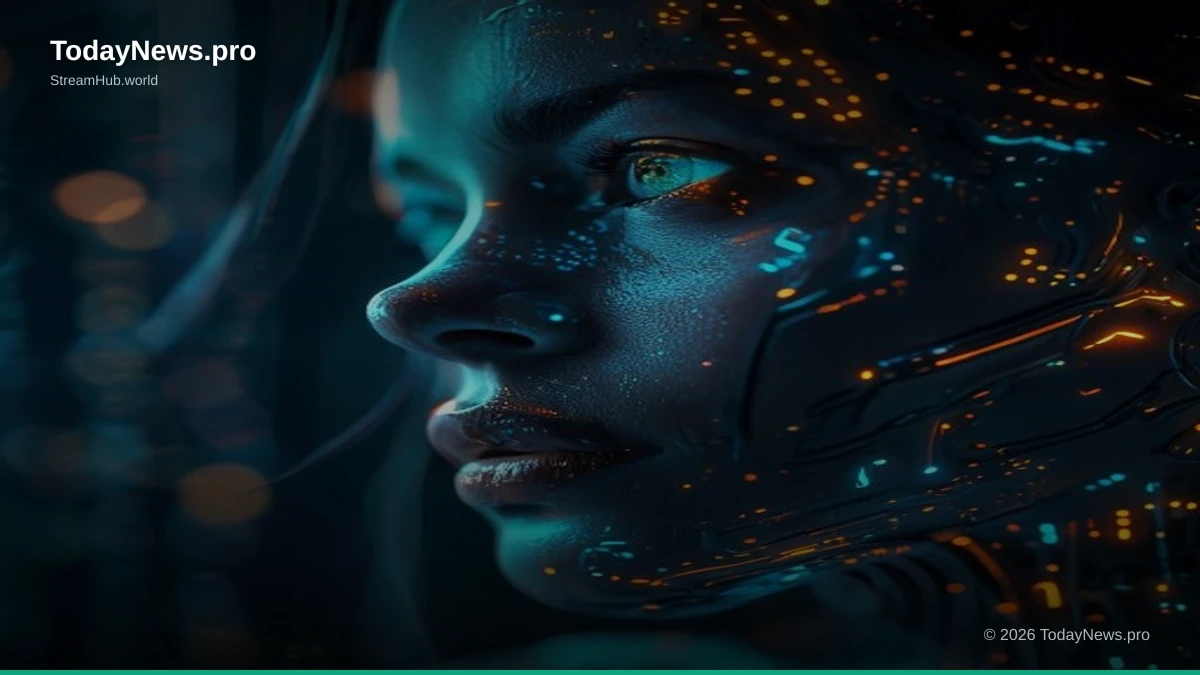
As of early 2024, the global market for generative AI is projected to reach over $110 billion by 2030, a testament to its rapidly expanding influence across numerous industries, with the creative sector experiencing a seismic shift.
The Algorithmic Muse: AIs Dawn in Creative Fields
For centuries, art, music, and storytelling have been considered uniquely human endeavors, born from the depths of emotion, experience, and imagination. Yet, the advent of sophisticated artificial intelligence is rapidly blurring these lines, ushering in an era where algorithms are not just tools, but increasingly, collaborators and even creators themselves. This rise of the "algorithmic creator" is fundamentally reshaping how we conceive, produce, and consume creative content.
From the visual arts to the sonic landscape and the intricate tapestry of narrative, AI-powered systems are demonstrating remarkable capabilities. These tools, often trained on vast datasets of existing human-created works, are learning to generate novel pieces that can evoke emotion, tell compelling stories, and push the boundaries of aesthetic expression. This phenomenon is not merely a technological curiosity; it represents a profound paradigm shift, prompting introspection about the very definition of creativity, authorship, and artistic value.
The implications are far-reaching, impacting individual artists, established industries, and the broader cultural discourse. Understanding this transformation requires a deep dive into the specific domains where AI is making its mark, the underlying technologies driving these advancements, and the complex ethical and philosophical questions that inevitably arise.
Defining the Algorithmic Creator
An algorithmic creator refers to an AI system capable of generating original content across various artistic mediums. Unlike traditional software that follows predefined instructions, these generative AI models learn patterns, styles, and structures from massive datasets. They can then synthesize this learned knowledge to produce entirely new outputs that exhibit characteristics of the data they were trained on, often with unexpected and emergent qualities.
The process typically involves complex machine learning techniques, most notably deep learning and transformer architectures. These algorithms are designed to identify intricate relationships within data, enabling them to understand and replicate artistic nuances. The output is not a mere copy but a novel amalgamation, a remix of learned styles and elements, often guided by user prompts or parameters.
The emergence of such systems challenges our anthropocentric view of creativity, suggesting that the creative impulse might be replicable, or at least mimicked, through computational processes. This shift forces us to re-evaluate what makes art "art" and who or what can be considered an "artist."
The Generative AI Toolkit
The technological backbone of algorithmic creation lies in generative AI models. These models, such as Generative Adversarial Networks (GANs) and diffusion models for visual art, and large language models (LLMs) for text and narrative, are at the forefront of this revolution. GANs, for instance, involve two neural networks—a generator and a discriminator—locked in a perpetual game of improvement. The generator creates art, and the discriminator tries to distinguish it from real art. This competitive process drives the generator to produce increasingly realistic and sophisticated outputs.
Diffusion models, a more recent development, work by gradually adding noise to an image and then learning to reverse the process, effectively "denoising" random data into coherent images. LLMs, like those powering ChatGPT, are trained on colossal amounts of text data and can generate human-like prose, poetry, scripts, and even code, by predicting the next word in a sequence based on the preceding context.
These technologies are becoming more accessible, with platforms offering user-friendly interfaces that allow individuals with minimal technical expertise to generate sophisticated creative works. This democratization of powerful creative tools is a key driver of the algorithmic creator's rise.
Generative Art: Pixels, Palettes, and Prompts
The visual arts have been one of the most visibly impacted domains by generative AI. Platforms like Midjourney, DALL-E, and Stable Diffusion have democratized the creation of stunning, often surreal, visual art from simple text prompts. Users describe their desired image – "a cyberpunk city at sunset, rendered in the style of Van Gogh," for example – and the AI generates a unique artwork within seconds.
This technology allows individuals who may lack traditional artistic skills to visualize their ideas with unprecedented ease. It also offers professional artists a powerful new tool for ideation, exploration, and even final piece creation. The speed and variety of outputs can accelerate the creative process significantly.
However, it also raises questions about originality and artistic intent. When an AI generates an image based on a prompt, who is the artist? Is it the person who wrote the prompt, the developers of the AI, or the AI itself? These are complex debates that are just beginning to unfold in galleries and courtrooms alike.
From Prompt to Masterpiece
The magic of generative art lies in the "prompt engineering" – the art of crafting precise and evocative text descriptions that guide the AI. The nuances of language, the inclusion of stylistic keywords, and the specification of artistic mediums all play a crucial role in the final output. A prompt can be as simple as "a cat wearing a hat" or as complex as "a bioluminescent forest clearing at midnight, with ethereal creatures dancing under a double moon, rendered in the style of a Japanese woodblock print, with a focus on atmospheric lighting and deep shadows."
The AI then interprets these instructions, drawing upon its vast training data of images and their associated text descriptions to synthesize a new visual representation. The process is iterative; users can refine prompts, generate variations, and even "inpainting" or "outpainting" to modify specific areas of an existing AI-generated image.
This accessibility has led to an explosion of AI-generated art shared online, from social media feeds to dedicated galleries. It has lowered the barrier to entry for visual creation, allowing a wider range of individuals to express their visual ideas.
The AI Art Market and Artist Reactions
The burgeoning AI art market is a mixed bag of excitement and apprehension. On one hand, AI-generated art is fetching significant prices at auction, and NFTs of AI art have seen substantial sales. Companies are integrating AI art into marketing campaigns and product designs. On the other hand, many traditional artists feel threatened by the perceived devaluation of their skills and the potential for AI to flood the market with content that might undercut human artists economically.
There's a growing debate about the ethical implications of training AI models on existing artists' work without explicit consent or compensation. Many artists argue that this constitutes a form of digital appropriation, especially when the AI can mimic their unique styles with uncanny accuracy. This has led to legal challenges and calls for greater transparency and regulation in AI model training data.
The future may well involve a hybrid approach, where AI serves as a powerful assistant for human artists, augmenting their capabilities rather than replacing them entirely. However, the economic realities and evolving public perception of art will undoubtedly shape this landscape.
The AI Symphony: Composing the Future of Music
The realm of music is also experiencing a profound transformation thanks to AI. Generative music AI can now compose original melodies, harmonies, and even full orchestral arrangements. Tools like Amper Music, Jukebox by OpenAI, and Google's MusicLM can create music tailored to specific moods, genres, or even video content, often in real-time.
This technology has significant implications for various sectors, from background music for videos and games to personalized soundtracks for advertising and content creators. Imagine a YouTuber needing a unique, royalty-free track for their video; an AI can generate a bespoke composition in minutes, perfectly matching the video's tone and length.
However, the question of musical soul and originality persists. Can an algorithm truly imbue music with the same emotional depth and human touch as a composer who draws from personal experiences and feelings? While AI can master technical aspects of composition, capturing the intangible essence of human emotion remains a frontier.
Algorithmic Melodies and Harmonies
AI in music composition leverages techniques similar to those used in visual art generation. Recurrent Neural Networks (RNNs) and transformer models are trained on vast libraries of musical data, learning patterns of melody, harmony, rhythm, and timbre. These models can then generate new sequences of notes that adhere to musical theory and established styles, or even create entirely novel sonic textures.
Some AI systems focus on generating specific elements, like a catchy melody or a robust bassline, which human musicians can then incorporate into their work. Others are capable of producing complete pieces, from simple jingles to complex instrumental arrangements. The ability to control parameters like tempo, key, instrumentation, and emotional tone allows for a high degree of customization.
For instance, a film composer might use an AI to quickly generate several thematic variations for a particular scene, saving considerable time in the early stages of the creative process. This augmentation of human creativity is a key benefit, allowing artists to explore more ideas and refine their compositions more efficiently.
The Business of AI Music
The commercial applications of AI-generated music are rapidly expanding. Companies are utilizing AI for royalty-free background music in advertisements, video games, and streaming content. This offers a cost-effective and efficient solution for a constant need for auditory backdrops. Furthermore, AI can generate personalized music experiences, adapting soundtracks in real-time based on a user's mood or activity.
However, the economic implications for human musicians and composers are a significant concern. The ability to generate vast amounts of music cheaply and quickly could potentially devalue human-created music and reduce opportunities for professional musicians. This has led to discussions about fair compensation and the establishment of new licensing models for AI-generated music.
The legal framework surrounding AI-generated music is also in its nascent stages. Questions of copyright ownership – who owns the music created by an AI? – and the ethical implications of using AI to replicate the styles of existing artists are yet to be fully resolved. The industry is at a crossroads, navigating the promise of innovation with the imperative of supporting human artistry.
Narrative Architectures: AI as Storyteller and Co-Author
Beyond visual and auditory arts, AI is making significant inroads into narrative storytelling. Large Language Models (LLMs) are capable of generating coherent and engaging text, including short stories, poetry, scripts, and even entire novels. They can adopt different writing styles, mimic character voices, and develop plotlines based on user inputs.
This capability opens up new avenues for content creation, from interactive fiction and personalized narratives to assisting human writers with brainstorming, outlining, and drafting. For example, an AI could generate multiple plot twists for a novel, or create dialogue options for a video game character, offering writers a wealth of possibilities to explore.
The question of "authorship" becomes even more pronounced here. If an AI generates a compelling story, who holds the copyright? Is it the user who provided the prompt, the developers of the AI, or is the work uncopyrightable as it lacks human authorship? These are legal and philosophical quandaries that are actively being debated and litigated.
The Power of Prompted Prose
LLMs like GPT-3, GPT-4, and Bard are trained on gargantuan datasets of text and code, allowing them to understand grammar, syntax, semantic relationships, and even stylistic nuances. When given a prompt, they predict the most probable sequence of words to form a coherent and contextually relevant response.
Writers can use these models to overcome writer's block, generate character backstories, flesh out plot details, or even draft entire scenes. For instance, a screenwriter might prompt an AI with: "Write a dialogue scene between a grizzled detective and a nervous witness in a dimly lit bar, where the witness is about to reveal a crucial piece of information about a stolen artifact." The AI would then generate a dialogue that attempts to capture the specified tone and narrative tension.
This collaborative aspect is where many see the greatest potential for AI in narrative. It's not about replacing writers, but about providing them with an exceptionally powerful and versatile assistant that can accelerate their creative process and help them explore new narrative territories.
Interactive Narratives and Personalized Stories
AI's ability to generate text dynamically also lends itself to interactive storytelling. In video games, AI can power non-player characters (NPCs) with more natural and context-aware dialogue, creating more immersive experiences. Imagine NPCs that can respond to player queries in a truly conversational manner, rather than relying on pre-scripted lines.
Furthermore, AI can be used to generate personalized narratives for readers. A story could be tailored to a specific reader's preferences, age group, or even their current emotional state. This could lead to a future where books and stories are not static entities but fluid, adaptive experiences designed to engage each individual user uniquely.
The potential for educational storytelling is also immense, with AI-generated narratives that can adapt to a student's learning pace and comprehension level, making complex subjects more accessible and engaging.
Ethical Labyrinths and Copyright Conundrums
The rapid rise of algorithmic creators has unearthed a complex web of ethical dilemmas and legal challenges, primarily centered around copyright, originality, and the potential for misuse.
One of the most contentious issues is the copyright of AI-generated works. Current copyright law in many jurisdictions, including the United States, requires human authorship for a work to be protected. This leaves AI-generated art, music, and literature in a legal gray area, raising questions about ownership and intellectual property rights.
The use of copyrighted material in AI training data is another significant concern. Many AI models are trained on vast datasets scraped from the internet, which often include copyrighted images, music, and texts. Artists and creators are increasingly vocal about their work being used without consent or compensation, leading to lawsuits and demands for greater transparency and ethical data sourcing.
The Copyright Conundrum
The fundamental question is: Who owns the copyright of a work created by an AI? Is it the user who provided the prompt, the developers of the AI model, or can the AI itself be considered an author? The U.S. Copyright Office, for example, has maintained that it will only register works created by human beings, rejecting copyright claims for works solely generated by AI.
This stance has led to creative workarounds, such as users heavily editing or modifying AI outputs to establish sufficient human authorship. However, the line between AI-generated content and human-modified content can be blurry, leading to potential disputes. The legal landscape is still evolving, and landmark court cases will likely shape future copyright regulations for AI-generated works.
Understanding these nuances is crucial for creators, developers, and consumers alike, as it impacts how these new forms of art can be protected, monetized, and distributed.
Data, Bias, and Misinformation
The training data used for AI models is critical. If this data contains biases – be it racial, gender, or cultural – the AI will inevitably perpetuate and amplify these biases in its outputs. For example, an AI image generator trained predominantly on images of male CEOs might disproportionately depict men in leadership roles.
Furthermore, the ease with which AI can generate convincing text and images raises concerns about the spread of misinformation and deepfakes. Malicious actors could use these tools to create fabricated news articles, manipulate public opinion, or impersonate individuals, posing a significant threat to societal trust and security. The development of robust AI detection tools and digital watermarking technologies is becoming increasingly important.
Authorship and Artistic Integrity
The concept of "authorship" is deeply intertwined with human experience, intent, and consciousness. When an AI generates a piece of art, it lacks lived experience, emotions, and personal intent. This has led some to argue that AI-generated works, while potentially aesthetically pleasing, cannot possess the same artistic depth or integrity as human-created art.
However, this perspective is challenged by those who view AI as a sophisticated tool that can augment human creativity. In this view, the human user who guides the AI, selects outputs, and curates the final work is the true author, with the AI acting as an advanced brush or instrument. This collaborative model redefines the role of the artist in the age of AI.
| Legal Question | Current Status/Debate |
|---|---|
| Copyright of AI-generated work | Generally requires human authorship; legal frameworks evolving. |
| Training data usage | Concerns over copyright infringement without consent/compensation; lawsuits ongoing. |
| AI bias in outputs | AI reflects biases in training data; efforts to mitigate bias are critical. |
| Deepfakes and misinformation | Potential for misuse is high; development of detection tools is crucial. |
The Human Element: Collaboration, Curation, and the Soul of Art
Despite the astonishing capabilities of generative AI, the human element remains indispensable in the creative process. AI, in its current form, lacks consciousness, lived experience, and subjective emotion – qualities that are often considered the very essence of art and storytelling.
The role of the human artist is shifting from sole creator to curator, collaborator, and conceptualizer. Humans are the ones who define the vision, select the prompts, refine the outputs, and imbue the work with meaning and context. The ability to discern, curate, and imbue a piece with personal intent differentiates human artistry from algorithmic generation.
Moreover, the appreciation and interpretation of art are deeply human experiences. The emotional resonance, the cultural significance, and the personal connection an audience forms with a piece of art are all rooted in human empathy and understanding. AI can generate, but it cannot yet *feel* or *experience* in a way that translates directly to artistic soul.
The Artist as Curator and Collaborator
In the age of algorithmic creation, the artist's role is evolving. Instead of meticulously crafting every detail from scratch, artists are increasingly acting as curators, guiding AI systems and selecting the most compelling outputs. They leverage AI as a powerful tool to explore a wider range of ideas, experiment with different styles, and accelerate their workflow.
Collaboration between humans and AI is becoming the norm. An artist might use an AI to generate initial concepts, then refine them through traditional methods, or integrate AI-generated elements into a larger, human-directed project. This synergy allows for the creation of works that might not have been possible through human effort alone.
This collaborative model emphasizes the artist's vision, intent, and critical judgment. The AI is an extension of the artist's capabilities, not a replacement for their creative direction. The human provides the spark of intent and the discerning eye.
The Irreplaceable Human Touch
While AI can mimic styles and generate aesthetically pleasing content, it cannot replicate the depth of human experience that informs true artistic expression. The pain of heartbreak, the joy of love, the complexities of societal issues – these are lived experiences that imbue art with profound meaning and emotional resonance.
Art is often a reflection of the human condition, a means of communication and connection between individuals. This connection relies on shared understanding, empathy, and the subtle nuances of human emotion that AI currently cannot possess. The "soul" of art, its ability to move us deeply, is intrinsically linked to its human origins.
Furthermore, the narrative of an artist's journey, their struggles, inspirations, and growth, often adds another layer of appreciation to their work. This personal context is absent in purely algorithmic creation.
Looking Ahead: The Evolving Landscape of AI-Generated Content
The integration of AI into creative fields is not a transient trend but a fundamental shift that will continue to evolve. As AI technologies advance, we can expect even more sophisticated generative capabilities, blurring the lines between human and machine creation further.
The creative industries will likely adapt by embracing AI as a collaborator, refining existing workflows, and developing new business models. Education will play a crucial role in equipping artists and creators with the skills to effectively utilize AI tools while maintaining their artistic integrity and ethical standards.
The ongoing dialogue surrounding ethics, copyright, and the definition of creativity will be paramount. As we navigate this new frontier, it is essential to foster an environment where AI augments human creativity, democratizes access to artistic expression, and enriches our cultural landscape, rather than diminishing it.
Future Trends in Algorithmic Creativity
We are likely to see AI models become even more nuanced, capable of generating content with greater emotional depth and stylistic originality. Personalized AI companions for creative work, capable of offering suggestions and feedback in real-time, could become commonplace.
The development of AI that can understand and respond to more abstract or conceptual prompts, moving beyond literal descriptions, will further expand its creative potential. Furthermore, multimodal AI systems that can seamlessly blend text, image, audio, and even video generation will unlock entirely new forms of artistic expression.
The democratization of these tools will continue, empowering individuals from all backgrounds to explore their creative ideas. This could lead to an unprecedented explosion of diverse artistic output, challenging traditional gatekeepers and democratizing the art world.
Navigating the Ethical and Legal Frontier
As AI's creative capabilities grow, so too will the urgency to address the ethical and legal challenges. Robust frameworks for copyright, attribution, and fair compensation will need to be established. International cooperation will be vital in harmonizing regulations across different jurisdictions.
The development and deployment of AI detection tools will be crucial in combating misinformation and ensuring transparency. Educating the public about the capabilities and limitations of AI-generated content will foster a more informed and critical audience.
Ultimately, the goal should be to harness the power of AI to amplify human creativity, to foster innovation, and to create a more inclusive and vibrant artistic ecosystem, while safeguarding against its potential pitfalls.
For further reading on the legal aspects of AI-generated content, consult the U.S. Copyright Office's guidance on AI and explore discussions on Artificial Intelligence and Art on Wikipedia.