

 Daniel Volk
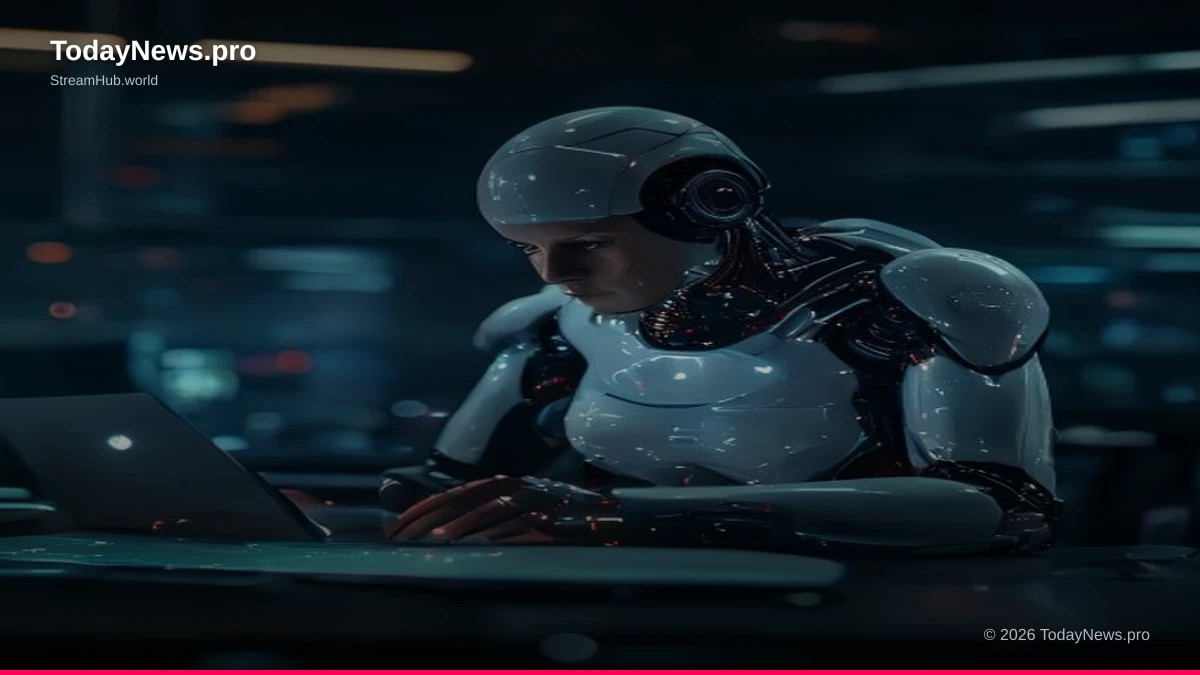
By 2025, the global AI in education market is projected to reach an astonishing $3.68 billion, signaling a seismic shift in how knowledge is imparted and acquired.
The AI Tutor: Dawn of a New Educational Era
The traditional classroom, a cornerstone of learning for centuries, is undergoing a profound metamorphosis. At the forefront of this revolution is the "AI tutor," a sophisticated artificial intelligence system designed to mimic the personalized attention and tailored guidance of a human educator. This technology is not merely an enhancement to existing educational tools; it represents a fundamental reimagining of how students of all ages can engage with information, develop critical skills, and achieve their full academic potential. The advent of AI tutors promises a future where learning is not a one-size-fits-all endeavor but a deeply individualized journey, responsive to the unique pace, style, and needs of every learner. The rapid advancements in machine learning, natural language processing, and data analytics have paved the way for AI tutors that can understand student queries, diagnose learning gaps, and deliver targeted interventions with remarkable precision. These systems are moving beyond simple digital textbooks or automated grading to become dynamic learning partners, capable of fostering deeper understanding and genuine curiosity. The implications for education are vast, potentially democratizing access to high-quality instruction and empowering learners in unprecedented ways.Beyond the Digital Blackboard: How AI Tutors Work
At its core, an AI tutor operates by collecting and analyzing vast amounts of data about a student's interactions. This data includes their responses to questions, the time taken to complete tasks, common errors, preferred learning modalities, and even their emotional state as inferred through engagement patterns. Using this information, the AI constructs a comprehensive profile of the student's strengths, weaknesses, and learning trajectory. The underlying technology is a blend of several AI disciplines. Natural Language Processing (NLP) allows the tutor to understand and respond to student questions in a human-like manner, breaking down complex concepts into simpler terms. Machine Learning (ML) algorithms are crucial for adapting the learning path, predicting areas where a student might struggle, and recommending appropriate resources. Reinforcement learning, in particular, enables the AI to learn from its own teaching strategies, refining its approach over time based on student success. These systems often employ sophisticated pedagogical models. They can identify common misconceptions, provide step-by-step guidance through problem-solving, and offer immediate, constructive feedback. Unlike static online courses, AI tutors are designed to be interactive, engaging students in dialogues, simulations, and problem-solving exercises that adapt in real-time to their progress. The goal is to create an immersive and supportive learning environment that feels both challenging and attainable.The Pillars of Personalized Learning
The promise of AI tutors lies in their ability to deliver truly personalized learning experiences, a concept long aspired to by educators but difficult to achieve in traditional settings. This personalization is built upon several key functionalities.Adaptive Learning Paths
Perhaps the most defining feature of an AI tutor is its capacity to create dynamic learning pathways. Instead of following a predetermined curriculum, the AI assesses a student's current knowledge and then crafts a unique sequence of lessons, exercises, and assessments tailored to their specific needs. If a student masters a concept quickly, the AI can accelerate the pace, introducing more advanced material. Conversely, if a student struggles, the AI can slow down, provide additional explanations, offer practice problems, or introduce prerequisite concepts. This ensures that no student is left behind or held back by the limitations of a standardized approach.Real-time Feedback and Assessment
Immediate feedback is a critical component of effective learning. AI tutors excel at this, providing instant analysis of a student's work. This can range from simple right/wrong indications to detailed explanations of why an answer is incorrect, pointing out specific errors in logic or calculation. Furthermore, AI can continuously assess a student's understanding through formative assessments embedded within the learning process, identifying knowledge gaps as they emerge rather than waiting for a formal test. This continuous evaluation allows for timely interventions, preventing small misunderstandings from snowballing into significant learning obstacles.Content Customization
AI tutors can adapt not only the pace and path of learning but also the very content presented. This can involve tailoring the difficulty of questions, using examples relevant to a student's interests, or presenting information in different formats (text, video, interactive simulations) based on their preferred learning style. For instance, an AI tutor might notice a student performs better with visual aids and subsequently prioritize video explanations or diagrams for that student, while another student who thrives on textual information might receive more detailed written content.| Feature | Description | Impact on Learning |
|---|---|---|
| Adaptive Pathing | Dynamically adjusts curriculum based on student performance. | Optimizes learning pace, prevents frustration or boredom. |
| Instant Feedback | Provides immediate analysis of student responses and errors. | Reinforces correct understanding, corrects misconceptions quickly. |
| Personalized Content | Tailors examples, explanations, and media to individual needs. | Increases engagement, caters to diverse learning styles. |
| Predictive Analytics | Identifies potential learning difficulties before they arise. | Enables proactive support and intervention. |
| 24/7 Availability | Accessible anytime, anywhere, without scheduling constraints. | Empowers self-paced learning and flexibility. |
Transforming Different Educational Stages
The impact of AI tutors is not confined to a single level of education; they are poised to revolutionize learning across the entire spectrum, from early childhood to lifelong professional development.Early Childhood and K-12 Innovations
For younger learners, AI tutors can transform foundational skill development. Interactive games powered by AI can make learning phonics, numbers, and basic problem-solving engaging and fun. These systems can adapt to a child's developmental stage, providing gentle encouragement and immediate positive reinforcement. In K-12 education, AI tutors can act as supplementary tools, helping students with homework, offering alternative explanations for concepts they didn't grasp in class, and providing practice for standardized tests. They can also identify early signs of learning disabilities or giftedness, allowing for timely support or enrichment.Higher Education and Professional Development
At the university level, AI tutors can assist with complex subjects, offering detailed explanations of advanced theories or guiding students through intricate problem sets in fields like mathematics, physics, or computer science. They can also be invaluable for busy professionals seeking to upskill or reskill. Imagine an engineer learning a new software proficiency or a doctor staying updated on the latest medical research, with an AI tutor providing curated learning modules, answering specific technical questions, and simulating real-world scenarios. This flexibility is crucial in a rapidly evolving job market.For instance, platforms like Coursera and edX are already incorporating AI elements to personalize learning recommendations and provide automated feedback on assignments. In higher education, universities are exploring AI-powered chatbots to answer student queries about courses, admissions, and campus services, freeing up administrative staff for more complex tasks.
The Evolving Role of the Human Educator
The rise of AI tutors does not signal the obsolescence of human teachers. Instead, it marks an evolution in their role, shifting their focus from primary information delivery to higher-order facilitation and mentorship.AI as a Co-pilot, Not a Replacement
Human educators will increasingly leverage AI tutors as powerful assistants. AI can handle the repetitive tasks of drilling concepts, grading basic assignments, and providing initial explanations, allowing teachers to dedicate more time to individualized student support, fostering critical thinking, creativity, and socio-emotional development. Teachers can use the insights provided by AI analytics to identify students who need extra help or those who could benefit from more challenging material, intervening with personalized guidance and human connection.Challenges and Ethical Considerations
Despite the immense potential, the widespread adoption of AI tutors is not without its hurdles and ethical dilemmas. Addressing these concerns proactively is crucial for ensuring equitable and beneficial implementation.Data Privacy and Security
AI tutoring systems rely on collecting extensive student data, from academic performance to learning behaviors. This raises significant concerns about data privacy and security. Who owns this data? How is it stored and protected? What measures are in place to prevent unauthorized access or misuse? Robust regulatory frameworks and transparent data handling policies are essential to build trust and safeguard sensitive information. Organizations must adhere to stringent data protection laws like GDPR or CCPA.For more information on data privacy regulations, refer to the Privacy International website.
Algorithmic Bias and Equity
AI algorithms are trained on data, and if that data reflects existing societal biases, the AI can perpetuate or even amplify them. This could lead to AI tutors offering less effective support to students from underrepresented backgrounds, or even making biased assessments. Ensuring fairness and equity requires careful attention to the data used for training AI models, rigorous testing for bias, and ongoing monitoring of performance across diverse student populations. Mitigating bias is an ongoing process requiring diverse development teams and a commitment to inclusive design.The Digital Divide Amplified?
The successful implementation of AI tutors is heavily dependent on access to reliable internet, appropriate devices, and digital literacy. Without equitable access, AI tutors could widen the existing digital divide, creating a two-tiered educational system where students with resources benefit immensely, while those without are further disadvantaged. Initiatives to ensure universal broadband access, provide affordable devices, and offer digital literacy training are critical to prevent AI from exacerbating educational inequalities. The digital divide remains a significant barrier to equitable technology adoption globally.A study by the International Society for Technology in Education (ISTE) found that while the potential is immense, the successful integration of AI hinges on careful planning and addressing equity concerns. Reuters has extensively covered the evolving landscape of AI in education, highlighting both its promise and its perils.