

 Sophie Turner
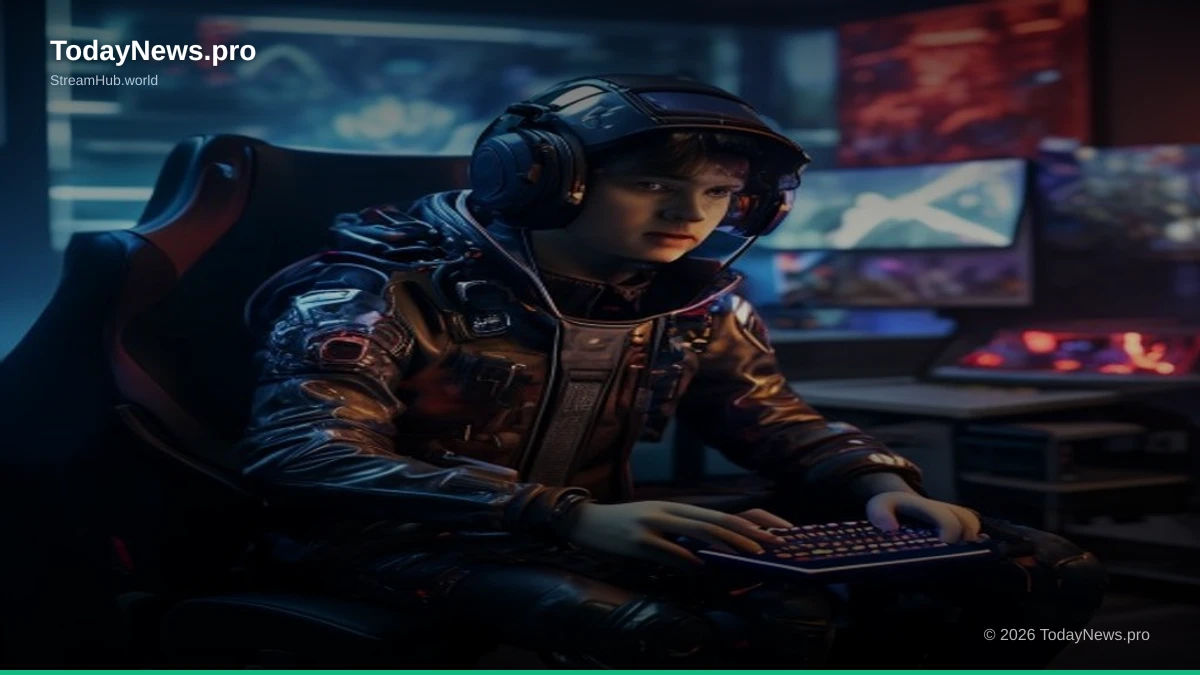
The global video game market generated an estimated $227 billion in revenue in 2023, a testament to its pervasive cultural and economic influence. This colossal industry is now on the cusp of another revolution, driven by the pervasive integration of Artificial Intelligence.
AI: The Silent Architect of Immersive Worlds
Artificial Intelligence is no longer a futuristic concept confined to science fiction; it is a tangible force actively reshaping the interactive entertainment landscape. From the complex algorithms that govern enemy behavior to the generative models creating breathtaking environments, AI is the silent architect behind the most compelling and immersive gaming experiences. Its influence permeates every facet of game design, development, and player interaction, promising an era of unprecedented realism, dynamism, and personalization.
The evolution of AI in gaming can be traced back to its rudimentary beginnings. Early forms of AI were largely script-based, dictating predictable enemy patrol patterns or simple decision trees for non-player characters (NPCs). While functional for their time, these systems lacked the nuance and unpredictability that characterize true intelligence. The advent of machine learning, particularly deep learning and reinforcement learning, has propelled AI capabilities into uncharted territory. These advanced techniques allow game AI to learn from vast datasets, adapt to player actions in real-time, and exhibit emergent behaviors that surprise even their creators.
Consider the evolution of AI in strategy games. What once involved rigid unit formations and predictable attack vectors has transformed into highly sophisticated simulations where AI opponents can learn player strategies, adapt their tactics on the fly, and even exhibit feigned confusion or calculated gambits. This leap from predictable patterns to intelligent decision-making is a direct result of advancements in AI algorithms that can process complex game states and predict optimal outcomes.
The Algorithmic Backbone of Engagement
At its core, AI in gaming functions by processing vast amounts of data generated within the game environment. This data includes player inputs, character states, environmental conditions, and historical interactions. Machine learning models then analyze this information to make informed decisions. For instance, in a shooter game, AI can analyze a player's aiming patterns, movement speed, and tactical choices to dynamically adjust enemy accuracy, flanking maneuvers, and cover utilization, thereby maintaining a consistent level of challenge.
Reinforcement learning, a particularly powerful subset of machine learning, is instrumental in teaching AI agents how to achieve specific goals. By rewarding desirable actions and penalizing undesirable ones, AI can learn optimal strategies through trial and error, much like a human player. This has led to AI agents capable of mastering complex games like StarCraft or Dota 2, often surpassing human professional players. The implications for creating more formidable and engaging AI opponents are profound.
Furthermore, generative AI is revolutionizing content creation. Large language models (LLMs) are being employed to generate dynamic dialogue, lore, and even quests, making game worlds feel more alive and responsive. Image and 3D model generation tools powered by AI are also accelerating asset creation, allowing developers to populate worlds with unique items and characters at an unprecedented pace.
Procedural Content Generation: Infinite Horizons
One of the most exciting frontiers AI is unlocking in gaming is procedural content generation (PCG). Traditionally, game worlds, levels, and assets are meticulously handcrafted by developers, a time-consuming and resource-intensive process. PCG, powered by AI algorithms, allows for the automated creation of vast, unique, and often surprising game environments and experiences. This means players can explore worlds that feel infinitely expansive, with new discoveries awaiting them in every playthrough.
AI-driven PCG goes beyond simply arranging pre-made assets. Sophisticated algorithms can generate terrain, flora, fauna, and even architectural structures based on a set of rules and parameters. This not only reduces development costs and time but also leads to a level of replayability that was previously unimaginable. Games like "No Man's Sky" famously demonstrated the power of PCG, offering a procedurally generated universe with quintillions of unique planets to explore.
From Handcrafted to Algorithmically Crafted Worlds
The process often involves using AI models trained on existing art styles and design principles. These models can then generate new content that adheres to specific aesthetic guidelines, ensuring a cohesive and visually appealing experience. For instance, an AI might be trained on a library of fantasy landscapes and then tasked with generating a new mountain range, complete with distinct rock formations, vegetation patterns, and weather effects.
The benefits extend to item generation, character customization, and even narrative elements. AI can create unique weapon variations with different stats and appearances, design new character outfits based on player preferences, or even weave emergent storylines based on player actions and world events. This dynamic generation of content ensures that no two player experiences are ever exactly alike, fostering a sense of genuine exploration and discovery.
However, challenges remain. Ensuring artistic consistency, thematic coherence, and meaningful gameplay across procedurally generated content requires careful balancing of AI parameters and rigorous testing. The goal is not just to generate content, but to generate content that is enjoyable, challenging, and contributes to the overall player experience. AI tools are also being developed to assist human artists and designers in the PCG process, allowing for greater control and refinement of algorithmically generated worlds.
| Game Title | Primary PCG Application | Estimated Content Scale |
|---|---|---|
| No Man's Sky | Planet generation, flora, fauna, spacecraft | Quintillions of planets |
| Minecraft | World generation (terrain, biomes, structures) | Virtually infinite worlds |
| Diablo Series | Dungeon layouts, enemy encounters, loot generation | Millions of unique dungeon combinations |
| Elite Dangerous | Galaxy generation, star systems, planetary bodies | 400 billion star systems |
Intelligent NPCs: Beyond Scripted Dialogues
Non-player characters (NPCs) have long been a staple of video games, serving as quest-givers, companions, or adversaries. However, their behavior and interactions have historically been limited by pre-written scripts and predictable AI routines. Artificial intelligence is now enabling NPCs to break free from these constraints, offering more dynamic, believable, and engaging interactions that blur the lines between the virtual and the real.
The integration of advanced AI, particularly natural language processing (NLP) and machine learning, is empowering NPCs with the ability to understand and respond to player input in more sophisticated ways. Instead of selecting from a fixed list of dialogue options, players can now converse with NPCs in a more natural, free-form manner. AI models can interpret player queries, understand context, and generate relevant, context-aware responses.
Conversational AI and Emotional Depth
Large Language Models (LLMs) are at the forefront of this revolution. By being trained on massive datasets of human conversation and narrative, these models can generate dialogue that is not only grammatically correct but also emotionally resonant and contextually appropriate. This allows for more organic storytelling, where NPCs can react to player choices, remember past interactions, and even express their own opinions or emotions.
Imagine an NPC in an RPG who can recall a previous conversation you had, ask about your well-being, or even offer unsolicited advice based on your recent actions. This level of dynamic interaction creates a deeper sense of immersion and makes the game world feel more alive and responsive. Developers are exploring ways to imbue NPCs with persistent memories and evolving personalities, making each encounter unique and impactful.
Beyond dialogue, AI is also enhancing NPC behavior in more subtle yet crucial ways. This includes more realistic pathfinding, improved combat tactics, and even emergent social dynamics within NPC communities. An NPC might learn to avoid areas where a player has previously encountered danger, or a group of NPCs might develop their own routines and interactions based on the player's presence or absence. This creates a more believable and dynamic game world where characters feel like inhabitants rather than mere props.
Adaptive Difficulty and Personalized Challenges
One of the perennial challenges in game design is catering to a diverse player base with varying skill levels and preferences. Games that are too easy can become boring, while those that are too difficult can lead to frustration and player abandonment. Artificial intelligence offers a powerful solution through adaptive difficulty systems, which dynamically adjust the game's challenges to match the player's current performance and skill.
These systems analyze a player's gameplay data – such as accuracy, reaction times, resource management, and success rates – to gauge their proficiency. Based on this analysis, the AI can subtly tweak various game parameters. This might involve adjusting enemy health and damage, altering enemy AI behavior, providing more or fewer resources, or even subtly modifying environmental hazards. The goal is to maintain a state of "flow," where the player is consistently engaged and challenged without being overwhelmed or bored.
Dynamic Balancing for Optimal Engagement
Unlike static difficulty settings, adaptive systems operate in real-time, often without the player even noticing. This creates a more seamless and personalized experience. A player struggling with a particular boss might find that enemies in subsequent encounters are slightly less aggressive, or that health pickups appear more frequently. Conversely, a player who is breezing through the game might face tougher enemies, more complex puzzles, or more demanding resource management challenges.
The benefits of adaptive difficulty extend beyond simply making games more accessible. They can also lead to deeper engagement and skill development. By providing tailored challenges, players are encouraged to learn, adapt, and improve their own abilities. This fosters a sense of accomplishment and mastery, which are crucial drivers of long-term player retention. Furthermore, AI can analyze player progression patterns to identify areas where a player might be getting stuck and offer subtle hints or adjust the challenge to help them overcome the obstacle.
However, implementing effective adaptive difficulty requires careful consideration. Developers must strike a balance between providing appropriate challenge and avoiding the perception that the game is "cheating" or unfairly penalizing the player. Transparency about how the system works, or offering players the option to override or fine-tune adaptive settings, can help maintain player trust and satisfaction. The ultimate aim is to create an experience that feels fair, rewarding, and uniquely tailored to each individual player.
AI in Game Development: Streamlining the Creative Process
The transformative power of AI in gaming extends far beyond the player experience; it is also revolutionizing the very process of game development. From asset creation and animation to testing and debugging, AI tools are empowering developers to work more efficiently, creatively, and cost-effectively.
One of the most significant impacts is on asset creation. AI-powered tools can generate textures, 3D models, character designs, and even entire environments based on textual prompts or stylistic examples. This dramatically accelerates the time it takes to populate a game world, freeing up artists to focus on more complex and nuanced aspects of design. For example, tools like Midjourney or Stable Diffusion, adapted for game development pipelines, can produce concept art or game-ready assets in a fraction of the time required by traditional methods.
Automated Animation and Playtesting
Animation, another labor-intensive aspect of game development, is also being transformed. AI can assist in generating character animations, interpolating between keyframes, or even creating motion capture data from video footage. This allows for more fluid and realistic character movements with less manual effort. Furthermore, AI can be used to procedurally generate variations of animations, ensuring a wider range of expressive movements for characters.
Game testing and quality assurance (QA) are also benefiting immensely. AI agents can be trained to play through game levels, identify bugs, glitches, and performance issues, and even test different gameplay scenarios. This automated testing process can uncover issues that might be missed by human testers, leading to more polished and stable game releases. AI can also analyze player feedback and telemetry data to identify common pain points or areas of frustration, providing valuable insights for iterative design improvements.
The integration of AI in development is not about replacing human creativity but augmenting it. These tools act as intelligent assistants, handling repetitive tasks and providing novel solutions, allowing developers to focus on the artistic vision, narrative coherence, and innovative gameplay mechanics that define truly memorable games. The result is a more agile and iterative development cycle, enabling faster prototyping and quicker responses to player feedback.
Ethical Considerations and the Future of Play
As AI becomes more sophisticated and deeply integrated into gaming, it raises important ethical considerations that the industry must address. Foremost among these are concerns about player addiction, the potential for AI to exploit psychological vulnerabilities, and the impact on human social interaction.
The personalized and adaptive nature of AI-driven games, while enhancing engagement, can also contribute to addictive play patterns. Developers have a responsibility to design games that promote healthy play habits and provide tools for players to manage their time. Furthermore, as AI becomes more adept at understanding and manipulating player emotions, there are concerns about its potential to be used for predatory monetization strategies or to create overly compelling, potentially unhealthy, engagement loops.
Bias in AI and the Pursuit of Fairness
Another critical ethical area is bias in AI. If AI models are trained on biased data, they can perpetuate and even amplify those biases within the game world, affecting everything from NPC representation to game mechanics. Ensuring fairness and inclusivity in AI development is paramount. This requires diverse development teams, rigorous testing for bias, and a commitment to ethical AI design principles.
The future of play is inextricably linked with AI. We can anticipate even more sophisticated AI-driven narratives, emergent gameplay systems that react dynamically to player choices, and virtual worlds that feel indistinguishable from reality in their complexity and responsiveness. AI will likely play a role in creating hyper-personalized gaming experiences, tailoring every aspect of a game to an individual player's preferences and even their mood.
The continued development of AI in gaming also necessitates ongoing dialogue about its societal impact. As AI becomes more integrated into our leisure activities, understanding its influence on our cognition, social skills, and even our sense of reality will be crucial. The industry, researchers, and players alike must work together to ensure that AI-driven gaming remains a force for positive entertainment, creativity, and connection.
Will AI replace human game developers?
How does AI improve NPC interactions?
What are the risks of AI in gaming?
Can AI create entire game worlds?
For further reading on the impact of AI on creative industries, consult resources from leading technology news outlets and academic institutions. For example, an overview of AI's impact on content creation can be found on Reuters, and discussions on the ethical frameworks for AI development are available on platforms like Wikipedia.