

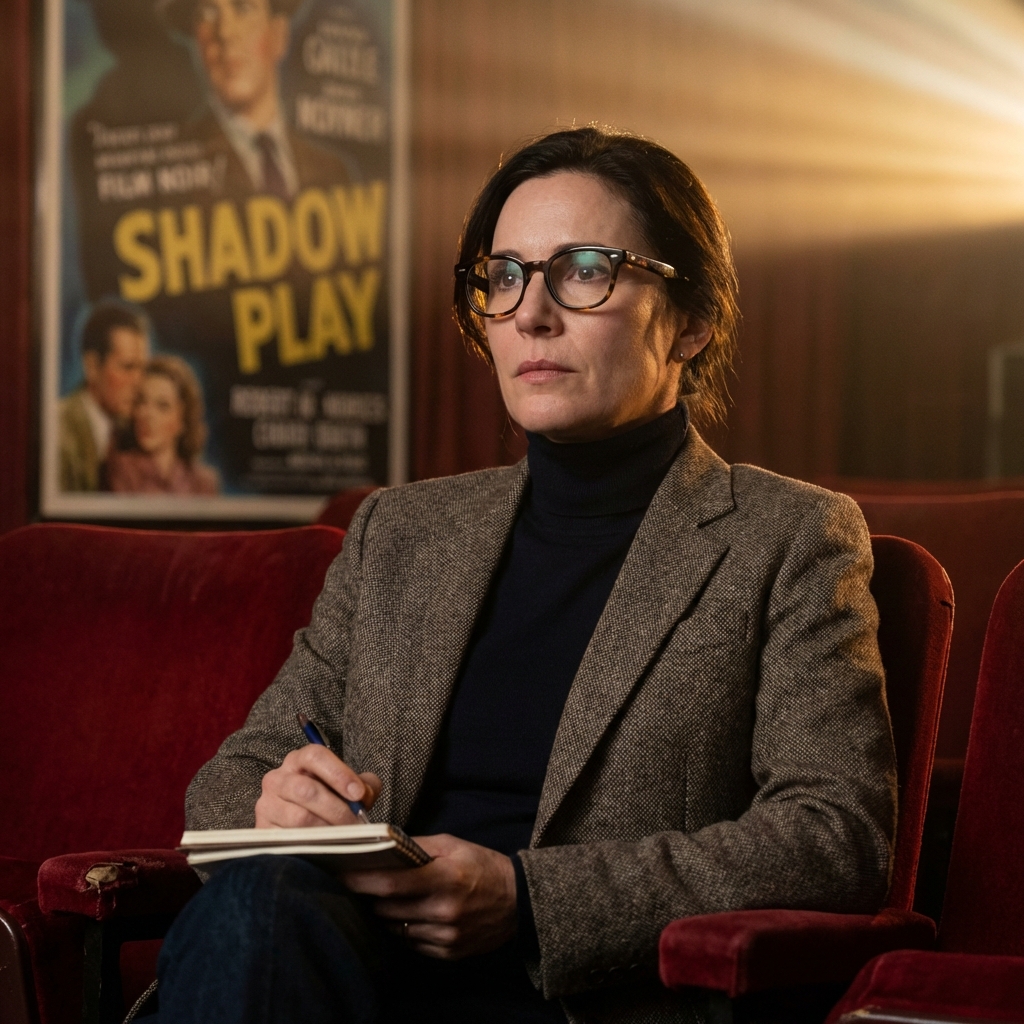
 Roger Evans

⏱ 15 min
In 2023, generative AI tools saw an estimated 200% surge in usage within creative industries, with filmmaking at the forefront of this technological tidal wave, fundamentally reshaping how stories are conceived, created, and consumed.
Lights, Camera, AI: The Dawn of a New Cinematic Era
The film industry, long a bastion of human artistry and craft, is undergoing a seismic shift. Artificial intelligence, once confined to science fiction narratives, is now an active participant in the filmmaking process, from the nascent stages of script development to the final polish of visual effects. This transformation is not merely about automation; it’s about augmentation, enabling filmmakers to achieve previously unimaginable creative feats, streamline complex workflows, and democratize access to sophisticated production tools. The integration of AI promises greater efficiency, novel artistic avenues, and, inevitably, profound ethical considerations that the industry must grapple with. The question is no longer *if* AI will be integral to filmmaking, but *how* deeply and *to what end*. The allure of AI in filmmaking lies in its potential to solve some of the most persistent challenges faced by creators. Budget constraints, time limitations, and the sheer complexity of modern productions can often stifle creative ambition. AI offers a powerful toolkit to mitigate these issues, acting as a tireless assistant, a sophisticated simulator, and even a generative force. This allows for greater experimentation, faster iteration, and the exploration of visual styles and narrative possibilities that were once logistically or financially prohibitive. The democratization aspect is particularly significant, as AI-powered tools can empower independent filmmakers and smaller studios to compete on a more level playing field with larger, established players. However, this rapid technological advancement is not without its anxieties. Concerns about job displacement for traditional roles, the authenticity of AI-generated content, and the potential for misuse are legitimate and require careful consideration. As AI becomes more capable of mimicking human creativity, the definition of authorship and originality in art becomes increasingly blurred. This article delves into the multifaceted ways AI is currently transforming filmmaking, explores the burgeoning ethical debates, and casts an eye towards the future implications of this technological symbiosis.The Scriptwriting Revolution: AI as a Collaborative Muse
The genesis of any film lies in its script, and here, AI is proving to be a formidable partner. Natural Language Processing (NLP) models, trained on vast corpuses of existing screenplays, literature, and dialogue, can now generate plot outlines, character backstories, and even complete scenes. These tools are not designed to replace human writers but to augment their creative process, acting as a powerful brainstorming engine and a source of unexpected inspiration. Writers can feed AI prompts with specific genres, themes, or character archetypes, and receive a plethora of narrative suggestions, dialogue options, and structural frameworks to build upon. ### AI-Powered Idea Generation AI can analyze trends in audience engagement, popular tropes, and successful narrative structures to suggest story concepts that have a higher probability of resonating. Tools like Sudowrite or Jasper can help overcome writer's block by generating alternative plot points or character motivations when a writer feels stuck. This doesn't mean the AI dictates the story; rather, it offers a range of possibilities that the human writer can then refine, adapt, or discard. The collaborative aspect is crucial – the AI provides raw material, and the human writer imbues it with emotion, nuance, and a unique authorial voice. ### Dialogue and Character Development Developing compelling dialogue is often a painstaking process. AI can assist by generating dialogue options for specific characters based on their established personalities, motivations, and the context of the scene. It can also help in identifying inconsistencies in character voice or pacing within a script. For instance, an AI might flag a line of dialogue that is uncharacteristic of a seasoned detective, prompting the writer to reconsider. Furthermore, AI can be used to flesh out character arcs, suggesting potential growth points or conflicts based on the established narrative. ### Script Analysis and Optimization Beyond generation, AI excels at analysis. It can meticulously scan scripts for pacing issues, plot holes, overuse of certain words or phrases, and even predict potential audience reception based on narrative structures. This analytical capability allows writers to refine their work with greater precision and efficiency, ensuring a tighter, more engaging story before production even begins. The ability to identify potential narrative weaknesses early on saves considerable time and resources in later stages.Visualizing the Unseen: AI in Pre-Production and Storyboarding
Pre-production is where the vision for a film begins to take concrete shape, and AI is rapidly becoming an indispensable tool in this phase. From generating concept art to creating animatics, AI’s ability to rapidly iterate and visualize ideas is transforming how directors and their teams plan their shots and define the film's aesthetic. ### Concept Art and Character Design Generative AI art platforms, such as Midjourney or DALL-E, are now widely used to create mood boards, character concepts, and environmental designs. Directors can provide textual descriptions, and the AI can generate a diverse range of visual styles and interpretations in minutes, allowing for rapid exploration of different looks and feels for the film. This significantly accelerates the process of finding a cohesive visual identity and presenting ideas to producers and studios.300%
Increase in concept art generation speed using AI
70%
Reduction in time spent on initial visual exploration
1000+
Visual variations generated per prompt
"AI in pre-production is a game-changer for independent filmmakers. It democratizes the ability to visualize complex scenes and explore creative options that were previously only accessible to well-funded studios. It’s about making the impossible, possible."
— Dr. Anya Sharma, Professor of Digital Media Arts, Metropol University
On Set with AI: From Performance Capture to Digital Actors
The integration of AI extends directly onto the production floor, influencing how performances are captured and how digital characters are brought to life. This is an area where the line between human performance and technological creation becomes particularly blurred. ### Enhanced Performance Capture AI is revolutionizing performance capture technology. Advanced AI algorithms can now more accurately translate the nuanced movements and facial expressions of actors into digital avatars, even in challenging lighting conditions or with partial occlusions. This leads to more believable and emotionally resonant digital performances. AI can also assist in cleaning up mocap data, removing noise and artifacts, and ensuring consistency across different takes. ### The Rise of Digital Actors Perhaps the most profound impact AI is having on set is the increasing feasibility of creating entirely digital actors. AI models can be trained on vast datasets of human anatomy, motion, and facial expressions to generate photorealistic digital characters. These digital actors can be programmed with specific performances, emotions, and even synthesized voices. This technology has implications for recasting actors in sequences, de-aging performers, or creating entirely new characters that would be impossible to portray physically. The ethics of digital resurrection of deceased actors, as seen with James Dean in a recent commercial project, opens a Pandora's Box of questions. ### Real-time AI-Assisted Cinematography AI is also starting to assist camera operators and cinematographers. Intelligent camera systems can predict actor movements, auto-focus with incredible precision, and even suggest optimal framing based on aesthetic principles learned from analyzing thousands of films. While human oversight remains critical, these AI assistants can help capture challenging shots more efficiently and consistently.Post-Production Powerhouse: Editing, VFX, and Sound Design
The post-production phase, where raw footage is sculpted into a finished film, is a prime candidate for AI-driven efficiencies and creative enhancements. AI’s ability to process vast amounts of data and perform complex tasks makes it invaluable in editing, visual effects, and sound design. ### AI-Powered Editing AI can assist editors in numerous ways. It can automatically log and categorize footage, identify key moments or dialogue, and even suggest rough cuts based on script cues or emotional arcs. Tools can analyze scene pacing and suggest areas where cuts might be needed for better flow. This frees up human editors to focus on the more nuanced aspects of storytelling, rhythm, and emotional impact. For instance, AI can quickly identify all the takes where a specific actor delivers a particular line with the desired emotion, saving hours of manual searching.AI Applications in Post-Production
The Ethical Labyrinth: Copyright, Authenticity, and the Human Touch
As AI becomes more deeply embedded in filmmaking, a host of complex ethical questions arise, challenging established norms and demanding careful consideration. These issues touch upon authorship, intellectual property, and the very definition of creativity. ### Copyright and Ownership of AI-Generated Content A significant debate revolves around copyright. Who owns the copyright to a script or an image generated by an AI? Is it the user who provided the prompt, the developers of the AI, or does AI-generated content fall into the public domain? Current legal frameworks are struggling to keep pace with these advancements. The US Copyright Office, for instance, has stated that works created solely by AI are not eligible for copyright protection, but works that involve significant human authorship in collaboration with AI may be. This ambiguity creates uncertainty for creators and studios.
"The fundamental question is: what constitutes authorship in the age of AI? If an AI generates a screenplay, and a human writer only edits it slightly, where does the creative ownership truly lie? These are legal and philosophical quandaries we are only beginning to unpack."
— Eleanor Vance, Intellectual Property Lawyer specializing in Digital Media
### The Authenticity of Performance and Narrative
The rise of digital actors and AI-generated performances raises questions about authenticity. When a deceased actor is digitally resurrected or an actor's performance is heavily manipulated by AI, are we experiencing a genuine artistic expression, or a technologically manufactured imitation? This can lead to concerns about the erosion of human performance and the potential for deepfakes to be used for malicious purposes, distorting reality and manipulating public perception. The ability to generate photorealistic but entirely fabricated scenes or performances necessitates robust mechanisms for transparency and verification.
### Job Displacement and the Future of Creative Labor
A persistent concern is the potential for AI to displace human workers in the film industry. While AI is often presented as a tool for augmentation, there is a tangible fear that certain roles, particularly in areas like entry-level editing, rotoscoping, or basic visual effects, could be automated. The industry must proactively consider how to reskill and upskill its workforce to adapt to these new technologies, ensuring that AI serves to enhance creative careers rather than eliminate them. Collaborative models where AI assists human artists, rather than replacing them, are likely to be the most sustainable path forward.
The Future of Filmmaking: Predictions and Potential Pitfalls
The trajectory of AI in filmmaking points towards an increasingly symbiotic relationship between human creativity and artificial intelligence. The innovations we see today are likely just the tip of the iceberg. ### Hyper-Personalized Storytelling and Immersive Experiences In the future, AI could enable hyper-personalized cinematic experiences. Imagine films where the narrative branches based on viewer preferences, or where digital actors can dynamically adapt their dialogue and performance to individual audience members. AI will also be crucial in creating more convincing and seamless virtual reality and augmented reality film experiences, blurring the lines between the viewer and the narrative world. ### Democratization of High-End Production The ongoing development of sophisticated AI tools will continue to lower the barrier to entry for high-quality filmmaking. Independent creators will have access to powerful visual effects, realistic digital actors, and efficient post-production pipelines that were once the exclusive domain of major studios. This could lead to an explosion of diverse and innovative content from a wider range of voices. ### Potential Pitfalls and the Need for Regulation However, the rapid advancement of AI also presents significant pitfalls. The unchecked proliferation of AI-generated content could lead to a deluge of low-quality, derivative material, making it harder to find genuine artistic merit. The ethical issues surrounding deepfakes, copyright, and labor displacement will require careful consideration and potentially new forms of regulation. A proactive approach to ethical guidelines and legal frameworks is essential to ensure that AI enriches, rather than diminishes, the art of filmmaking. The industry must foster a dialogue that prioritizes human creativity, artistic integrity, and responsible technological advancement.Will AI replace human filmmakers entirely?
It is highly unlikely that AI will replace human filmmakers entirely. While AI can automate many tasks and generate content, human creativity, emotional intelligence, directorial vision, and nuanced storytelling are still considered uniquely human attributes. AI is more likely to serve as a powerful tool and collaborator, augmenting the capabilities of human filmmakers and opening new avenues for artistic expression.
How is AI impacting the roles of actors?
AI is impacting actors in several ways. Performance capture technology, enhanced by AI, allows for more sophisticated digital representations of actors. AI is also used to create digital doubles and potentially de-age actors, or even bring back deceased actors digitally. This raises ethical questions about consent, ownership of likeness, and the authenticity of performance. Some traditional roles might be automated, while new opportunities in performance capture and AI-driven character development may emerge.
Who owns the copyright of AI-generated film scripts?
The copyright status of AI-generated content is a complex and evolving legal issue. In many jurisdictions, including the United States, copyright protection is generally granted to works created by human authors. If a work is created solely by an AI without significant human creative input, it may not be eligible for copyright. However, if a human writer uses AI as a tool to assist in the creation of a script, with substantial human authorship and creative control, the resulting work might be copyrightable. Legal frameworks are still being developed to address these nuances.
Can AI compose film scores?
Yes, AI can compose film scores. AI music generation tools can analyze musical styles, genres, and emotional cues to create original compositions. These AI-generated scores can serve as a starting point for human composers, providing thematic ideas or even complete instrumental pieces that can be further refined and adapted. This technology can significantly speed up the scoring process and offer new creative possibilities for composers.