

 Elena Kogan
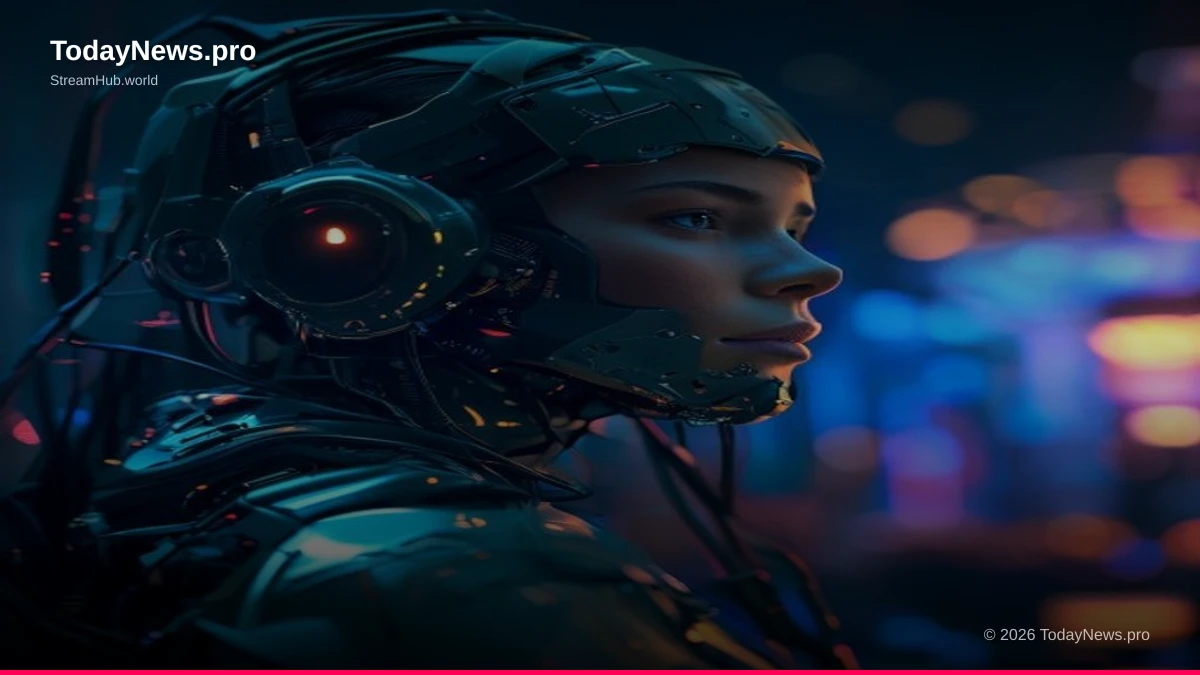
The global gaming market, projected to reach $321 billion by 2026, is on the precipice of a narrative revolution, driven by the burgeoning capabilities of artificial intelligence in generating dynamic, adaptive storytelling and virtual worlds.
The Genesis of Algorithmic Authorship
For decades, the dream of truly emergent storytelling in video games and interactive media remained largely theoretical, confined to the realm of science fiction. Traditional game development relies on meticulously crafted narratives, branching paths, and pre-written dialogue trees. While these methods have yielded masterpieces of interactive fiction, they inherently limit the scope of player experience to predetermined possibilities. The introduction of advanced AI, particularly Large Language Models (LLMs) and sophisticated procedural generation techniques, is fundamentally altering this paradigm.
Early attempts at AI-driven narrative were rudimentary, often resulting in nonsensical dialogue or predictable plotlines. However, the exponential growth in computing power and the refinement of machine learning algorithms have propelled AI from a novelty to a formidable creative force. LLMs like GPT-3.5 and its successors, trained on vast datasets of human text and dialogue, are now capable of generating coherent, contextually relevant, and even emotionally resonant prose. This capability is not merely about writing a story; it's about understanding narrative structure, character motivations, and the subtle nuances of human communication.
The underlying technology involves complex neural networks that analyze patterns, predict sequences, and generate new content based on learned probabilities. This allows for a level of spontaneity and unpredictability that was previously impossible. Instead of a fixed script, AI can now improvise, adapt to player choices in real-time, and even introduce unforeseen plot twists that feel organic to the unfolding narrative.
The Power of Generative Models
Generative AI, in its various forms, is the engine driving this transformation. For text generation, LLMs are paramount. They can craft dialogue, descriptions, lore, and even entire questlines. For visual and environmental generation, diffusion models and procedural content generation (PCG) algorithms work in tandem. PCG has been used for years to create landscapes, textures, and objects, but AI is infusing these processes with a deeper understanding of aesthetic principles and contextual relevance, leading to worlds that feel less like random assemblages and more like intentional creations.
The distinction between scripted and AI-generated content is blurring. AI can now mimic specific writing styles, generate dialogue that aligns with a character's established personality, and even create narrative arcs that respond dynamically to player actions. This opens up a vast expanse of creative possibilities, moving beyond linear progression to truly personalized and replayable experiences.
| Era | Key Technologies | Narrative Impact | Limitations |
|---|---|---|---|
| Early Days (Pre-2000s) | Rule-based systems, simple algorithms | Basic NPC interactions, limited dialogue trees | Repetitive, predictable, lack of depth |
| Emergent AI (2000s-2010s) | Procedural content generation (PCG), early AI agents | Randomized environments, emergent gameplay mechanics | Narrative often secondary, lack of cohesive story |
| Deep Learning Era (2010s-Present) | Large Language Models (LLMs), advanced PCG, Reinforcement Learning | Dynamic dialogue, adaptive quests, emergent narrative | Consistency challenges, potential for unexpected behavior, ethical concerns |
AI as World Builder: Crafting Dynamic Universes
The impact of AI extends beyond mere text generation; it is fundamentally transforming how virtual worlds are conceived, built, and experienced. Instead of static environments populated by pre-programmed events, AI is enabling the creation of living, breathing ecosystems that react and evolve.
Procedural content generation has long been a staple in game development for creating vast landscapes and repeatable assets. However, AI-powered PCG goes a step further. It can learn from real-world geographical data, architectural styles, and even ecological principles to generate environments that are not only diverse but also believable and internally consistent. This means procedurally generated forests might exhibit realistic plant distribution based on simulated climate, or cities could develop organically with historically plausible architectural evolution.
Furthermore, AI can imbue these worlds with dynamic systems. Imagine a game world where economies fluctuate based on player actions or NPC behavior, where political factions rise and fall without direct player intervention, or where ecosystems react realistically to environmental changes. This level of dynamism creates a sense of a living, breathing world that players can explore and influence in profound ways. The narrative then emerges organically from the interactions within these complex, AI-managed systems.
The Rise of Adaptive Environments
Adaptive environments are a direct consequence of AI's world-building capabilities. These are not just visually stunning landscapes; they are worlds that respond to the player's presence and actions. An NPC might remember a past interaction and alter their behavior accordingly, a quest objective might change based on the state of the world, or even the weather patterns could be influenced by a player's long-term actions.
This adaptability extends to the very fabric of the game world. AI can generate unique flora and fauna for different biomes, design complex dungeons that reconfigure themselves, or even create dynamic soundtracks that perfectly match the mood and intensity of the unfolding events. The goal is to create an experience that feels uniquely tailored to each player, where no two playthroughs are ever identical.
The Evolution of Narrative Agency
One of the most compelling aspects of AI-generated narratives is the potential to dramatically enhance player agency. Traditionally, agency in games is often an illusion – a choice between pre-defined paths. AI promises to move beyond this, offering players a genuine impact on the unfolding story and the world around them.
Imagine a role-playing game where the NPCs are not just quest dispensers but dynamic characters with their own motivations, memories, and relationships. An AI can manage these complex interactions, allowing for emergent storylines that arise organically from player choices and NPC reactions. A casual conversation could escalate into a political intrigue, or a simple favor could lead to an unexpected alliance. This creates a sense of consequence that is far more profound than simply triggering a pre-written cutscene.
The concept of "emergent narrative" becomes a tangible reality. Instead of following a pre-written script, players become active participants in shaping the story. The AI acts as a dynamic Dungeon Master, constantly generating new challenges, plot points, and character interactions based on the player's actions and the evolving state of the game world. This fosters a unique and highly personalized experience for every player.
Personalized Storytelling at Scale
AI's ability to process vast amounts of data and adapt in real-time is key to personalized storytelling. Each player's journey can be a unique tapestry woven by their decisions. The AI can learn a player's preferences, their playstyle, and even their emotional responses to certain narrative elements, tailoring future story beats to maximize engagement and impact. This moves beyond simple difficulty scaling to a deeper, narrative personalization.
Consider a detective game where the AI not only generates clues but also adapts the suspects' testimonies and motivations based on how the player investigates. If a player focuses on financial motives, the AI might subtly weave in elements of greed and embezzlement. If they emphasize emotional distress, the AI might highlight personal vendettas and past trauma. This creates a deeply immersive experience where the narrative feels responsive and intelligent.
Implications for Content Creators and Consumers
The rise of AI-generated narratives has profound implications for both the creators of entertainment and the audiences who consume it. For developers and writers, AI presents an opportunity to augment their creative processes, accelerate production, and explore narrative possibilities previously out of reach.
AI can serve as a powerful co-pilot, assisting with everything from generating initial plot ideas and character backstories to drafting dialogue and polishing prose. This can significantly reduce the time and resources required for content creation, allowing smaller studios to compete with larger ones and enabling AAA developers to push the boundaries of storytelling even further. It also opens doors for new forms of interactive entertainment, such as persistent online worlds with dynamically generated quests and evolving lore.
For consumers, the benefits are equally significant. AI-powered narratives promise more personalized, engaging, and replayable experiences. Players can look forward to games that adapt to their individual preferences, offer truly meaningful choices, and provide a sense of discovery that never fades. The dream of a game world that truly feels alive and responsive is becoming a reality.
Democratizing Content Creation?
One of the most exciting, albeit speculative, implications is the potential for AI to democratize content creation. Imagine independent creators using AI tools to generate entire games, novels, or film scripts with minimal resources. This could lead to an explosion of diverse and niche content, catering to every imaginable taste and interest. Tools that simplify complex narrative design and world-building could empower individuals with compelling ideas but limited technical or artistic skills.
However, this democratization also raises questions about the role of human creativity. Will AI become a tool that enhances human artists, or will it eventually replace them? The current consensus among industry leaders is that AI will serve as a powerful collaborator, freeing up human creators to focus on higher-level conceptualization, emotional depth, and artistic vision. The nuances of human experience, empathy, and subjective interpretation remain areas where human creators excel.
Ethical Labyrinths and Future Frontiers
As AI-generated narratives become more sophisticated, they inevitably bring forth a complex web of ethical considerations. The most immediate concern revolves around authorship and intellectual property. When an AI generates a story, who owns it? The developers who created the AI? The users who prompted it? The AI itself?
Copyright law is still grappling with these questions. Current frameworks are largely based on human authorship, and adapting them to accommodate AI-generated content will require significant legal and philosophical debate. This extends to the data used to train these models. If an AI is trained on copyrighted material, does its output constitute a derivative work? These are not abstract legal hypotheticals; they are pressing issues that will shape the future of creative industries.
Another critical ethical frontier is the potential for AI to generate harmful, biased, or manipulative content. If AI models are trained on biased datasets, they can inadvertently perpetuate those biases in their narratives, leading to unfair or offensive representations. Furthermore, sophisticated AI could be used to generate propaganda or disinformation campaigns disguised as interactive entertainment, posing a significant threat to public discourse and individual autonomy.
The Transparency Imperative
Transparency about AI's role in content creation is crucial. Audiences have a right to know when they are interacting with AI-generated narratives. This allows them to engage critically with the content and understand its origins. Establishing clear labeling standards for AI-assisted or AI-generated content will be essential for maintaining trust and accountability.
Moreover, developers must invest in robust AI safety and bias mitigation techniques. This includes careful curation of training data, continuous monitoring of AI outputs for problematic content, and the implementation of ethical guidelines for AI development and deployment. The pursuit of novel narratives must be balanced with a commitment to responsible AI practices.
The future frontiers of AI in entertainment are vast, promising experiences that are more immersive, personalized, and dynamic than ever before. However, navigating these frontiers responsibly requires a proactive approach to ethical challenges and a steadfast commitment to human values. As we embrace the power of algorithmic storytelling, we must also ensure that it serves to enrich, rather than diminish, the human experience. For more on the ethical considerations of AI, see the Wikipedia entry on AI ethics.
The Specter of Homogenization vs. Infinite Novelty
A recurring concern with any powerful generative technology is the potential for homogenization. If AI models are trained on similar datasets and operate under similar parameters, could this lead to a future where all AI-generated stories feel indistinct and generic? This fear is understandable; the very nature of AI learning involves identifying and replicating patterns.
However, the counterargument, and one increasingly supported by technological advancements, is that AI, particularly when wielded by creative individuals, can unlock unprecedented levels of novelty. The sheer scale of data AI can process, combined with its ability to blend disparate concepts and generate unexpected connections, could lead to entirely new genres, narrative structures, and thematic explorations that human creators might not have conceived of independently.
The key lies in how AI is utilized. If AI is simply used to churn out formulaic content based on popular trends, homogenization is a real risk. But if AI is used as a tool for exploration, for pushing boundaries, and for generating truly novel combinations of ideas, it can lead to an explosion of creative diversity. The adaptive nature of AI-generated worlds also works in its favor here; even if initial world-building parameters are similar, player interaction will invariably lead to unique outcomes.
The Role of Human Curation and Prompt Engineering
The role of human oversight, curation, and sophisticated prompt engineering becomes paramount in this context. Rather than simply asking an AI to "write a fantasy story," a creator might craft intricate prompts that guide the AI towards specific thematic explorations, unique character archetypes, or unconventional plot structures. The art of "prompt engineering" is emerging as a crucial skill, allowing humans to coax unique and compelling narratives out of AI.
Furthermore, the very act of interacting with AI-generated content can inspire human creators. Observing the unexpected outputs of an AI might spark new ideas or lead to a deeper understanding of narrative mechanics. It's a symbiotic relationship, where AI can both generate and inspire, leading to a richer and more varied creative landscape.
The potential for infinite novelty is also tied to the concept of AI generating content for niche audiences. Instead of focusing on mass-market appeal, AI can be tasked with creating highly specific experiences for smaller communities, leading to a far more fragmented but also more deeply satisfying entertainment ecosystem. For a look at the history of procedural generation, a precursor to AI world-building, see this Wikipedia article.
Case Studies: Early Adopters and Their Innovations
While the full potential of AI-generated narratives is still being explored, several early adopters and experimental projects offer glimpses into the future. These initiatives, ranging from indie game developers to cutting-edge research labs, are paving the way for broader adoption.
One notable area is in the development of AI-powered NPCs. Projects like NVIDIA's ACE (Avatar Cloud Engine) aim to create NPCs that can engage in natural language conversations, understand context, and exhibit dynamic personalities. This technology promises to move beyond pre-scripted dialogue to truly interactive character experiences, where players can have unscripted conversations that impact the narrative.
In the realm of interactive fiction, platforms are emerging that leverage LLMs to create dynamic stories. These often allow users to input story prompts and then have the AI generate text, dialogue, and even plot progression in real-time. While still in their nascent stages, these tools demonstrate the power of AI to create emergent narratives on demand. For instance, AI Dungeon, an early example, allowed players to interact with a text-based adventure game where the AI generated the world and plot based on player input.
The Indie Frontier and Experimental Platforms
The independent game development scene is a fertile ground for experimentation with AI narrative tools. Indie developers, often less constrained by publisher demands for established formulas, are more likely to explore the cutting edge of AI integration. This can range from using AI to procedurally generate unique dialogue for thousands of NPCs in a sprawling open world to employing AI to dynamically adapt questlines based on player choices and the game's evolving state.
Moreover, research institutions and tech companies are continuously releasing new AI models and tools that facilitate AI-driven content creation. Companies like OpenAI, Google DeepMind, and Anthropic are at the forefront, developing increasingly sophisticated LLMs and generative models. The accessibility of APIs for these models allows developers to integrate advanced AI capabilities into their projects, fostering a rapid pace of innovation. The insights from these developments are often shared through research papers and technical demonstrations, fueling further progress across the industry. For news on AI advancements, check out Reuters' Technology section on AI.
These early examples, though varied in their success and scope, consistently point towards a future where AI plays an integral role in shaping the stories we experience, making them more personal, dynamic, and engaging than ever before.