

 David Chen
⏱ 18 min
The global generative AI market is projected to reach USD 110.8 billion by 2029, a staggering growth indicating its rapid integration into creative industries. The AI Muse: A New Renaissance?
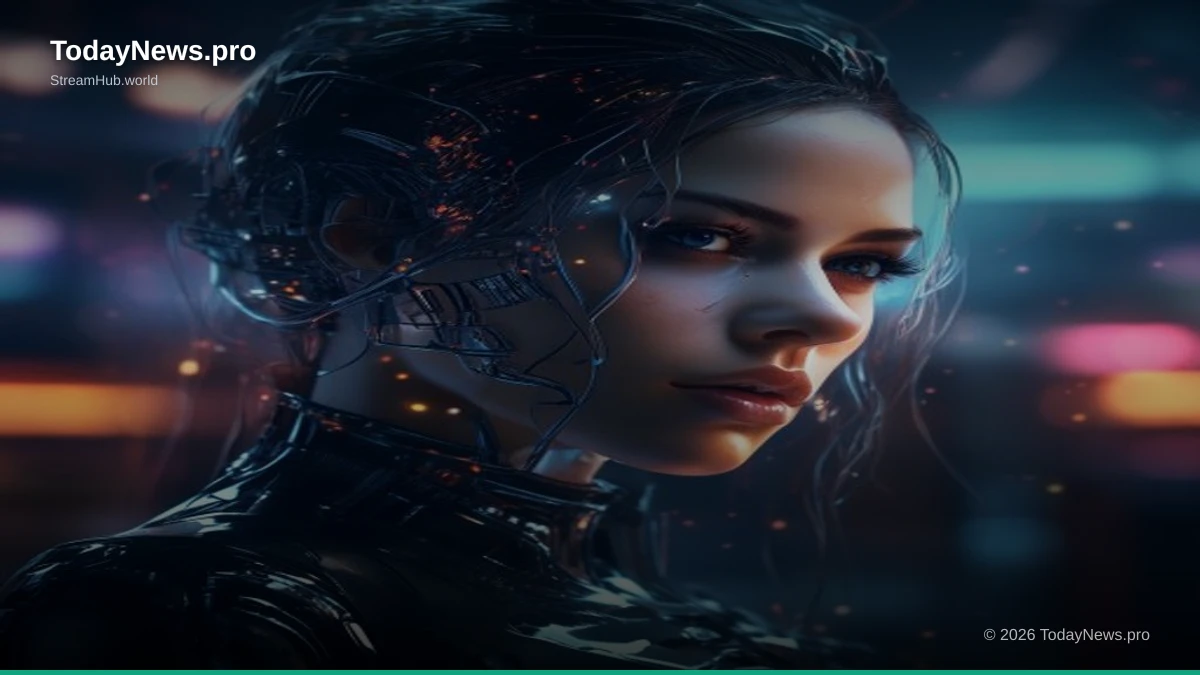
Artificial intelligence is no longer a distant science fiction concept; it has firmly planted itself at the intersection of technology and human expression. The "AI muse," as it's increasingly being called, is not merely a tool for artists but a collaborator, a generator of novel ideas, and a catalyst for entirely new forms of creative output. This profound shift is reshaping not just how art is made, but what it means to be an artist in the 21st century. From generating photorealistic images from simple text prompts to composing original musical scores and crafting intricate literary narratives, AI is proving to be a powerful, and sometimes unsettling, force in the realm of human creativity and artistry. This evolution is sparking debates about originality, authorship, and the very definition of art itself. We are witnessing a potential renaissance, one driven not by human genius alone, but by the potent synergy between human intent and algorithmic prowess.Democratizing Creativity
One of the most immediate impacts of AI on creativity is its democratizing effect. Previously, the creation of certain art forms required years of specialized training, expensive equipment, and access to specific resources. AI-powered tools are lowering these barriers significantly. Individuals with compelling ideas but lacking traditional artistic skills can now bring their visions to life. A budding novelist can experiment with plotlines generated by AI, a graphic designer can rapidly iterate through countless visual concepts, and a musician can explore harmonic progressions they might not have conceived of independently. This accessibility fosters a broader participation in creative endeavors, potentially unleashing a wave of untapped human imagination.Augmenting Human Skill
Beyond democratization, AI serves as a potent augmentative force for existing artists. Instead of replacing human skill, AI can enhance it, acting as a tireless assistant that handles repetitive tasks, offers suggestions, and pushes creative boundaries. A painter might use AI to generate preliminary sketches or explore color palettes, a filmmaker could leverage AI for storyboarding or generating background elements, and a game developer might employ AI to populate vast virtual worlds with unique assets and characters. This collaborative model allows artists to focus on the conceptual and emotional aspects of their work, while AI handles the heavy lifting of execution or idea generation.75%
Artists using AI report increased speed in their creative process.
60%
Creators feel AI helps them overcome creative blocks.
45%
Viewers express curiosity about AI-generated art.
Generative AI: The Engine of Algorithmic Art
At the heart of this transformation lies generative AI. These are sophisticated algorithms, often based on deep learning models like Generative Adversarial Networks (GANs) or Transformer architectures, trained on vast datasets of existing art, text, and music. Their remarkable ability to learn patterns, styles, and structures allows them to produce novel outputs that mimic, adapt, or even transcend human-created works. The ease with which users can interact with these models through natural language prompts has made generative AI tools accessible to a wide audience, sparking an explosion of AI-assisted artistic creation.Text-to-Image Revolution
Perhaps the most visible manifestation of generative AI's impact is in the realm of visual arts. Tools like DALL-E 2, Midjourney, and Stable Diffusion have captivated the public imagination. Users can type descriptive phrases – "an astronaut riding a unicorn on the moon in the style of Van Gogh" – and within moments, receive stunning, original images. These platforms are not just generating variations on existing themes; they are capable of creating entirely new aesthetic experiences, blending disparate concepts and styles in ways previously unimaginable.The Power of Prompts
The art of "prompt engineering" has emerged as a crucial skill. Crafting effective prompts requires an understanding of how the AI interprets language, its stylistic biases, and its capacity for detail. A well-constructed prompt can unlock the full potential of these models, guiding them to produce specific moods, compositions, and visual effects. This interplay between human intent and algorithmic interpretation is a defining characteristic of AI-assisted art creation."The prompt is the new brushstroke. It's where human intention meets the vast potential of the AI. Mastering this dialogue is key to unlocking truly innovative AI art."
— Dr. Anya Sharma, AI Ethicist and Digital Art Critic
Beyond the Brushstroke: AI in Visual Arts
The influence of AI extends far beyond simple image generation. It is being integrated into various facets of the visual arts ecosystem, from concept development to artistic refinement.Algorithmic Sculptures and Installations
AI is also venturing into the physical realm. Artists are using AI to design complex 3D models for sculpture, which can then be fabricated using advanced manufacturing techniques like 3D printing. AI algorithms can analyze environmental data or viewer interaction to dynamically alter the form or appearance of physical installations, creating truly responsive and evolving artworks. This blurs the lines between digital creation and tangible experience.AI in Film and Animation
The film industry is increasingly leveraging AI. Generative AI can create realistic backgrounds, special effects, and even animated characters. AI-powered tools can assist with rotoscoping, color grading, and even script analysis, accelerating production timelines and opening up new creative possibilities for visual storytelling. The ability to generate vast amounts of content efficiently is a significant draw for large-scale productions.Adoption of AI Tools in Creative Industries (Estimated Percentage of Professionals)
The Algorithmic Symphony: AI in Music and Sound
The impact of AI is not confined to visual mediums; it is profoundly influencing the world of music and sound. AI models can now compose original melodies, harmonies, and even entire musical pieces in various genres.Algorithmic Composition and Production
Tools like Amper Music, AIVA, and Google's Magenta project are enabling musicians to collaborate with AI to generate background scores for videos, create adaptive soundtracks for games, or even explore new sonic landscapes. These AI systems can analyze vast libraries of existing music to understand genre conventions, emotional cues, and structural patterns, allowing them to produce music that is both coherent and creatively novel.Personalized Soundscapes
Beyond composition, AI is being used to generate personalized sound experiences. Imagine an AI that dynamically adjusts the music in your environment based on your mood, activity, or even physiological data. This opens up possibilities for therapeutic applications, enhanced gaming immersion, and entirely new forms of interactive audio entertainment.| AI Music Tool | Primary Function | Example Use Case |
|---|---|---|
| AIVA | AI Composer | Generating soundtracks for films and video games. |
| Amper Music | AI Music Generation Platform | Creating royalty-free background music for content creators. |
| Google Magenta | Research Project for AI in Art & Music | Developing tools for musical improvisation and generative music. |
| OpenAI Jukebox | Generative Music Model | Creating music with singing in various styles and genres. |
Narrative Intelligence: AI in Literature and Storytelling
The written word, too, is being reshaped by artificial intelligence. While AI may not yet possess human consciousness or emotional depth, it can excel at pattern recognition, language generation, and stylistic mimicry, making it a valuable asset in literary creation.Assisted Writing and Editing
Large Language Models (LLMs) like GPT-3 and its successors can assist writers in numerous ways. They can generate story ideas, flesh out character backstories, suggest plot twists, or even draft entire passages. AI-powered editing tools can identify grammatical errors, suggest stylistic improvements, and ensure consistency in tone and voice. This allows writers to focus on the overarching narrative and emotional impact of their work.Interactive Narratives and Game Writing
AI is also enabling new forms of interactive storytelling. Imagine video games where dialogue and plotlines dynamically adapt to player choices in real-time, guided by sophisticated AI narrative engines. This moves beyond pre-scripted branching narratives to create truly emergent and personal storytelling experiences."AI in writing is not about replacing the author's soul, but about providing a powerful co-pilot. It can handle the scaffolding, the world-building details, freeing the author to imbue the work with genuine human insight and emotion."
— Benjamin Carter, Award-Winning Novelist and AI Advocate
Ethical Canvas: Copyright, Authorship, and Authenticity
The rapid integration of AI into creative processes has brought a complex web of ethical considerations to the forefront. Questions of copyright, authorship, and the very definition of authenticity are being rigorously debated.The Copyright Conundrum
Who owns the copyright of an AI-generated artwork? If an AI is trained on millions of copyrighted images, is its output derivative? Current legal frameworks are struggling to keep pace with these questions. The U.S. Copyright Office, for instance, has stated that works must have human authorship to be copyrightable, posing a significant challenge for purely AI-generated art. This ambiguity impacts how creators can protect and monetize their AI-assisted work.The Future Palette: Collaboration and Evolution
The trajectory of AI in creativity is one of ever-deepening collaboration and continuous evolution. The initial skepticism is giving way to an understanding that AI is not a replacement for human artistry, but a new, powerful partner.Human-AI Symbiosis
The future of art will likely be characterized by a symbiotic relationship between humans and AI. Artists will leverage AI's computational power and pattern recognition capabilities to augment their own intuition, creativity, and emotional intelligence. This partnership promises to push the boundaries of what is aesthetically possible, leading to entirely new genres and forms of expression.Evolving Definitions of Artistry
As AI tools become more sophisticated, the definitions of artistry and creativity will undoubtedly evolve. The emphasis may shift from technical execution to conceptualization, curation, and the ability to effectively collaborate with intelligent machines. The artist of the future might be as much a conductor as a painter or musician. The exploration of these new frontiers is just beginning, promising an exciting and unpredictable future for human creativity.Can AI truly be considered creative?
The definition of creativity is a philosophical debate. While AI can generate novel outputs by learning patterns from data, it lacks consciousness, intent, and subjective experience, which many associate with true creativity. However, its ability to produce surprising and aesthetically pleasing results challenges traditional notions.
Will AI replace human artists?
It is unlikely that AI will fully replace human artists. Instead, it is more probable that AI will become a powerful tool and collaborator, augmenting human creativity. The unique human elements of emotion, personal experience, and intentionality remain crucial in art-making.
How does AI learn to create art?
AI models, particularly generative AI like GANs and Transformers, are trained on vast datasets of existing art, text, music, and other creative works. They learn patterns, styles, and structures from this data and then use this knowledge to generate new content.
What are the main ethical concerns surrounding AI art?
Key ethical concerns include copyright ownership of AI-generated works, the potential for AI to plagiarize or mimic existing artists without attribution, the impact on the livelihoods of human artists, and questions about the authenticity and originality of AI-assisted art.