

 Diana Prince
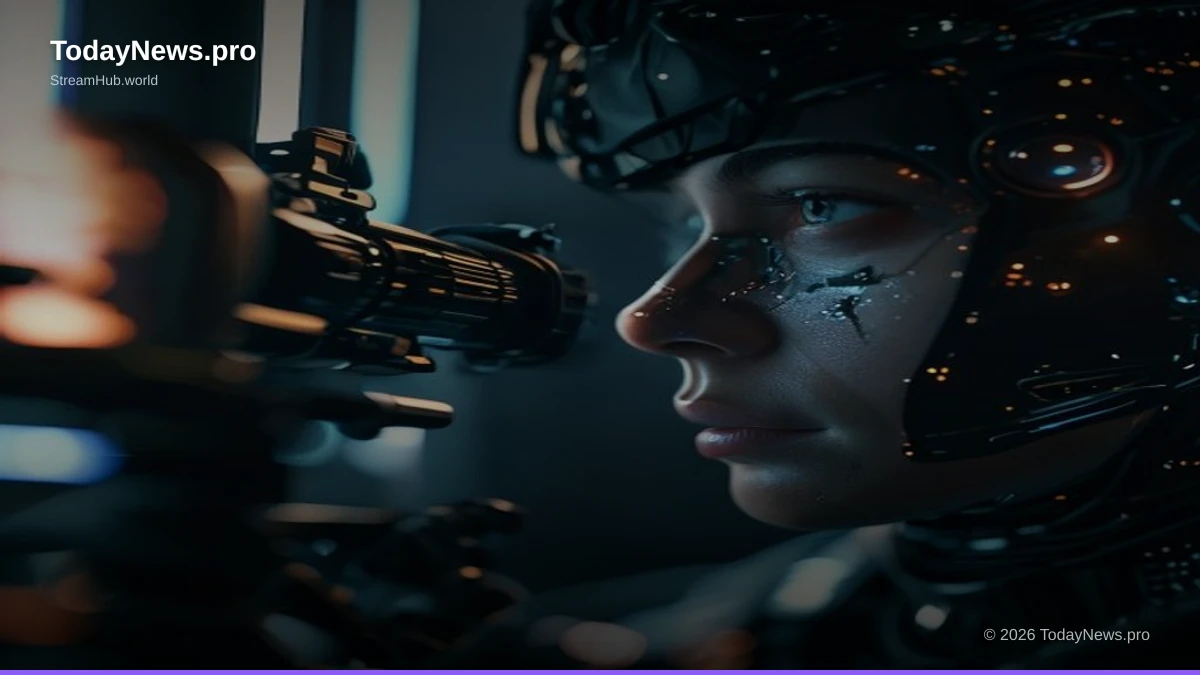
By 2030, the global market for artificial intelligence in media and entertainment is projected to exceed $20 billion, with filmmaking being a significant driver of this growth.
AIs Genesis in Cinema: Beyond Visual Effects
While artificial intelligence's most visible impact on filmmaking historically resided in the realm of visual effects, its influence has quietly permeated every stage of the cinematic process. Early forays involved sophisticated algorithms for rendering complex CGI, but the current wave of AI integration represents a fundamental shift, moving from mere enhancement to active participation in creative and logistical decision-making. This evolution is not just about making pixels move more realistically; it’s about reimagining how stories are conceived, crafted, and delivered to audiences.
The journey began with computational power enabling more intricate visual effects. Think of the seamless integration of digital characters into live-action scenes or the creation of fantastical worlds that were once confined to imagination. However, modern AI, particularly machine learning and deep learning, offers capabilities far beyond rendering. These systems can now analyze vast datasets, identify patterns, and even generate novel content, fundamentally altering the filmmaker's toolkit and workflow.
The accessibility of powerful AI tools is democratizing filmmaking. Smaller independent studios and even individual creators can now leverage technologies that were once exclusive to major Hollywood productions. This shift promises a more diverse cinematic landscape, where innovation is not solely dictated by budget but by creative vision and the strategic application of these emerging technologies. The very definition of a "filmmaker" is expanding to include those adept at collaborating with intelligent machines.
The Evolution from CGI to Creative Partnership
The early days of AI in cinema were characterized by its use as a sophisticated tool for visual effects artists. Algorithms were developed to automate repetitive tasks, such as rotoscoping, motion tracking, and the rendering of complex textures and lighting. This allowed for greater detail and realism in digital environments and characters, pushing the boundaries of what audiences had previously seen on screen. Iconic films like "Avatar" and the "Lord of the Rings" trilogy showcased the immense potential of these early AI-driven visual effects.
However, the current generation of AI moves beyond mere automation. Generative AI models, trained on massive datasets of text, images, and even film footage, can now assist in creating entirely new visual assets. This includes generating concept art, designing character models, and even creating short animated sequences. This collaborative approach allows artists to explore a wider range of creative possibilities rapidly, accelerating the ideation phase and providing novel starting points for visual development.
The shift is not about replacing human creativity but augmenting it. AI can act as a tireless assistant, capable of generating countless variations on a theme, allowing human artists to focus on refinement, curation, and the injection of nuanced artistic intent. This partnership is crucial for pushing the boundaries of visual storytelling in ways that were previously unimaginable due to time and resource constraints.
Machine Learning in Pre-Visualisation
Before cameras even roll, AI is proving invaluable in pre-visualization. Machine learning algorithms can analyze scripts and suggest optimal camera angles, blocking, and even lighting setups based on established cinematic principles and genre conventions. This data-driven approach helps directors and cinematographers make informed decisions early in the process, reducing costly guesswork during production.
AI-powered pre-vis tools can generate rough 3D animatics of key scenes, allowing filmmakers to "walk through" the narrative before shooting. These simulations can reveal potential pacing issues, spatial disorientation, or missed opportunities for visual storytelling. By identifying these problems early, teams can iterate and refine the visual language of the film efficiently, ensuring a more cohesive and impactful final product.
Furthermore, AI can analyze audience engagement data from previous films, providing insights into which visual styles, narrative arcs, or character archetypes resonate most effectively. This information, while requiring careful ethical consideration, can guide pre-production decisions to enhance the potential for audience connection and commercial success. The goal is to blend artistic vision with data-informed strategy.
Scriptwriting Revolution: From Blank Page to AI Co-Author
The blank page has long been the nemesis of many a screenwriter, but artificial intelligence is emerging as a powerful ally. AI-driven tools are now capable of generating plot outlines, character backstories, dialogue, and even entire scene drafts. These systems, trained on vast corpuses of literature and film scripts, can identify narrative structures, genre tropes, and effective character development arcs, offering writers novel starting points and assisting in overcoming creative blocks.
The process often involves an iterative dialogue between the human writer and the AI. A writer might provide a premise, a few key characters, or a desired genre, and the AI will generate various plot possibilities. The writer then selects, refines, and directs the AI's output, essentially co-authoring the screenplay. This collaborative model preserves the human element of storytelling while leveraging AI's capacity for rapid idea generation and exploration of diverse narrative pathways.
While AI cannot replicate the lived experience, emotional depth, and nuanced understanding of human psychology that a seasoned screenwriter brings, it can serve as an invaluable brainstorming partner and a powerful tool for accelerating the initial drafting stages. The fear of AI replacing writers is being tempered by the realization of its potential to enhance creativity and efficiency.
Generating Loglines and Synopses
One of the most immediate applications of AI in scriptwriting is the generation of compelling loglines and synopses. By analyzing the core elements of a story – its premise, protagonist, conflict, and stakes – AI can craft concise and attention-grabbing summaries. This is invaluable for pitching projects, generating marketing materials, and even for writers trying to crystallize the essence of their narrative.
Tools like Jasper or Sudowrite can take a user's input about their story and produce multiple logline options, often with surprising creativity and effectiveness. These outputs can spark new ideas for refining the central conflict or highlighting the unique selling points of the film. This ability to quickly generate variations allows writers to experiment with different angles and find the most impactful way to convey their story's premise.
This doesn't negate the skill required for crafting a truly memorable logline, but it significantly lowers the barrier to entry and provides a powerful starting point. The human touch remains essential for ensuring the logline accurately reflects the tone and spirit of the screenplay.
Character Development and Dialogue Assistance
AI can also play a significant role in character development. By analyzing existing character archetypes and narrative functions, AI can suggest personality traits, motivations, and even potential character arcs. For dialogue, AI can generate sample conversations based on character profiles and plot points, helping writers find naturalistic or stylistically appropriate speech patterns.
For example, an AI might be prompted to create dialogue for a cynical detective in a noir film, drawing on patterns and vocabulary common to that genre and character type. The output might not be perfect, but it can provide a foundation or inspiration that the writer can then mold and refine. This saves time on what can often be a painstaking process of crafting authentic-sounding conversations.
Furthermore, AI can be used to analyze existing dialogue for pacing, subtext, and character consistency, offering suggestions for improvement. This analytical capability allows writers to gain a more objective perspective on their work, identifying areas where dialogue might be clunky, redundant, or inconsistent with a character's established persona. It's a form of automated script doctoring.
Plot Generation and Story Structure Analysis
Beyond individual scenes, AI is being trained to understand and generate entire plot structures. By analyzing successful narrative arcs, such as the three-act structure, the hero's journey, or more complex episodic frameworks, AI can suggest plot points, twists, and resolutions. This is particularly useful for genre films where established structures are common.
Tools can also analyze existing scripts or story outlines for structural weaknesses. They can identify pacing issues, plot holes, or underdeveloped subplots, providing actionable feedback to the writer. This analytical power allows for a more robust and coherent narrative before production begins, potentially saving significant reshoot costs and improving the overall viewing experience.
The AI can even suggest alternative plot paths, allowing writers to explore "what-if" scenarios and discover unexpected narrative avenues. This explorative capacity is a significant boon for creative brainstorming, helping to avoid predictable storylines and fostering more original storytelling. The ability to quickly generate and evaluate multiple plot directions is a game-changer.
Pre-Production Powerhouse: AI in Planning and Storyboarding
The meticulous planning that underpins successful filmmaking is being dramatically enhanced by AI. From optimizing shooting schedules to generating detailed storyboards, artificial intelligence is streamlining pre-production, saving time, reducing costs, and unlocking new creative possibilities. AI’s ability to process vast amounts of data and identify complex patterns makes it an ideal tool for the intricate logistical and creative challenges of this phase.
AI algorithms can analyze scripts to predict the resources required for each scene, including cast, crew, locations, and equipment. This information can then be used to generate highly optimized shooting schedules that minimize downtime and maximize efficiency, considering factors like actor availability, set construction timelines, and geographical proximity of locations. The result is a more fluid and cost-effective production plan.
Furthermore, AI is transforming the visualization of scripts. Tools can now generate sophisticated storyboards, concept art, and pre-visualization animations based on script descriptions. This allows directors and their teams to visually conceptualize the film’s look and feel much earlier in the process, facilitating clearer communication and more informed creative decisions before the cameras start rolling.
Optimizing Shooting Schedules and Logistics
One of the most significant impacts of AI in pre-production is its ability to revolutionize scheduling. Traditional scheduling can be a complex, manual process fraught with potential errors and inefficiencies. AI-powered software can analyze scripts, cast availability, crew schedules, location constraints, and even weather patterns to generate optimal shooting plans.
These systems can identify potential conflicts, suggest the most efficient order of shooting scenes based on logistical factors, and even predict the impact of unforeseen delays. For instance, an AI could recommend shooting all scenes at a particular studio soundstage consecutively, even if they appear at different points in the script, to minimize setup and teardown time. This level of granular optimization can lead to substantial savings in both time and budget.
The data-driven nature of AI scheduling allows for rapid recalculation in response to changes, ensuring that the production team always has the most up-to-date and efficient plan. This adaptability is crucial in the often unpredictable world of filmmaking.
| AI Scheduling Benefit | Potential Reduction |
|---|---|
| Overall Production Time | 5-15% |
| On-Set Overtime Costs | 10-20% |
| Travel and Accommodation Expenses | 5-10% |
| Equipment Rental Days | 7-12% |
Automated Storyboarding and Concept Art Generation
The visual storytelling of a film begins long before principal photography. AI tools are now capable of generating dynamic storyboards and concept art from script descriptions. By feeding a script into an AI model, filmmakers can receive a series of visual panels that depict key scenes, character actions, and camera movements.
These AI-generated storyboards serve as a powerful communication tool, ensuring that the entire creative team shares a common visual understanding of the film. They allow directors to rapidly iterate on visual ideas, explore different framing options, and refine the narrative flow before committing to expensive set builds or location scouting.
The speed at which AI can produce these visuals is remarkable. What might take a team of artists days or weeks can now be generated in hours, freeing up human artists to focus on more nuanced and detailed artistic contributions, such as character design or environmental textures. This democratizes the pre-visualization process, making high-quality visual planning accessible to a wider range of filmmakers.
Virtual Production and AI Integration
Virtual production, which leverages LED screens to display real-time digital environments, is a rapidly growing field. AI is becoming integral to its success, particularly in the creation and manipulation of virtual sets and characters. AI can help generate photorealistic backdrops, populate them with dynamic elements like crowds or weather effects, and even drive the animation of virtual characters in real-time.
For example, AI can analyze an actor's performance in front of a green screen and seamlessly blend them into a pre-rendered virtual environment, with realistic lighting and reflections. This reduces the need for extensive location shooting and complex green screen compositing in post-production.
The synergy between AI and virtual production offers unprecedented control over the visual aspects of filmmaking. Filmmakers can literally walk through and interact with their digital sets before they are even built, allowing for a level of creative freedom and efficiency previously unattainable. This technology is rapidly democratizing the ability to create visually stunning and immersive cinematic experiences.
On-Set Automation: Streamlining Production and Performance
The chaos and dynamism of a film set are often seen as inherently human domains, but artificial intelligence is now finding its footing on location, automating tasks, enhancing director's tools, and even influencing performance capture. From real-time editing suggestions to AI-driven camera operation, the on-set experience is becoming more efficient and creatively augmented.
One of the most practical applications of AI on set is in real-time dailies processing. AI can analyze footage as it's shot, automatically categorizing shots, identifying potential technical issues like focus problems or exposure inconsistencies, and even flagging moments of exceptional performance. This provides directors and editors with immediate feedback, allowing for on-the-spot adjustments and a more streamlined post-production workflow.
Beyond data analysis, AI is also being developed to assist with camera operation. Robotic camera systems controlled by AI can execute complex, repeatable shots with remarkable precision, freeing up human cinematographers to focus on artistic composition and lighting. This is particularly useful for action sequences or shots requiring extreme steadiness and accuracy.
AI-Assisted Cinematography and Camera Operation
While the artistic eye of a cinematographer remains paramount, AI is emerging as a powerful assistant on set. AI algorithms can analyze scene composition, lighting conditions, and subject movement to suggest optimal camera settings, framing, and focus pulls. In some advanced systems, AI can even control camera movements autonomously, executing pre-programmed shots with uncanny precision.
Robotic camera systems, guided by AI, can perform complex, multi-axis movements that would be difficult or impossible for a human operator. This is invaluable for repetitive shots, high-speed action sequences, or scenes requiring absolute consistency. The AI can also be trained to track subjects seamlessly, ensuring that the focus remains sharp even during dynamic movement.
This integration doesn't aim to replace the cinematographer but to augment their capabilities. By automating certain technical aspects, AI allows cinematographers to dedicate more time and mental energy to the creative vision of the shot, exploring different artistic choices and ensuring the emotional resonance of the imagery. The result is often a more polished and artistically cohesive visual output.
Real-time Dailies and Performance Analysis
The laborious process of reviewing daily footage, known as dailies, is being revolutionized by AI. As footage is captured, AI can perform real-time analysis, identifying the best takes based on factors like actor performance, technical quality, and emotional impact. This allows directors and editors to make more informed decisions about which takes to keep and which to discard, significantly speeding up the review process.
AI can also flag specific moments of interest – a particularly nuanced facial expression, a powerful line delivery, or a subtle gesture – that might otherwise be overlooked in hours of footage. This data-driven approach ensures that the most compelling performances are captured and preserved, leading to a richer and more impactful final edit.
Furthermore, AI can assist in identifying continuity errors or technical glitches in real-time, allowing for immediate reshoots or corrections. This proactive approach to quality control can save considerable time and resources in post-production, preventing problems from cascading through the pipeline.
Performance Capture and Digital Avatars
AI is playing a crucial role in enhancing performance capture for digital characters and virtual actors. Machine learning algorithms can analyze an actor's movements, facial expressions, and vocal inflections, translating them into highly realistic digital performances. This allows for the creation of believable digital characters that are indistinguishable from their human counterparts.
Beyond simply replicating human performance, AI can also be used to generate entirely new character performances. By training AI models on vast datasets of human movement and emotion, filmmakers can create digital characters with unique personalities and expressive capabilities that may even surpass human limitations. This opens up new avenues for creature design and the creation of non-human characters with compelling emotional depth.
The development of AI-powered digital avatars also has implications for remote collaboration and virtual filmmaking. Actors can perform their roles remotely, with their performances captured and rendered in real-time within a virtual production environment, seamlessly integrating them into the scene.
The AI-Powered Post-Production Pipeline
The post-production phase of filmmaking, where raw footage is transformed into a polished final product, is perhaps the area where AI has had the most profound and widespread impact. From editing and color grading to sound design and visual effects, AI is automating laborious tasks, enhancing creative possibilities, and accelerating the entire workflow.
Automated editing is no longer science fiction. AI can analyze footage, identify key narrative moments, and even generate rough cuts based on script cues or desired pacing. This allows editors to focus on refining the artistic nuances and emotional arc of the film, rather than spending hours sifting through raw footage. AI can also assist in tasks like shot selection, continuity checking, and even the automatic generation of trailers.
Color grading, a crucial element in setting a film's mood and visual tone, is also being transformed. AI can analyze reference images or established cinematic styles and apply similar color palettes to footage, ensuring consistency and speeding up the grading process. Furthermore, AI can intelligently adjust color and exposure to match shots, creating a seamless visual flow.
Automated Editing and Shot Selection
The sheer volume of footage captured during principal photography can be overwhelming for editors. AI is stepping in to automate parts of this process. By analyzing scripts, audio cues, and visual content, AI can identify the most relevant takes and suggest initial edit sequences. This is particularly useful for dialogue-heavy scenes or documentaries where multiple takes of the same information are captured.
AI can also be trained to recognize specific visual elements or actions, allowing for the automatic assembly of montages or sequences. For example, an AI could be instructed to find all shots containing a specific character or object, and then arrange them in a coherent order. This dramatically reduces the time spent on manual searching and sorting of footage.
While AI can generate a rough cut, the human editor's role remains indispensable for shaping the final rhythm, pacing, and emotional impact of the film. AI acts as a powerful assistant, handling the more tedious aspects of assembly so that editors can concentrate on the art of storytelling.
AI in Color Grading and Visual Styling
Achieving a consistent and evocative visual style is paramount in filmmaking, and AI is making significant strides in color grading and stylistic consistency. AI algorithms can analyze existing film styles or user-defined aesthetics and apply them to new footage, ensuring a cohesive look throughout the film.
One application is the ability to match the color and exposure of different shots automatically. This is invaluable for ensuring continuity, especially when scenes are shot out of sequence or under varying lighting conditions. AI can analyze the luminance, saturation, and hue of each shot and intelligently adjust them to create a seamless visual flow, saving hours of manual correction by colorists.
Furthermore, AI tools can be used to create stylistic presets or emulate the looks of classic films, providing directors and cinematographers with a vast palette of visual options to explore during the grading process. This democratizes high-end color grading, making sophisticated visual styling more accessible.
Sound Design, Dubbing, and Music Generation
The auditory landscape of a film is as crucial as its visuals. AI is making its mark here too, with tools capable of generating sound effects, cleaning up audio, and even creating original musical scores. AI can analyze existing sound libraries and create novel soundscapes based on scene descriptions or desired moods.
Dubbing and voiceover work are also being streamlined. AI can generate synthetic voices that closely mimic human speech patterns, making it easier and more cost-effective to create localized versions of films or to add narration. Advanced AI can even lip-sync dialogue to match the original actor's performance, ensuring a seamless dubbing experience.
In music composition, AI can generate original scores based on the emotional tone and pacing of a scene. While it may not yet replicate the nuanced artistry of a human composer, it can provide a functional and mood-appropriate soundtrack, or serve as inspiration for composers. The ability to generate royalty-free background music quickly is a significant boon for independent filmmakers.
Ethical Lenses and Creative Futures: Navigating the AI Landscape
As artificial intelligence becomes more deeply embedded in filmmaking, it brings with it a host of ethical considerations and opens up fascinating avenues for the future of cinema. The potential for AI to mimic human creativity raises questions about authorship, copyright, and the very definition of art. Simultaneously, it offers unprecedented opportunities for creative expression and narrative innovation.
One of the most pressing ethical concerns revolves around the potential for AI to generate deepfakes and manipulate visual content. Safeguarding against the misuse of these powerful technologies is paramount. This includes developing robust detection mechanisms and establishing clear guidelines for the ethical use of AI-generated imagery, particularly concerning the likeness of actors and the potential for misinformation.
On the creative front, AI's ability to generate novel content is pushing the boundaries of storytelling. We are seeing the emergence of AI-assisted filmmaking where algorithms are not just tools but collaborators, contributing to scriptwriting, visual design, and even musical composition. This symbiotic relationship between human and machine intelligence promises to unlock entirely new forms of cinematic expression.
Authorship, Copyright, and Intellectual Property
The increasing role of AI in content creation inevitably leads to complex questions about authorship and copyright. When an AI generates a script or a visual asset, who owns the intellectual property? Current legal frameworks are still grappling with these issues, as copyright law traditionally protects works created by human beings.
There is a growing debate on whether AI-generated content should be eligible for copyright protection and, if so, who the rightful owner should be – the developer of the AI, the user who prompted it, or the AI itself. This ambiguity poses challenges for creators, studios, and distributors alike, necessitating a re-evaluation of intellectual property laws in the digital age.
Some advocate for a distinction between AI as a tool and AI as a co-creator. When AI assists a human creator, the human is typically considered the author. However, when AI generates content with minimal human input, the legal landscape becomes much murkier. Clearer regulations and industry standards are needed to navigate this evolving terrain.
The Future of Human Creativity in an AI-Dominated Industry
Concerns about AI replacing human jobs in filmmaking are valid, but the prevailing sentiment among many industry professionals is that AI will augment, rather than supersede, human creativity. The unique emotional intelligence, lived experience, and nuanced understanding of the human condition that artists bring to filmmaking are qualities that AI, at least in its current form, cannot replicate.
Instead, AI is likely to evolve into a sophisticated collaborator, handling repetitive and data-intensive tasks, freeing up human creators to focus on higher-level conceptualization, artistic direction, and emotional storytelling. This could lead to a more efficient and creatively liberated filmmaking process.
The future of filmmaking may see a new breed of "AI-literate" filmmakers who are adept at leveraging these tools to realize their artistic visions. The emphasis will likely shift from manual execution to intelligent direction and curation of AI-generated content, fostering a new era of creative partnerships.
Bias in AI and Representation in Cinema
A critical ethical challenge in AI development, including its application in filmmaking, is the issue of bias. AI systems are trained on data, and if that data reflects societal biases, the AI will perpetuate and potentially amplify them. This can manifest in various ways, from biased script generation that favors certain archetypes to AI-generated characters that lack diversity.
For example, if an AI is trained predominantly on historical films that feature predominantly white male protagonists, it may struggle to generate diverse characters or narratives. This raises concerns about representation in cinema and the potential for AI to reinforce existing inequalities rather than challenge them.
Addressing this requires a conscious effort to curate diverse and inclusive training datasets for AI models, as well as developing AI systems that are explicitly designed to promote fairness and representation. Filmmakers have a responsibility to use AI tools ethically and to critically evaluate their outputs to ensure that they contribute to a more inclusive and equitable cinematic landscape.
The Emerging AI Toolkit for Filmmakers
The landscape of AI tools for filmmakers is rapidly expanding, offering solutions for every stage of the production pipeline. From generative text models for scriptwriting to advanced visual synthesis tools for post-production, these technologies are democratizing access to sophisticated creative capabilities.
Platforms like OpenAI's GPT-3 and its successors are revolutionizing scriptwriting, enabling users to generate plot ideas, character dialogues, and even complete scene drafts. For visual creation, tools such as Midjourney, DALL-E 2, and Stable Diffusion are enabling artists to generate concept art, storyboards, and even short animated sequences from simple text prompts.
In post-production, AI-powered software is automating tasks like video editing, color grading, and sound mixing. Companies like Adobe are integrating AI features directly into their creative suites, making these powerful tools more accessible to a wider range of filmmakers. The rapid pace of innovation means that the toolkit is constantly evolving, offering new possibilities for storytelling and visual expression.
Generative AI for Script and Narrative Development
Generative AI models have emerged as powerful allies for screenwriters. Tools like Jasper, Sudowrite, and even more generalized large language models (LLMs) can assist in brainstorming, outlining, and drafting. By providing prompts, writers can receive suggestions for plot twists, character motivations, dialogue variations, and even entire scene sequences.
These AI models learn from vast datasets of text and scripts, enabling them to understand narrative structures, genre conventions, and stylistic nuances. This doesn't mean the AI writes the film independently; rather, it acts as a sophisticated co-writer, offering a constant stream of ideas and solutions that a human writer can then curate, refine, and imbue with their unique voice and vision.
The ability to quickly generate multiple narrative possibilities allows writers to explore different story directions and overcome creative blocks more efficiently. This iterative process, combining human creativity with AI's generative power, is shaping the future of screenwriting.
Visual Content Generation: From Concept Art to Final Frames
The creation of visual assets is another area where generative AI is having a transformative impact. Tools like Midjourney, DALL-E 2, and Stable Diffusion can generate photorealistic images, concept art, and storyboards from textual descriptions. This allows filmmakers to visualize their ideas with unprecedented speed and flexibility.
These tools are invaluable for concept artists, who can use them to rapidly explore different visual styles and character designs. They can also be used to generate background plates for visual effects, create unique textures, or even produce short animated sequences for pre-visualization. The ability to generate complex visuals from simple prompts significantly accelerates the early stages of visual development.
As these technologies advance, we are seeing them integrated into more complex workflows, enabling the generation of full scenes, character animations, and even photorealistic digital actors. The line between AI-generated content and human-created content is becoming increasingly blurred, presenting both exciting opportunities and significant challenges for the industry.
AI in Editing, Color Grading, and Sound Design Software
Post-production workflows are being significantly optimized by AI. Major software providers are integrating AI-powered features into their editing, color grading, and sound design tools. For example, Adobe Premiere Pro now includes AI-driven features for automatic transcription, scene detection, and color correction.
AI can assist editors by automatically identifying the best takes, suggesting cuts, and even assembling rough edits based on script cues. In color grading, AI can intelligently match the color and exposure of different shots, ensuring visual consistency and saving colorists significant time. For sound design, AI can be used to remove background noise, generate realistic sound effects, and even create original musical scores.
These AI integrations are not intended to replace skilled professionals but to empower them. By automating tedious tasks, AI allows editors, colorists, and sound designers to focus on the more creative and nuanced aspects of their work, leading to a more efficient and artistically richer post-production process. The accessibility of these tools also lowers the barrier to entry for aspiring filmmakers.
| AI Tool Category | Key Applications | Example Software/Platforms |
|---|---|---|
| Scriptwriting & Narrative | Plot generation, dialogue writing, character development | Jasper, Sudowrite, OpenAI GPT series |
| Visual Content Generation | Concept art, storyboards, digital assets, animation | Midjourney, DALL-E 2, Stable Diffusion |
| Editing & Post-Production | Automated editing, shot selection, color matching, audio cleanup | Adobe Premiere Pro (AI features), DaVinci Resolve (AI features) |
| Virtual Production & VFX | Environment generation, character animation, real-time compositing | Nvidia Omniverse, Unreal Engine (AI integrations) |