

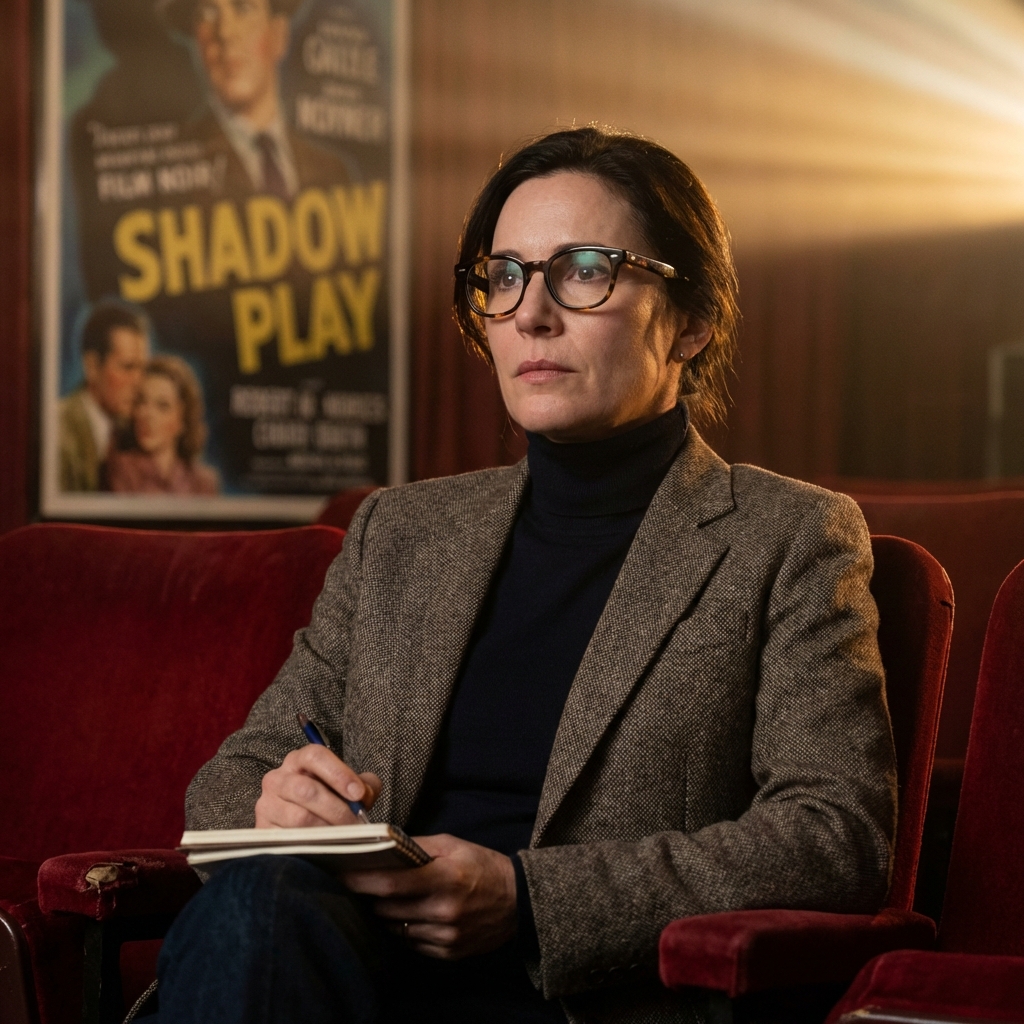
 Kenji Sato

Hollywood’s global box office revenue plummeted by an estimated 75% in 2020, a stark reminder of the industry's vulnerability to disruption and the constant need for innovation in storytelling.
The Dawn of Algorithmic Authorship
For decades, the hallowed halls of Hollywood have been synonymous with human creativity, the painstaking craft of screenwriting and the collaborative magic of filmmaking. The script, the blueprint for cinematic worlds, has traditionally been the sole domain of human imagination, shaped by life experiences, emotional nuances, and the complex tapestry of human interaction. However, a seismic shift is underway, powered by the accelerating capabilities of Artificial Intelligence. AI is no longer a futuristic concept confined to science fiction; it is actively integrating into the very fabric of how stories are conceived, written, and visualized in the motion picture industry.
The emergence of sophisticated AI models capable of generating coherent text, understanding narrative structures, and even mimicking artistic styles has thrown open the doors to a new era of content creation. These algorithms, trained on vast datasets of existing scripts, novels, and visual media, are demonstrating an uncanny ability to produce original storylines, dialogue, and even character arcs. While the notion of a machine penning the next Oscar-winning screenplay might seem far-fetched, the current reality is that AI tools are already being employed to augment, assist, and, in some cases, even initiate the creative process for screenwriters.
The implications of this technological evolution are profound and far-reaching. They touch upon the very definition of authorship, the economic models of content production, and the future aesthetic of cinematic storytelling. As AI’s capabilities expand, so too does the debate surrounding its role, raising critical questions about originality, artistic integrity, and the enduring value of human creativity in an increasingly automated world.
From Data to Dialogue: The Rise of Generative AI
At the heart of this transformation lie generative AI models, such as Large Language Models (LLMs). These neural networks, exemplified by OpenAI's GPT series and Google's LaMDA, are trained on colossal amounts of text and code, enabling them to understand context, generate human-like prose, and even learn complex patterns in storytelling. For screenwriters, these tools offer a tantalizing glimpse into a future where writer's block might be a relic of the past, and the iterative process of drafting and refining scripts can be significantly accelerated.
Tools powered by these LLMs can assist in brainstorming plot points, generating character backstories, suggesting alternative dialogue options, and even outlining entire scenes based on a few prompts. This doesn't necessarily mean AI is replacing writers wholesale, but rather acting as a highly sophisticated brainstorming partner or an incredibly efficient assistant. The ability to rapidly generate multiple versions of a scene or explore diverse narrative pathways can free up human writers to focus on higher-level creative decisions, emotional depth, and the unique human touch that resonates with audiences.
The speed at which these models can process information and generate content is unparalleled. A human writer might spend days or weeks developing a detailed outline for a feature film; an AI, given the right parameters, could potentially generate several compelling outlines within hours. This efficiency is a significant draw for studios and production companies looking to streamline their development pipelines and reduce production costs.
The AI-Powered Writers Room
The traditional writer's room, a collaborative space where ideas are bounced around and scripts are hammered into shape, is beginning to see the subtle, yet significant, integration of AI. Instead of just whiteboards and heated discussions, digital interfaces are appearing, populated by AI-generated suggestions. These tools can act as impartial participants, offering objective feedback or generating new angles that might not have been considered by the human team.
For instance, an AI could analyze a draft script for pacing issues, identify clichés, or even suggest ways to improve character motivations based on established narrative archetypes. This analytical capability can provide invaluable insights that might be missed by a group solely focused on the creative flow. Furthermore, AI can be tasked with generating variations on dialogue, ensuring that each character’s voice remains distinct and authentic, a task that can be time-consuming for human writers.
The goal here is not to devalue the human element but to amplify it. By offloading some of the more laborious or analytical tasks to AI, writers can dedicate more of their energy to the core emotional resonance, thematic exploration, and the subtle nuances that make a story truly compelling and relatable. The AI becomes a powerful tool, akin to a sophisticated word processor or a vast digital library, but with the added capability of creative generation and analysis.
AI as a Co-Pilot: Enhancing the Creative Process
The integration of AI into screenwriting is best understood, at this nascent stage, as a collaborative partnership rather than a complete takeover. AI serves as a powerful co-pilot, augmenting the human screenwriter's abilities and streamlining various aspects of the creative workflow. This symbiotic relationship promises to unlock new levels of efficiency and creative exploration.
One of the most immediate benefits is the acceleration of the pre-production phase. AI tools can rapidly generate a multitude of plot synopses, character profiles, and scene descriptions based on initial concepts. This allows writers to explore a wider range of narrative possibilities in a fraction of the time it would traditionally take. Instead of staring at a blank page, writers can be presented with several starting points, saving valuable development hours and resources.
Moreover, AI can act as a tireless research assistant. Need to ensure historical accuracy for a period drama? An AI can sift through vast archives of information, providing relevant details about clothing, customs, and historical events. Trying to craft dialogue for a character with a specific dialect or technical background? AI can provide linguistic assistance and factual accuracy checks, ensuring authenticity and credibility.
Accelerating Development and Idea Generation
The sheer speed at which AI can generate content is a game-changer for the early stages of script development. Imagine a studio executive with a vague idea for a sci-fi thriller. Instead of weeks of brainstorming sessions, an AI can, within minutes, produce a dozen distinct plot summaries, each with unique twists and character archetypes. This allows for rapid iteration and identification of the most promising concepts.
Furthermore, AI can be employed to generate loglines and synopses that are optimized for market appeal, based on an analysis of successful films. This data-driven approach can help identify narrative elements that are likely to resonate with target audiences, offering a more strategic approach to content development. While human intuition remains paramount, AI can provide a valuable layer of informed suggestion.
The fear of writer's block, a perennial challenge for creatives, can also be mitigated. When a writer hits a wall, AI can offer alternative plot developments, suggest character motivations, or even propose new scenes that could advance the narrative. This is not about the AI writing the story, but about providing a wealth of creative prompts that can reignite inspiration and push the narrative in unforeseen directions.
Personalized Storytelling and Audience Engagement
Looking further ahead, AI's ability to analyze audience data could lead to more personalized storytelling experiences. While this is still largely in the experimental phase for feature films, the potential is undeniable. Imagine films that can subtly adapt their plot points or character interactions based on viewer preferences, creating a uniquely tailored experience for each individual.
This could extend to interactive narratives where AI dynamically generates branching storylines in real-time, offering a level of engagement not seen before. For streaming platforms, this could mean creating content that has a longer shelf life and higher retention rates by catering to niche audience preferences with remarkable precision. However, this also raises significant ethical questions about manipulation and the homogenization of creative output.
The ability of AI to understand emotional cues in text and predict audience reactions based on vast datasets of past viewing habits could influence how scripts are written. Writers might receive feedback not just on grammatical correctness or plot coherence, but also on the predicted emotional impact of specific scenes or dialogue. This data-informed approach, while potentially beneficial for commercial success, could also lead to a more formulaic approach to filmmaking if not carefully balanced with human artistic vision.
Dialogue Generation and Refinement
Crafting authentic and engaging dialogue is one of the most challenging aspects of screenwriting. AI models are proving to be remarkably adept at generating dialogue that mimics human speech patterns, adapting to different character voices and contexts. This can be invaluable for writers seeking to ensure that their characters sound distinct and believable.
An AI can be prompted to generate dialogue for a specific character based on their personality traits, background, and the scene's objective. It can offer multiple variations, allowing the writer to select the most effective lines or use them as inspiration for their own writing. This is particularly useful for historical dramas or genre films where specialized vocabulary or stylistic nuances are important.
Furthermore, AI can analyze existing dialogue for pacing, rhythm, and subtext, suggesting improvements. It can identify instances where dialogue might be too expositional, redundant, or lacking in emotional weight. By providing these kinds of detailed feedback, AI acts as an intelligent editor, helping writers polish their work to a higher standard.
| AI Application | Primary Benefit | Potential Drawback |
|---|---|---|
| Plot Generation | Rapid exploration of narrative possibilities | Risk of formulaic or derivative storylines |
| Character Development | Detailed backstories and personality profiles | May lack true emotional depth and nuance |
| Dialogue Assistance | Authentic and contextually appropriate speech | Can sound generic or lack unique human voice |
| Pacing and Structure Analysis | Identification of narrative flow issues | May overemphasize quantifiable metrics over artistic intent |
Beyond the Bard: AI in Visual Storytelling
The transformative impact of AI extends far beyond the written word, permeating the visual landscape of filmmaking. From generating concept art and storyboards to revolutionizing visual effects (VFX) and animation, AI is rapidly reshaping how movies look and feel. This technological infusion is not only speeding up production processes but also unlocking creative possibilities that were once the exclusive realm of immense budgets and specialized artistry.
The painstaking process of creating visual assets for films, which often involves legions of artists and technicians, is being augmented by AI-powered tools. These systems can generate photorealistic textures, design complex 3D models, and even animate characters with a degree of fluidity and realism that was previously unimaginable. This democratization of visual creation has the potential to lower the barrier to entry for independent filmmakers and allow larger studios to achieve more ambitious visual spectacles.
The integration of AI in VFX is particularly noteworthy. Tasks that once required manual painstaking work, such as rotoscoping (isolating and tracking objects in footage) or motion capture cleanup, are being automated by AI. This not only saves countless hours of labor but also allows for more complex and dynamic visual effects to be integrated seamlessly into the final product.
AI-Generated Visuals and Concept Art
Tools like Midjourney, DALL-E 2, and Stable Diffusion have exploded onto the scene, allowing users to generate stunningly detailed images from simple text prompts. For filmmakers, this translates into a powerful new way to visualize characters, environments, and entire scenes before a single frame is shot. Concept artists can use these tools to rapidly iterate on ideas, exploring a vast array of visual styles and aesthetics in minutes rather than days.
This rapid ideation process can significantly de-risk the early stages of visual development. Instead of commissioning numerous sketches, directors and art departments can quickly generate a visual palette, helping to solidify the look and feel of a film. This AI-generated concept art can then serve as a detailed guide for human artists who will refine and develop these visions further.
While concerns about originality and intellectual property are valid, the current trend suggests AI is more of a powerful ideation and augmentation tool for human artists. The ability to generate variations on a theme, explore different lighting scenarios, or even create entirely new creature designs based on descriptive prompts opens up a universe of visual possibilities that can inspire and accelerate the work of human visual artists.
Revolutionizing Visual Effects and Animation
The realm of Visual Effects (VFX) is perhaps where AI's impact is most tangible and transformative. Traditional VFX workflows often involve highly labor-intensive processes like manual tracking, rotoscoping, and 3D model creation. AI is now automating many of these tasks, leading to faster turnaround times and enabling more complex visual spectacles.
For instance, AI-powered tools can now perform "deepfake" technology for creative purposes, such as de-aging actors or recreating historical figures with remarkable accuracy. While the ethical implications of deepfakes are widely debated, their application in film for specific creative needs is becoming increasingly sophisticated. AI can also automate the process of creating realistic digital doubles of actors, which can then be used for dangerous stunts or digitally manipulated in ways that would be impossible with practical effects.
In animation, AI is assisting with character rigging, motion synthesis, and even facial animation. This allows animators to create more lifelike and expressive characters with greater efficiency. AI can learn from vast datasets of human movement and apply those principles to animated characters, resulting in more natural and compelling performances. The ability to generate fluid motion and realistic physics simulations is greatly enhanced by AI algorithms.
AI in Post-Production and Editing
The post-production phase, where raw footage is assembled and refined, is also being touched by AI. AI-powered editing software can assist in identifying the best takes, automatically syncing audio and video, and even suggesting cuts based on scene analysis and pacing. This can significantly speed up the editing process, allowing editors to focus on the narrative flow and emotional impact of the film.
AI can also be used for tasks such as color grading, sound design, and even generating background music. By analyzing the mood and tone of a scene, AI can suggest appropriate color palettes or musical scores, providing editors with a starting point for their creative decisions. This not only speeds up the process but can also lead to more consistent and effective post-production work.
The ability to analyze vast amounts of footage and identify key moments or emotional beats can be invaluable for editors. AI can flag scenes that are particularly compelling or that contain strong performances, helping editors to make more informed decisions about how to structure the final cut. This data-driven approach to editing, combined with the editor's creative judgment, promises a more efficient and potentially more impactful final film.
The Economic and Ethical Labyrinth
The rapid integration of AI into Hollywood is not without its complexities, particularly concerning economic implications and a burgeoning ethical landscape. While AI promises efficiency and cost savings, it also raises critical questions about job security for creatives, intellectual property rights, and the potential for bias within algorithmic creations.
The prospect of AI generating scripts, storyboards, or even completing visual effects tasks has sent ripples of anxiety through the industry. Unions and guilds representing writers, actors, and visual effects artists are actively engaged in discussions and negotiations to understand and shape how AI will impact their livelihoods. The economic models that have sustained Hollywood for decades are being re-evaluated in the face of these powerful new technologies.
Furthermore, the ethical considerations surrounding AI-generated content are vast. Who owns the copyright to an AI-generated screenplay? How do we ensure that AI models are not perpetuating harmful stereotypes or biases embedded in their training data? These are not theoretical questions but urgent challenges that the industry must confront to ensure a responsible and equitable future for filmmaking.
Job Displacement and the Future of Creative Labor
Perhaps the most immediate concern for many in Hollywood is the potential for AI to displace human workers. Writers, illustrators, animators, and even editors could find their roles significantly altered or reduced as AI capabilities advance. This has led to significant unrest and calls for protection from industry unions.
The Writers Guild of America (WGA), for example, has been at the forefront of negotiating AI limitations in its recent contract disputes. Their demands include preventing AI from being considered an author, ensuring that AI-generated content cannot be used to undermine writing credits or compensation, and maintaining the human element as central to the creative process. The goal is not to ban AI but to regulate its use in a way that safeguards writers' jobs and creative integrity.
Similarly, actors are concerned about AI being used to generate performances or to create digital likenesses without their consent or fair compensation. The ethical implications of using AI to create performances that mimic living actors, or even deceased ones, are profound and require careful consideration and regulation. The economic model of talent representation and compensation will undoubtedly need to adapt.
Intellectual Property and Authorship in the AI Era
A fundamental question emerging from AI's creative capabilities is the issue of intellectual property. If an AI generates a screenplay, who owns the copyright? Current copyright law is largely designed around human authorship, and adapting it to accommodate AI-generated works presents a significant legal challenge.
The US Copyright Office, for instance, has stated that it will only register works created by human authors. This stance suggests that while AI can be a tool used in the creative process, the ultimate authorship must reside with a human. However, the line between AI as a tool and AI as a co-creator can become blurred, leading to complex legal disputes. The industry is grappling with defining what constitutes "human authorship" in an age of sophisticated AI assistance.
Furthermore, the vast datasets used to train AI models often include copyrighted material. This raises questions about potential infringement if AI-generated content too closely resembles existing works. Establishing clear guidelines for the use of training data and ensuring that AI-produced content is sufficiently original will be crucial for the industry's legal and creative sustainability.
Bias in AI and the Perpetuation of Stereotypes
AI models learn from the data they are trained on. If that data contains biases, then the AI will inevitably perpetuate those biases. In the context of filmmaking, this can lead to AI generating scripts or visual content that reinforces harmful stereotypes related to race, gender, age, or any other demographic.
For example, if an AI is trained on a dataset where female characters are predominantly depicted in subservient roles or as romantic interests, it may continue to generate similar portrayals, limiting the diversity and complexity of female characters in new stories. Similarly, biases in visual data could lead to AI generating environments or characters that lack diversity or misrepresent certain cultures.
Ensuring that AI models are trained on diverse and representative datasets, and implementing robust auditing processes to identify and mitigate biases, is paramount. The industry has a responsibility to ensure that AI contributes to a more inclusive and equitable representation on screen, rather than amplifying existing societal prejudices. Transparency in AI development and deployment will be key to addressing these concerns.
Navigating the Future: Industry Reactions and Adaptations
Hollywood, a notoriously adaptable industry, is currently in a phase of intense introspection and strategic recalibrating as it grapples with the implications of AI. While some embrace it as the next evolutionary leap, others approach it with caution, focusing on regulatory frameworks and the preservation of human artistry. The prevailing sentiment is one of cautious exploration, with a clear emphasis on harnessing AI's potential without sacrificing the core values of creativity and human expression.
Major studios are actively investing in AI research and development, experimenting with various tools and platforms to understand their practical applications. Simultaneously, industry guilds and unions are engaged in crucial negotiations to establish guidelines and protections for creative professionals. The path forward is being shaped by a complex interplay of technological innovation, economic imperatives, and the collective voice of the creative community.
The landscape is far from settled, but a few key trends are emerging: AI is unlikely to replace human creativity entirely, but rather to augment it. The focus is shifting towards AI as a sophisticated tool that can enhance efficiency, unlock new creative possibilities, and democratize certain aspects of filmmaking. The success of this integration will hinge on finding a harmonious balance between algorithmic power and human ingenuity.
Studio Investments and R&D
Major Hollywood studios are no longer on the sidelines when it comes to AI. They are actively investing in AI research and development, either through internal teams, partnerships with tech companies, or strategic acquisitions. The goal is to understand how AI can be leveraged to streamline production, reduce costs, and unlock new creative avenues.
For instance, studios are exploring AI for tasks ranging from script analysis and trend prediction to automated rendering and advanced visual effects. Some are developing proprietary AI tools tailored to their specific production pipelines, while others are licensing off-the-shelf solutions. The race is on to identify and implement AI technologies that can provide a competitive edge in the increasingly crowded entertainment market.
This investment is not just about efficiency; it's also about future-proofing. Studios recognize that AI is not a fleeting trend but a fundamental technological shift that will reshape content creation for years to come. By staying at the forefront of AI adoption, they aim to maintain their leadership in the global entertainment industry.
Guilds and Unions: Negotiating the AI Landscape
The proactive stance of Hollywood's guilds and unions is a critical factor in shaping the responsible integration of AI. Organizations like the Writers Guild of America (WGA), SAG-AFTRA (for actors), and the International Alliance of Theatrical Stage Employees (I.A.T.S.E.) are at the forefront of advocating for protections for their members.
Their primary objectives include ensuring that AI does not diminish the value of human creativity, that AI-generated content is clearly identified, and that writers, actors, and technicians receive fair compensation and credit for their work, even when AI is involved. The recent WGA strike, in part, centered on the union's demands for clear guidelines regarding the use of AI in the writing process. These negotiations are vital for setting precedents and establishing ethical boundaries.
The success of these negotiations will determine how AI is deployed in a way that is mutually beneficial for both the studios seeking efficiency and the creative professionals whose livelihoods depend on their artistry. The goal is to strike a balance that fosters innovation while upholding the rights and contributions of human talent.
The Rise of AI-Assisted Production Platforms
A new ecosystem of AI-assisted production platforms is rapidly emerging, offering a suite of tools designed to support various stages of filmmaking. These platforms are not necessarily intended to replace human creatives but to empower them with advanced capabilities.
Examples include AI-powered script analysis tools that can identify plot holes or character arcs, AI-driven storyboarding software that can generate visual sequences from text descriptions, and AI-enhanced VFX tools that automate complex rendering and compositing tasks. These platforms are designed to be user-friendly, allowing filmmakers of all levels to leverage AI's power.
The availability of these platforms democratizes access to advanced filmmaking techniques. Independent filmmakers, who often operate with limited budgets, can now utilize tools that were once exclusive to large studios. This has the potential to foster a more diverse and innovative cinematic landscape, enabling new voices and stories to emerge.
The Specter of Automation: Fears and Realities
The rapid advancement of AI in creative fields understandably elicits a spectrum of reactions, from enthusiastic adoption to deep-seated apprehension. For many within Hollywood, the specter of automation looms large, raising legitimate fears about the future of their careers and the very essence of artistic creation. While AI offers undeniable benefits in efficiency and scope, the potential for job displacement and the erosion of human artistry remains a significant concern.
The reality is that AI's capabilities are expanding at an unprecedented rate. What was once the exclusive domain of human skill—generating nuanced dialogue, crafting intricate visual effects, or even composing evocative musical scores—is now within the reach of sophisticated algorithms. This technological progress necessitates a careful examination of both the tangible threats and the potential for a redefined creative landscape.
Understanding these fears and distinguishing them from the actual, demonstrable capabilities of AI is crucial for navigating this evolving industry. It requires open dialogue, proactive adaptation, and a commitment to ensuring that technology serves as an enhancement to, rather than a replacement for, human ingenuity.
The Human Touch: Irreplaceable Elements
Despite AI's impressive generative abilities, there are fundamental aspects of storytelling and artistic creation that remain intrinsically human. Emotional intelligence, lived experience, empathy, and the unique perspective that comes from navigating the complexities of human relationships are elements that AI, in its current form, cannot replicate.
A script written solely by AI might be technically proficient, but it may lack the soul, the subtext, and the raw emotional power that connects with audiences on a profound level. The subtle nuances of human interaction, the unspoken emotions, and the spark of unexpected insight are born from consciousness and experience—qualities that algorithms do not possess. Human writers bring their own unique histories, cultural backgrounds, and personal struggles to their work, imbuing it with a depth and authenticity that AI can only mimic, not truly originate.
Similarly, the collaborative spirit of filmmaking, the serendipitous moments of inspiration that arise from human interaction, and the intuitive leaps of judgment made by experienced directors, editors, and actors are all vital components of the creative process. While AI can provide data-driven insights, it cannot replicate the visceral, intuitive, and often irrational leaps of faith that lead to groundbreaking art.
AI as a Tool, Not a Tyrant
The most productive path forward, as articulated by many industry leaders and creatives, involves viewing AI not as a usurper, but as a powerful tool. Just as the advent of digital cameras did not eliminate filmmakers but rather changed the medium, AI has the potential to augment and enhance the capabilities of human artists.
When AI is used to automate tedious tasks like data analysis, rotoscoping, or basic scene generation, it frees up human creatives to focus on higher-level conceptualization, emotional depth, and nuanced storytelling. For screenwriters, AI can be a sophisticated brainstorming partner, generating plot variations or dialogue options that spark new ideas. For visual effects artists, AI can accelerate rendering times or automate repetitive tasks, allowing them to dedicate more time to the artistic and creative challenges of their work.
The key lies in maintaining human oversight and creative control. AI should serve the vision of the filmmaker, not dictate it. This requires a conscious effort to integrate AI in ways that amplify human talent and creativity, rather than diminish it. The focus should be on augmenting the artist, providing them with unprecedented capabilities to realize their visions more effectively and expansively.
The Evolution of Creative Roles
The integration of AI will undoubtedly lead to an evolution of creative roles within the film industry. Some roles may become more specialized, focusing on areas where human intuition and creativity are paramount, while others may incorporate new skill sets related to managing and directing AI tools.
For example, we might see the emergence of "AI prompt engineers" who specialize in crafting the precise instructions needed to generate desired creative output from AI models. Screenwriters might evolve into "narrative architects" who oversee AI-generated plot elements and imbue them with humanistic depth. Similarly, VFX supervisors might become "AI simulation directors," guiding AI-powered rendering and animation processes.
This evolution is not necessarily a negative one. It represents an adaptation to new technological realities, creating opportunities for individuals who can bridge the gap between human creativity and artificial intelligence. The industry will need professionals who can effectively leverage these new tools to push the boundaries of cinematic storytelling. The challenge lies in ensuring that this transition is managed equitably, with ample opportunities for reskilling and upskilling the existing workforce.
A New Chapter in Cinema?
The integration of Artificial Intelligence into Hollywood signifies not just a technological upgrade but a potential paradigm shift in how cinematic narratives are conceived, crafted, and experienced. The question is no longer whether AI will play a role, but rather how its influence will be shaped and what kind of cinematic future it will help forge.
As AI tools become more sophisticated and accessible, they promise to democratize filmmaking, enabling creators with limited resources to achieve previously unattainable visual and narrative ambitions. This could lead to a richer, more diverse, and more innovative cinematic landscape, where human ingenuity is amplified by algorithmic power.
However, the journey is fraught with challenges. Navigating the ethical complexities, ensuring fair compensation for human artists, and preserving the irreplaceable essence of human creativity will be paramount. The future of cinematic storytelling hinges on finding a harmonious and responsible balance between the boundless potential of AI and the enduring power of the human heart and mind.