

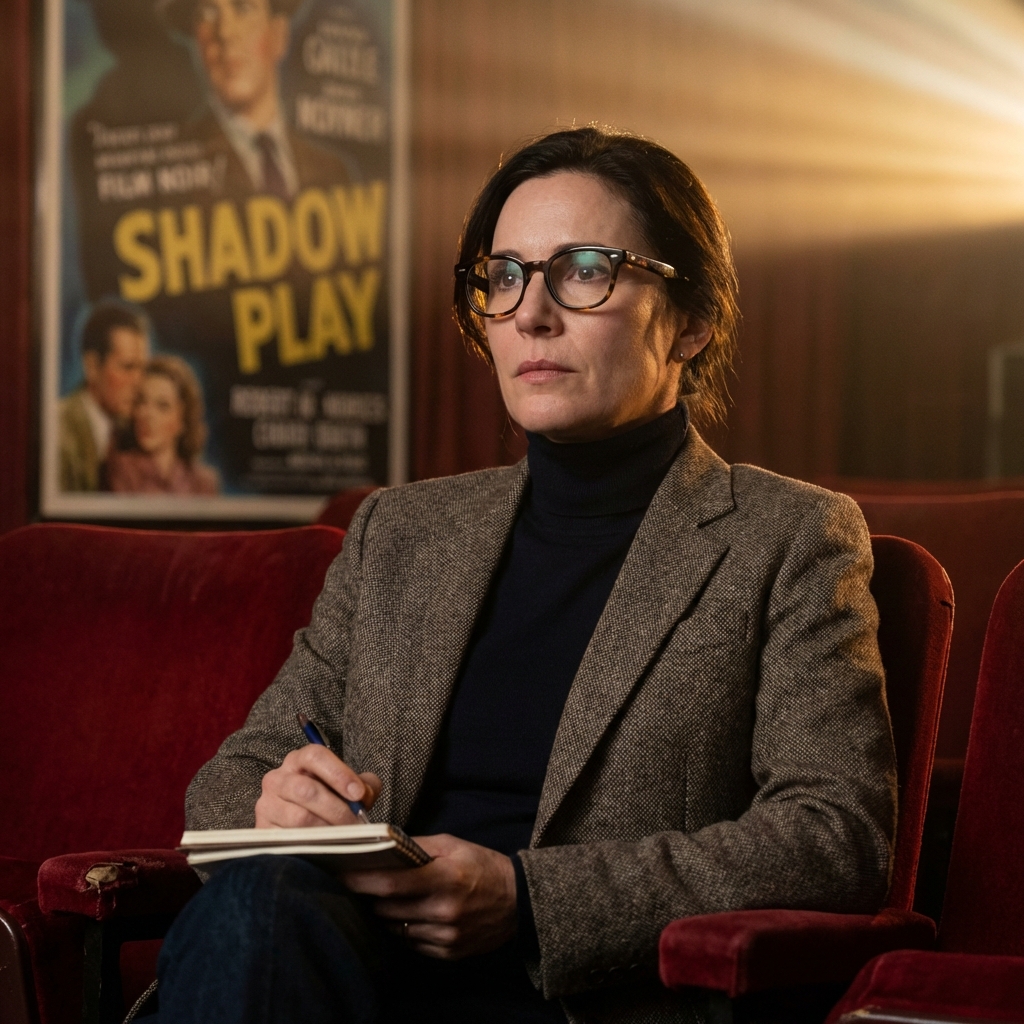
 Scott Wright
⏱ 40 min
The global market for AI in media and entertainment is projected to reach $117.8 billion by 2030, a staggering testament to the transformative power of artificial intelligence on creative industries. Hollywood, long the bastion of human artistry and craft, is now at the forefront of this revolution, grappling with and embracing generative AI technologies that are fundamentally rewriting the rules of filmmaking.
The Digital Renaissance: AIs Ascent in Hollywood
For decades, filmmaking has been a labor-intensive process, relying on meticulous planning, skilled artisans, and significant financial investment. The advent of digital technology streamlined many aspects, but the core creative and production pipelines remained largely human-driven. Generative AI, however, represents a paradigm shift. It's not merely an enhancement of existing tools; it's a fundamental rethinking of how content is conceived, created, and consumed. From initial script generation to the final polish of visual effects, AI is weaving itself into the fabric of cinematic production, promising unprecedented efficiency, novel creative avenues, and, inevitably, complex ethical considerations. The industry is no longer asking *if* AI will play a role, but *how extensively* and *to what end*. This digital renaissance is characterized by rapid innovation, a steep learning curve for studios and creatives alike, and a profound reevaluation of what it means to be a filmmaker in the 21st century. The potential is immense, but so too are the questions surrounding authorship, originality, and the very essence of human creativity.The Genesis of Generative AI in Film
The journey of AI in Hollywood began subtly, with tools for data analysis and predictive modeling. Early applications focused on optimizing marketing campaigns, analyzing audience demographics, and even predicting box office performance. However, the last few years have witnessed an explosive growth in generative AI, capable of producing entirely new content—text, images, audio, and video—from simple prompts. This leap from analytical to creative AI has sent ripples through every department, from writers' rooms to post-production suites. The ability of models like OpenAI's DALL-E, Midjourney, and Stable Diffusion to generate photorealistic images from text descriptions, and large language models (LLMs) like GPT-4 to craft compelling narratives, has moved AI from a behind-the-scenes facilitator to a potential co-creator.A New Creative Partnership?
The initial reaction within Hollywood has been a mixture of awe, apprehension, and a keen sense of opportunism. Many see generative AI not as a replacement for human talent, but as a powerful collaborator. Imagine a screenwriter using an AI to brainstorm plot points, generate character backstories, or even draft alternative dialogue. Picture a concept artist using AI to rapidly visualize a myriad of futuristic cityscapes or fantastical creatures. This partnership model suggests a future where AI handles the more repetitive or time-consuming aspects of creation, freeing up human artists to focus on higher-level conceptualization, refinement, and emotional nuance. This synergy is key to unlocking AI's full potential without sacrificing the human touch that defines compelling storytelling.From Script to Screen: Generative AIs Creative Toolkit
The writing process, once solely the domain of human imagination and painstaking revision, is now being augmented by AI. Large language models are proving adept at generating scripts, suggesting plot twists, and even developing character dialogue. This doesn't necessarily mean AI will write the next blockbuster solo, but it can serve as an invaluable assistant, breaking through writer's block and offering diverse narrative possibilities.AI as a Scriptwriting Muse
The sheer volume of content required by streaming services has put immense pressure on writers. Generative AI offers a potential solution by accelerating the ideation and drafting phases. LLMs can be trained on vast datasets of existing screenplays, learning patterns, genre conventions, and narrative structures. This allows them to generate story outlines, scene descriptions, and even complete scripts. For instance, an AI could be prompted to "write a sci-fi thriller set on a terraformed Mars, featuring a lone detective and a conspiracy involving alien artifacts," and it could produce a coherent narrative framework.75%
Potential time saving in early script development phases
40%
Increase in narrative variations explored
90%
Reduction in cost for concept art iteration
Character Development and World-Building
Beyond plot, AI can assist in fleshing out characters and building immersive worlds. An LLM could generate detailed character profiles, including backstories, personality traits, and even suggested motivations, based on high-level concepts. For world-building, AI can help design alien ecosystems, historical timelines, or intricate political systems. This capability is particularly valuable for science fiction and fantasy genres, where the creation of entirely new universes is paramount. The AI can act as an encyclopedia of possibilities, allowing creators to pick and choose from a vast array of generated elements.Pre-visualization and Storyboarding
The visual journey of a film begins long before principal photography. AI-powered tools are revolutionizing pre-visualization and storyboarding. Instead of manual drawing, AI can generate visual concepts for scenes, camera angles, and character blocking based on script descriptions. This accelerates the process of bringing a script to life visually, allowing directors and cinematographers to experiment with different approaches rapidly. Tools that can generate sequential images from text prompts are becoming increasingly sophisticated, offering a dynamic way to plan shots.Visual Spectacle: Revolutionizing Special Effects and Animation
The realm of visual effects (VFX) and animation, already heavily reliant on digital tools, is perhaps where generative AI's impact is most visually apparent and profound. From generating textures and environments to animating complex characters and creating entirely synthetic scenes, AI is pushing the boundaries of what's possible.AI-Powered Asset Generation
Creating digital assets—3D models, textures, environments, and props—is a time-consuming and expensive part of VFX. Generative AI can automate and accelerate this process dramatically. By providing text descriptions or reference images, artists can generate a wide array of assets. Imagine needing a specific type of alien plant for a scene; an AI could generate dozens of variations in minutes, far faster than traditional modeling. This also extends to creating realistic textures for surfaces, from weathered stone to futuristic metal.The Rise of Synthetically Generated Animation
Animation, whether 2D or 3D, is undergoing a significant transformation. AI can assist in generating character movements, facial expressions, and even entire animated sequences. For example, AI can learn from motion capture data to create realistic secondary animations, like the subtle sway of clothing or the ripple of muscles. Furthermore, AI models are being developed to generate animation directly from textual descriptions or even from simple sketches, opening up new possibilities for independent animators and smaller studios.AI Impact on VFX Production Timelines
Procedural Generation and Virtual Worlds
AI excels at procedural generation, creating vast and complex environments that would be impossible to build manually. This is particularly relevant for creating expansive virtual worlds for films, video games, and immersive experiences. AI can generate realistic landscapes, intricate city layouts, and detailed interiors, providing filmmakers with rich backdrops that can be explored and manipulated. The ability to procedurally generate elements means that even large-scale fictional worlds can be realized with greater efficiency and detail.The Blurring Lines: AI-Generated Cinematography
While true AI-driven cinematography is still in its nascent stages, tools are emerging that can suggest camera angles, lighting setups, and even generate virtual camera movements based on scene descriptions. This allows for rapid iteration of visual styles and can help directors explore creative options that might not have been immediately apparent. The future might see AI suggesting optimal shot compositions for maximum emotional impact, acting as a sort of intelligent cinematographer's assistant.The Actors Double: Deepfakes, Digital Avatars, and Ethical Quagmires
Perhaps the most controversial and ethically charged application of generative AI in filmmaking involves the creation and manipulation of human likenesses, most notably through deepfake technology and the development of digital avatars. While these technologies offer tantalizing possibilities, they also raise profound questions about consent, authenticity, and the future of acting.The Rise of Digital Doubles and De-aging
AI-powered tools can create highly realistic digital doubles of actors, allowing for de-aging, posthumous performances, or the creation of stunt doubles that are indistinguishable from their real-life counterparts. The technology has advanced to a point where actors can be digitally resurrected for new roles or seamlessly inserted into scenes where they were never physically present. This capability has been used to de-age actors in films like "The Irishman" and to recreate iconic performances.
"The ability to de-age actors or even digitally resurrect them raises fundamental questions about artistic legacy and what it means to give a performance. We must ensure that consent and ethical guidelines are paramount in these applications."
— Dr. Anya Sharma, AI Ethics Researcher, Stanford University
Deepfakes and the Specter of Misinformation
Deepfake technology, which uses AI to synthesize a person's likeness and voice to create fabricated videos, presents a significant ethical challenge. While it can be used for creative purposes in filmmaking (e.g., altering an actor's performance or creating a character from scratch), the potential for misuse is immense. The ability to convincingly create false footage of public figures, including actors, raises concerns about defamation, manipulation, and the erosion of trust in visual media. Hollywood is actively debating how to regulate and responsibly deploy such powerful tools.AI-Generated Performances: A New Era of Acting?
The notion of AI generating entire performances, not just mimicking existing actors, is on the horizon. Imagine AI creating nuanced emotional performances based on script parameters. This raises critical questions for actors' unions and the industry at large. Will AI performers complement human actors, or will they eventually compete for roles? The debate is ongoing, with many advocating for clear labeling of AI-generated content and robust frameworks to protect human performers.Consent and Copyright in the Age of Digital Likeness
A major hurdle is establishing clear consent protocols for using an actor's likeness. When is consent required? For how long does it last? What about actors who have passed away? These questions are being fiercely debated by legal teams and industry bodies. Copyright also becomes a complex issue: who owns the rights to an AI-generated performance or likeness? The legal landscape is still being charted, and new regulations are likely to emerge. For more on the evolving legalities, see Reuters' coverage on the AI copyright battle in Hollywood.Sound and Fury: AIs Impact on Music, Dialogue, and Sound Design
The auditory landscape of a film is as crucial as its visuals in crafting an immersive experience. Generative AI is making significant inroads into music composition, voice synthesis, and sound design, offering new creative possibilities and efficiency gains.AI-Composed Scores and Soundscapes
AI algorithms can now compose original music in various styles, mimicking classical orchestras, modern electronic music, or even specific composers. This capability can provide filmmakers with a vast library of royalty-free music or serve as a starting point for human composers. Beyond music, AI can generate complex soundscapes, from ambient environmental noise to the specific sounds of futuristic technology or alien creatures. This frees up sound designers to focus on more nuanced audio mixing and creative storytelling through sound.Voice Synthesis and Dubbing Revolution
Voice synthesis technology has advanced to the point where AI can generate human-like voices with remarkable fidelity. This has profound implications for dubbing films into different languages. Instead of re-recording dialogue, AI can potentially take an actor's original performance and synthesize it in another language, matching the lip movements and vocal nuances. While still undergoing refinement, this could democratize international film distribution. Furthermore, AI can create entirely new character voices or even convincingly replicate celebrity voices, raising further ethical considerations regarding consent and authenticity.| AI Application | Potential Benefit | Current Stage |
|---|---|---|
| AI Music Composition | Cost reduction, rapid prototyping, diverse styles | Advanced |
| Voice Synthesis for Dubbing | Faster localization, consistent voice quality | Developing rapidly |
| AI Sound Effects Generation | Efficiency, novel sound creation | Advanced |
| Dialogue Generation/Modification | Script refinement, voice cloning | Emerging |
Enhancing and Restoring Audio
AI is also being used for audio restoration, cleaning up noisy recordings from older films or enhancing the clarity of dialogue in challenging shooting conditions. Machine learning models can identify and remove unwanted background noise, equalize audio levels, and even reconstruct missing audio elements, breathing new life into archival footage and improving the final mix for modern audiences.The Business of Pixels: Efficiency, Cost, and the Future of Studios
The integration of AI into filmmaking is not just a creative endeavor; it's a strategic business imperative. Studios are keenly aware of the potential for AI to drive down costs, accelerate production timelines, and unlock new revenue streams, all while navigating a rapidly evolving competitive landscape.Streamlining Production Pipelines
Generative AI tools promise to significantly streamline many aspects of film production. Tasks that once took weeks or months, such as creating background characters, generating diverse environments, or rendering complex visual effects, can potentially be reduced to days or even hours. This increased efficiency can lead to faster turnaround times, allowing studios to produce more content to meet the insatiable demand of streaming platforms. The ability to iterate quickly on visual concepts and scenes also means fewer costly reshoots or lengthy post-production fixes.$1 Billion
Estimated annual savings in VFX budgets by 2028
20%
Projected reduction in overall film production costs
50%
Faster time-to-market for certain content types
Democratizing Filmmaking
While large studios have the resources to invest in cutting-edge AI technology, these tools also have the potential to democratize filmmaking. Independent filmmakers and smaller production companies can leverage AI to create high-quality visual effects, generate compelling animations, or even assist with scriptwriting, leveling the playing field to some extent. This could lead to a surge of innovative and diverse content from sources traditionally limited by budget constraints. For a broader understanding of AI's impact on creative industries, consult Wikipedia's entry.The Shifting Landscape of Talent and Labor
The widespread adoption of AI raises significant questions about the future of talent and labor in Hollywood. While AI may automate certain tasks, it's also creating demand for new skill sets, such as AI prompt engineering, AI ethics oversight, and AI integration specialists. However, there are valid concerns among existing craftspeople—writers, artists, animators, and VFX professionals—about job displacement. The ongoing labor disputes, particularly those involving the Writers Guild of America (WGA) and SAG-AFTRA, have highlighted these tensions, with AI being a central point of negotiation. The industry is in a delicate balancing act to harness AI's power without alienating its human workforce.New Revenue Streams and Business Models
AI also opens up avenues for new revenue streams and business models. Personalized content experiences, where AI tailors aspects of a film (e.g., soundtrack, minor plot variations) to individual viewers, could become a reality. AI can also be used to generate vast amounts of derivative content or interactive experiences based on existing intellectual property, extending the lifespan and profitability of franchises. The ability to rapidly prototype and test different creative concepts with AI can also inform more lucrative investment decisions.Navigating the Uncharted: Challenges and Opportunities Ahead
As Hollywood continues its deep dive into generative AI, the path forward is fraught with both immense opportunity and significant challenges. The industry must proactively address the ethical, legal, and creative hurdles to ensure a sustainable and equitable integration of these powerful new tools.The Copyright Conundrum and Authorship
One of the most pressing legal challenges is copyright. Who owns the copyright to content generated by an AI? If an AI is trained on copyrighted material, does its output infringe on those rights? These questions are complex and are already the subject of significant legal debate. Establishing clear guidelines for AI-generated content authorship is crucial for the industry's future. Without clear frameworks, the legal battles over AI-generated works are likely to intensify.Maintaining Authenticity and Artistic Integrity
A key concern is how to maintain artistic integrity and authenticity in an era of AI-generated content. Will audiences be able to distinguish between human-created and AI-generated art? Will the reliance on AI lead to a homogenization of creative output, or will it unlock new forms of expression? Striking a balance between leveraging AI's efficiency and preserving the unique creative vision and emotional depth of human artists is paramount. The danger lies in sacrificing originality for expediency.
"The narrative arc of AI in Hollywood is still being written. The key will be to ensure that technology serves creativity, not the other way around. Ethical considerations and human oversight must be non-negotiable components of this evolution."
— Mark Jennings, Senior Industry Analyst, TodayNews.pro
The Need for Ethical Frameworks and Regulation
The rapid advancement of AI necessitates the development of robust ethical frameworks and, potentially, industry-wide regulations. This includes establishing clear protocols for consent regarding the use of actors' likenesses, mandating transparency about AI-generated content, and addressing potential biases embedded within AI algorithms. Proactive self-regulation and collaboration with policymakers will be essential to navigate this complex terrain responsibly.The Future of Creativity: Collaboration or Replacement?
The ultimate question is whether AI will ultimately replace human creatives or serve as an indispensable collaborator. Most experts believe it will be a combination of both. AI is likely to automate many repetitive tasks, freeing up human talent to focus on higher-level creative decisions, conceptualization, and emotional storytelling. The challenge lies in ensuring this collaboration is equitable and that the value of human artistry is not diminished. The industry must invest in reskilling and upskilling its workforce to adapt to this evolving landscape.Embracing the Evolution
Despite the challenges, the opportunities presented by generative AI in filmmaking are undeniable. From hyper-realistic visual effects and personalized storytelling to unprecedented production efficiencies, AI is poised to reshape Hollywood in profound ways. The studios and creators who embrace this technological evolution, while carefully considering its ethical and creative implications, will be the ones to define the future of cinema. The story of AI in Hollywood is just beginning, and its next chapters promise to be as dramatic and groundbreaking as any film ever produced.What is generative AI in the context of filmmaking?
Generative AI refers to artificial intelligence systems capable of creating new content, such as text, images, audio, and video, based on prompts and existing data. In filmmaking, this includes generating scripts, concept art, visual effects, music, and even synthesizing actor likenesses.
Will AI replace human actors and writers?
While AI can assist with and even generate certain aspects of writing and performance, it is not widely expected to completely replace human actors and writers. The consensus is that AI will likely serve as a powerful tool for collaboration, automation of repetitive tasks, and exploration of creative possibilities, augmenting rather than supplanting human creativity and emotional nuance.
What are the main ethical concerns surrounding AI in Hollywood?
Key ethical concerns include the use of AI for deepfakes and misinformation, the lack of clear consent protocols for using actors' likenesses, potential job displacement for human talent, copyright ownership of AI-generated content, and the risk of perpetuating biases embedded in AI algorithms.
How can AI reduce production costs in filmmaking?
AI can reduce production costs by automating time-consuming tasks like asset creation for VFX, generating concept art rapidly, streamlining animation processes, and potentially accelerating script development and pre-visualization. This leads to faster production timelines and fewer resources spent on manual labor.