

 Daniel Volk
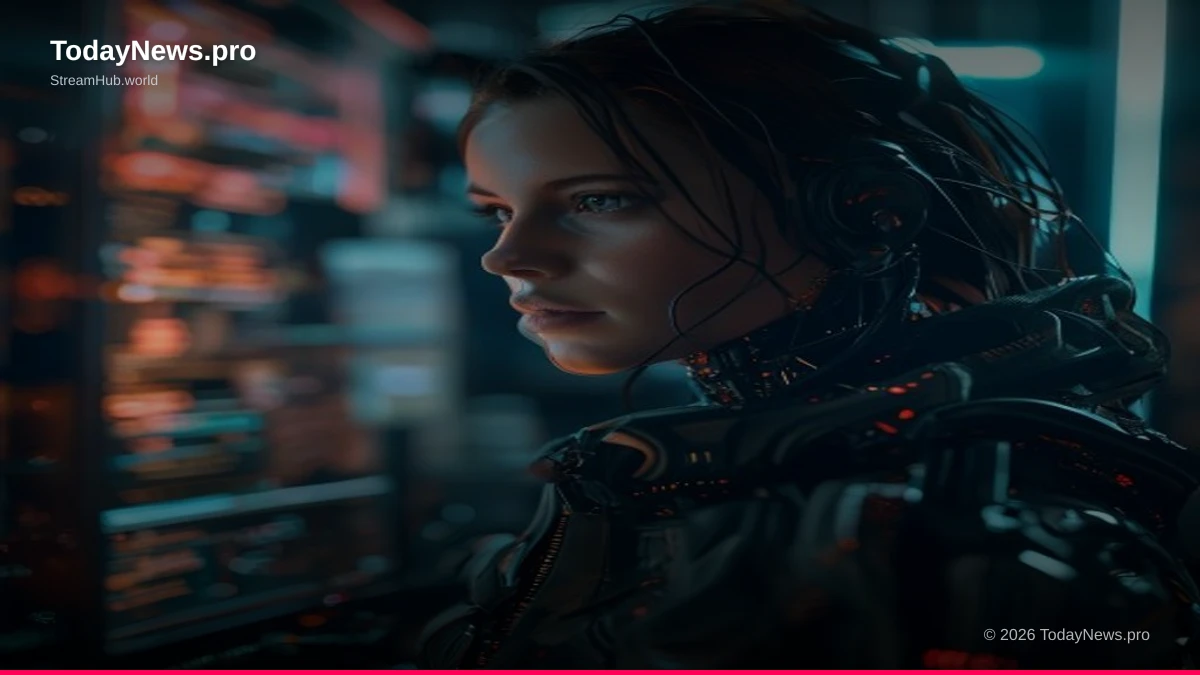
The global AI market is projected to reach over $1.8 trillion by 2030, with a significant portion of this growth fueled by the burgeoning field of AI-generated content, transforming industries from marketing to fine art.
The Dawn of AI Content: A Paradigm Shift
We are witnessing a profound transformation in how content is conceived, created, and consumed. Artificial intelligence, once a realm of theoretical exploration, has rapidly evolved into a practical, powerful tool capable of generating text, images, music, and even video with astonishing speed and quality. This isn't just an incremental improvement; it represents a paradigm shift, challenging long-held notions of authorship, creativity, and the very essence of intellectual property. The accessibility of sophisticated AI models has democratized content creation, enabling individuals and small businesses to produce professional-grade materials previously out of reach.
The Democratization of Creation
For decades, the production of high-quality content required specialized skills, expensive software, and significant time investment. Graphic designers, copywriters, musicians, and videographers formed the backbone of content creation. Now, AI tools can perform many of these tasks at a fraction of the cost and time. A small startup can generate marketing copy, design logos, and even compose background music without hiring a team of professionals. This has profound implications for market entry, competition, and the distribution of creative power.
Early Adopters and Industry Impact
Industries like marketing and advertising have been at the forefront of adopting AI-generated content. Companies are leveraging AI to personalize ad copy at scale, generate product descriptions for e-commerce sites, and even create entire visual campaigns. Gaming studios are exploring AI for generating game assets and dialogue, while news organizations are experimenting with AI for drafting routine reports and summarizing complex information. The speed at which these tools can churn out variations of content allows for unprecedented levels of A/B testing and optimization.
The AI Toolkit: Generative Models and Their Capabilities
At the heart of AI-generated content lie sophisticated generative models, primarily based on deep learning architectures. These models are trained on vast datasets of existing human-created content, learning patterns, styles, and structures that enable them to produce novel outputs. The most prominent among these are Large Language Models (LLMs) for text generation and diffusion models for image synthesis.
Large Language Models (LLMs)
LLMs like GPT-4, Claude, and Gemini have revolutionized text-based content creation. They can write articles, generate code, translate languages, answer questions, and even engage in creative writing such as poetry and fiction. Their ability to understand context and generate coherent, grammatically correct, and often stylistically appropriate text makes them invaluable for drafting, brainstorming, and even ghostwriting.
Image and Multimedia Generation
Tools such as Midjourney, DALL-E 3, and Stable Diffusion have brought about a revolution in visual content. Users can describe an image they want, and these models can generate it from scratch. This includes photorealistic images, artistic illustrations, and abstract designs. Beyond images, AI is making inroads into video generation, with tools beginning to produce short clips and animations from textual prompts, albeit still in relatively nascent stages compared to text and image generation.
The Generative Process Explained
Generative AI doesn't "create" in the human sense of consciousness or intent. Instead, it identifies statistical relationships within its training data and uses these to predict the most probable next element in a sequence, whether it's a word, a pixel, or a musical note. This probabilistic approach allows for immense creativity and variation, producing outputs that can feel entirely new while still being rooted in learned patterns. The "prompt engineering" required to guide these models effectively is becoming a skill in itself.
| AI Content Type | Prominent Models/Tools | Primary Applications | Current Maturity |
|---|---|---|---|
| Text Generation | GPT-4, Claude, Gemini, Llama 2 | Article writing, code generation, marketing copy, summarization | High |
| Image Generation | Midjourney, DALL-E 3, Stable Diffusion | Illustrations, concept art, marketing visuals, graphic design | High |
| Music Generation | Amper Music, AIVA, Soundraw | Background music, jingles, soundscapes | Medium |
| Video Generation | RunwayML, Pika Labs, Synthesia | Short clips, explainer videos, avatar-based content | Low to Medium |
| 3D Asset Generation | Nvidia Omniverse, Luma AI | Game assets, architectural visualization, virtual environments | Low |
The Creator Economys AI Frontier
The creator economy, built on the back of digital platforms and the ability of individuals to monetize their skills and content, is experiencing a seismic shift due to AI. Creators are not just consumers of AI tools; they are becoming active participants in shaping the AI content landscape, using it to enhance their output, reach new audiences, and redefine their creative processes.
Augmenting Human Creativity
For many creators, AI is not a replacement but an amplifier. A writer might use an LLM to overcome writer's block, generate plot ideas, or draft initial outlines. A visual artist might use AI to quickly generate variations of a concept, create backgrounds, or explore different stylistic approaches. This augmentation allows creators to focus on higher-level conceptualization and refinement, accelerating their workflow and enabling them to produce more content than ever before.
New Roles and Skillsets
The rise of AI content generation is also creating new roles and demanding new skillsets. "Prompt engineers," individuals adept at crafting precise and effective prompts for AI models, are becoming highly sought after. Furthermore, creators who can effectively integrate AI tools into their existing workflows, curate AI-generated outputs, and add their unique human touch are poised to thrive. The ability to discern quality, provide critical feedback, and imbue AI-generated content with a distinct voice or aesthetic is becoming paramount.
Monetization Strategies in the AI Era
Creators are exploring various monetization strategies in this new landscape. Some are selling AI-generated art and designs on platforms like Etsy or Redbubble. Others are offering AI-assisted content creation services to businesses. There's also a growing market for AI-generated music used in videos and podcasts. As AI tools become more sophisticated, new business models are emerging, such as AI-powered personalized content subscriptions or platforms that leverage AI to match creators with audiences.
The Copyright Conundrum: Ownership and Originality
One of the most contentious and complex aspects of AI-generated content is copyright. Current copyright law, largely designed for human creators, struggles to accommodate works produced by machines. This has led to a flurry of legal challenges, debates, and evolving interpretations worldwide.
Who Owns AI-Generated Work?
The central question is whether AI-generated content can be copyrighted at all, and if so, by whom. Copyright typically protects original works of authorship fixed in a tangible medium of expression. The U.S. Copyright Office, for instance, has stated that it will only register works created by human beings. This means that purely AI-generated content, without significant human creative input, may not be eligible for copyright protection.
The Role of Human Input
The degree of human involvement is becoming a critical factor. If a human significantly directs, edits, or curates AI-generated output, the resulting work might be eligible for copyright. This could involve detailed prompt engineering, extensive post-generation editing, or the selection and arrangement of AI-generated elements into a larger, original work. The legal landscape is still very much in flux, with courts and copyright offices grappling with how to define "authorship" in the AI era.
Training Data and Infringement Concerns
Another significant legal challenge concerns the datasets used to train AI models. Many models are trained on vast amounts of copyrighted material scraped from the internet without explicit permission from the copyright holders. This has led to lawsuits from artists and authors who claim their work has been used to create AI systems that now compete with them, potentially infringing on their original copyrights. The outcome of these cases could have far-reaching implications for the future development and deployment of AI generative models. For more on this, see the ongoing discussions at Reuters.
(US Copyright Office stance)
Ethical Implications and the Future of Creativity
Beyond legal frameworks, the rise of AI-generated content raises profound ethical questions about authenticity, bias, misinformation, and the very value of human creativity. As these tools become more powerful, a thoughtful consideration of their societal impact is crucial.
The Specter of Misinformation and Deepfakes
The ability of AI to generate highly realistic text, images, and videos presents a significant risk of creating and spreading misinformation. Deepfakes, AI-generated videos or audio recordings that depict people saying or doing things they never did, can be used for malicious purposes, including political manipulation, defamation, and fraud. The challenge lies in developing robust detection mechanisms and fostering digital literacy among the public.
Bias in AI Models
AI models are trained on data that reflects existing societal biases. If the training data contains racial, gender, or other prejudices, the AI-generated content can perpetuate and even amplify these biases. This can manifest in discriminatory outputs, stereotypes, and unfair representations. Efforts to curate more diverse and equitable training datasets, and to build AI systems that can identify and mitigate bias, are critical for responsible development.
The Value of Human Artistry
There is a legitimate concern that the proliferation of easily generated AI content could devalue human artistry and craftsmanship. If audiences become accustomed to consuming AI-generated material, will they still appreciate the effort, skill, and unique human perspective that goes into traditional art forms? The debate centers on whether AI can truly replicate the emotional depth, lived experience, and intentionality that often define human creativity. This ties into the philosophical discussion about consciousness and subjective experience, as explored on Wikipedia.
Navigating the New Landscape: Strategies for Creators and Platforms
As AI-generated content becomes more pervasive, creators and platforms alike must adapt their strategies to navigate this evolving environment. Proactive measures are essential to foster innovation while mitigating risks and upholding ethical standards.
For Creators: Embracing and Adapting
Creators who view AI as a collaborative tool rather than a threat are likely to benefit. This involves experimenting with AI for idea generation, content drafting, and workflow optimization. Developing a distinct personal brand and style that AI cannot easily replicate is also crucial. Transparency with audiences about the use of AI in content creation can build trust and manage expectations. Learning prompt engineering and AI content curation skills will become increasingly valuable.
For Platforms: Policy and Curation
Digital platforms have a critical role to play in shaping the AI content ecosystem. This includes developing clear policies on the disclosure of AI-generated content, implementing mechanisms for identifying and flagging AI-generated misinformation, and considering how to manage copyright disputes arising from AI outputs. Platforms may also need to adapt their algorithms to distinguish between human-created and AI-generated content to ensure fair visibility and prevent the overwhelming of genuine human expression.
The Importance of Watermarking and Provenance
As AI tools become more sophisticated, the ability to reliably distinguish between human and AI-generated content diminishes. Technologies like digital watermarking and blockchain-based provenance tracking are being explored to provide verifiable proof of content origin and creation methods. This could help establish trust and accountability in the digital content space, allowing users to understand how a piece of content was made.
The Evolving Definition of Art in the Age of AI
The advent of AI-generated content forces us to re-examine our fundamental understanding of art, creativity, and authorship. What does it mean to be an artist when a machine can generate visually stunning or conceptually intriguing pieces? This philosophical debate is as old as art itself, but AI has thrust it into the practical realm.
Intent, Consciousness, and Emotion
A key differentiator often cited is human intent, consciousness, and lived experience. Art is frequently seen as an expression of the artist's inner world, their emotions, their perspective on the human condition. Can an AI, which lacks consciousness and emotion, truly "create" art in this sense? Or is it merely a sophisticated tool that an artist can wield to express their intent? The answer likely lies in how we choose to define art and authorship.
AI as a New Medium
Historically, new technologies have always led to new art forms. Photography was initially met with skepticism, viewed by some as a mechanical reproduction rather than art. Similarly, AI can be seen as a new medium, an extension of the artist's palette. The creativity then lies in the artist's ability to conceptualize, guide, and curate the AI's output, imbuing it with meaning and purpose. The output is a collaboration between human vision and algorithmic generation.
The Future of Artistic Value
Ultimately, the value we place on art, whether human-created or AI-assisted, will likely be shaped by a combination of factors: aesthetic appeal, conceptual depth, emotional resonance, originality, and the story behind its creation. As AI continues to evolve, so too will our appreciation and critique of art. The distinction between a tool and a creator may blur, leading to a more nuanced and perhaps broader definition of what constitutes artistic endeavor.