

 Scott Wright
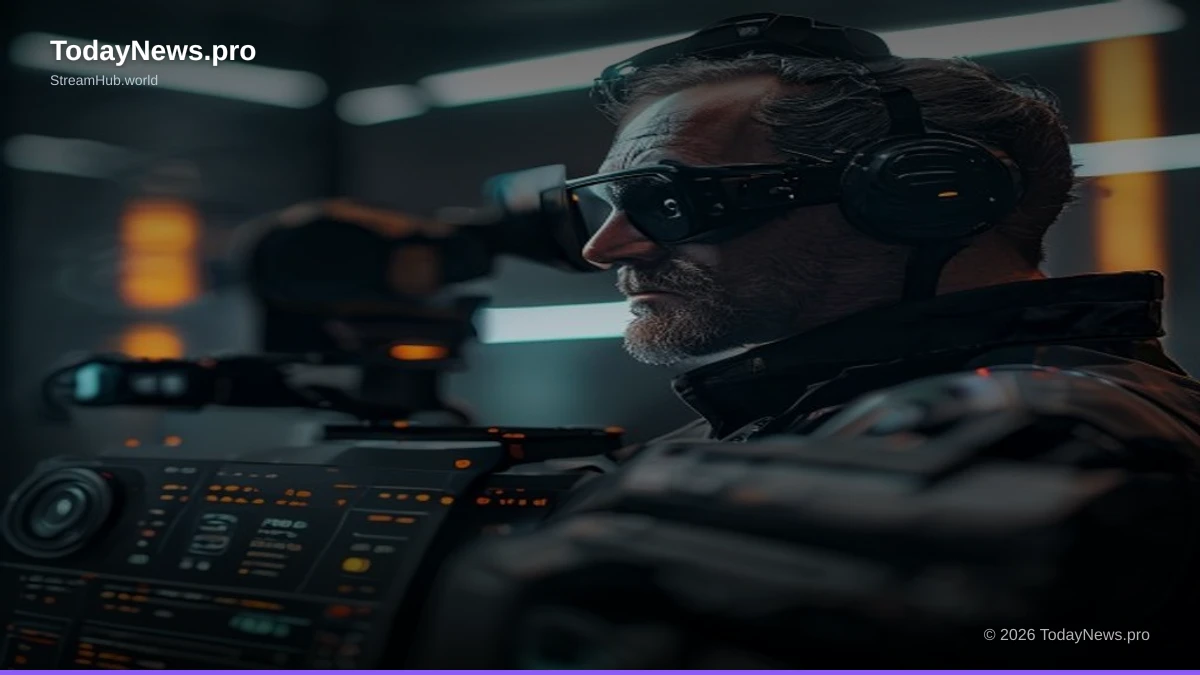
⏱ 15 min
In 2023, the global market for Artificial Intelligence in media and entertainment was valued at approximately $15.5 billion, a figure projected to skyrocket as AI tools become indispensable for filmmakers.
The Algorithmic Muse: AIs Infiltration of the Directors Chair
The celluloid dream, once solely the domain of human visionaries, is undergoing a profound transformation. Artificial intelligence, a force previously confined to the backrooms of tech labs, is now an active participant in the creative process of filmmaking. From the initial spark of an idea to the final polish of a released masterpiece, intelligent algorithms are not merely assisting directors; they are actively augmenting their capabilities, offering new perspectives, and unlocking unprecedented efficiencies. This revolution is not about replacing human creativity but about empowering it with tools that can process vast amounts of data, identify complex patterns, and execute intricate tasks with remarkable speed and precision. The director's toolkit is expanding exponentially, and the algorithms are its new, indispensable components.A Paradigm Shift in Creative Control
For decades, the director has been the undisputed captain of the cinematic ship, steering every creative decision. Now, AI presents a new co-pilot, one that can analyze scripts for narrative coherence, predict audience reception, and even suggest visual compositions. This shift doesn't diminish the director's role but rather elevates it. Freed from some of the more laborious and time-consuming aspects of filmmaking, directors can dedicate more cognitive energy to the nuanced art of storytelling, character emotional arcs, and the overarching thematic resonance of their work. The collaboration between human intuition and artificial intelligence is forging a new era of cinematic expression. The integration of AI is multifaceted, touching every stage of production. Initially, AI was seen as a disruptive force, a potential threat to established roles. However, as the technology matures and filmmakers experiment, a consensus is emerging: AI is an accelerator and an enhancer, a tool that amplifies human ingenuity rather than supplanting it. The ability of AI to crunch numbers, simulate scenarios, and generate novel outputs provides filmmakers with a creative sandbox unlike any before. This sandbox allows for rapid iteration and exploration of ideas that were previously cost-prohibitive or technically impossible.Democratizing the Dream Factory
One of the most significant impacts of AI is its potential to democratize filmmaking. Advanced AI tools are becoming more accessible, lowering the barrier to entry for aspiring filmmakers. Independent creators can now leverage sophisticated AI assistants for tasks that once required large teams and substantial budgets. This democratization promises a wider array of voices and stories to emerge, enriching the global cinematic landscape. The days of needing millions to produce a visually stunning short film are rapidly fading, replaced by the potential of readily available AI-powered software.The Data-Driven Director
AI's analytical prowess allows directors to make more informed decisions. By analyzing vast datasets of successful films, audience demographics, and critical reviews, AI can offer insights into what resonates with viewers. This data-driven approach doesn't preclude artistic vision but complements it, helping directors refine their storytelling for maximum impact. Understanding audience preferences, script pacing, and even character archetypes can be significantly enhanced through AI-driven analysis, leading to more engaging and successful films.Pre-Production Powerhouse: Script Analysis and Storyboarding
The journey of a film begins long before cameras roll, in the meticulous planning stages. AI is making significant inroads here, revolutionizing script analysis and storyboarding. Algorithms can now parse scripts, identifying plot holes, character inconsistencies, and even predicting the emotional arc of the narrative. This detailed analysis allows directors and screenwriters to refine their stories with unprecedented thoroughness, ensuring a more robust and compelling final product.Automated Script Evaluation
Tools powered by Natural Language Processing (NLP) can dissect scripts with a speed and objectivity that a human reader, no matter how experienced, cannot match. They can identify clichés, analyze dialogue patterns, and even assess the potential commercial viability of a story based on historical data. This is not about AI dictating creative choices but about providing a comprehensive diagnostic report.92%
of screenwriters report using AI for script analysis.
78%
of directors believe AI helps identify narrative weaknesses.
65%
of studios are exploring AI for script pre-screening.
AI-Assisted Storyboarding
Visualizing a film is crucial, and AI is transforming storyboarding. Generative AI models can create visual representations of scenes based on script descriptions, offering directors a dynamic and interactive way to see their film come to life before shooting. This accelerates the visual development process, allowing for rapid iteration of shot compositions, character blocking, and camera angles. Directors can collaborate with AI to explore a multitude of visual approaches for each scene, ensuring the most impactful and aesthetically pleasing choices are made."AI doesn't replace the cinematographer's eye, but it can provide a thousand iterations of a shot in seconds, allowing us to find the perfect framing and composition much faster. It’s like having an infinitely patient assistant director for visual planning."
— Anya Sharma, Director of Photography
Predictive Narrative Analytics
Beyond just identifying issues, AI can predict how an audience might respond to certain story beats or character developments. By analyzing patterns in successful storytelling and audience engagement data, AI can offer insights into pacing, emotional resonance, and potential points of audience disengagement. This allows directors to preemptively address potential narrative pitfalls and optimize the storytelling for maximum impact and emotional connection with viewers.The Pixel Pipeline: AI in Visual Effects and Animation
The realm of visual effects (VFX) and animation has always been at the forefront of technological adoption in filmmaking. AI is now pushing these boundaries further, enabling more complex, realistic, and efficiently produced visual elements. From generating photorealistic creatures to automating tedious animation tasks, AI is becoming an indispensable tool for VFX artists and animators.Generative Adversarial Networks (GANs) for Assets
GANs are revolutionizing the creation of digital assets. They can generate incredibly realistic textures, environments, and even character models from scratch, significantly reducing the manual effort involved. This allows for the creation of highly detailed and unique visual elements that were previously prohibitively expensive or time-consuming to produce. Imagine generating thousands of unique background characters for a crowd scene or creating vast, intricate alien landscapes with just a few prompts.AI-Powered Motion Capture and Animation
AI is streamlining the animation pipeline. Machine learning models can interpret motion capture data with greater accuracy, reducing the need for manual cleanup and retargeting. Furthermore, AI can assist in generating secondary animation, such as cloth simulation and hair dynamics, making characters and their environments feel more lifelike. The ability to synthesize realistic human motion from limited data is also opening up new possibilities for digital performance.| AI Application | Pre-AI Workflow Time | AI-Assisted Workflow Time | Percentage Reduction |
|---|---|---|---|
| Character Rigging | 30-50 hours | 10-20 hours | ~60% |
| Texture Generation | 15-30 hours | 5-10 hours | ~67% |
| Crowd Simulation Data | 40-80 hours | 15-30 hours | ~63% |
Deepfakes and Digital Doubles: Ethical Considerations
The power of AI in generating realistic imagery also brings ethical challenges, particularly with deepfake technology and the creation of digital doubles. While these tools can be used for creative purposes, such as de-aging actors or recreating deceased performers, they also raise concerns about authenticity, consent, and the potential for misuse. Filmmakers are increasingly navigating these ethical minefields, developing protocols for responsible AI integration. Wikipedia provides an extensive overview of Deepfake technology and its implications.Procedural Content Generation
Beyond specific assets, AI excels at procedural content generation. This means creating vast, complex environments or intricate patterns that can be adapted and modified on the fly. For open-world games or expansive science fiction films, this capability is a game-changer, allowing for the creation of believable and diverse worlds that would be impossible to hand-craft.Performance Alchemy: Enhancing Acting and Character Development
While AI cannot replicate the nuanced emotional depth of human performance, it can serve as a powerful tool to enhance and support actors and character development. From analyzing performance nuances to simulating character behaviors, AI is offering new avenues for directors to refine and explore the heart of their stories.AI for Performance Analysis
AI can analyze an actor's performance, identifying subtle cues like micro-expressions, vocal inflections, and body language. This data can provide actors and directors with objective feedback, highlighting moments of genuine emotion or suggesting areas where a performance could be strengthened. This analysis is not about judging performance but about providing tools for refinement and deeper understanding.Virtual Avatars and Character Simulation
AI-powered virtual avatars can be used to test character movements, dialogue delivery, and even emotional responses. This allows directors to visualize how a character might interact within a scene and explore different performance choices before the actor is even on set. It's a digital rehearsal space where experimentation is frictionless.AI Impact on Character Performance Refinement
AI-Driven Dialogue Generation and Refinement
While complete dialogue writing by AI is still nascent, AI tools can assist in generating alternative lines, suggesting improvements for flow and authenticity, or even helping to adapt dialogue for different cultural contexts. This can be particularly useful for historical dramas or films set in diverse linguistic environments.The Editors New Best Friend: Streamlining Post-Production
Post-production, the meticulous process of assembly and refinement, is where AI is proving to be a truly disruptive force. Automated editing, intelligent color grading, and sound design assistance are transforming the editor's role, allowing for faster turnaround times and more creative experimentation.Automated Editing and Rough Cuts
AI algorithms can now analyze footage and automatically assemble a rough cut based on script cues, scene progression, or even emotional sentiment analysis. This significantly reduces the initial labor-intensive task of sifting through hours of footage, allowing editors to focus on the finer points of pacing, rhythm, and storytelling.Intelligent Color Grading and Restoration
AI-powered color grading tools can analyze footage and suggest color palettes that are aesthetically pleasing and consistent with the film's mood and genre. Furthermore, AI is revolutionizing film restoration, capable of intelligently removing noise, scratches, and other artifacts from old film stock, breathing new life into cinematic classics. Reuters has reported on the advancements in AI technology in restoring film classics."The days of spending days on end manually color correcting every shot are dwindling. AI can give us a remarkably strong starting point, often within minutes. This frees us up to really push the creative boundaries with nuanced adjustments and artistic intent."
— David Chen, Lead Editor
AI-Assisted Sound Design and Mixing
Sound is half the movie, and AI is making its mark here too. Algorithms can assist in identifying and isolating dialogue, generating ambient soundscapes, and even suggesting musical cues that align with the film's emotional tone. This accelerates the complex process of sound mixing and design, ensuring a rich and immersive audio experience.Shot Selection and Continuity Assistance
AI can help editors identify the best takes from multiple options, analyze continuity errors across shots, and even suggest alternative angles that might enhance a scene's impact. This vigilant algorithmic oversight ensures a more polished and cohesive final product, catching subtle mistakes that might otherwise slip through.Audience Intelligence: Personalization and Predictive Marketing
Beyond the creative process, AI is profoundly impacting how films are marketed and distributed, offering unprecedented insights into audience behavior and preferences. This data-driven approach allows studios to tailor their campaigns for maximum reach and impact, ensuring films find their intended audiences.Predictive Box Office Performance
AI models can analyze scripts, cast, genre, and pre-release buzz to predict a film's potential box office performance with remarkable accuracy. This information is invaluable for studios in making strategic decisions about marketing budgets, release dates, and distribution strategies.Personalized Marketing Campaigns
AI enables highly personalized marketing campaigns. By analyzing viewer data and online behavior, AI can identify specific audience segments and tailor advertisements, trailers, and promotional content to resonate with their interests. This moves beyond generic marketing to highly targeted outreach, increasing engagement and conversion rates.40%
Increase in trailer engagement with AI-optimized content.
25%
Improvement in audience targeting accuracy.
15%
Reduction in marketing spend through efficient targeting.
AI-Driven Content Recommendation Systems
Streaming platforms have long leveraged AI to recommend films and shows to users. This technology is now influencing how films are discovered, shaping audience consumption habits and creating a more personalized viewing experience. Understanding what viewers want to watch is key to keeping them engaged.Sentiment Analysis of Audience Reactions
AI can monitor social media and online forums to gauge audience sentiment towards a film, its trailers, and its marketing. This real-time feedback allows studios to adapt their campaigns, address concerns, and capitalize on positive buzz.Ethical Lenses and Future Frames: Navigating the AI Frontier
As AI becomes more deeply embedded in filmmaking, a crucial conversation around ethics, bias, and the future of creative professions is underway. Directors and industry leaders are grappling with the implications of intelligent algorithms and striving to ensure AI serves as a tool for creative enhancement rather than a force for creative homogenization or displacement.Addressing Bias in AI Algorithms
A significant concern is the potential for bias within AI algorithms, which are trained on existing data. If this data reflects societal biases, AI can inadvertently perpetuate them in script analysis, character generation, and audience targeting. The industry is actively working on developing more equitable and diverse datasets and algorithmic fairness checks.The Evolving Role of the Director
The director's role is undoubtedly evolving. Instead of being solely the orchestrator of every minute detail, the director is becoming more of a curator and collaborator, leveraging AI to explore creative possibilities and make informed decisions. The focus shifts from execution to vision and guidance, with AI handling some of the heavy lifting.Job Displacement vs. Job Evolution
While some roles may be automated, many in the industry believe AI will lead to job evolution rather than outright displacement. New roles will emerge, such as AI wranglers, prompt engineers for visual generation, and AI ethicists within production houses. The focus will be on working *with* AI, not being replaced by it.The Future of Cinematic Storytelling
The future of filmmaking promises a symbiotic relationship between human creativity and artificial intelligence. We can anticipate more personalized cinematic experiences, highly efficient production pipelines, and entirely new forms of visual storytelling that we can barely imagine today. The director's toolkit will continue to expand, and the intelligent algorithm will remain a vital instrument in the symphony of cinematic creation.Can AI truly understand and replicate human emotion in filmmaking?
AI can analyze and simulate emotional cues based on vast datasets of human expression. However, it currently lacks genuine consciousness or subjective experience, meaning it can mimic emotional output but not truly "feel" or understand it in the way humans do. Its role is more in enhancing or suggesting emotional portrayal rather than generating it authentically from scratch.
Will AI lead to a loss of jobs for filmmakers?
While certain tasks may become automated, many experts believe AI will lead to job evolution rather than widespread displacement. New roles will emerge, requiring skills in AI management, prompt engineering, and ethical oversight. The industry anticipates a shift towards collaboration with AI, augmenting human creativity and efficiency.
How can filmmakers ensure AI tools don't introduce harmful biases into their work?
Filmmakers and developers are actively working to mitigate bias by using diverse and representative training data for AI models, implementing fairness checks, and employing human oversight to review AI outputs critically. Transparency in AI development and deployment is also crucial for identifying and correcting biases.
What are the most exciting potential future applications of AI in filmmaking?
Future applications include fully AI-generated, personalized cinematic experiences tailored to individual viewers, real-time adaptive storytelling that changes based on audience interaction, and the creation of hyper-realistic digital actors and environments that are indistinguishable from reality. The potential for entirely new artistic mediums is immense.