

 Elena Kogan
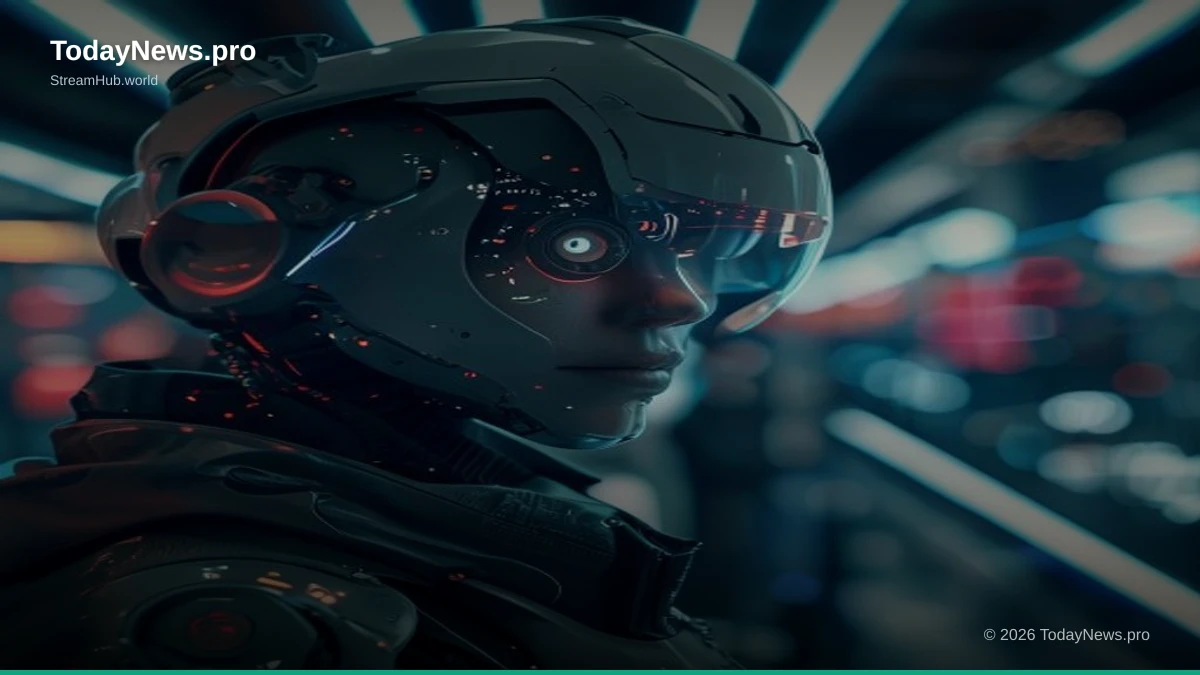
By 2030, an estimated 400 million jobs globally may need to be re-skilled due to the widespread adoption of AI and automation, according to McKinsey Global Institute projections.
The Imminent AI Revolution: 2026-2030
The period between 2026 and 2030 marks a critical inflection point in the integration of artificial intelligence into the global workforce. This isn't a distant science fiction scenario; it's a palpable shift already underway. We are moving beyond AI as a niche tool to AI as a foundational component of business operations, impacting every sector from manufacturing and healthcare to finance and creative arts. The accelerating pace of AI development, fueled by advancements in machine learning, natural language processing, and generative AI, promises to redefine what it means to be employed and how work is performed.
Generative AI, in particular, has moved from a research curiosity to a powerful tool capable of creating text, images, code, and even music. This capability is not just augmenting human creativity but is beginning to automate tasks previously considered uniquely human, such as content creation, basic coding, and customer service interactions. The coming years will see a rapid deployment of these technologies, necessitating a proactive approach to understanding their implications.
The Acceleration Curve
The adoption curve for AI technologies is steepening. Early adopters have already demonstrated significant productivity gains, pushing competitors to accelerate their own AI integration strategies. This creates a feedback loop where increased investment in AI R&D leads to more sophisticated tools, which in turn drives further adoption. Governments and international bodies are also beginning to grapple with the regulatory and economic ramifications, indicating the profound societal impact expected.
The convergence of AI with other emerging technologies like quantum computing, advanced robotics, and the Internet of Things (IoT) will create synergistic effects, amplifying the transformative power of AI. This interconnected ecosystem will enable entirely new business models and operational efficiencies previously unimaginable.
Automations Advance: Reshaping Industries
The narrative surrounding automation has long focused on blue-collar jobs in manufacturing. However, the AI-driven era of automation is far more pervasive, targeting white-collar roles with increasing efficacy. Repetitive, data-intensive, and even complex analytical tasks are now within the reach of advanced AI systems.
In the financial sector, AI algorithms are already handling algorithmic trading, fraud detection, and personalized financial advisory services. Healthcare is witnessing AI-powered diagnostic tools that can analyze medical images with remarkable accuracy, assist in drug discovery, and manage patient records more efficiently. Even the legal profession is seeing AI tools that can review vast quantities of documents, predict case outcomes, and draft legal briefs, albeit under human supervision.
Manufacturing and Logistics Reimagined
Traditional manufacturing is being revolutionized by intelligent automation. Robots, powered by AI, are no longer confined to predictable assembly lines. They are now capable of complex manipulation, learning from their environment, and working alongside human colleagues in collaborative robotics (cobots). This leads to increased precision, reduced waste, and enhanced safety.
Logistics and supply chain management are also undergoing a seismic shift. AI optimizes delivery routes in real-time, predicts demand fluctuations, and manages warehouse operations with autonomous robots. This not only improves efficiency but also contributes to sustainability by reducing fuel consumption and optimizing resource allocation.
The Service Sectors AI Embrace
Customer service has been one of the earliest and most visible areas of AI adoption. Chatbots and virtual assistants are now sophisticated enough to handle a wide range of inquiries, from simple FAQs to complex troubleshooting. This frees up human agents to deal with more nuanced or sensitive customer issues. Furthermore, AI is being used for personalized marketing, customer sentiment analysis, and even predictive customer service, anticipating needs before they arise.
The Skill Imperative: Adapting to the New Landscape
The most significant consequence of AI-driven automation is the imperative for upskilling and reskilling the workforce. Jobs that primarily involve routine, predictable tasks are at the highest risk of automation. This necessitates a fundamental shift in the skills that are valued in the labor market. While technical proficiency will remain important, the focus will increasingly shift towards uniquely human capabilities.
Soft skills, often overlooked in traditional education, are becoming paramount. These include critical thinking, problem-solving, creativity, emotional intelligence, collaboration, and adaptability. AI can process data and execute commands, but it currently lacks the nuanced understanding, empathy, and innovative spark that humans bring to complex situations.
Cognitive Flexibility and Lifelong Learning
The ability to learn, unlearn, and relearn will be the defining characteristic of a successful career in the coming years. The rapid evolution of AI means that skills acquired today may be obsolete tomorrow. Individuals must cultivate cognitive flexibility, a mindset that embraces continuous learning and adaptation. This involves actively seeking out new knowledge, experimenting with new tools, and being open to career transitions.
Educational institutions and corporate training programs are under immense pressure to adapt. Traditional degree programs may need to be supplemented with micro-credentials, bootcamps, and personalized learning paths that can equip individuals with relevant skills more rapidly. The concept of a "job for life" is rapidly being replaced by a "career of continuous learning."
The Rise of AI Literacy
Understanding how AI works, its capabilities, and its limitations is becoming a fundamental aspect of AI literacy. This doesn't mean everyone needs to become an AI engineer, but rather possess a foundational knowledge that enables them to effectively work with AI tools. This includes understanding data privacy, algorithmic bias, and the ethical implications of AI deployment.
Emerging Roles and the Human-AI Collaboration
While automation will undoubtedly displace some jobs, it will also create new ones. The future of work is not simply about humans versus machines, but about a synergistic collaboration between human intelligence and artificial intelligence. New roles will emerge that leverage the strengths of both.
These emerging roles will often bridge the gap between human expertise and AI capabilities. Think of AI trainers, AI ethicists, AI system integrators, and AI-enhanced creative professionals. These roles require a deep understanding of AI technology coupled with strong human-centric skills.
AI Trainers and Curators
As AI systems learn from data, the quality and relevance of that data are paramount. AI trainers will be responsible for curating, labeling, and refining datasets to ensure AI models are accurate, unbiased, and perform as intended. This role requires a keen eye for detail, domain expertise, and an understanding of how AI learns.
Similarly, AI curators will play a vital role in selecting and integrating AI tools into existing workflows. They will need to understand the specific needs of a business and identify the AI solutions that best address those needs, ensuring seamless integration and maximum benefit.
Human-AI Teaming Specialists
The concept of "human-AI teaming" will become increasingly prevalent. Specialists in this field will focus on designing and optimizing workflows where humans and AI systems work together efficiently and effectively. This involves understanding the strengths and weaknesses of both, designing clear communication protocols, and establishing trust between human and artificial agents.
Ethical Considerations and Societal Impact
The rapid advancement and deployment of AI raise profound ethical and societal questions that cannot be ignored. Issues of bias in algorithms, data privacy, job displacement, and the potential for increased inequality demand careful consideration and proactive policy-making.
Algorithmic bias, stemming from biased training data, can perpetuate and even amplify existing societal inequalities. This can manifest in hiring processes, loan applications, and even criminal justice systems. Ensuring fairness and transparency in AI is a critical challenge.
Data Privacy and Security
AI systems often rely on vast amounts of data, raising concerns about data privacy and security. Robust regulations and ethical guidelines are needed to protect personal information and prevent its misuse. The increasing interconnectedness of systems also amplifies cybersecurity risks, requiring sophisticated AI-driven defenses.
The potential for AI to be used for surveillance or manipulation also presents a significant societal challenge. Striking a balance between leveraging AI for societal benefit and safeguarding individual freedoms is a delicate but essential task.
The Future of Income and Social Safety Nets
As automation reshapes the labor market, discussions around universal basic income (UBI) and other forms of social safety nets are likely to intensify. If a significant portion of the population finds their traditional employment roles diminished or eliminated, new models of income distribution and social support will be necessary to prevent widespread economic hardship and social unrest.
The economic gains from AI-driven productivity are substantial, but ensuring these gains are shared broadly across society is a critical policy challenge. Without thoughtful interventions, the benefits of AI could accrue disproportionately to a select few, exacerbating existing wealth disparities.
| Potential Job Displacement Areas | Estimated Impact (2026-2030) | Key AI Impact Drivers |
|---|---|---|
| Data Entry and Administrative Support | High | Natural Language Processing, Robotic Process Automation |
| Customer Service Representatives (Basic Inquiries) | High | Chatbots, Virtual Assistants |
| Manufacturing Line Workers (Repetitive Tasks) | Medium-High | Advanced Robotics, Machine Vision |
| Transportation and Logistics (Routine Driving) | Medium | Autonomous Driving Systems, Predictive Routing |
| Basic Content Creation and Summarization | Medium | Generative AI Models |
Preparing for the Future: Strategies for Individuals and Organizations
Navigating the AI-driven workforce requires a multifaceted approach. Individuals, educational institutions, businesses, and governments all have crucial roles to play in ensuring a smooth and equitable transition.
For individuals, the key is to embrace a mindset of continuous learning and adaptability. This means actively seeking out training in emerging technologies and developing critical soft skills that complement AI capabilities. Staying informed about industry trends and understanding how AI is impacting one's specific field is also vital.
Organizational Transformation
Businesses must move beyond simply adopting AI tools and fundamentally rethink their organizational structures and talent management strategies. This involves identifying which tasks can be automated, which require human expertise, and how to best integrate AI into workflows.
Investing in employee training and development programs that focus on AI literacy and the skills needed for human-AI collaboration is no longer optional, but a strategic imperative. Companies that prioritize their human capital while leveraging AI will be best positioned for success.
The Role of Government and Policy
Governments have a critical responsibility to create an environment that supports a just transition. This includes investing in education and workforce development programs, modernizing labor laws, and developing ethical guidelines and regulations for AI. Policies that encourage innovation while protecting workers and ensuring equitable distribution of AI's benefits will be essential.
International cooperation will also be important in setting global standards for AI development and deployment, addressing issues like AI safety and the potential for an AI arms race. Resources like the Reuters AI News provide ongoing updates on these critical developments.
The Long View: Beyond 2030
The period between 2026 and 2030 is merely the opening chapter of a much larger story. The trajectory of AI development suggests that the transformations witnessed in these years will continue and accelerate. We can anticipate even more sophisticated AI systems, capable of greater autonomy and complex problem-solving.
The concept of work itself may undergo further redefinition. As AI takes on more tasks, the focus may shift from traditional employment models to a more project-based, gig economy, or even a society where human value is measured beyond direct economic output. Exploring the philosophical and societal implications of such shifts is a task that begins now.
The Future of Human Potential
As AI handles more of the mundane and repetitive, humanity may be freed to pursue more creative, exploratory, and meaningful endeavors. This could lead to a renaissance in arts, sciences, and philosophy. The challenge will be to ensure that everyone has the opportunity and the means to participate in this future.
Understanding the historical context of technological change, such as that documented on Wikipedia's History of Artificial Intelligence page, can offer valuable insights into how societies have adapted to significant disruptions in the past. The current AI revolution presents a unique set of challenges and opportunities that will shape the human experience for generations to come.