

 Max Speed
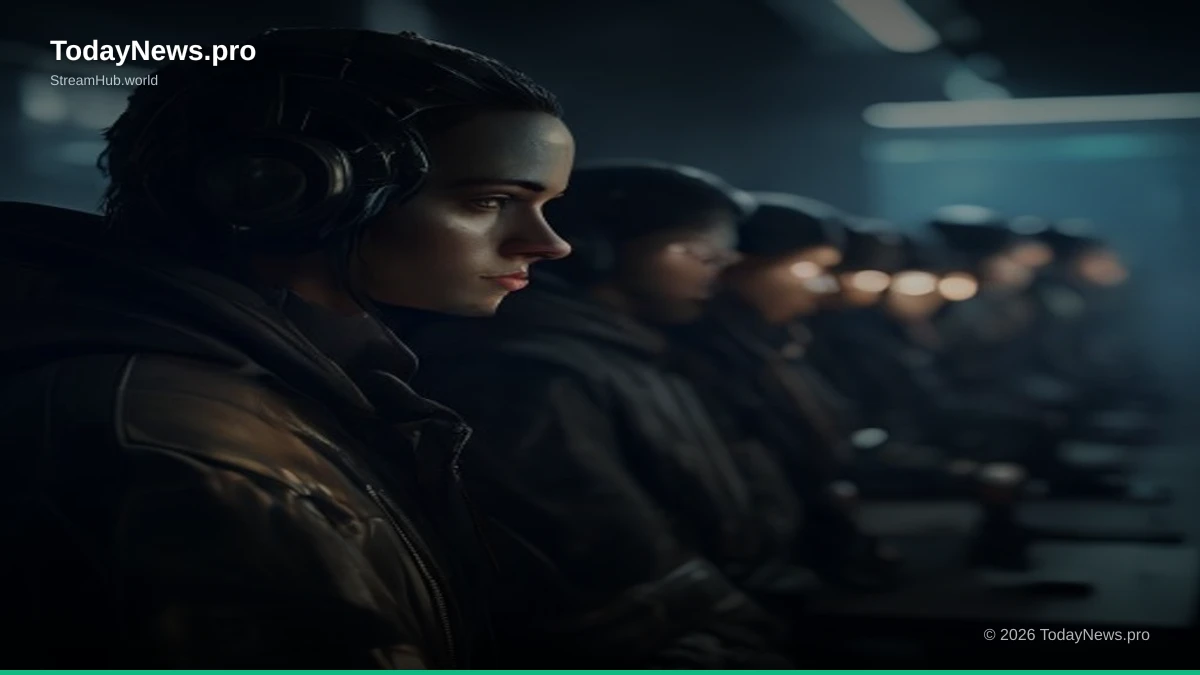
The global video game market is projected to reach over $321 billion by 2026, a testament to the ever-increasing sophistication and immersive power of interactive entertainment. At the heart of this evolution lies a transformative shift in how virtual worlds are populated and how stories unfold, driven by the intelligent integration of Artificial Intelligence into non-player characters (NPCs).
NPCs Get Smart: The Rise of AI-Driven Characters and Dynamic Storytelling
For decades, non-player characters (NPCs) in video games were largely predictable automatons. Their dialogue was pre-scripted, their movements followed set paths, and their reactions were limited to a narrow range of predefined responses. While these characters served their purpose in populating virtual worlds and delivering narrative beats, they often broke the illusion of immersion. Today, however, a new era is dawning. Driven by rapid advancements in artificial intelligence, NPCs are shedding their robotic skins and emerging as sophisticated, dynamic entities capable of complex behaviors, nuanced interactions, and even contributing to emergent, player-driven narratives. This evolution is not merely an aesthetic upgrade; it represents a fundamental paradigm shift in game design, promising richer, more engaging, and deeply personal player experiences.
The Evolution of Non-Player Characters
The journey of NPCs from simple props to complex characters is a fascinating chronicle of technological progress and creative ambition. Early video games featured rudimentary characters that served functional roles. In games like Pac-Man, the ghosts were programmed with simple pursuit algorithms, creating a sense of challenge but lacking any semblance of personality. As graphics and processing power improved, so did the complexity of NPC AI. The advent of 3D environments allowed for more intricate movement patterns, and early attempts at dialogue systems introduced branching conversations, albeit with limited scope.
By the late 1990s and early 2000s, games began to explore more sophisticated AI. Characters in titles like Half-Life exhibited team tactics, reacting to player presence and coordinating attacks. Games like The Sims pioneered emergent behavior, where individual Sims had needs, desires, and personalities that influenced their actions and interactions. Yet, even with these advancements, most NPCs remained fundamentally scripted. Their actions were predictable once you understood their underlying logic, and their responses to the player were often confined to specific triggers.
The current generation of games is pushing these boundaries further than ever before. Developers are investing heavily in AI research and implementation, aiming to create virtual beings that feel truly alive, responsive, and integral to the unfolding narrative. This is where the true revolution of AI-driven NPCs and dynamic storytelling begins to take hold.
The AI Revolution: Beyond Scripted Responses
The most significant leap in NPC capabilities comes from the integration of advanced AI techniques that move beyond simple, pre-programmed behaviors. Instead of relying solely on rigid decision trees, modern game NPCs are increasingly powered by systems that allow for learning, adaptation, and more naturalistic interaction.
Machine Learning and Natural Language Processing
Machine learning (ML) is a cornerstone of this new wave of AI. By training models on vast datasets, developers can create NPCs that learn from their environment, player actions, and even other NPCs. This allows them to develop unique behaviors and react in ways that are not explicitly coded. For instance, an NPC might learn to avoid certain areas that are frequently patrolled by enemies or develop a preference for interacting with players who consistently engage with them positively.
Complementing ML is Natural Language Processing (NLP). While full, open-ended conversational AI for every NPC is still a distant goal due to computational and design challenges, significant progress is being made. NLP allows NPCs to understand a wider range of player inputs, not just button prompts or predefined dialogue options. This means players might be able to type or speak commands or questions, and the NPC can interpret and respond in a more contextually relevant manner. Even without full voice recognition, sophisticated NLP can analyze player intent from their actions and environmental cues, leading to more nuanced dialogue and behavioral responses. For a deeper understanding of NLP, the Wikipedia entry offers a comprehensive overview.
Behavioral Trees and State Machines
While ML and NLP represent the cutting edge, traditional AI structures like behavioral trees and state machines are still vital. Behavioral trees are hierarchical structures that define an AI's decision-making process. They allow for complex sequences of actions and conditional logic, enabling NPCs to perform intricate tasks like patrolling, combat, or interacting with objects. State machines, on the other hand, define an AI's different modes of operation (e.g., idle, alert, combat, fleeing) and the conditions under which it transitions between them.
The innovation lies in how these traditional methods are being combined with newer AI techniques. ML can be used to dynamically adjust parameters within a behavioral tree, making an NPC's patrol routes less predictable or its combat strategies more adaptive. Similarly, state machines can be populated with ML-driven decision-making modules, allowing an NPC to enter a "panicked" state not just when its health is low, but also based on complex environmental factors or learned threat assessments. This hybrid approach provides both structure and emergent flexibility.
| Technology | Description | Impact on NPCs |
|---|---|---|
| Machine Learning (ML) | Algorithms that enable systems to learn from data without explicit programming. | Adaptive behaviors, personalized interactions, emergent actions, threat assessment. |
| Natural Language Processing (NLP) | Enables computers to understand, interpret, and generate human language. | More natural dialogue, understanding player intent from actions/text, context-aware responses. |
| Behavioral Trees | Hierarchical systems for AI decision-making and action sequencing. | Complex routines, coordinated actions, realistic character behaviors. |
| State Machines | Models that define an AI's different operational modes and transitions. | Managing NPC moods, combat states, social interactions, environmental awareness. |
| Reinforcement Learning | A type of ML where agents learn by trial and error, receiving rewards or penalties. | Developing optimal strategies in complex scenarios (e.g., combat, resource management). |
Dynamic Storytelling: A New Frontier
The rise of intelligent NPCs is intrinsically linked to the emergence of dynamic storytelling. Instead of following a linear, preordained narrative path, games are beginning to offer experiences where the story actively adapts to the player's choices, actions, and even their playstyle. This creates a sense of unparalleled agency and makes each playthrough a unique journey.
Procedural Content Generation and Adaptive Narratives
Procedural Content Generation (PCG) is a powerful tool for creating dynamic narratives. PCG algorithms can generate game elements such as levels, quests, items, and even plot points on the fly. When combined with intelligent NPCs, PCG can lead to truly emergent storytelling. For example, an NPC might generate a quest based on its own learned needs or a perceived threat in the environment, which the player then undertakes. This quest could be unique to that player's experience, adding a personal touch to the narrative.
Adaptive narratives go a step further by actively weaving player actions into the story's fabric. If a player consistently shows aggression towards a particular faction, the game's narrative might shift to reflect this, leading to new alliances, increased hostility, or even unique story arcs that wouldn't otherwise be accessible. This is often achieved by tracking player choices and using AI systems to interpret their impact on the game's internal "story state."
Player Agency and Emergent Narratives
The ultimate goal of dynamic storytelling is to maximize player agency – the feeling that the player's decisions truly matter. With AI-driven NPCs, this agency is amplified. An NPC that remembers a past kindness might offer unexpected aid later, while one that feels betrayed might actively work against the player. These emergent behaviors, born from the interaction between intelligent agents and player choices, create narratives that feel organic and deeply personal. The narrative isn't just told to the player; it's co-created by them and the game's inhabitants.
Case Studies: Pioneers in AI NPCs
Several games have already demonstrated the incredible potential of AI-driven NPCs and dynamic storytelling, setting new benchmarks for the industry.
The Witcher 3: Wild Hunt
CD Projekt Red's The Witcher 3: Wild Hunt is renowned for its rich world and compelling quests. While not entirely driven by generative AI, its NPCs exhibit impressive depth. They react to Geralt's presence, engage in daily routines, and their dialogue often changes based on the player's progress and decisions. The world feels alive because its inhabitants aren't static; they have their own lives and concerns, contributing to a believable and immersive ecosystem. The intricate quest design often branches based on player choices, showing how even pre-written narratives can feel dynamic with well-implemented NPC interactions.
Red Dead Redemption 2
Rockstar Games' Red Dead Redemption 2 sets a gold standard for NPC simulation. The game's world is populated by thousands of characters, each with their own routines, personalities, and reactions. NPCs in RDR2 can engage in spontaneous conversations, respond to the player's appearance and actions with remarkable detail, and even recall previous encounters. If the player commits a crime, NPCs will remember and report it, impacting the player's honor and bounty. This level of environmental and social simulation creates a profound sense of immersion, where the world truly feels like it exists independently of the player.
Cyberpunk 2077
Despite its initial technical issues, Cyberpunk 2077, also by CD Projekt Red, aimed for a highly populated and reactive open world. The city of Night City is envisioned as a teeming metropolis where NPCs have schedules, react to ambient events, and engage in conversations that reflect their social strata and surroundings. While the full realization of its ambitious AI systems faced challenges, the underlying concepts showcase the drive towards creating truly dynamic urban environments populated by intelligent, believable characters.
Challenges and Ethical Considerations
The pursuit of hyper-realistic AI NPCs and dynamic storytelling is not without its hurdles. Developers face significant technical, creative, and ethical challenges as they push the boundaries of what's possible.
Computational Cost and Development Hurdles
Running complex AI simulations for hundreds or thousands of characters simultaneously demands immense computational power. Developers must meticulously balance the sophistication of NPC AI with performance constraints, ensuring smooth gameplay across various hardware configurations. This often involves intricate optimization techniques and difficult decisions about where to allocate processing resources.
Furthermore, designing and implementing these advanced AI systems is a monumental task. It requires specialized expertise in AI programming, narrative design, and system integration. The sheer complexity of creating believable, dynamic characters that can adapt to an infinite number of player actions can lead to longer development cycles and increased costs. Testing these systems to ensure they behave as intended, without introducing game-breaking bugs or illogical outcomes, is another significant challenge. The learning curves for developing advanced AI are steep, requiring continuous research and development investment.
Maintaining Player Immersion
While sophisticated AI can enhance immersion, poorly implemented AI can shatter it. An NPC that breaks character, behaves illogically, or repeats the same limited phrases can quickly pull a player out of the experience. Developers must ensure that AI behaviors are consistent with the game's lore and tone, and that NPC reactions feel natural and earned, rather than arbitrary or repetitive. The uncanny valley effect, where near-perfect but not quite perfect AI feels unsettling, is also a consideration.
Ensuring that dynamic storytelling doesn't lead to an overwhelming or confusing experience for the player is also crucial. While player agency is desirable, narratives that become too fragmented or unpredictable can alienate players. Striking a balance between emergent complexity and narrative coherence is a delicate art. Players need to feel empowered by choice, not lost in a sea of possibilities. The Reuters Technology section often features discussions on AI advancements and their implications.
The Future of AI in Gaming
The trajectory of AI in gaming is undeniably upward. As AI technology continues to mature and become more accessible, we can expect even more profound changes. We may see NPCs capable of genuine empathy, complex emotional responses, and even rudimentary forms of creativity. Imagine NPCs that can improvise dialogue based on a deep understanding of their character and the current narrative situation, or AI companions that learn your playstyle and proactively assist you in ways that feel intuitive and personalized.
The integration of generative AI models, similar to those used in text and image creation, could revolutionize quest design and narrative generation. Games might offer an almost infinite variety of bespoke quests tailored to each player's progression and preferences. Furthermore, AI could be used to dynamically adjust game difficulty, pacing, and even thematic elements in real-time, ensuring that every player always has the most engaging experience possible. The lines between player and character, between game and reality, will continue to blur as AI unlocks new dimensions of interactivity and immersion.