

 Amanda Pope
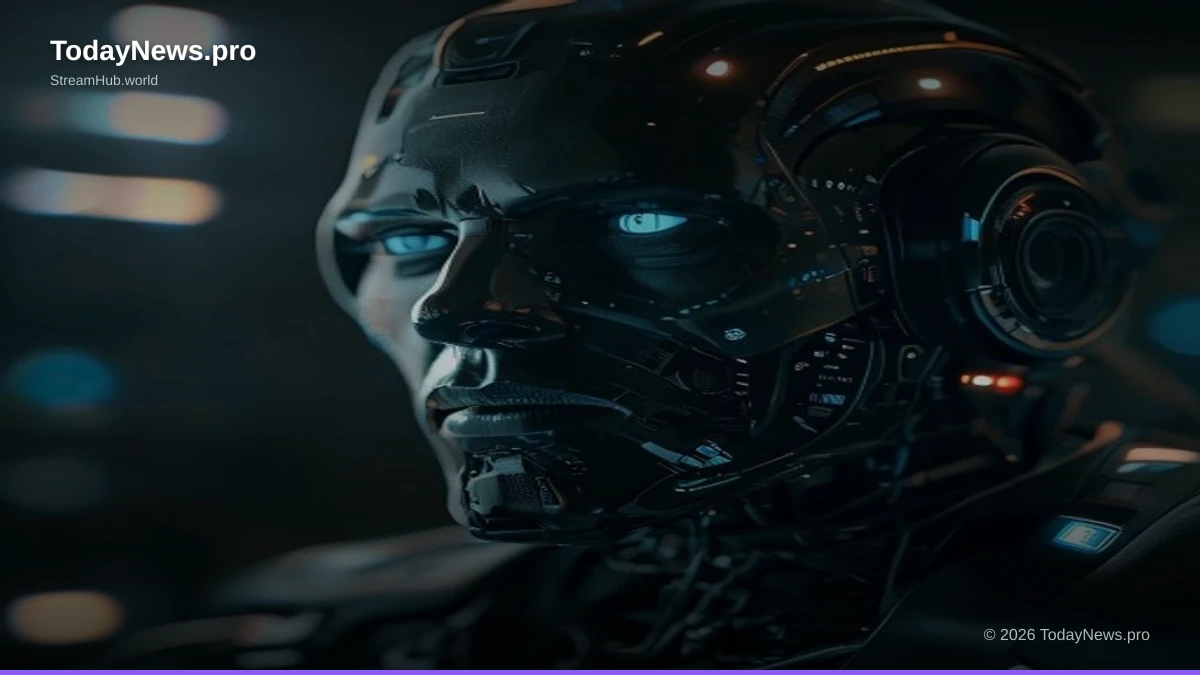
The global film industry, valued at over $200 billion annually, is experiencing a seismic shift, with artificial intelligence poised to redefine every facet of content creation, from the initial spark of an idea to the final polished frame.
The Dawn of the AI Director: A New Era in Storytelling
For over a century, filmmaking has been a profoundly human endeavor, driven by creative vision, technical skill, and collaborative artistry. The director, at the helm, orchestrates every element, translating a narrative vision into a tangible cinematic experience. Now, a new force is emerging: the AI director. This isn't about robots replacing humans outright, but rather about intelligent systems augmenting, accelerating, and even democratizing the filmmaking process. Generative AI models, capable of understanding context, generating novel content, and learning from vast datasets, are no longer confined to research labs; they are actively being integrated into studios, indie productions, and individual creators' toolkits.
This transformation promises to break down traditional barriers to entry, enabling more diverse voices to tell their stories. The sheer computational power and pattern recognition abilities of AI can unlock creative avenues previously unimaginable or prohibitively expensive. Imagine a world where a writer can instantly visualize a scene described in a script, or where a small production team can generate photorealistic visual effects that once required blockbuster budgets.
Democratizing Creativity: Lowering the Barrier to Entry
Historically, filmmaking has been an expensive and resource-intensive undertaking. The need for specialized equipment, skilled crews, and extensive post-production facilities often limited participation to well-funded studios. AI is changing this paradigm. Tools that can generate scripts, design characters, create storyboards, and even render complex visual effects are becoming accessible to independent filmmakers and hobbyists. This democratization could lead to an explosion of creative content, with new genres and storytelling techniques emerging from unexpected corners of the globe.
The Augmentative Role: AI as a Creative Partner
It's crucial to understand that AI in filmmaking is largely positioned as an augmentative tool rather than a complete replacement for human creativity. Think of AI as an incredibly powerful assistant, capable of handling repetitive tasks, generating multiple options, and providing data-driven insights. A human director can leverage AI to explore narrative branches, test different visual styles, or optimize pacing. The final creative decisions, the emotional core, and the overarching artistic intent remain firmly in human hands. This symbiotic relationship allows creators to focus on higher-level conceptualization and emotional storytelling.
From Pixels to Plot: AIs Scriptwriting Revolution
The genesis of any film lies in its script. AI's foray into scriptwriting is one of its most disruptive applications in the industry. Advanced language models, trained on millions of screenplays, novels, and other narrative forms, can now generate entire scripts, suggest plot twists, develop character arcs, and even mimic the style of specific writers or genres. While the output may still require significant human refinement, AI can provide a powerful starting point, overcoming writer's block and accelerating the ideation phase.
These tools can analyze existing scripts for pacing, dialogue effectiveness, and audience engagement metrics, offering data-backed suggestions for improvement. They can also generate variations of scenes, allowing writers to explore multiple narrative directions without extensive manual re-writing. This efficiency gain is particularly valuable in a fast-paced industry where deadlines are often tight.
Generative Scriptwriting Tools
Platforms like Jasper, Sudowrite, and dedicated film industry AI tools are emerging, offering functionalities ranging from simple premise generation to full script drafting. These tools can take a basic logline and expand it into a multi-act structure, complete with character descriptions and dialogue. Some advanced systems can even incorporate audience demographic data to tailor content for specific market segments, a concept that raises fascinating questions about artistic intent versus commercial viability.
Character Development and Dialogue Generation
AI can assist in creating nuanced characters by analyzing personality archetypes and suggesting backstory elements that enrich their motivations. Dialogue generation is another area where AI excels, producing conversational exchanges that can range from naturalistic to stylized, depending on the user's input. While AI-generated dialogue might sometimes lack genuine emotional depth or unique voice, it can serve as a solid foundation for human writers to build upon, infusing it with the necessary subtext and emotional resonance.
| Feature | Basic AI Tools | Advanced AI Tools | Human Writer |
|---|---|---|---|
| Idea Generation | Limited, often generic | Context-aware, genre-specific | Highly original, nuanced |
| Plot Structuring | Basic templates | Complex narrative arc generation | Intuitive, emotionally driven |
| Dialogue Creation | Can be stilted or repetitive | More naturalistic, stylistic options | Unique voice, subtext, emotional depth |
| Revision Speed | Fast for initial drafts | Rapid iteration of multiple options | Time-consuming, iterative process |
| Emotional Nuance | Lacks depth | Can mimic emotions based on patterns | Authentic, subtle, and complex |
Visualizing Worlds: AI in Pre-production and Storyboarding
Before the cameras even roll, AI is transforming the pre-production process. Storyboarding, concept art, and set design can now be accelerated and enriched by AI. Tools can generate visual representations of scenes based on script descriptions, allowing directors and cinematographers to visualize the film's aesthetic long before production begins. This not only saves time but also facilitates clearer communication among the creative team.
Generative adversarial networks (GANs) and diffusion models are at the forefront of this visual revolution. They can produce a vast array of images, from photorealistic environments to abstract artistic concepts, based on textual prompts. This capability allows for rapid iteration of visual styles, character designs, and location scouting simulations.
Concept Art and Character Design
AI can generate hundreds of character designs or concept art pieces for a single scene in a matter of minutes. This allows art departments to explore a wider range of creative possibilities and identify the most compelling visual directions. For example, an AI could be tasked with generating "a grizzled space pirate captain with a cybernetic eye, in a neon-drenched cantina," and provide multiple interpretations for the art director to choose from or be inspired by.
Virtual Set Design and Location Scouting
AI can also assist in virtual set design by creating realistic 3D models of environments based on architectural plans or existing imagery. This is invaluable for visualizing sets and making adjustments before physical construction begins. Furthermore, AI-powered image analysis can aid in virtual location scouting, identifying potential filming sites that match specific aesthetic requirements from vast image databases.
The Algorithmic Actor and Digital Performances
The realm of performance is also being touched by AI, primarily through the creation of digital actors and the enhancement of live-action performances. Deepfake technology, while often associated with misuse, has legitimate applications in filmmaking, such as de-aging actors, recreating deceased performers for specific roles, or generating entirely new digital characters with unique performances. AI can analyze vast datasets of human motion and facial expressions to create incredibly lifelike digital avatars that can be animated to deliver performances.
Beyond creating entirely digital actors, AI is also used to enhance the performances of human actors. Motion capture data can be refined by AI algorithms to produce more natural and nuanced movements. Additionally, AI can assist in lip-syncing, ensuring that dialogue perfectly matches the on-screen performer's mouth movements, even when the dialogue is changed in post-production.
Digital Doubles and De-aging
The ability to create digital doubles of actors is revolutionary. This allows for stunt work to be performed by AI-generated characters, enhancing safety and creative possibilities. De-aging actors, a complex process that requires meticulous attention to detail, is now significantly streamlined by AI, enabling actors to convincingly portray younger versions of themselves. The ethical implications of using digital likenesses, particularly for deceased actors, are a subject of ongoing debate.
Voice Synthesis and Performance Capture
AI-powered voice synthesis can now generate incredibly realistic human voices, which can be used for character voices or even to re-dub dialogue. When combined with performance capture, AI can translate the nuances of a human actor's performance into the digital realm with remarkable fidelity. This opens up new possibilities for animated features and hybrid live-action/CGI productions.
Editing with an Algorithm: The Pace of Post-Production
Post-production, particularly the editing process, is often a time-consuming and labor-intensive phase of filmmaking. AI is poised to revolutionize this area by automating many of the more repetitive tasks and providing intelligent suggestions to editors. AI-powered editing software can automatically identify the best takes, assemble rough cuts, and even suggest pacing adjustments based on genre conventions or audience engagement data.
These tools can analyze footage for emotional cues, action sequences, or dialogue clarity, helping editors to quickly identify key moments. For documentary filmmakers, AI can sift through hours of raw footage to find relevant clips, saving immense amounts of time. The goal is not to replace human editors, but to empower them with tools that enhance their efficiency and creative workflow.
Automated Rough Cuts and Scene Selection
AI can be trained to recognize narrative beats and character interactions within footage. Based on this understanding, it can automatically assemble a rough cut of a film, significantly speeding up the initial assembly process. Editors can then refine this AI-generated cut, focusing their attention on the finer details of pacing, rhythm, and emotional impact.
Intelligent Pacing and Rhythm Analysis
AI algorithms can analyze the temporal flow of a film and suggest adjustments to pacing to maximize audience engagement. By studying successful films within a specific genre, AI can identify optimal scene lengths, transition points, and emotional arcs. This analytical capability can provide editors with valuable insights to enhance the viewing experience.
Soundscapes and Scores: AIs Auditory Contributions
The auditory experience of a film is as crucial as its visual component, and AI is making significant inroads into sound design and music composition. AI can generate ambient soundscapes, create realistic Foley effects, and even compose original musical scores tailored to the mood and genre of a film. This capability can dramatically reduce the time and cost associated with traditional sound design and music production.
Generative music models can produce endless variations of musical themes, allowing composers to experiment with different styles and instrumentation. AI can also analyze the emotional content of a scene and generate music that perfectly complements it. For sound design, AI can create realistic environmental sounds, such as the roar of a crowd or the whisper of wind, based on descriptive prompts.
Generative Music Composition
AI platforms like Amper Music, AIVA, and others can compose original music in various styles and moods. Filmmakers can provide parameters such as genre, tempo, instrumentation, and emotional tone, and the AI will generate a unique score. This allows for greater flexibility and cost-effectiveness, especially for independent productions or projects with tight budgets.
AI-Powered Sound Design
Creating realistic sound effects can be a complex and time-consuming process. AI can assist by generating a wide range of sounds, from natural ambient noises to complex mechanical or fantastical effects. This can be achieved through deep learning models trained on vast libraries of sound data, allowing for the creation of highly specific and convincing audio elements.
Furthermore, AI can be used to automate the process of mixing and mastering audio, ensuring a consistent and high-quality sound experience across the entire film. This includes balancing dialogue, music, and sound effects to create a cohesive and immersive soundscape.
Ethical Lenses and Future Frontiers
As AI becomes more integrated into filmmaking, critical ethical considerations come to the fore. Issues of copyright for AI-generated content, the potential for job displacement among creative professionals, and the implications of deepfakes for authenticity and trust are all paramount. Studios and creators must navigate these challenges responsibly to ensure that AI serves as a tool for creative enhancement rather than a source of exploitation or misinformation.
The future of filmmaking will likely involve a dynamic interplay between human creativity and artificial intelligence. We can anticipate even more sophisticated AI tools that can understand narrative nuance, generate emotionally resonant performances, and create entirely novel cinematic experiences. The industry is at a pivotal moment, where the careful and ethical integration of AI will shape the stories we tell and the way we experience them for generations to come.
Copyright and Ownership of AI-Generated Content
A significant debate is unfolding regarding the copyright and ownership of content created or significantly assisted by AI. Current legal frameworks are often ill-equipped to handle these complexities. If an AI generates a script or a visual element, who owns the intellectual property? The AI developer, the user who provided the prompt, or is it considered public domain? Establishing clear guidelines is crucial for the future of creative industries.
The Evolving Role of Human Creatives
While AI can automate many tasks, the demand for human creativity, critical judgment, and emotional intelligence will likely increase. Filmmakers will need to become adept at directing AI, curating its output, and infusing it with the unique human touch that resonates with audiences. The industry may see a shift towards roles that emphasize creative direction, AI prompt engineering, and the ethical oversight of AI-generated content.
The ability of AI to analyze vast amounts of data can also lead to new forms of audience engagement and personalized content delivery. Imagine films that adapt their narrative or pacing based on individual viewer preferences, or interactive experiences where AI-driven characters respond dynamically to audience input. The possibilities are vast and largely unexplored.
For more on the impact of AI on creative industries, explore resources like the Reuters Technology section and learn about the history of technological advancements at Wikipedia's History of Film. The future of cinema is being written, and AI is holding the pen.