

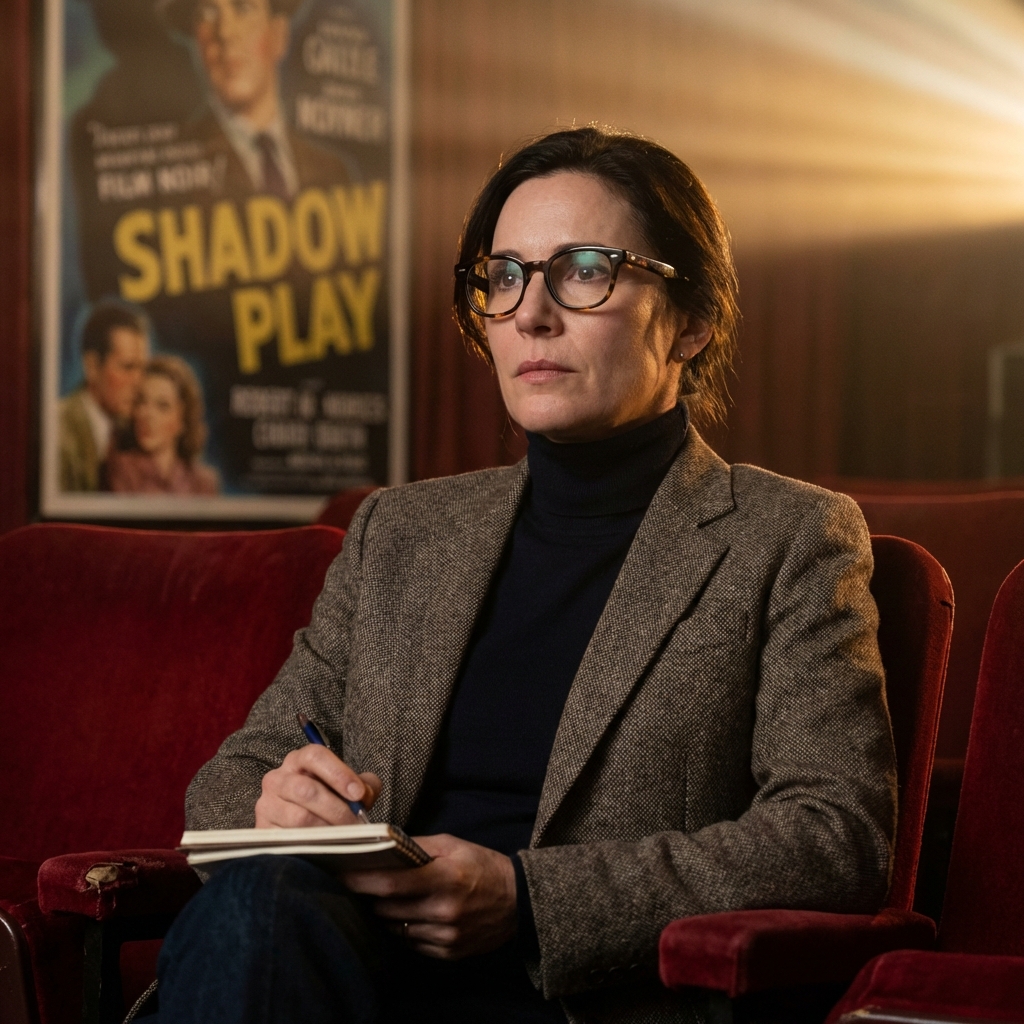
 Kenji Sato

⏱ 45 min
The global film industry, a behemoth valued at over $200 billion annually, is experiencing a seismic shift driven not by a new starlet or a blockbuster franchise, but by lines of code. Machine learning, once a niche academic pursuit, is now actively rewriting the fundamental processes of filmmaking and storytelling, from initial concept generation to the final edit, ushering in an era where artificial intelligence acts as a creative partner, a tireless assistant, and increasingly, an "AI Director."
The Algorithmic Auteur: AIs Ascent in Filmmaking
The notion of a machine crafting art has long been confined to science fiction. However, the rapid advancements in artificial intelligence, particularly in generative models and natural language processing, are blurring the lines between human creativity and algorithmic output. AI's integration into filmmaking is no longer a theoretical exercise; it's a tangible force shaping how stories are conceived, developed, and ultimately presented to audiences. This transformation is multifaceted, touching every stage of the cinematic pipeline.Democratizing Creativity
Historically, filmmaking has been an endeavor requiring significant financial backing, specialized skills, and extensive networks. AI tools are beginning to democratize this landscape. Independent filmmakers and even hobbyists can now access sophisticated tools that were once the exclusive domain of major studios. This democratization extends to accessibility, allowing individuals with compelling stories but limited resources to bring their visions to life with unprecedented ease.The Rise of Generative AI in Visual Arts
Generative adversarial networks (GANs) and diffusion models have revolutionized the creation of visual content. These AI systems can generate photorealistic images, intricate 3D models, and even short animated sequences based on textual prompts. This capability opens up a world of possibilities for concept art, storyboarding, and the creation of visual effects, significantly reducing the time and cost associated with these traditionally labor-intensive tasks. The ability to iterate rapidly on visual ideas is a game-changer for directors and production designers."We are witnessing a paradigm shift where AI is not just a tool, but a collaborator. It can spark ideas, visualize concepts, and even execute tasks that would have taken weeks for a human team. The speed and scale at which AI can generate visual assets are simply astounding."
— Dr. Evelyn Reed, Lead AI Researcher, Lumina Labs
From Script to Screen: AIs Influence on Pre-Production
The journey of a film begins long before the cameras roll, with the script. AI is making significant inroads into this critical pre-production phase, offering novel approaches to idea generation, script analysis, and even character development.AI-Powered Scriptwriting and Analysis
Natural Language Processing (NLP) models are now capable of generating coherent and compelling narrative structures. While AI-written screenplays are still in their nascent stages and often require human refinement, AI tools can assist human writers by suggesting plot points, character arcs, and dialogue. More practically, AI excels at script analysis. It can identify pacing issues, analyze character dialogue frequency, predict audience reception based on historical data, and even flag potential continuity errors before they become costly problems on set.| AI Script Analysis Metric | Typical Human Analysis Time | AI Analysis Time | Impact |
|---|---|---|---|
| Pacing Report (Scene-by-Scene) | 4-8 hours | < 5 minutes | Faster identification of slow or rushed scenes. |
| Character Dialogue Distribution | 2-4 hours | < 2 minutes | Ensures balanced character screen time and dialogue. |
| Emotional Arc Analysis | 6-12 hours | 10-15 minutes | Provides objective insights into narrative emotional flow. |
| Predictive Audience Engagement Score | N/A (Highly Subjective) | 15-30 minutes | Data-driven projection of potential viewer interest. |
Concept Art and Storyboarding Revolution
Visualizing a script is paramount, and AI has become an invaluable tool for concept artists and storyboard artists. Instead of manually sketching countless iterations, directors can use text-to-image AI models to generate a wide array of visual styles, character designs, and environmental concepts within minutes. These AI-generated visuals can then serve as a rich source of inspiration or a direct starting point for human artists, accelerating the visual development process significantly. This allows for more extensive exploration of creative directions early on.Virtual Production and Pre-Visualization
AI is also enhancing pre-visualization, the process of creating a rough 3D representation of the film's key sequences. AI algorithms can assist in generating realistic virtual environments and character animations for pre-vis, allowing directors to experiment with camera angles, blocking, and composition before the actual shoot. This level of digital rehearsal can drastically reduce on-set confusion and improve efficiency, particularly for complex action sequences or scenes requiring extensive visual effects.The Virtual Studio: AIs Role in Production and Cinematography
The production phase, where the film is actually shot, is another area where AI is making its mark, albeit with a more cautious integration due to the highly dynamic and human-centric nature of set operations.Automated Camera Work and Cinematography Assistance
While AI is not yet directing the camera in the traditional sense, it is increasingly being used for automated camera systems and intelligent cinematography assistance. AI-powered drones can execute complex, pre-programmed aerial shots with precision. On set, AI can analyze lighting conditions and suggest optimal camera settings, or even predict actor movements to pre-focus the camera. This can free up cinematographers to focus on the artistic and emotional aspects of framing and composition.AI-Assisted Cinematography Tools Adoption
Virtual Production and Real-time Rendering
Virtual production techniques, often powered by AI, allow filmmakers to shoot scenes against digital backdrops that are rendered in real-time. This means actors can interact with digital environments and characters during the shoot, and the director can see the final composite image immediately. AI plays a crucial role in optimizing these real-time rendering pipelines, ensuring smooth and photorealistic visuals. This significantly reduces the need for green screen work and post-production compositing.AI for Logistics and Scheduling
Beyond the creative aspects, AI is also being employed to optimize the logistical challenges of film production. Advanced algorithms can analyze complex shooting schedules, factoring in actor availability, location constraints, weather patterns, and crew requirements to create highly efficient production plans. This not only saves time and money but also reduces the stress and logistical nightmares that often plague large-scale productions.Editing the Unseen: AIs Impact on Post-Production
Post-production, the phase where raw footage is transformed into a finished film, is perhaps where AI's influence is most profoundly felt and widely adopted. The sheer volume of data and the iterative nature of editing make it a prime candidate for algorithmic assistance.Automated Rough Cuts and Scene Assembly
AI can now analyze raw footage and automatically assemble a rough cut based on predefined criteria. This could include identifying the best takes, selecting shots with good audio, or even following the narrative flow of a script. While these AI-generated cuts are rarely perfect, they provide an excellent starting point for human editors, saving them countless hours of sifting through hours of unedited footage. This accelerates the initial assembly process dramatically.Visual Effects and Digital Compositing
The creation of visual effects (VFX) has been deeply intertwined with technological advancements, and AI is the latest frontier. AI algorithms are used for tasks like rotoscoping (isolating objects), motion tracking, background removal, and even generating digital extras. Generative AI is also enabling the creation of entirely synthetic environments and characters with unprecedented realism, often at a fraction of the cost and time of traditional methods. For instance, AI can be used to seamlessly blend live-action footage with CGI elements.75%
Reduction in Rotoscoping Time
50%
Cost Savings in CGI Asset Creation
90%
Improvement in Motion Tracking Accuracy
Color Grading and Sound Design Automation
AI is also making its way into more nuanced areas like color grading and sound design. AI can analyze footage and suggest color palettes that match a desired mood or genre, or even automatically correct inconsistencies in lighting and color across different shots. In sound design, AI tools can assist in cleaning up audio, generating realistic sound effects, or even composing background scores. These tools empower editors and sound designers with more options and greater efficiency.Crafting the Narrative: AI and the Future of Storytelling
Beyond the technical aspects of filmmaking, AI is poised to fundamentally alter how stories are conceived, structured, and experienced. The very definition of authorship and narrative creation is being challenged.Personalized Storytelling and Interactive Narratives
One of the most exciting potentials of AI in storytelling lies in personalized and interactive narratives. Imagine films that adapt their plot, characters, or even endings based on individual viewer preferences, emotional responses, or past viewing habits. AI could dynamically generate dialogue or plot branches, creating a unique cinematic experience for each audience member. This moves beyond passive consumption to active participation.AI as a Co-Writer and Idea Generator
While AI is unlikely to replace human screenwriters entirely, it can serve as an incredibly powerful co-writer and muse. AI can analyze vast datasets of existing stories, identifying common narrative tropes, character archetypes, and successful plot structures. It can then generate novel combinations and suggestions, helping writers overcome writer's block or explore unconventional narrative paths. The "AI Director" might not write the script alone, but it can certainly contribute significantly to its genesis and refinement.Deepfakes and Synthetic Medias Narrative Potential
The controversial technology of deepfakes, which uses AI to create highly realistic fake videos, also has potential narrative applications when used ethically. Imagine resurrecting historical figures for documentaries, de-aging actors seamlessly, or creating entirely new fictional characters with the likeness of real people for specific roles. However, the ethical implications of synthetic media, particularly regarding consent and misinformation, are significant and require careful consideration. Reuters: Deepfakes emerge as new tool for film industryEthical Lenses: Challenges and Opportunities in AI Filmmaking
The integration of AI into filmmaking is not without its challenges and ethical quandaries. As AI becomes more sophisticated, questions of authorship, copyright, job displacement, and the potential for misuse become paramount.Authorship, Copyright, and Intellectual Property
Who owns the copyright to a film or script created or heavily influenced by AI? This is a rapidly evolving legal landscape. Current copyright laws are largely designed for human creators. As AI-generated content becomes more prevalent, new frameworks will be needed to address ownership, intellectual property rights, and royalties. The line between a tool and a creator becomes blurred.Job Displacement and the Evolving Workforce
There are legitimate concerns about AI leading to job displacement in certain areas of filmmaking, particularly in repetitive or data-intensive roles. However, many argue that AI will also create new roles and require new skill sets, such as AI supervisors, prompt engineers, and ethical AI consultants. The industry will likely see a shift towards human-AI collaboration rather than outright replacement.Bias in AI and Representation
AI models are trained on vast datasets, and if these datasets contain biases (e.g., racial, gender, cultural), the AI's output will inevitably reflect those biases. This can lead to problematic representation in scripts, character designs, and even story outcomes. Ensuring diverse and inclusive datasets, and developing AI that can actively mitigate bias, is crucial for the ethical advancement of AI in storytelling. Wikipedia: Algorithmic biasThe Human Element: Collaboration, Not Replacement
Despite the increasing capabilities of AI, the consensus among many industry professionals is that human creativity, intuition, and emotional intelligence remain indispensable in filmmaking. AI is best viewed as a powerful enhancement to the human creative process, not a substitute for it.AI as a Tool for Human Creativity
The most promising future for AI in filmmaking involves a symbiotic relationship. AI can handle the tedious, data-heavy, or computationally intensive tasks, freeing up human directors, writers, editors, and artists to focus on the aspects that require nuanced judgment, emotional depth, and original artistic vision. AI can be the ultimate assistant, the tireless concept generator, or the hyper-efficient post-production operative, but the final artistic decisions and the soul of the story will likely remain human-driven."AI is a phenomenal tool, capable of things we could only dream of a decade ago. But the magic of cinema, the ability to connect with an audience on an emotional level, that still comes from the human heart, the shared human experience that a filmmaker imbues into their work. AI can amplify that, but it can't replicate it."
— Anya Sharma, Award-Winning Director
The Evolving Role of the Director
The "AI Director" isn't likely to be a fully autonomous entity soon. Instead, the role of the human director will evolve. They will become expert curators and conductors of AI tools, guiding algorithms with sophisticated prompts and critical judgment to achieve their artistic vision. The director's ability to conceptualize, to understand audience psychology, and to inspire human talent will become even more critical in this new paradigm.The Future of Storytelling: A Collaborative Canvas
The future of filmmaking and storytelling is a collaborative canvas where human ingenuity and artificial intelligence paint together. AI offers unprecedented potential for efficiency, innovation, and new forms of creative expression. By embracing these tools responsibly and ethically, the film industry can unlock new possibilities, democratize creativity, and ultimately, tell stories in ways we are only just beginning to imagine. The algorithmic auteur is here, not to replace the human artist, but to expand the boundaries of what is possible.Can AI write a complete, award-winning screenplay on its own?
Currently, AI can generate screenplay elements, suggest plot points, and even draft scenes. However, producing a complete, nuanced, and emotionally resonant screenplay that would win awards typically requires significant human input for refinement, character development, thematic depth, and artistic vision. While AI is improving, it hasn't yet reached the level of independent, award-winning scriptwriting.
Will AI replace human actors in films?
While AI can create realistic digital actors or de-age existing ones, it's unlikely to completely replace human actors in the foreseeable future. The nuances of human performance, the chemistry between actors, and the emotional connection audiences have with real people on screen are difficult for AI to replicate. AI might be used for specific effects or to create background characters, but lead roles will likely remain human-driven.
How is AI changing the budget of filmmaking?
AI has the potential to significantly reduce filmmaking budgets by automating tasks that were previously time-consuming and expensive. This includes tasks in pre-production (script analysis, concept art), production (virtual production, logistics), and post-production (VFX, editing, rotoscoping). While upfront investment in AI tools might be necessary, the long-term cost savings can be substantial, especially for independent filmmakers.
What are the main ethical concerns regarding AI in filmmaking?
The primary ethical concerns include authorship and copyright issues for AI-generated content, the potential for job displacement in the industry, the perpetuation of biases present in training data leading to misrepresentation, and the misuse of AI technologies like deepfakes for misinformation or non-consensual purposes.